The regulation is part of the implementation of the HEARTH Act and updates regulations originally established in 1961.
Press Release here.
Final Rule here.
Fact Sheet here.
Both the United States and the Mohawk plaintiffs make these arguments in briefs filed last Friday, November 16. The United States stating, “In other New York land claims…dismissed by the Second Circuit, it was inarguable that the lands at issue had become heavily populated and developed by non-Indians in the years since New York unlawfully acquired the lands….That is not true here….the Mohawks… never departed the region and have remained a powerful enduring presence both as a government and as a population in the region and within the specific claim areas.”
As for the claim to the islands, the United States and the Mohawks have presented a unique argument that has never been considered in any other land claim because of the particular facts of the case. “The Department of Justice Attorneys and the Department of Interior met with tribal leadership recently and listened to our concerns. They responded with the filing of a strong brief that supports the Tribe’s efforts and their own interests, as owners of the underlying title to some of the islands that make up the Power Project.” said Chief Randy Hart.
Previous coverage here.
Victoria Sweet, MSU Law ’13, will be one of the students presenting at this event:

Sign up here.

Here, via ILTF/@indianland
The responses to NPR’s two Freedom of Information Act requests include emails between staffers, correspondence with the companies, results of water-quality tests, the permits, and documents justifying each permit. Most of this information had not been public before.
The documents show hints of mutiny inside the EPA. Some EPA staffers clearly are appalled by the wastewater releases.
One wrote in an email to colleagues: “Can we get together and discuss a strategic approach for sending our message of concern? I have attached pictures of this ridiculousness.”
Another staffer warns that the chemicals in the water could have “irrevocable human health and environmental impacts.”
The documents also show recent detective work that some EPA staffers did to try to figure out what chemicals companies are putting in the water. Their research reveals that some of the waste streams sometimes include chemicals from hydraulic fracturing, an engineering technique designed to increase the flow of wells. They also include chemicals whose warning labels clearly state “toxic to aquatic organisms,” “prevent material from entering sewers or waterways,” and warnings about cancer and birth defects at low levels.
The documents suggest that at least some people inside the EPA are advocating for stricter rules. But much of this debate has been kept secret. The EPA refused to give NPR 757 documents about the loophole, claiming they can be kept secret because they are between the EPA and its attorneys or among EPA staffers.
A split of the Sixth Circuit upheld the 3 judge panel. Our previous coverage of Prop. 2 here.
Here.
COLE, J., delivered the opinion of court in which MARTIN, DAUGHTREY, MOORE, CLAY, WHITE, STRANCH, and DONALD, JJ., joined; and BATCHELDER, C. J., and GIBBONS, ROGERS, SUTTON, COOK, and GRIFFIN, JJ., joined in Part II.B and C. BOGGS, J. (pp. 37–40), delivered a separate dissenting opinion, in which BATCHELDER, C. J., joined. GIBBONS (pp. 41–57), delivered a separate dissenting opinion, in which BATCHELDER, C. J., and ROGERS, SUTTON, and COOK, JJ., joined, and GRIFFIN, J., joined with the exception of Part III. ROGERS (pg. 58) delivered a separate dissenting opinion, in which COOK, J., joined. SUTTON (pp. 59–69), delivered a separate dissenting opinion in which BATCHELDER, C. J., and BOGGS and COOK, JJ., joined. GRIFFIN, J. (pp. 70–74), delivered a separate dissenting opinion.
A student seeking to have her family’s alumni connections considered in her application to one of Michigan’s esteemed public universities could do one of four things to have the school adopt a legacy-conscious admissions policy: she could lobby the admissions committee, she could petition the leadership of the university, she could seek to influence the school’s governing board, or, as a measure of last resort, she could initiate a statewide campaign to alter the state’s constitution. The same cannot be said for a black student seeking the adoption of a constitutionally permissible race-conscious admissions policy. That student could do only one thing to effect change: she could attempt to amend the Michigan Constitution—a lengthy, expensive, and arduous process—to repeal the consequences of Proposal 2. The existence of such a comparative structural burden undermines the Equal Protection Clause’s guarantee that all citizens ought to have equal access to the tools of political change. We therefore REVERSE the judgment of the district court on this issue and find Proposal 2 unconstitutional. We AFFIRM the denial of the University Defendants’ motion to be dismissed as parties, and we AFFIRM the grant of the Cantrell Plaintiffs’ motion for summary judgment as to Russell.
From the press release:
THE WHITE HOUSE
Office of the Press Secretary
FOR IMMEDIATE RELEASE
November 15, 2012
President Obama Announces 2012 White House Tribal Nations Conference
WASHINGTON – On Wednesday, December 5, President Obama will host the White House Tribal Nations Conference at the Department of the Interior. The conference will provide leaders from the 566 federally recognized tribes the opportunity to interact directly with the President and representatives from the highest levels of his Administration. Each federally recognized tribe will be invited to send one representative to the conference. This will be the fourth White House Tribal Nations Conference for the Obama Administration, and continues to build upon the President’s commitment to strengthen the government to government relationship with Indian Country. Additional details about the conference will be released at a later date.
###
Here. The audio version is longer than the print version.
We’ve been doing a lot of thinking in the office about how courts interpret the “public interest” when weighing tribal concerns. This story certainly shows how one state representative chooses to do so.
Allen: Many of the Indian tribes in Michigan are opposed to this legislation right now, and that’s primarily because they feel the wolf has a special status for them. It figures importantly in many of their creation stories. They consider the wolf to be a brother or part of their kin. Here’s what Kurt Perron, the president of the Bay Mills Indian Community, told me about that:
“As we see the wolf returning, or gaining strength, just like we, as Ojibwe Anishinaabe people have, we see that relationship. So that’s what concerns us with the hunt, it’s almost like you’re hunting our brothers.”
Perron also said that by hunting wolves, you really don’t know what’s going to happen in terms of how that affects the pack structure of wolves, since they are pack animals.
Senator Tom Casperson of the western Upper Peninsula, is the primary sponsor of the wolf hunt bill, and he says that he has met a couple of times with the Indian tribes, and heard their concerns, and he recognizes and respects their relationship to the wolf. But he also says that that’s not a value that all of his constituents hold.
“I don’t know how you negotiate that, because that’s a personal belief they have. But at the end of the day, I do think many people don’t hold that same belief, so what do we do. Do we hold fast to it because the tribes say it’s sensitive to them, when many of my citizens don’t hold that same value?”
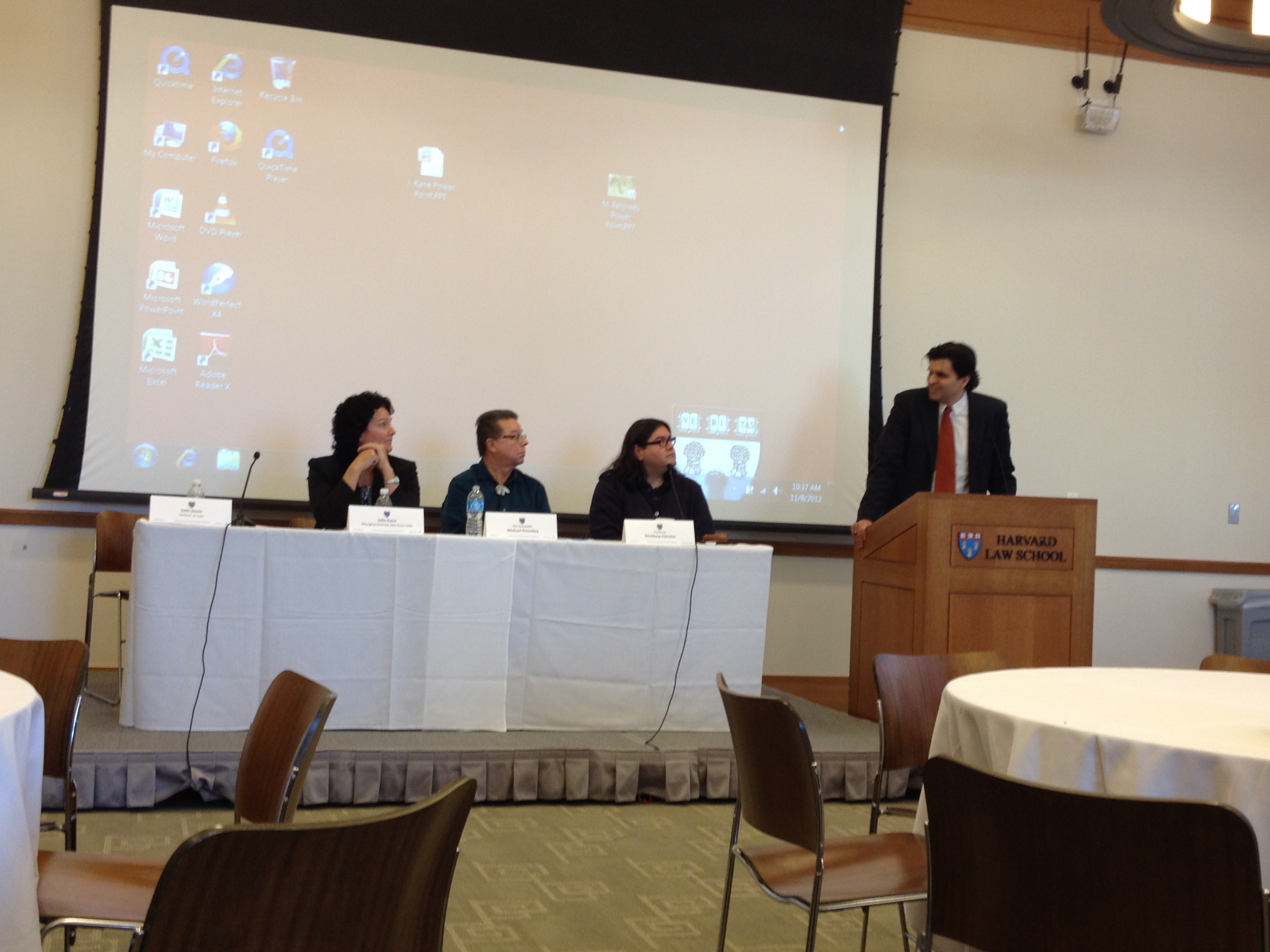
Julie Kane, Michael Petoskey, Matthew L.M. Fletcher
 Turtle Talk
You must be logged in to post a comment.