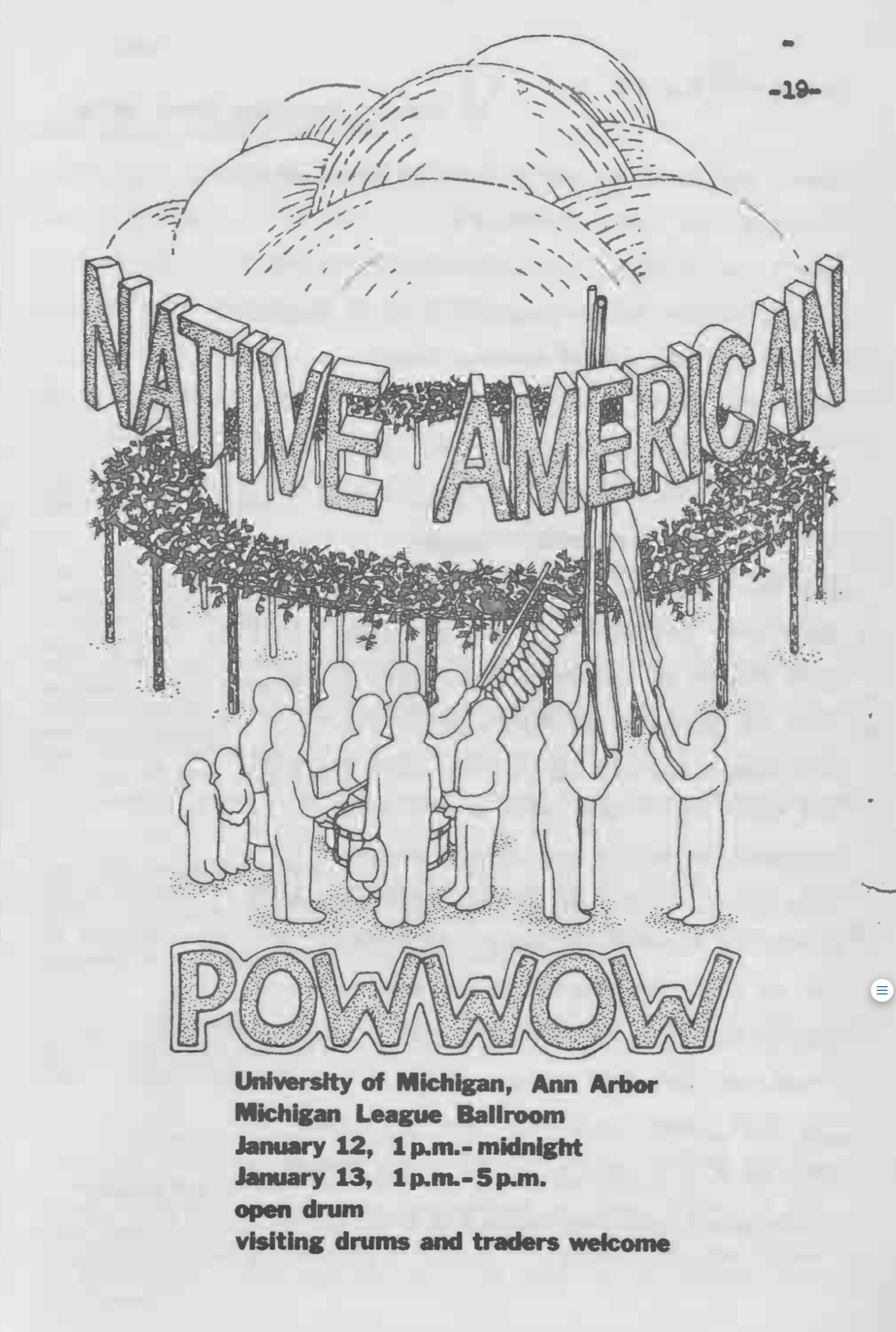
37th Coming Together of Peoples Conference @ Wisconsin Law — March 31-April 1, 2023

Register here.

Continue reading

Grant Christensen on Article III Courts’ Power to Adjudicate Tribal Inherent Powers

Grant Christensen has posted “Article III and Indian Tribes,” forthcoming in the Minnesota Law Review, on SSRN.

Here is the abstract:

Among the most basic principles of our federal courts is that they are courts of limited jurisdiction, exercising only those powers delegated to them in Article III. In 1985 the Supreme Court inexplicably created an exception to this constitutional tenant, and unilaterally declared a plenary judicial power to review the exercise of an Indian tribe’s inherent sovereign authority. This exception is unmoored from all other Supreme Court precedent outside Indian law, and unjustifiably assumes the judicial power in direct contrast to the Court’s ordinarily thoughtful jurisprudence on Article III and deference to the separation of powers.

This article concludes that the Supreme Court was wrong in 1985 when it assumed a plenary judicial power over Indian affairs. The consequences are profound, and suggest a reconceptualization of the entire field of Indian law. Canon creating cases like Oliphant, Montana, and Cabazon should never have been decided because the exercise of a tribe’s inherent authority does not create a federal question conferring subject matter jurisdiction on the federal courts. The inherent power of Indian tribes to criminally prosecute or civilly regulate non-Indians in Indian country should not subject them to the judicially imposed limits set by the Supreme Court, because the Court lacks subject matter jurisdiction to decide those cases. Until a treaty or statute creates an affirmative basis for federal court review, an Indian tribe’s inherent powers are subject to the checks and balances imposed by tribal government and no others.

This has nothing to do with anything.

SCOTUSBlog Recap of Arizona v. Navajo Nation Oral Argument

Here is “Justices appear divided over Navajo Nation’s water rights.”

Background materials on the case are here.

According to the U.S., this area is entitled only to the water that the Navajos can find there.

Montana Federal Court Allows Crow Nation Member’s Allotment Partition Suit to Proceed

Here are the materials so far in Halverson v. Haaland (D. Mont.):

1 Complaint

18 Motion to Dismiss

22 Response

23 Reply

UCLA Debrief of Oral Argument in Arizona v. Navajo Nation

Transcript of the argument is here.

Audio is here.

SCOTUS Denies Cert in Challenge to Spokane Tribe Water Agreement

Here is today’s order list.

The denied petition is Sulgrove v. Spokane Indian Tribe.

Lower court materials here.

This has nothing to do with this case.

Amy Cordalis Water Law Lecture @ Montana Law

Join us Wednesday, April 12th at noon in LAW 101, or on Zoom.

Amy Cordalis, Director/Founder of Ridges to Riffles Indigenous Conservation Group, will give the lecture The Water Remembers: A calling from the Klamath Basin to incorporate indigenous law and knowledge into climate resiliency strategies.

1 CLE credit is pending.  

https://umontana.zoom.us/j/95273009210

SCOTUSBlog Preview of Arizona v. Navajo Nation

Here is “As drought persists in the west, justices to consider Navajo Nation’s rights to Colorado River.”

Background materials on the case are here.

Background Materials in Arizona v. Navajo Nation

SCOTUSblog preview here.

Merits stage briefs:

Federal Brief

Colorado Brief

Arizona Brief

Navajo Nation Brief

Arizona Reply

Colorado Reply

Federal Reply

Joint Appendix

Merits Stage Amicus Briefs (supporting Petitioners; there’s a second one but I refuse to give space on my blog to those rancid bigots):

Western Water Users Amicus

Merits Stage Amicus Briefs (supporting Respondents):

Coalition of Large Tribes Amicus Brief

DigDeep Right to Water Project Amicus Brief

Diné Hataalii Association Amicus Brief

Historians Amicus Brief

McCool Rosser Wilkins Amicus Brief

Southern Ute and Ute Mountain Ute Amicus Brief

Tribal Nations and Indian Organizations Amicus Brief

Ute Indian Tribe Amicus Brief

Water Scholars Brief

Cert Stage Briefs:

Arizona Petition 21-1484

Navajo Opposition 21-1484

Federal Response in 21-1484

Arizona Reply 21-1484

Federal Petition 22-51

Navajo Opposition 22-51

States Reponse 22-51

Federal Reply 22-51

Ninth Circuit En Banc Materials

Amended Order + Denial of En Banc Petition

US En Banc Petition

Water District En Banc Petition

Navajo Response

Ninth Circuit Panel Materials:

Opinion


District Court Materials:

Third Amended Complaint materials

339 US Response

340 Utility and State Response

346 Navajo Reply

360-1 Navajo Renewed Motion

369 Utility and State Response

370 US Response

375 Navajo Reply

385 DCT Order

This don’t look like this no more.

Univ. of Michigan Posts Native Studies Professor Job Opening

Here.

ACTIVE SEARCH:

NATIVE AMERICAN STUDIES. The Department of American Culture and the program in Native American Studies (NAS) at the University of Michigan invite applications for an open-rank tenured or tenure track position in Native American and/or other U.S.-related Indigenous Studies as part of the Provost’s Anti-Racism Hiring Initiative (ARHI).

We seek qualified scholars in all fields with either disciplinary or interdisciplinary training. The search will consider scholars whose work focuses on Indigeneity, Race, and American Belonging in the United States and those who use comparative and transnational frameworks in relation to the United States. Scholars whose expertise in Native American and Indigenous studies falls within the humanities or humanistic social sciences (including but not limited to gender & sexuality, environmental studies, history, digital studies, museum studies, visual and expressive culture, etc.) are encouraged to apply.

Applicants must demonstrate evidence of excellence in teaching and research. A Ph.D. in a relevant discipline in the arts, humanities, or social sciences is required prior to appointment. This is a university-year appointment with an expected start date of August 26, 2024.

HOW TO APPLY

Application Deadline for full consideration is August 21, 2023, 11:59 p.m., Eastern Standard Time.

Qualified persons should submit preliminary application documents as email attachments to

ac-position@umich.edu under the subject line “NAS ARHI Position.”

Please include the following components (each submitted as a separate PDF file):

  1. Cover Letter addressed to the Chair, NAS Search Committee. Please be sure the cover letter includes: Your name and address; your email address and phone contact information.    
  2. Curriculum Vitae    
  3. Writing Sample (limit to 25 pages)

Persons whose applications are selected for further review will be individually asked to provide additional documents, including but not limited to: evidence of teaching excellence, a statement of teaching philosophy and experience, a diversity statement, and a statement of current and future research plans.

Confirmation: Upon receipt of your preliminary application you can expect an email acknowledgment with a request and instructions to submit a voluntary survey to the College of Literature, Science, and the Arts.

The University of Michigan is committed to fostering and maintaining a diverse work culture that respects the rights and dignity of each individual, without regard to race, color, national origin, ancestry, religious creed, sex, gender identity, sexual orientation, gender expression, height, weight, marital status, disability, medical condition, age, or veteran status. The University of Michigan is supportive of the needs of dual career couples and is an Equal Opportunity/Affirmative Action Employer. Offers for this appointment are contingent upon a successful background screening.