Carter and Rotman on Surface Mining Regulation After McGirt

Sam Carter and Robin Rotman have posted “Resurfacing Sovereignty: Who Regulates Surface Mining In Indian Country After McGirt?,” forthcoming in the Montana Law Review, on SSRN.

Here is the abstract:

Following the decision in McGirt v. Oklahoma, 140 S. Ct. 2452 (2020), there has been a surge of litigation from the State of Oklahoma seeking to clarify the scope of the McGirt holding. While the Supreme Court of the United States was clear that the holding in McGirt was limited to criminal jurisdiction under the Major Crimes Act, it has sparked subsequent litigation regarding the scope of tribal authority. The pending case of State of Oklahoma v. United States Department of the Interior, which concerns surface mining regulation in Indian Country in Oklahoma, will test the application of McGirt outside of the criminal context. To this end, our article makes three recommendations: (1) in litigation concerning tribal lands, tribes should be a necessary party for litigation to proceed; (2) Congress should invest in pathways for tribes to build the capacity to create and manage their own programs, and (3) when tribal self-determination is encouraged and jurisdictional boundaries are clear, tribes can retain agency over their energy future and are less susceptible to the social harms that have been associated with the development of energy projects.
Greg Ablavsky Responds to Rob Natelson’s “Cite Check” of Ablavsky’s “Beyond the Indian Commerce Clause”

Gregory Ablavsky’s “Beyond the Indian Commerce Clause: Robert Natelson’s Problematic ‘Cite-Check’” is at the Stanford Law School blog, Legal Aggregate.

An excerpt:

Here’s that context: In 2007, Mr. Natelson wrote a law review article on the original understanding of the Indian Commerce Clause. Justice Thomas later cited Mr. Natelson’s article in a 2013 concurrence questioning Congress’s authority to enact the Indian Child Welfare Act (ICWA). In 2015, while a graduate student finishing my J.D./Ph.D. in American Legal History at Penn, I published Beyond the Indian Commerce Clause in the YLJ, which revisited original understandings of the sources of federal power over Indian affairs. In the article, I argued that the Founders thought that the federal government’s authority rested not just on the Indian Commerce Clause but on the interplay between multipleconstitutional provisions, including the Treaty Clause, the Territory Clause, the war powers, the law of nations, and the Constitution’s limits on state authority. The article also challenged Justice Thomas’s and Mr. Natelson’s conclusions in what Mr. Natelson later conceded was a “generally respectful” tone. Since the article, a number of subsequent articles by other scholars, some right-of-center and others disagreeing with my conclusions, have similarly challenged Mr. Natelson’s views.

Recommended reading. Professor Ablavsky is the leading legal historian of federal Indian law right now and filed a compelling amicus brief in Brackeen (here).

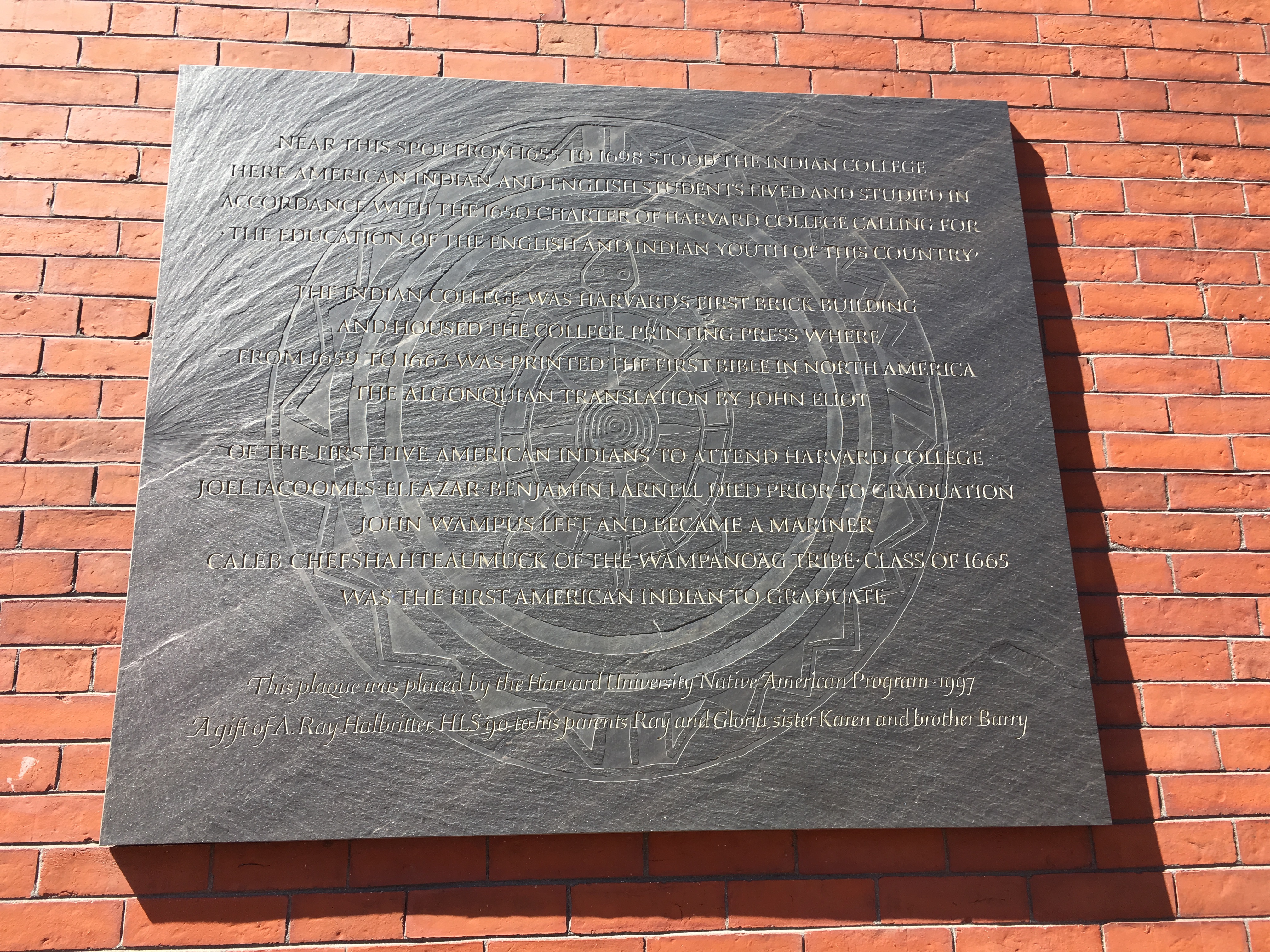
Harvard Native Alums Letter on the Harvard Steering Committee on Human Remains in University Museum Collections Report

Here:

The report is here.

What would the ancestors say?

Minnesota Tri-Bar Event: The Shifting Jurisdictional Landscape in Indian Country: SCOTUS’s Decision in Oklahoma v. Castro-Huerta

Register here.

Oklahoma Federal Court Finds No Jurisdiction in Contract Dispute Involving Seneca-Cayuga Nation

Here are the materials in The Queens LLC v. Seneca-Cayuga Nation (N.D. Okla.):

2 Complaint

10 Motion to Dismiss — Immunity

13 Response

14 Reply

17 Surreply

32 Motion for Determination of Federal Court Jurisdiction

35 Response

37 Reply

38 DCT Order

Photo by Pavel Danilyuk on Pexels.com

Oklahoma Tax Commission Reverses Administrative Law Judge, Holds McGirt Doesn’t Offer Tax Immunities to Tribal Members because of Castro-Huerta (kinda)

Here is the opinion:

Prior opinion here.

The tax man has spoken

SCOTUS Denies Cert in Oklahoma Indian Status Case

Here is yesterday’s order list.

The Oklahoma case was Oklahoma v. Wadkins. Lower court materials here.

The Court also denied cert in the Clarkson case.

Slockish v. Dept. of Transportation Cert Petition

Here:

Question presented:

Whether the Ninth Circuit’s mootness ruling warrants summary reversal where the panel clearly misapprehended governing law on mootness and on the authority of federal courts to order equitable relief affecting nonparties.

Lower court materials here.

Tamera Begay and Fletcher [in trickster forms] on Tribal Economic Development

Tamera Begay and Matthew Fletcher have posted “Ma’ii and Nanaboozhoo Fistfight in Heaven,” forthcoming in the Southwestern Law Review, on SSRN. Here is the abstract (more of a blurb, really):

The Navajo trickster Ma’ii and the Anishinaabe trickster Nanaboozhoo debate the future of tribal economic development [ostensibly reviewing Ezra Rosser’s new book].

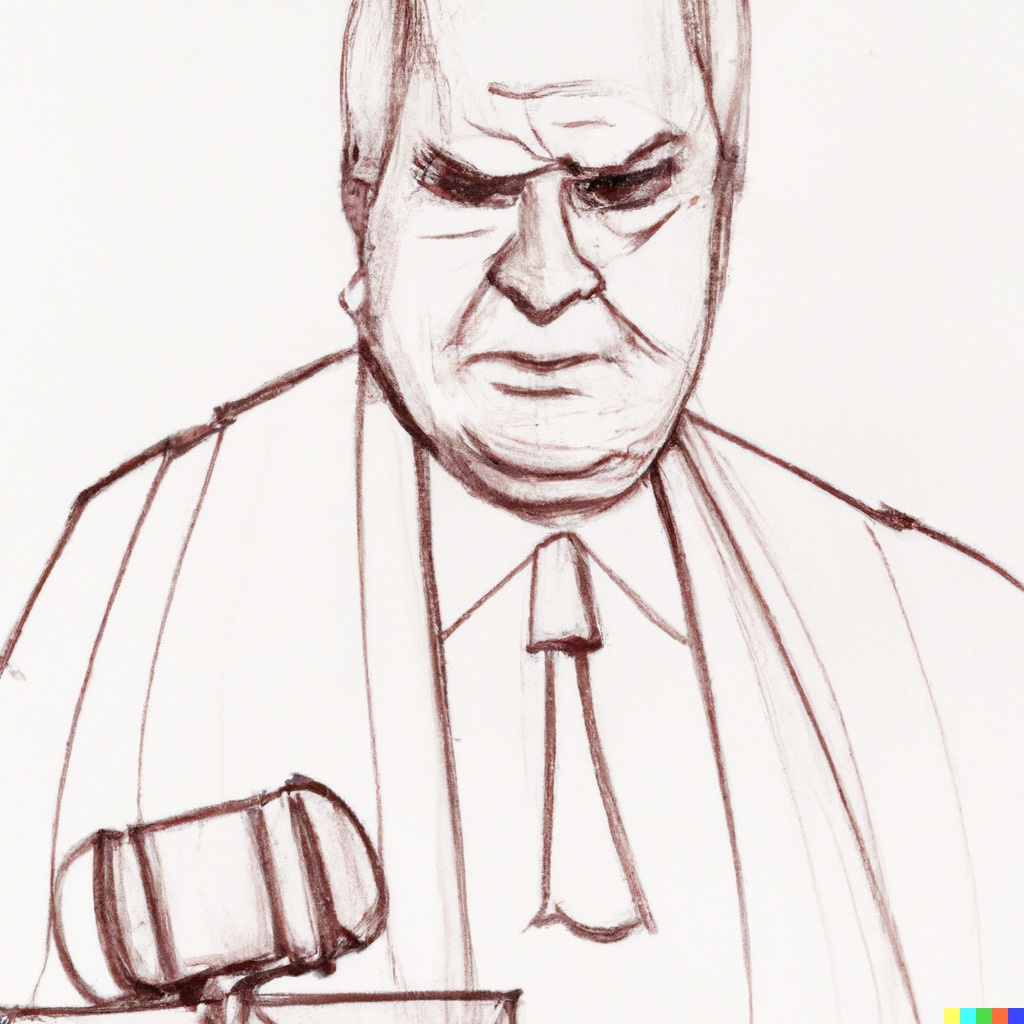
Miigwetch, DALL-E, for another weird piece of fake art.

Dylan Hedden-Nicely on the Continued Vitality of Worcester v. Georgia

Dylan Hedden-Nicely has posted “The Reports of My Death Are Greatly Exaggerated: The Continued Vitality of Worcester v. Georgia,” forthcoming in the Southwestern Law Review, on SSRN.

Here is the abstract:

Rumors abound among the academy, practitioners, and the judiciary about the death of Worcester v. Georgia since the Court’s recent decision in Oklahoma v. Castro-Huerta. The misunderstanding is compounded by those that fail to take the time necessary to appreciate the rich nuance of Chief Justice John Marshall’s decision or in the subtle ways the Court has since modified its holding from Worcester. However, the importance of this case, which is integral to our entire system of federal Indian law, to major components of our constitutional system, as well as to our claim to leader in the human rights arena, mandates we proceed with caution and demand precision in its treatment. We cannot presume the abrogation of such a significant case based on veiled rhetoric that stitches together dicta built upon dicta. Instead, we should proceed by acknowledging the broad scope of Worcester’s original holding and carefully examining where and how the Supreme Court has since circumscribed its breadth.

In furtherance of that call, this paper focusses on the Court’s Indian law jurisprudence around the middle of the twentieth century to provide a clearer picture of how the Court has treated Worcester in the modern era and the ways in which it has been limited. That analysis leads to the inescapable conclusion that although the Court has abandoned Worcester’s categorical prohibition on state jurisdiction in Indian country, “the broad principles of that decision came to be accepted as law.” Accordingly, until such time as the Court “openly avow[s]” its intent to overrule Worcester, we must remain faithful to its narrow authorization of state power in Indian country, as well as its broad recognition of tribal sovereignty and federal primacy over the relationship with tribal nations.