Here:
Here:
Questions presented:
1. Whether a claim for legal restitution triggers the Seventh Amendment right to a jury trial. 2. Whether a litigant may validly waive a constitutional right at a time when binding circuit precedent clearly forecloses any exercise of that right.
Lower court materials here.
Here are the briefs in several consolidated cases [Brown Lopez v. United States, 25-5197; Arizona Mining Reform Coalition v. Rollins, 25-5185; San Carlos Apache Tribe v. United States Forest Service, 25-5189]:
Arizona Reform Mining Coalition Opening Brief
San Carlos Apache Tribe Opening Brief
Religious Freedom Institute Amicus Brief

Here.
From the site:
Federally recognized Tribal governments maintain inherent sovereignty, treaty and reserved rights, and ancestral connections to approximately 44.7 million acres of inventoried roadless areas across 36 states now threatened by the USDA’s proposed rescission of the 2001 Roadless Area Conservation Rule. Tribal Nations’ traditional territories, sacred sites, and subsistence resources within these lands predate the existence of the Forest Service itself. The federal government’s failure to conduct prior consultation violates Executive Order 13175, USDA Departmental Regulation 1350-002, and trust responsibilities.This hub provides Tribal governments with a central source of comprehensive resources, template documents, and strategic tools.

Here are the materials in Walden v. City of Duncan (W.D. Okla.):

Here are the materials in Metropolitan Life Insurance Co. v. Mundahl (D. S.D.):
Here.
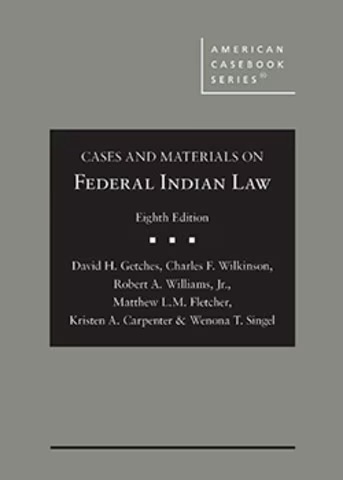
The 8th Edition of the federal Indian law casebook covers recent updates in Supreme Court jurisprudence, as well as statutory and regulatory material. Major developments include the recovery of tribal jurisdiction through judicial decisions and legislative enactments, affirmation of the Indian Child Welfare Act, and law and policy addressing domestic violence in Indian Country and the epidemic of Missing and Murdered Indigenous People. The 8th Edition also considers efforts to secure treaty rights to water during an era of climate change and the fluctuating availability of funding for tribal operations amidst changing presidential administrations.
The 8th Edition retains classic material on the history of federal Indian law and policy, including the medieval origins of the “Doctrine of Discovery,” and the shifting eras of Indian law leading to the present era of self-determination and human rights. The book covers the federal tribal relationship; tribal property rights, tribal sovereignty and jurisdiction; tribal justice systems, Indian religion and culture; water rights; treaty rights; rights of Alaska natives and native Hawaiians; and international and comparative legal perspectives, including the United Nations Declaration on the Rights of Indigenous Peoples.
Here:
Question presented:
Does a federal court have jurisdiction to recognize the existence of an Indian tribe where the findings in the Indian Tribe List Act, Public Law 103-454, sec. 103(3), provide that “Indian Tribes presently may be recognized by . . . a decision of a United States court,” and no other federal statute addresses the question of tribal recognition?
Lower court materials here.
Update:
Here:
Question presented:
Whether the United States can regulate fishing on Alaska’s navigable waters under the Alaska National Interest Lands Conservation Act, when its statutory authority is limited to “public lands” and that term is defined as “lands, waters, and interests therein … the title to which is in the United States.”
Lower court materials here.


 Turtle Talk
You must be logged in to post a comment.