Tell us which Indian!

Tell us which Indian!
Jason Robison has posted “Beyond Binary Co-Sovereignty: Native Nations & Water Compacts,” forthcoming in the Yale Law Journal, on SSRN.
Here is the abstract:
Former U.S. Supreme Court Justice Felix Frankfurter and former Harvard Law School Dean James Landis published in 1925 the seminal work on the U.S. Constitution’s Compact Clause. The article was, by definition, about co-sovereignty within the United States, though only in a binary sense. While shaping indelibly interstate and federal-state relations, North America’s original sovereigns, Native nations, were not visible within the influential piece. So, too, with the approximately two dozen compacts later formed to apportion water from rivers running across and along state lines, compacts acknowledging Native nations and their water (property) rights only at the margins, if at all. Revisiting Frankfurter and Landis’s seminal work exactly one century later, this Article advocates for moving beyond the binary conception of co-sovereignty apparent in that piece and entrenched in the suite of compacts created in its wake. Tracking Native nations’ growing calls for inclusion in transboundary water management, the Article advocates for these co-sovereigns to be respected as just that—sovereigns—and afforded opportunities for direct representation on compact commissions beside their state and federal counterparts. Food for thought is offered about potential forms and processes for this indigenization, all of which aim at the Article’s ultimate goal: further socializing and institutionalizing tripartite co-sovereignty.
Ariana Kravetz has published “Rectifying Historical Wrongs: The Case for the Indigenous’ Inherent Right to Self–Govern Child Welfare in Canada” in the University of Miami Inter-American Law Review.

In honor of the land claims settlement at Akwesasne:

Akwesasne Notes, 1971:
Wesley J. Furlong and Lori E. Blumenthal have published “Water Knows No Boundaries: Tribal Jurisdiction over Non-Indians’ Off-Reservation Conduct that Threatens On-Reservation Tribal Water Resources” in the Public Lands & Resources Law Review.
Here is the abstract:
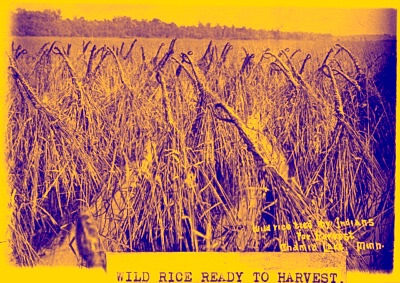
This Article begins by discussing Manoomin and Sauk-Suiattle, orienting the reader to how these complicated jurisdictional issues have been addressed by Tribal courts. Next, this Article sets forth the current framework under Montana and Merrion for determining the extent of Tribal civil jurisdiction over non-Indians. Next, this Article examines the caselaw establishing Tribal Nations’ inherent sovereign authority to exercise civil jurisdiction over non-Indian activities and conduct occurring on-reservation that threaten or affect Tribal water resources and rights. Finally, this Article examines the caselaw that lays the groundwork for extending Tribal Nations’ civil jurisdiction over non-Indian activities and conduct occurring off-reservation that threaten or affect on-reservation Tribal water resources and rights.
Micbelle Bryan has published “A Most Essential Power: The Case for Restoring Comprehensive Land Use Authority in Indian Country” in the Public Land & Resources L.Rev.
Here is the abstract:
Part I of this article provides a brief overview of allotment and its lingering jurisdictional quagmire on impacted reservations. Stepping outside of Indian Country, Part II then outlines the U.S. Supreme Court’s longstanding recognition of sweeping, area-wide government land use authority—authority it considers among the “most essential” and “least limitable.” The Court has never applied this established law when determining tribal sovereignty over land use. That application is long overdue.
Part III details how we arrived at this state of affairs—how tribes, despite starting with sovereign control over land use throughout their territories, experienced losses in that authority over time due to judicial error. This Part contrasts the Court’s double-speak regarding the “essentiality” of land use authority, depending on whether the case arises within or outside of an Indian reservation. Not surprisingly, this flawed jurisprudence has negatively impacted tribes’ welfare and undermined the current federal policy of tribal self-determination.
Part IV thus argues that the Court should restore tribes’ comprehensive land use authority, outlining three potential pathways of reasoning. While legal work-arounds also exist and should be explored— such as Congressional authorization or inter-governmental cooperative agreements—this article focuses on a judicial course correction in order to establish a more enduring baseline of sovereignty in federal Indian law. Finally, the article concludes that federal jurisprudence and policies should align in favor of comprehensive authority over land use in Indian Country, regardless of the ownership status of an individual parcel.

Here is the brief in Landor v. Louisiana Dept. of Corrections and Public Safety:

 Turtle Talk
You must be logged in to post a comment.