Wisconsin v. Ho-Chunk Nation Cert Petition re: e-Poker

Here:

Wisconsin v. Ho-Chunk Nation Cert Petition

Question presented:

The Indian Gaming Regulatory Act (IGRA) defines authorized Indian gaming as Class I, Class II, or Class III. 25 U.S.C. § 2703. Unlike Class III gaming, Class II is not subject to tribal-state gaming compacts. 25 U.S.C. § 2710. Class II gaming includes card games that “are not explicitly prohibited by the laws of the State.” 25 U.S.C. § 2703(7)(A)(ii)(II). Wisconsin’s Constitution prohibits the state legislature from authorizing any form of gambling, including poker. See Wis. Const., art. IV, § 24(1).
Prior to Congress enacting IGRA, the Court held that a state cannot enforce its gambling laws on Indian land when its policy toward gambling is civil and regulatory, rather than criminal and prohibitory. California v. Cabazon Band of Mission Indians,480 U.S. 202, 210 (1987). Here, the Seventh Circuit applied Cabazon to interpret IGRA. It concluded that the electronic poker offered by the Ho-Chunk Nation is Class II, not Class III, when Wisconsin’s policy toward gambling and poker is regulatory, rather than prohibitory. Under this approach, the Nation can offer e-poker in Madison, Wisconsin despite the parties’ compact, which does not authorize Class III gaming in Madison.
The question presented is:
Whether Cabazon’s “regulatory/prohibitory” test that pre-dates IGRA applies to determine whether a game is Class II or Class III gaming under IGRA?

Lower court materials here.

Alex Skibine on Federal Control over Tribal Property and The New Equal Protection

Alex Tallchief Skibine has published “Using the New Equal Protection to Challenge Federal Control over Tribal Lands” in the Public Land and Resources Law Review.

Here is an excerpt of the conclusion of the article:

Indian tribes and their members are probably the only people who are subject to federal restrictions on the management of their own lands because of their status. While the law prevented Indians from successfully challenging these restrictions on equal protection grounds, recent development in equal protection jurisprudence has opened new possibilities. This article [argues] that while congressional restrictions imposed on Indians pursuant to the Indian Commerce Clause do not create racial classifications, these laws can be successfully challenged on equal protection grounds alleging that they were either enacted pursuant to unconstitutional animus or are not rationally tied to the true congressional purpose behind the legislation.

Chemehuevi Tribe Sues San Bernardino Count Sheriff for Interfering with Tribal Police Operations

Here is the complaint in Chemehuevi Tribe v. McMahon (C.D. Cal.):

1 Complaint

VAWA Tribal Trial Advocacy Skills Training Hosted by The Tulalip Tribes

VAWA Tribal Trial Advocacy Skills Training Hosted by The Tulalip Tribes

September 2-4, 2015

Tribal court judges, criminal defenders and prosecutors are invited to attend a free trial advocacy skills training at the Tulalip Tribes. The training will cover basic trial advocacy skills from the point of view of the parties and the bench, as well as information about prosecuting non-Indian defendants under the Violence Against Women Act Reauthorization. The training will consist of joint skill lectures and separate skills practice for each cohort. The training will end with a mock trial in the Tulalip Tribal Courthouse on Friday, September 4th.


Announcement/Agenda and Registration form here:

REGISTRATION FORM_Tulalip VAWA Training 9-2 to 9-4

SAVE THE DATE – Announcement_Tulalip VAWA Training 9-2 to 9-4-2015 w AGENDA

Goodeagle Plaintiffs May Sue for Pre-1994 IIM Trust Account Breach

Here are the materials in Goodeagle v. United States (Fed. Cl.):

90-1 US Motion for Partial Summary J

94 Goodeagle Cross Motion

96 US Reply

97 Goodeagle Reply

103 DCT Order

United States v. King Mountain Tobacco — Fair and Equitable Tobacco Reform Act of 2004 Suit

Here are the materials in United States v. King Mountain Tobacco Co. (E.D. Wash.):

14 US Motion to Dismiss Counterclaim

15 US Motion for Summary J

23 King Mtn Opposition to 15

24 King Mtn Opposition to 14

26 King Mtn Response to 15

30 US Reply re 15

31 US Reply re 14

41 King Mtn Motion for Summary J

44 US Opposition to 41

45 King Mtn Reply re 41

46 DCT Order

ABA Criminal Justice Section’s Indian Law and Order Commission Panel

IMG_2944
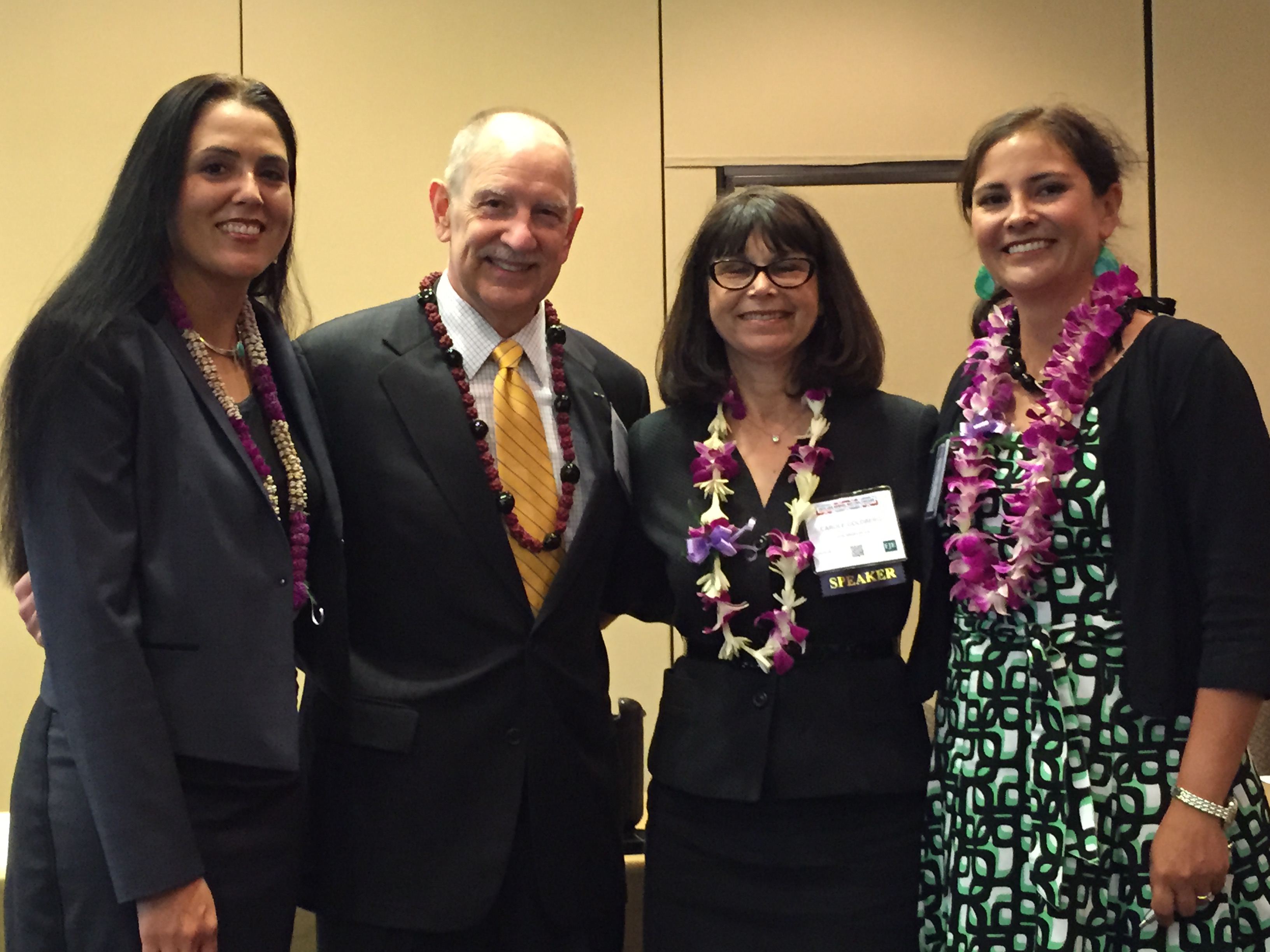
Carole Goldberg and Tom Gede
IMG_0450
Patty Ferguson, Tom Gede, Carole Goldberg, and Affie Ellis

NYTs Profile of Shooting at Wind River

Here is “In Wyoming, Shooting Highlights Divide Between a City and a Reservation.”

Tenth Circuit Affirms Conviction of Former Paiute Tribal Employee for Mail Fraud

Here is the opinion in United States v. Zander.

An excerpt:

Defendant Jeffrey Zander was convicted of two counts of mail fraud, two counts of wire fraud, one count of money laundering, and three counts of willful failure to file federal tax returns. He was sentenced to sixty-eight months of imprisonment and ordered to pay $202,543.92 in restitution to the Paiute Indian Tribe of Utah, the main victim of his fraud. On appeal, he challenges his convictions on the mail fraud, wire fraud, and money laundering counts. He also challenges the length of his sentence and the amount of restitution awarded to the Tribe.

Ninth Circuit Decides Tulalip Tribes v. Suquamish Tribe

Here is the opinion. From the syllabus:

The panel affirmed the district court’s summary judgment in a treaty fishing rights case in which the Tulalip Tribes sought a determination of the scope of the Suquamish Indian Tribe’s usual and accustomed fishing grounds and stations.
The Tulalip Tribes invoked the district court’s continuing jurisdiction as provided by a permanent injunction entered in 1974. The panel affirmed the district court’s conclusion that certain contested areas were not excluded from the Suquamish Tribe’s usual and accustomed fishing grounds and stations, as determined by the district court in 1975.

Briefs here.