Quapaw Partially Prevails in Dispute over Undistributed Indian Claims Commission Judgment Funds

Here are the materials in Quapaw Tribe of Oklahoma v. United States (Fed. Cl.):

59 US Motion for Partial Summary J

66 Quapaw Cross-Motion

70 US Reply

72 Quapaw Reply

87 DCT Order

An excerpt:

In deciding the cross-motions for partial summary judgment on this issue, the Court considered at least two factors. Foremost, the Court notes that fact discovery was still ongoing in this case when the motions were filed. As of March 31, 2015, the Government anticipated producing over 452,000 document images to Plaintiff before the close of fact discovery on April 16,2015. Gov.’s Status Report, Dkt. No. 81, at 5. The Court declines to draw evidentiary conclusions when material facts are in dispute and ongoing discovery may yet shed more light on the issues. Second, the Court must consider the parties’ respective burdens. To prevail at the summary judgment stage, Plaintiff must sufficiently allege a breach of trust by the Government through affirmative evidence of nonpayment so that the finder of fact could not reasonably rule in favor of the Government. See Anderson v. Liberty Lobby, Inc., 477 U.S. 242, 249–50, 106 S.Ct. 2505, 91 L.Ed.2d 202 (1986). The Court finds that the Government’s evidence of accounting records and meeting minutes sufficiently rebuts Plaintiff’s argument so as to create a continuing and genuine dispute. On the other hand, the Government has not convinced the Court that records of emptied Treasury accounts and presumptions of regularity are sufficient to decide this issue. Plaintiff’s evidence of meeting minutes and the conclusions of the Quapaw Analysis satisfy the Court, again, that the issue is in genuine dispute. Therefore, the Court denies both motions for partial summary judgment on the question of whether the Tribe is entitled to recover some or all of the trust funds.

We posted earlier on this matter here.
White Earth Nation Moves for Summary Judgment in Challenge to Two Oil Pipelines

Here is the motion in White Earth Nation v. Kerry (D. Minn.):

71 Motion for Summary J

We posted the complaint here.

Update in Jamul Action Committee v. Chaudhuri

Here are the new materials in Jamul Action Committee v. Chaudhuri (E.D. Cal.):

60-1 Jamul Action Committee Motion for PI

62 Tribal Opposition to Motion for PI

63 NIGC Opposition to Motion for PI

67 Jamul Action Committee Reply

75-1 Rosales & Toggery Motion to File Amicus

75-2 Rosales & Toggery Amicus Brief

83 Tribal Opposition

84 NIGC Opposition

92 DCT Order Denying Amicus Motion

Previous postings here and here.

Getches Wilkinson Williams Fletcher + Carpenter Casebook Panel

Rob Williams


Kristen Carpenter and Charles Wilkinson


Jim Anaya, our moderator


Special guests in the audience included Ray Austin and Angela Riley


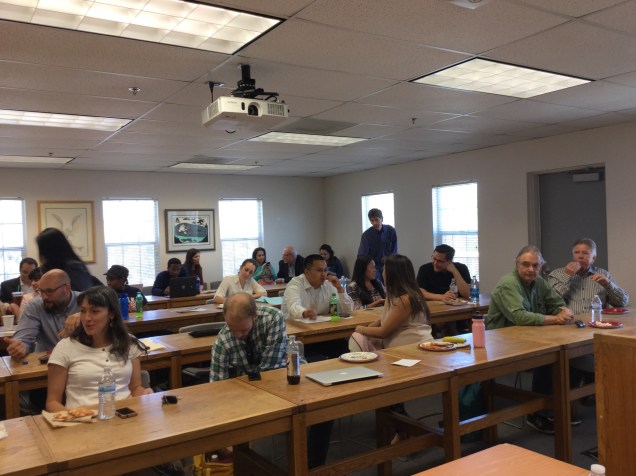
University of Arizona Event Last Night

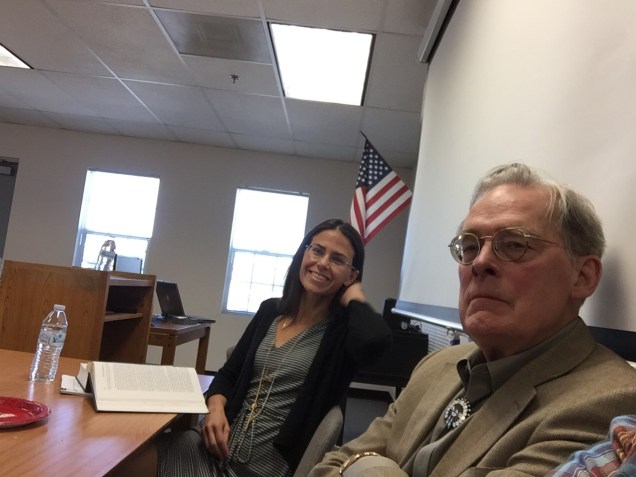
Bob Hersey, Charles Wilkinson, Tom Enote, and Jim Anaya


The Stranger on the Swinomish Tribe’s Fight against BNSF’s Railroad

Here is “How One Tribe Could Slow the Rate of “Bomb Trains” Through Seattle.”An excerpt:

The Swinomish Indian Tribal Community couldn’t have known that more than a century later, crude-oil trains would be rattling along that very route—and across reservation land—carrying with them a well-established risk of derailing and exploding. In fact, the only way today’s Swinomish people knew that trains full of crude oil were passing through their land was from media reports in 2012. They’re not alone. As it stands, railroads still don’t have to disclose crude-by-rail routes.

Bureau of Justice Statistics announces CTLEA solicitation

The Bureau of Justice Statistics (BJS) has announced a solicitation:

Census of Tribal Law Enforcement Agencies (CTLEA) seeks applications to design and administer the collection, analysis, and dissemination of information on tribal law enforcement agencies, Village Public Safety Offices (VPSO) in Alaska, and law enforcement agencies operated by the Bureau of Indian Affairs (BIA). This will be the first BJS data collection targeted solely at information on tribal law enforcement agencies. The census will cover areas such as criminal jurisdiction, staffing, officer training, budgets, sources of funding, equipment, information systems, and services and support provided. CTLEA will also cover agreements, interactions, or participations of tribal agencies with federal, state, regional, and local agencies or other criminal justice organizations.

Visit BJS online for deadlines and eligibility requirements.

Pascua Yaqui VAWA Trial Advocacy Training

Here:

PYT VAWA Trial Advocacy Training Packet_compressed size

Consumer Financial Protection Board and Navajo Nation Sue Tax Loans Company

Here are the materials in Consumer Financial Protection Board v. S/W Tax Loans Inc. (D. N.M.):

1 – Complaint

2015-04-14 OAG PressRlse NN and Consumer Financial Protection Bureau Take Action to Stop an Illegal Tax Refund Scheme

An excerpt from the press release:

Today, the Office of the Attorney General and the Department of Justice announced, together with the Consumer Financial Protection Bureau (CFPB), it is suing companies and individuals who operated an illegal tax-refund scheme. The scheme was based on tax-preparation franchises steering low-income consumers, including many citizens of the Navajo Nation, toward high-cost tax-refund-anticipation loans. A proposed order, if approved by the court, would result in roughly $438,000 in total consumer redress and require the defendants to pay $438,000 in civil penalties for their unfair, deceptive, and abusive practices.

Cross-Motions in Penobscot Nation Suit over the Penobscot River

Here are the pleadings in Penobscot Nation v. Schneider (D. Me.):

116 State Intervenors Motion

117 Maine Motion

120 US Motion

121 Penobscot Nation Motion

137 Intervenors Response

138 Intervenors Motion to Exclude

139 Penobscot Response to NPDES Permittees

142 State Response

143 US Response

144 Penobscot Response

We posted the first amended complaint here.