FBA Webinar TODAY: Native Service Members, Veterans, and the ICWA

Native Service Members, Veterans, and the ICWA
TODAY
1:00-2:00 p.m. EST

The recent Supreme Court decision, Adoptive Couple v. Baby Girl, focused on the application of the Indian Child Welfare Act (ICWA) to adoptions. A key fact not mentioned by the Court in its decision was the role of the biological father’s military service in the case. From the adoption attorneys who took advantage of the timing of his deployment to Iraq, to the placement of the child with the adoptive couple during his deployment, the biological father had an uphill battle to gain custody of his own child when he returned from deployment. In addition, the particular limitations of an active duty service member regarding travel and pay were disregarded entirely by both the Court and the media covering the case.

Presenter:
Kathryn E. Fort, Staff Attorney, Indigenous Law and Policy Center, Michigan State University College of Law (view bio here)

CLE Credit: 1 credit hour (pending)
Tribal Marijuana Conference — February 27, 2015 @ Tulalip Resort Casino

Here are the materials:

Tribal Marijuana Conference Agenda 1.25.15

TMC FINAL Release.1.26.15

Supreme Court Cert Opposition Briefs in Stockbridge-Munsee Land Claim

Here (thanks to the Supreme Court Project page):

State of New York Brief in Opposition

Oneida Indian Nation Brief in Opposition

The petition is here.

Yakama Nation Education Dept. Employees Indicted by Feds for Theft from a Tribal Organization

Here is the indictment in United States v. Gardee (E.D. Wash.):

1 Indictment

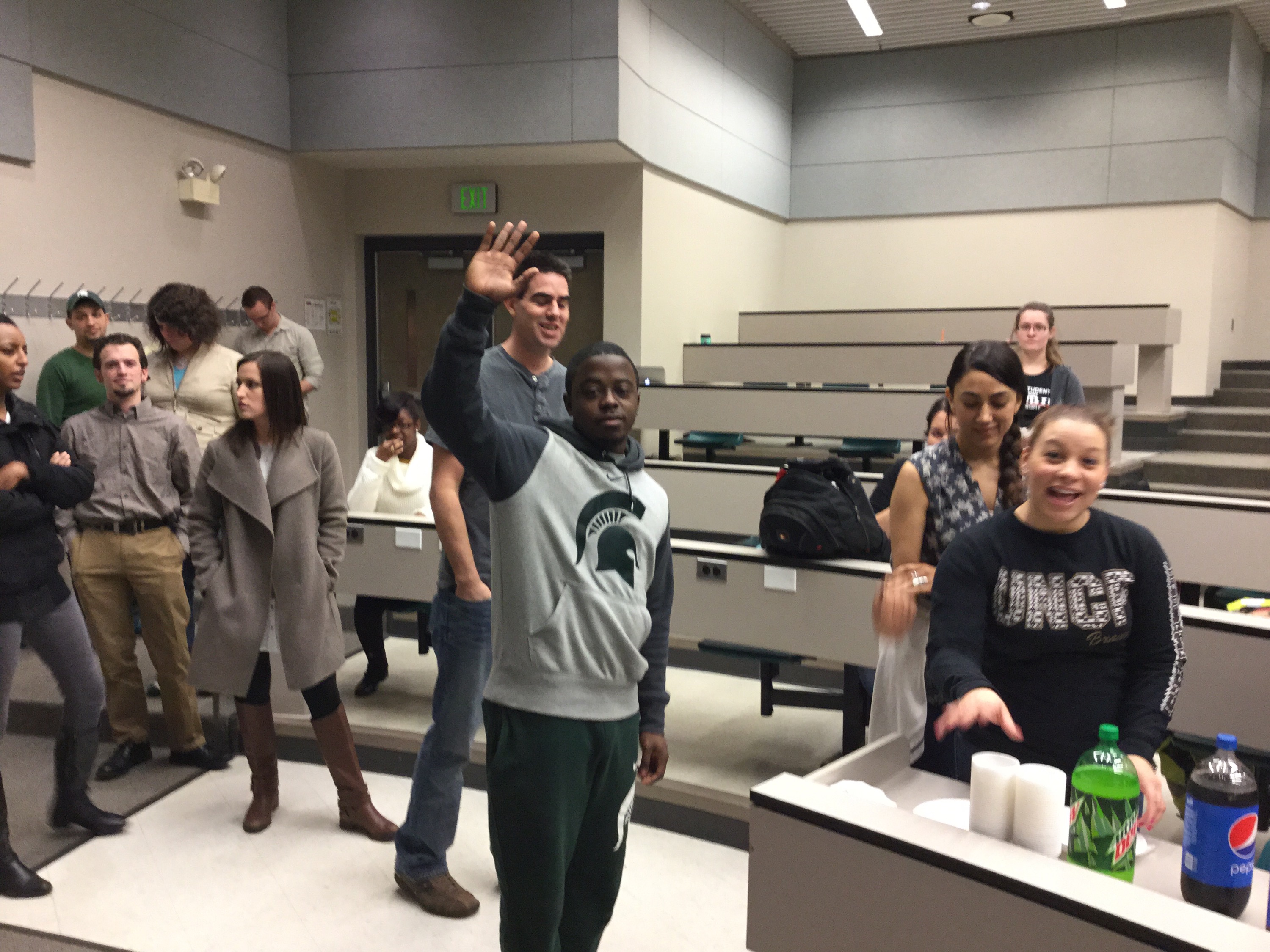
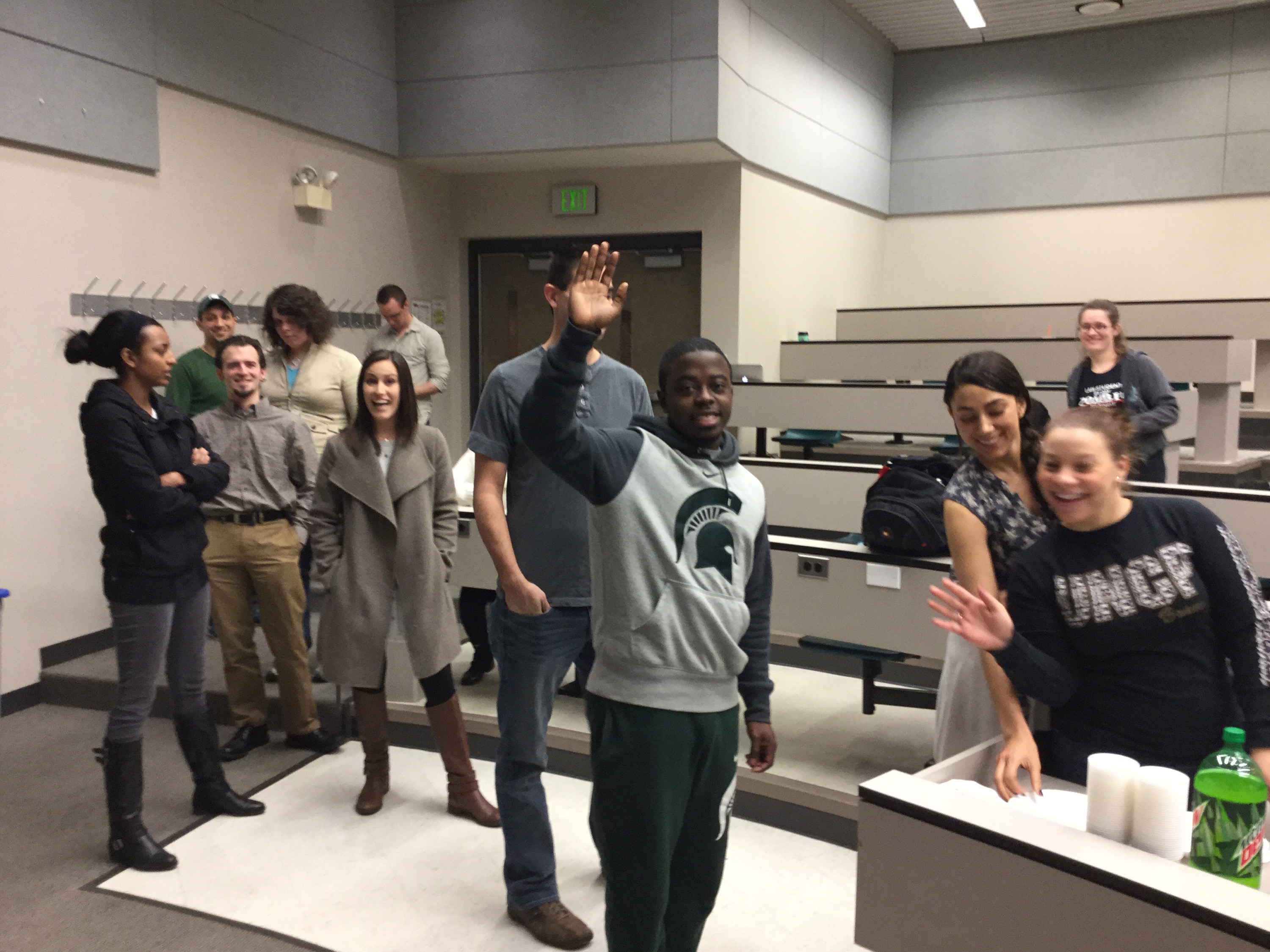
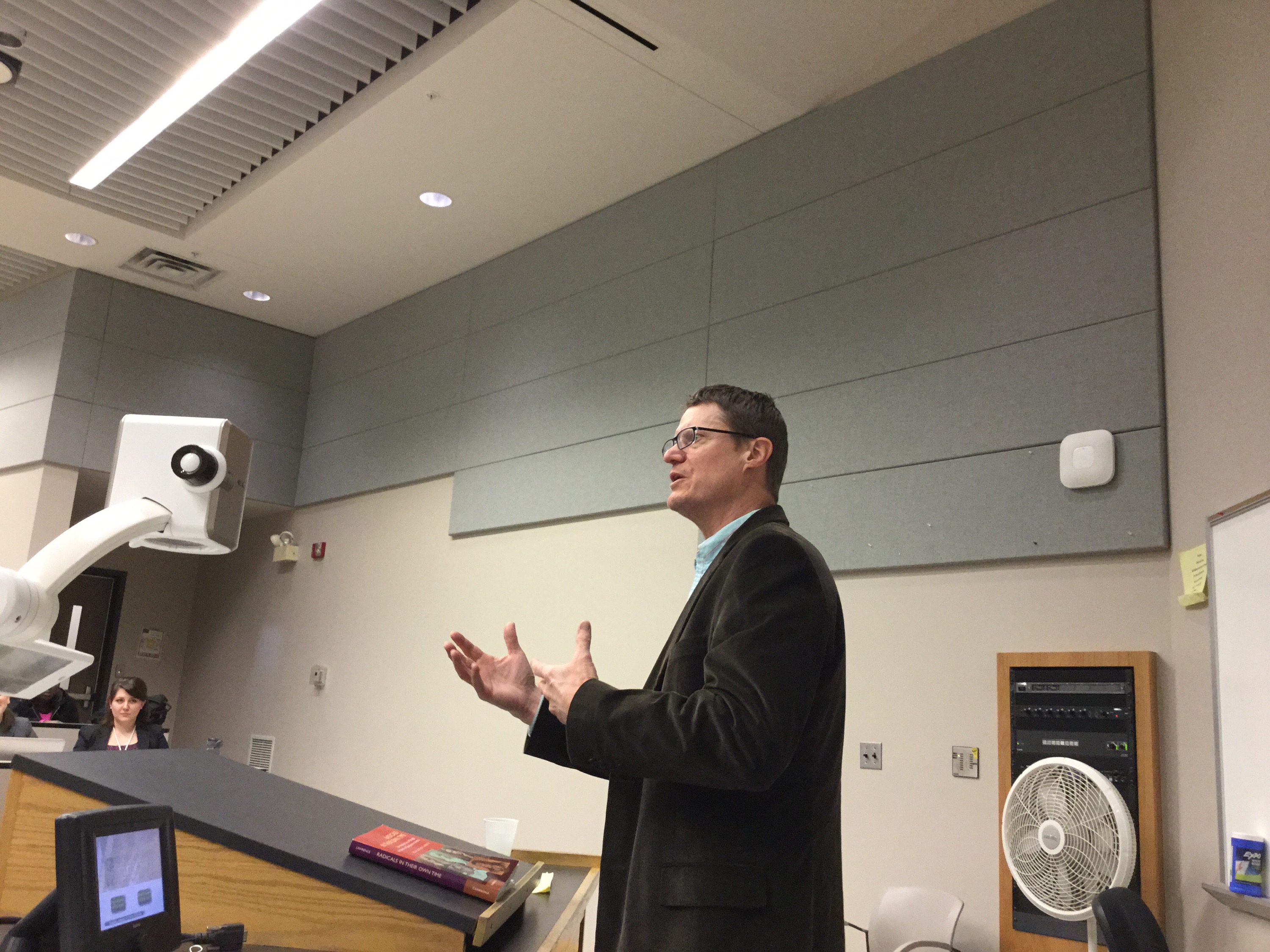
MSU Diversity Coalition Talk w/ Fletcher and Professor Mike Lawrence

Professor Lawrence

IMG_1333

Students

IMG_1331

IMG_1332

Hungry students

IMG_1329

IMG_1330

Eighth Circuit Affirms Dismissal of Shakopee Tribal Member’s Prisoner Rights Claim

Here is the opinion in Brooks v. Roy.

An excerpt:

According to Brooks, he was placed into a 12-step program at New Dimensions because there is no alternative program at MCF-Faribault for those of a Native American faith. He says that the program “conflicts with his Native American religious faith” because it forces him to “profess beliefs that are inconsistent with his faith, which he does not wish to do.” Brooks does not, however, specify his religion or allege which principles of his religion are compromised or unaccommodated at MCF-Faribault. Instead, he requests to participate in what he asserts is a culturally appropriate treatment program available at the Mash-ka-wisen treatment center in Sawyer, Minnesota, which is 191 miles north of MCF-Faribault. Brooks says the defendants denied his request, and he appealed their decision until, he alleges, he had exhausted his administrative remedies.

Briefs:

Appellant Brief

Appellee Brief

Reply Brief


MSU Law Talk Today — Seven Generations: Reflecting on Our Past to Achieve Justice for Our Tomorrow

Seven Generations: Reflecting on Our Past to Achieve Justice for Our Tomorrow

MSU Law’s Diversity Consortium and Native American Law Students Association (NALSA)
Tuesday, January 27th
12:00 PM – 1:15 PM
MSU College of Law, Room 471

Please join MSU Law’s Diversity Consortium and NALSA in hosting Professor Fletcher and Professor Lawrence for our first Around the Hour Series Program of the year. We will be discussing a Native American philosophy known as Seven Generations, a framework under which we will contemplate how past efforts to achieve justice are linked to both emerging movements of today and those in the future. What is your role in the process?
Mary Ferguson, fergusma@law.msu.edu

Idaho SCT Decides ICWA Active Efforts Case

Here is the opinion for In re Jane Doe.

An excerpt:

Jane Doe appeals from an order terminating her parental rights to her son, TSD. Because TSD is an “Indian child” as that term is defined by the Indian Child Welfare Act, the magistrate court was required to make findings in addition to those required by Idaho law. Among other findings, the Department of Health and Welfare (“DHW”) was required to satisfy the court that it made “active efforts” to “prevent the breakup of the Indian family.” On appeal, Doe argues that the magistrate court erred in finding that DHW made such efforts and erred in failing to make that finding by clear and convincing evidence.

And:

25 U.S.C. section 1912(d) requires that a party seeking termination of parental rights with respect to an Indian child “shall satisfy” the court that active efforts to prevent the breakup of the family have been made, not that the party show by clear and convincing evidence that such efforts have been made. The magistrate court stated that it was satisfied that DHW made active efforts to prevent the breakup of the family. In doing so, it made the finding required by 25 U.S.C. section 1912(d).

Atlantic: “Genetic Testing and Tribal Identity”

Here.

An excerpt:

But figuring out where your ancestors came from becomes complicated when it entails a legacy of exclusion of displacement. Tribes each have important cultural histories, that include their origin stories. Many of their histories say that the tribe came from the land, that they arose there and have always lived there. And many of them have more modern histories that include white settlers challenging their right to live where they did. So to many tribal people, having a scientist come in from the outside looking to tell them where they’re “really” from is not only uninteresting, but threatening. “We know who we are as a people, as an indigenous people, why would we be so interested in where scientists think our genetic ancestors came from?” asks Kim Tallbear, a researcher at the University of Texas at Austin, the author of Native American DNA: Tribal Belonging and the False Promise of Genetic Science, and a member of the Sisseton-Wahpeton Oyate tribe.

Tallbear says that from her perspective, researchers offering to tell tribes where they’re from doesn’t look any different than the Christians who came in to tell them what their religion should be. “Those look like very similarly invasive projects to us,” she said. Tribes haven’t forgotten the history of scientists whogathered native skulls to prove that native people were less intelligent, and thus less entitled to the land they lived on than the white settlers. To them, these genetic questions of origin look pretty similar.

Ninth Circuit Rules (Preliminarily) in Favor of Black Mesa Water Coalition in Attorney Fees Dispute

Here is the opinion in Black Mesa Water Coalition v. Jewell. From the court’s summary:

The panel reversed in part, and vacated in part, the district court’s judgment in an action for costs and expenses brought by a plaintiff group of environmental and community organizations against the federal Office of Surface Mining Reclamation and Enforcement after plaintiff participated in a successful challenge to OSM’s grant of a coal mining permit revision.

Plaintiff petitioned the agency under the Surface Mining Control and Reclamation Act’s administrative fee-award provision to recover costs and expenses from OSM. The administrative law judge dismissed the fee petition based on the conclusion that plaintiff was not “eligible,” and was not “entitled” to costs and expenses, under 43 C.F.R. § 4.1294(b).

The panel held that its review of the agency’s “eligibility” determination was de novo, and its review of the “entitlement” determination was for substantial evidence. The panel concluded that plaintiff was “eligible” for fees because it showed some degree of success on the merits, and the agency’s contrary conclusion was error as a matter of law. The panel vacated the portion of the district court’s decision as related to the question of entitlement. The panel declined to reach the issue whether plaintiff was “entitled” to fees, and remanded for the agency to consider the issue. Finally, the panel rejected plaintiff’s argument that the Secretary of the Interior had waived a challenge to the reasonableness of any award amount that the agency might grant on remand for costs and expenses reasonably incurred for plaintiff’s participation in the proceedings at the agency level.

And the briefs:

Black Mesa Opening Brief

Interior Appellee Brief

Black Mesa Reply

Black Mesa Supplemental Brief

Interior Supplemental Brief

Black Mesa Supplemental Reply Brief

Oral argument audio here.