Author: Matthew Campbell
Volunteer with the Native American Rights Fund’s Election Protection Project

You can learn more about protecting the Native vote at https://vote.narf.org/
World Intellectual Property Organization (“WIPO”) Adopts Treaty on Genetic Resources and Associated Traditional Knowledge
In a historic step toward protecting Indigenous Peoples’ genetic resources and associated traditional knowledge, on May 24, 2024, Member States of WIPO, a specialized agency of the United Nations, adopted a landmark new treaty. Culminating over two decades of negotiations, the treaty requires patent applicants to disclose when they seek to patent inventions that are based on genetic resources and/or traditional knowledge associated with genetic resources. The disclosure requirement is aimed at preventing the erroneous granting of patents based on “prior art” (e.g., the use of plant medicine known to Indigenous Peoples for centuries) and can also help to curb instances of biopiracy by pharmaceutical companies and others who seek to profit from use of traditional knowledge to develop new medications or other products. The treaty, WIPO’s first involving Indigenous Peoples, references the UN Declaration on the Rights of Indigenous Peoples, as well as States’ commitment to achieving the ends of the Declaration. It also includes provisions allowing for Indigenous Peoples’ participation in the treaty’s implementation.
The treaty will enter into force following ratification by 15 countries. Negotiations will continue at WIPO in December 2024, on other potential treaties for the protections for Indigenous Peoples’ traditional knowledge and traditional cultural expressions. The Native American Rights Fund participates in the negotiations on behalf of the National Congress of American Indians.
You can learn more here.
North Dakota Flips Argument at Supreme Court in Seeking to Overturn Redistricting Win for MHA Nation
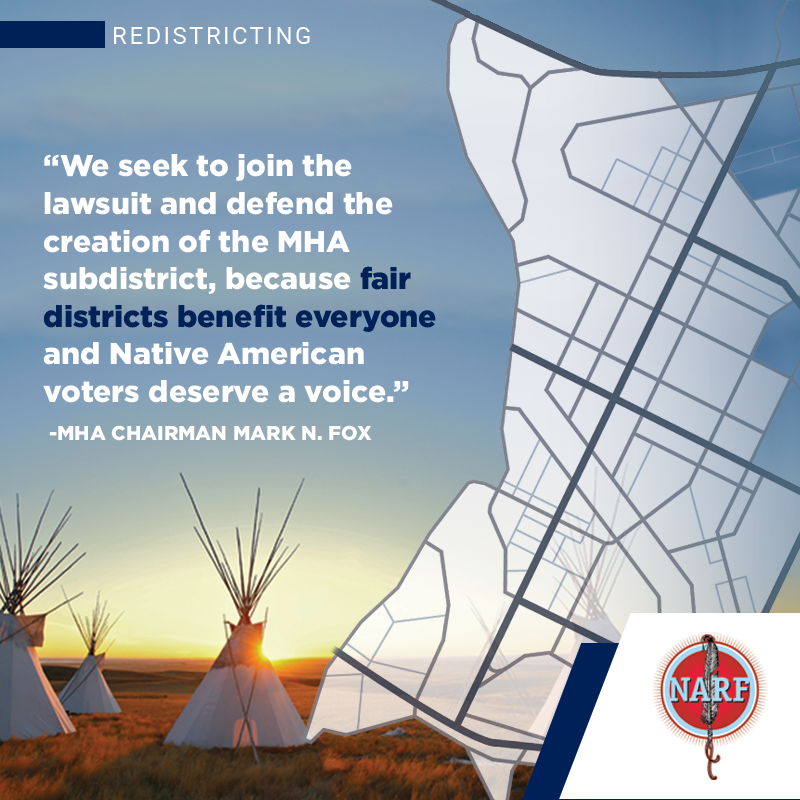
To defend a challenge to a North Dakota State House subdistrict that the North Dakota Legislature approved in 2021, the the Mandan, Hidatsa, and Arikara (“MHA”) Nation intervened as a defendant to support North Dakota. After MHA Nation and the state successfully won summary judgment in the district court, North Dakota is now asking the Supreme Court to vacate the state’s (and the MHA Nation’s) win in the lower court.
Here is the jurisdictional statement from the Plaintiffs.
Here is MHA Nation’s Motion to Dismiss or Affirm.
And here is North Dakota’s Response.
Media coverage:
More here.

Tribal Nations Move to Intervene to Protect Baaj Nwaavjo I’tah Kukveni
Request for Applications; Tribal Issues Advisory Group
In view of two upcoming vacancies in the at-large membership of the Tribal Issues Advisory Group, the United States Sentencing Commission hereby invites any individual who is eligible to be appointed to the at-large membership of the Tribal Issues Advisory Group to apply. An applicant for membership in the Tribal Issues Advisory Group should apply by sending a letter of interest and resume to the Commission as indicated in the ADDRESSES section below. Application materials should be received by the Commission not later than December 26, 2023.
Here is the official notice:
Turtle Mountain and Spirit Lake Win Redistricting Lawsuit Against North Dakota
On November 17, 2023, the North Dakota federal district court ruled in favor of the Turtle Mountain Band of Chippewa Indians and the Spirit Lake Nation against the North Dakota Secretary of State. The Plaintiffs proved at trial that the North Dakota legislative redistricting plan violates Section 2 of the Voting Rights Act (VRA) by diluting the voting strength of Native American voters living on and near both reservations. The state has been ordered to submit a VRA compliant redistricting plan to the court by December 22, 2023.
The Order is here:
Previous post on this matter here and PR here.

MHA Nation Prevails in Redistricting Lawsuit
On November 2, 2023, the North Dakota federal district court ruled in favor of the MHA Nation and North Dakota on motions for summary judgment. The Plaintiffs were alleging that the newly created MHA state legislative district was an illegal racial gerrymander. North Dakota’s 2021 redistricting plan resulted in the election of an MHA tribal member to the state legislature in 2022. The order means that the district will remain unchanged and MHA tribal member Representative Lisa DeVille will continue to serve as a state legislator.
Order here.
MHA Motion for Summary Judgment here:
State Motion here:
Plaintiff Motion here:
You can see a press release here and previous post on this matter here.
Utah District Court Dismisses Utah and Individual Challenges to Bears Ears National Monument
On Friday, August 11, 2023, United States District Judge David Nuffer of the United States District Court of the District of Utah granted motions to dismiss the cases challenging the Bears Ears National Monument designation.
Here is the Order:
Previous post with briefs here and here.
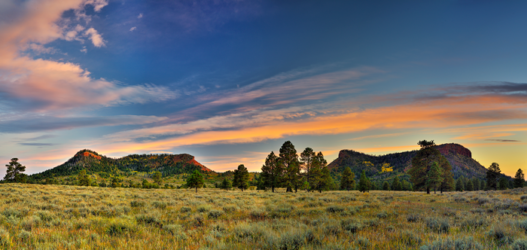
Bears Ears at Sunset. Photo credit: Tim Peterson.
10th Cir. Decision in Crow Tribe of Indians v. Repsis
Despite the Supreme Court’s decision in Wyoming v. Herrera, which affirmed that the Crow Tribe’s treaty-reserved right to hunt in the Big Horn National Forest remained intact following Wyoming’s statehood, the State continued to prosecute Mr. Herrera for taking an elk in the Forest. The State argued that notwithstanding the Supreme Court’s decision in Herrera, Mr. Herrera was precluded from asserting his treaty defense because he (being in privity with the Crow Tribe as a Tribal member) was bound by the Tenth Circuit’s decision in Crow Tribe of Indians v. Repsis, which held that the Tribe’s treaty right was extinguished upon Wyoming’s statehood. Accordingly, the Crow Tribe sought relief from the Repsis judgments pursuant to Rule 60(b), so that the State could not continue to use Repsis. The Wyoming Federal District Court initially denied the Tribe’s Rule 60(b) motion, but the Tenth Circuit has now vacated that decision, remanding to the district court to consider the merits of the Tribe’s Rule 60(b) motion.
Here is the decision:


You must be logged in to post a comment.