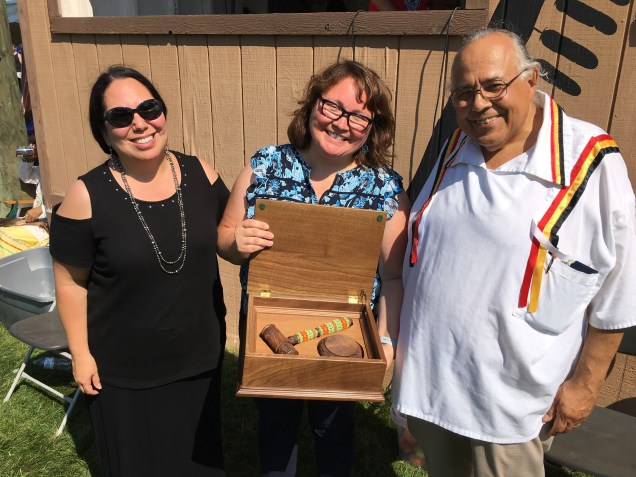

LTBB Honors Former Appellate Justice Wenona Singel
Here are the materials in Commonwealth of Pennsylvania v. ThinkFinance (E.D. La.):
Here.
Here:
The National Indian Law Library added new content to the Indian Law Bulletins on 8/8/18.
Law Review & Bar Journal Bulletin
http://www.narf.org/nill/bulletins/lawreviews/2018.html
Federal Courts Bulletin
http://www.narf.org/nill/bulletins/federal/2018.html
Carter v. Tahsuda (Indian Child Welfare Act – Constitutionality)
State of California v. Iipay Nation of Santa Ysabel (Gaming; Unlawful Internet Gambling Enforcement Act)
Northern Natural Gas Company v. 80 Acres of Land in Thurston County (Utilities; Rights-of-Way – Condemnation)
Wilhite v. Awe Kualawaache Care Center (Jurisdiction; Racketeer Influenced and Corrupt Organizations Act)
State Courts Bulletin
http://www.narf.org/nill/bulletins/state/2018.html
State v. George (Jurisdiction)
Cayuga Nation v. Campbell (Official Tribal Government)
News Bulletin
http://www.narf.org/nill/bulletins/news/currentnews.html
In the Land & Water section, we feature an article about a study on the changing scope of Native American groundwater rights.
U.S. Legislation Bulletin
http://www.narf.org/nill/bulletins/legislation/115_uslegislation.html
The following bills were added:
HR 3744 is here: CBO publication here and Bill here. It could replace the current procedures for federal recognition (for reference, here), but does not allow previously denied “Indian groups” from re-petitioning for federal recognition under the new act (if this bill passes), nor does it have an avenue to challenge a denial/negative finding.
Jeffery T. Ulmer & Mindy S. Bradley have published Punishment in Indian
Country: Ironies of Federal Punishment of Native Americans in Justice Quarterly:
Ulmer Bradley (2018) – Punishment in Indian Country
Here is the abstract:
Native Americans are US citizens, but they are also tribal nationals subject to complex and unique criminal jurisdiction arrangements over Indian lands. Tribal nations typically have tribal court jurisdiction over less serious crimes, but for serious crimes the federal justice system often supersedes tribal authority, exposing Native Americans to more severe punishments. In addition, recent federal programs have attempted to foster greater tribal/federal criminal justice coupling. Yet, examinations of criminal punishment of Native Americans are few, and most are outdated and/or of very limited generalizability. We examine the punishment of Native American defendants in federal court, focusing on 28 federal districts with substantial Indian presence. Using recent US Sentencing Commission data, as well as contextual data from the Bureau of Indian Affairs and tribal courts, we focus on differences in the federal sentencing of Native American defendants, and how these differences are conditioned by indicators of tribal-federal criminal justice coupling.
Here.
News coverage here, here, and here.
Here are most of the materials in Grayeyes v. Cox (D. Utah):
13 motion for preliminary injunction
57 San Juan county opposition to 13
92 dct order denying motion to dismiss
The order to restore Mr. Grayeyes to the ballot has not yet been filed on PACER.
 Turtle Talk
You must be logged in to post a comment.