Here.
PDF.
Paul Spruhan has updated his timeline. It is posted in SSRN here.

Here is the FBA 2015 brochure (PDF). And the blurb:
40th Annual Indian Law Conference | April 9–10, 2015 | Talking Stick Resort | Scottsdale, Ariz.
If you are working with—or on behalf of—Native Americans, this is the largest annual law event designed for you. At this year’s conference, Forty Years Strong: The Indian Self-Determination Era Strengthening Tribal Sovereignty, attendees will hear scholars, federal appointees, and other community leaders discuss some of the most pressing issues related to Indian law and the future independence and health of tribal communities. Special events commemorating this landmark event include colorguard presentation and honor song during the Thursday luncheon and a celebratory round dance at the conclusion of the conference on Friday. Don’t miss this celebration 40 years in the making! Visit www.fedbar.org/IndianLaw15 today for more information about attending this premier Indian Law event.
Agenda:
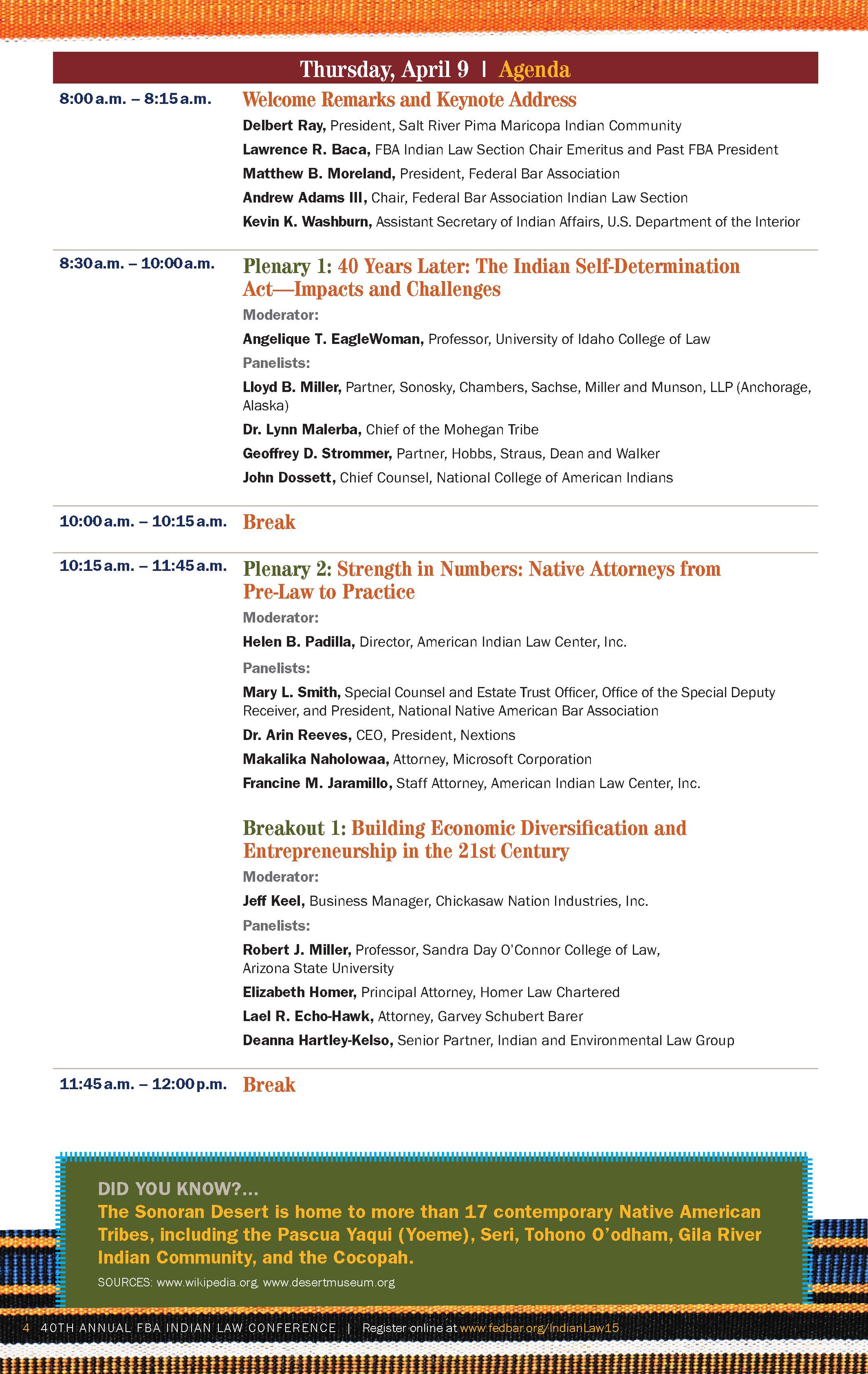
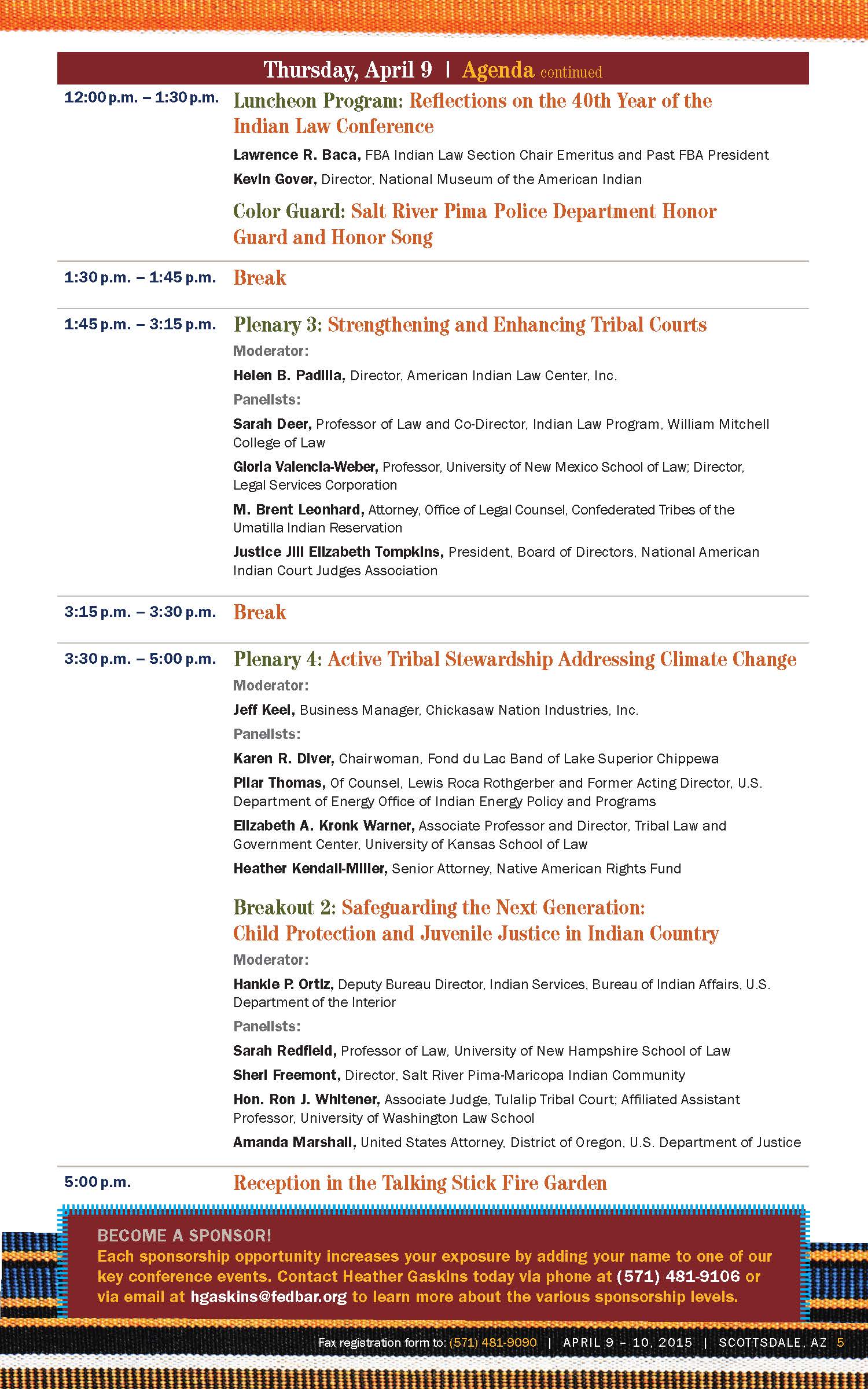
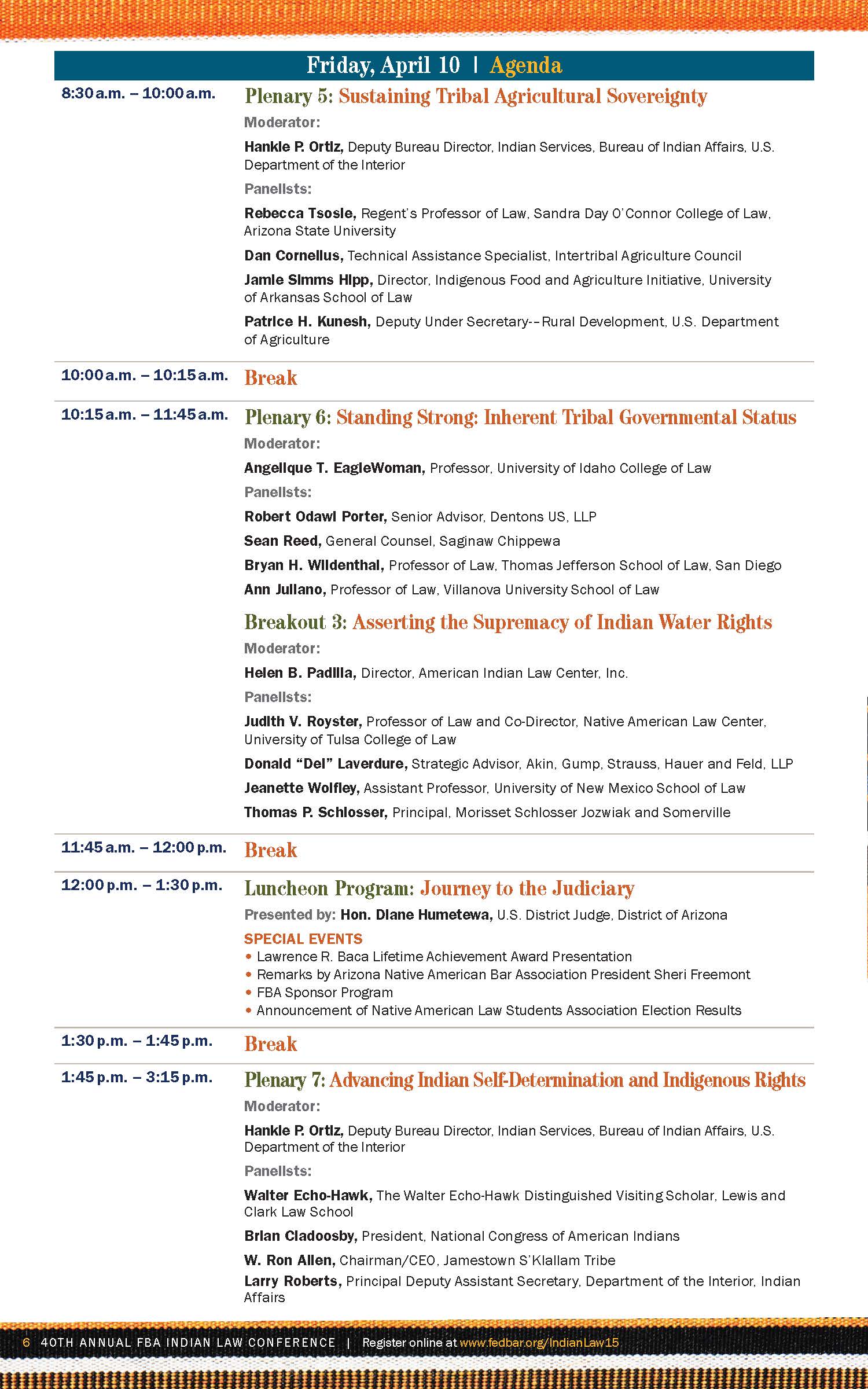
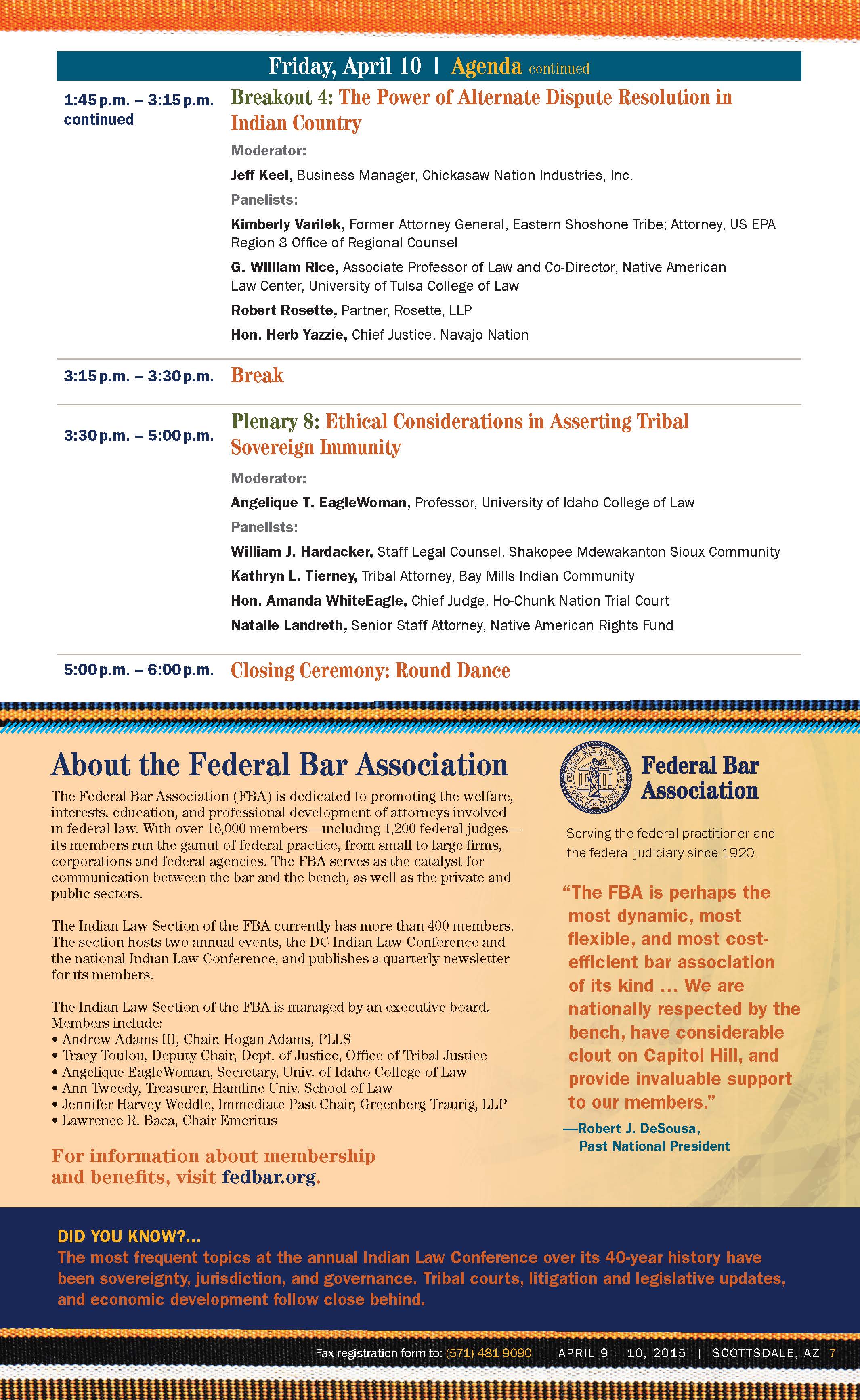
Here:

Here is the agenda (PDF):
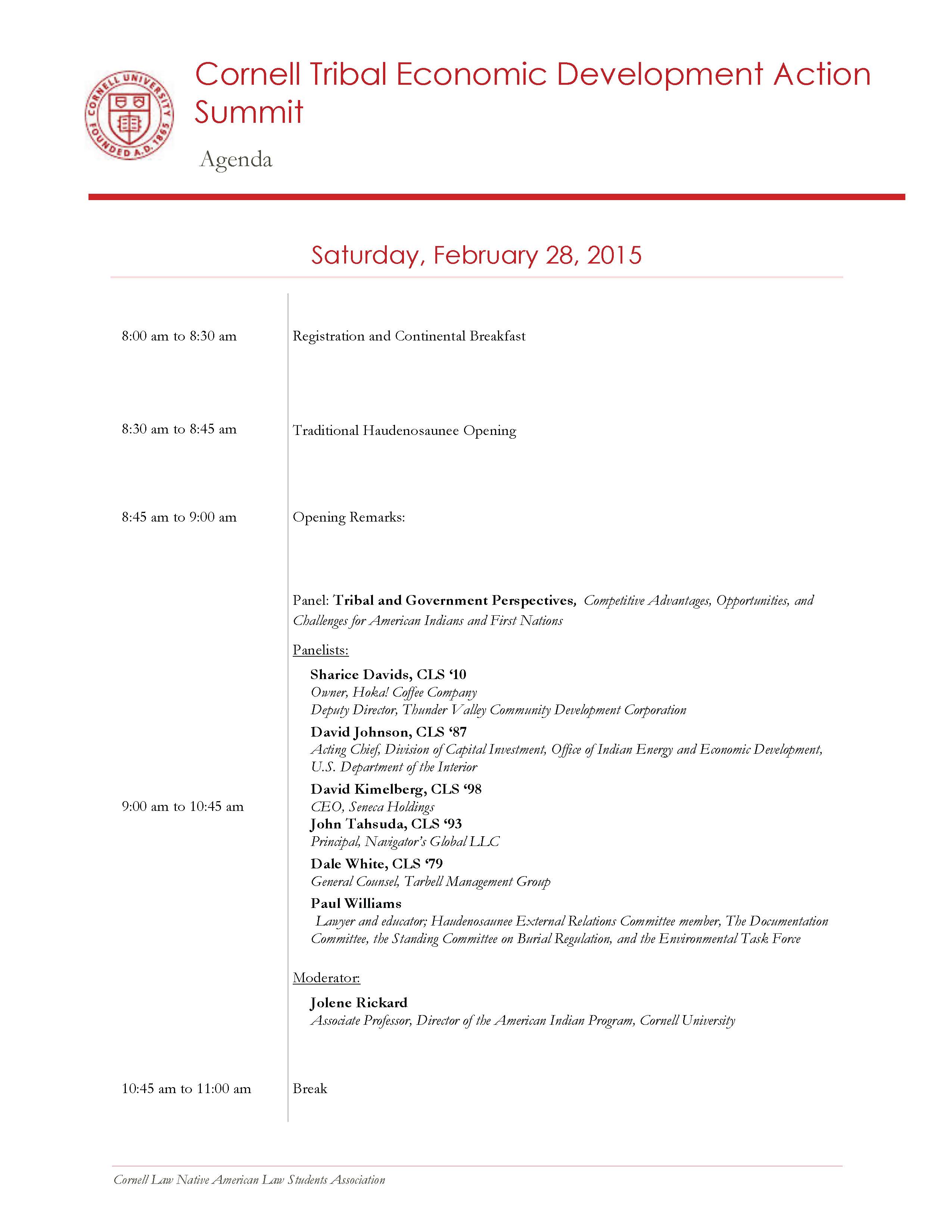
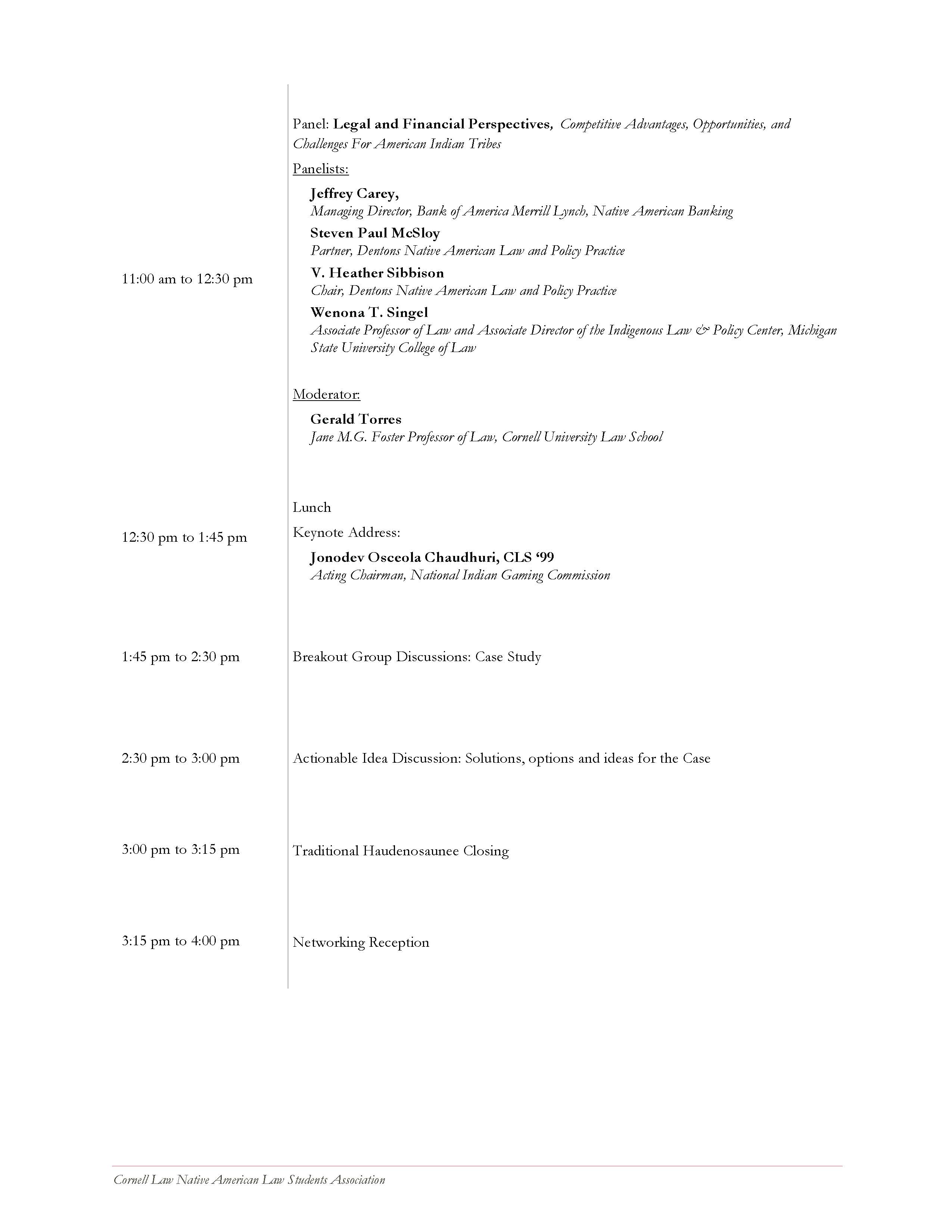
Here is the live stream link for the morning panel sessions:
http://law.webcast.video.cornell.edu/Mediasite/Play/4c30d7814aec4710a6f84e9dc33dfc851d
And here is the link for the Keynote address:
http://law.webcast.video.cornell.edu/Mediasite/Play/e5f613f211524a7abaaa8401574bca081d
The University of South Dakota School of Law Native American Law Student Association  (NALSA) organized a Peace Gathering in honor of the 57 children from American Horse School on the Pine Ridge Reservation. These students, age 9 to 13, were attending a Rapid City Rush hockey game in recognition of their school accomplishments. Unfortunately, these students had beer poured on them and were subject to racial epithets. The alleged perpetrator was charged with a low level misdemeanor of disorderly conduct.
The gathering brought together almost 30 law students and faculty members into the courtroom. The Law School community was invited to write personal letters of encouragement and support to send to the students. NALSA’s goal is to send a strong message to the children so that they know we support them in their efforts to continue to strive and to grow from this negative and ugly experience.
Tysolake House, second year law student and Vice-President of NALSA, shared his thoughts on the incident. For Tysolake, this incident hit very close to home. He mentioned the obstacles he had to overcome dealing with racially charged issues as a child. He also expressed his sympathies for the children as he envisioned this situation potentially happening to his own children, who are the same age.
USD Law Professor Frank Pommersheim shared a few thoughts about how to move forward from this horrible incident. His remarks focused on the need for ‘solidarity,’ particularly from NALSA and the legal community, to show support for these young native students. These students need to know that there are many people of good will who want them to succeed.
Gene Thin Elk, Director of the Native American Cultural Center, also attended the Peace Gathering in support of the children from American Horse School. Gene expressed his support by sharing a few words about overcoming adversity and by singing a Lakota Song.
At the conclusion of this gathering everyone gathered to take a group picture. Everyone in attendance firmly stood behind the banner that exclaimed the words, “They are our children too.”
-Kyle Chase
USD NALSA President
From here:
I am proud to announce the 2015 Alternative Spring Break (ASB) Program projects that have been selected to receive an award. The National Native American Law Student Association Executive Board has chosen a project from Columbia Law School and the University of Michigan Law School! Columbia Law School will be working with Anishinabe Legal Services on three reservations in northwestern Minnesota to assist indigent program clients with civil needs, including a strong emphasis on domestic violence. Michigan Law School will be travelling to the Navajo Nation to work with DNA Legal Services to gain legal and practical skills, while also learning about Navajo life in Window Rock, Arizona. NNALSA has budgeted $1,000 for this year’s program, and each school will receive an award of $500! NNALSA would also like to recognize all program applicants for the high quality projects that were submitted. Congratulations to this year’s award winners!
In other news, Alex Kitson has made the difficult decision to resign from her duties as the Public Relations Director of NNALSA. On behalf of the Board of NNALSA, I would like to thank Alex for her time and commitment at helping NNALSA achieve its goals by helping to spread the word through numerous media outlets. Alex, you will be missed and good luck in all of your future endeavors.
The Executive Board took a vote and appointed P. Nelson Lambert to the PR Director position. Nelson entered NNALSA as the Area 5 representative. Because the Board appointed him to PR Director Area 5 is now vacant and we are looking to fill the position. If any member is interested in representing Area 5 please send an interest statement to nnalsa.president@gmail.com.
Be sure to keep a look out for future announcements because NNALSA has some wonderful events and opportunities coming up! Events such as the National Moot Court Competition at the University of Arizona, and “Fed-Bar” where the new future board members of NNALSA will be elected and where the best 1L, 2L, 3L, and Chapter of the Year awards will be given. I hope everyone is excited about the future of NNALSA, and the positive future we are trying to achieve for Indian Country.
Nelson Lambert
J.D. Candidate, 2016
Charlotte School of Law
National NALSA Public Relations Director
Joseph Brewer II and Elizabeth Ann Kronk Warner have posted “Guarding Against Exploitation: Protecting Indigenous Knowledge in the Age of Climate Change” on SSRN.
Here is the abstract:
Indigenous knowledge has the potential to ameliorate the extreme, destructive impacts of climate change. Given their enduring connection to place, indigenous communities are the subjects of knowledge acquisition relevant to the changing climate. Yet, because this traditional knowledge has been exploited by outsiders, indigenous communities may be wary to share such valuable information with individuals outside of their communities. And, even if traditional knowledge is shared, indigenous peoples may wish to maintain control over its use to guard against exploitation. This article addresses concerns associated with the stewarding of such traditional knowledge, in hopes of providing legal structure to the conversation. As the application of traditional knowledge becomes more apparent in the climate change context, a conversation to invoke action in the academy and legal systems is needed to create structures that value as well as protect the complexities of indigenous community-based research. Ultimately, this article strives to explore methods of holding those who seek and steward traditional knowledge accountable to indigenous communities. To accomplish this goal, this article examines traditional knowledge held by tribes within the United States that may prove helpful in the fight against the deleterious impacts of climate change. Then, having identified valuable knowledge possessed by tribes, the article goes on to examine the potential for existing domestic and international law to protect against the exploitation of such knowledge. After concluding that the existing law provides inadequate protection at best, the article asserts that tribes may be better served by enacting their own tribal laws to protect against such exploitation, and then explores the existing tribal law enacted to protect tribal traditional knowledge. This is the first article to provide concrete examples of traditional knowledge useful in combating the impacts of climate change and how the law may apply in such instances. This is also the first article to examine the use of tribal law to address the protection of traditional knowledge in-depth and provide a discussion of how some tribes are already utilizing tribal law to accomplish such goals. Accordingly, this article constitutes an important addition to the scholarship surrounding protection of traditional knowledge.
Ventura County Human Services Agency initially told the juvenile court that ICWA doesn’t apply to Alaska Natives (or, as stated in the opinion, “Eskimo families”).
Here is the opinion in In re H.G.:
 Turtle Talk
You must be logged in to post a comment.