Here are the materials so far in Wolfchild v. Redwood County (D. Minn.):
156 Redwood County Motion to Dismiss
164 Landowners Motion to Dismiss
165 Lower Sioux Community Motion to Dismiss
Here are the materials so far in Wolfchild v. Redwood County (D. Minn.):
156 Redwood County Motion to Dismiss
164 Landowners Motion to Dismiss
165 Lower Sioux Community Motion to Dismiss
Here is the rule.
Press release here:
As part of President Obama’s commitment to upholding the nation’s trust responsibilities to American Indian and Alaska Natives, Assistant Secretary of Indian Affairs Kevin K. Washburn today announced a final rule that will allow the Department of the Interior to accept land into trust for federally recognized Alaska tribes.
Previously, Interior regulations allowed tribal nations in the continental United States to seek to place lands into trust, but did not allow the same for federally recognized Alaska Native tribes. Taking land into trust for a tribal nation makes the land eligible for certain federal programs that further tribal sovereignty and economic development, related to agriculture, energy, infrastructure, health and housing programs. It also clarifies and affirms tribal sovereign powers over the land.
“This marks a major step forward in federal policy in Alaska. Our aim is to make it possible to secure tribal homelands, which in turn advances tribal sovereignty and economic development, promotes the health and welfare of tribal communities, and protects tribal culture and traditional ways of life,” said Assistant Secretary Washburn. “Restoring tribal lands to trust status furthers tribal self-governance.”
Representatives of Alaska Native tribes have asserted that the denial of a land into trust process in Alaska is unfair and have sought to correct this unfairness, in part, through litigation. The rule issued today not only addresses this litigation, but also responds to recommendations by two independent blue ribbon commissions, the Congressionally-created Indian Law and Order Commission and the Secretarial Commission on Indian Trust Administration and Reform. Today’s rule also reflects numerous public comments and feedback obtained from Alaska Native tribes during formal consultation.
The Assistant Secretary’s announcement complements recent Congressional action affecting Alaska Native tribes. Earlier this month, Congress amended the Violence Against Women Reauthorization Act of 2013 (VAWA) to allow Alaska tribal courts to prosecute non-Indians who commit domestic violence against Indian spouses and partners. If land is taken into trust pursuant to today’s rule, it will support such tribal court jurisdiction authorized by Congress and, ultimately, help Native governments to be better partners with the State of Alaska to address these problems.
Today’s rule confirms that the Secretary of the Interior has pre-existing statutory authority to consider applications to take land into trust in Alaska and this authority will now be exercised. Part 151 of the Code of Federal Regulations (CFR), entitled Land Acquisitions, is the regulatory framework within which the Secretary of the Interior, through the Assistant Secretary and the Bureau of Indian Affairs, will consider requests and exercise discretion to take land into trust. The land acquisition regulations are rigorous; whether in Alaska or the lower 48 states, tribes must satisfy extensive regulatory requirements, including possessing clear title to the land, before the Department will approve a trust application.
Several important questions about the rule arose in the comment period. For example, some were concerned about the effect on subsurface mineral rights if surface lands are taken into trust. Each application will be considered on a case-by-case basis, but taking lands into trust on the surface usually has little impact on mineral rights because surface interests are typically subservient to the subsurface mineral interests, which are dominant. The Department will use its experience managing lands with split estates in the lower 48 states to address any problems that might arise.
Generally, lands are placed into trust pursuant to the Indian Reorganization Act of 1934 (IRA), which was enacted to remedy the devastating loss of tens of millions of acres of tribally owned lands. The IRA authorizes the Interior Secretary to hold land in trust for Indian Tribes and individual Indians, thereby securing these lands for housing, schools, economic development, and other beneficial purposes. Trust land also allows the tribe to benefit from federal housing programs and other federal grant programs which are often available only on land that has been placed in trust. Thus, today’s rule has the potential to unlock additional federal financial resources for Alaska Natives.
The U.S. Government currently holds 55 million surface acres and 57 million acres of subsurface minerals estates for American Indians, Indian tribes and Alaska Natives. The Obama Administration has taken more than 280,000 acres of American Indian land into trust since 2009.
The proposed rule was made available for public comment on May 1, 2014. The final rule can be viewed online at: http://www.bia.gov/WhoWeAre/AS-IA/ORM/LandTrustAlaska/index.htm.
The Assistant Secretary – Indian Affairs oversees the BIA, which is headed by a director who is responsible for managing day-to-day operations through four offices – Indian Services, Justice Services, Trust Services and Field Operations. These offices directly administer or fund tribally based infrastructure, law enforcement, social services, tribal governance, natural and energy resources, and trust management programs for the nation’s federally recognized American Indian and Alaska Native tribes and villages through 12 regional offices and 81 agencies.
###
Here is the opinion in State v. Charlie:
An excerpt:
In summary, the testimony that the Navajo Nation enabled cross-commissioned State Police officers to transport Navajos off the reservation for chemical testing to investigate Navajo Code violations was unopposed. Defendants instead argued that in spite of this testimony, extradition protocols had to be followed. They erred as a matter of law because no extraditions occurred. In addition, because Defendants’ only argument for lack of jurisdiction erroneously relied on the purported need to follow Navajo extradition procedures, the Court of Appeals erred in reversing the district court decisions on bases that exceeded the scope of review. As a result, we reverse the Court of Appeals.
Karen Tani has published “States’ Rights, Welfare Rights, and the ‘Indian Problem’: Negotiating Citizenship and Sovereignty, 1935–1954” in the Law & History Review.
Here’s the abstract:
Starting in the 1940s, American Indians living on reservations in Arizona and New Mexico used the Social Security Act of 1935 to assert unprecedented claims within the American federal system: as U.S. and state citizens, they claimed federally subsidized state welfare payments, but as members of sovereign nations, they denied states the jurisdiction that historically accompanied such beneficence. This article documents their campaign, and the fierce resistance it provoked, by tracing two legal episodes. In 1948, through savvy use of both agencies and courts, and with aid from former government lawyer Felix Cohen, reservation Indians won welfare benefits and avoided accompanying demands for state jurisdiction; the states, in turn, extracted a price–higher subsidies–from the federal government. Arizona officials re-opened the dispute in 1951, by crafting a new welfare program that excluded reservation Indians and suing the federal government for refusing to support it. The 1954 dismissal of the case was a victory for Indians, but also leant urgency to efforts to terminate their anomalous status. Together these episodes illustrate the disruptive citizenship claims that became possible in the wake of the New Deal and World War Two, as well as the increasingly tense federal-state negotiations that followed.
Subscribers may access the full article here.
Prof. Tani blogged about the article at the Legal History Blog.
Originally filed by Clint Halftown’s group against the Village of Union Springs to enjoin the village’s effort to regulate Class II bingo; now a challenge to the Halftown group by the Cayuga Nation Unity Council. News coverage here.
Here are the materials:
27 Cayuga Nation Unity Council Motion to Intervene
28 Cayuga Nation Unity Council Motion to Dismiss
32 Defendants Cross-Motion to Dismiss
The IBIA decision on the Cayuga leadership dispute is here.
A state court decision on the leadership dispute is here.
January 2015
Galanda Broadman, PLLC, an Indian Country Law Firm with six lawyers and offices in
Seattle, Washington, and Bend, Oregon, seeks to add an experienced litigation associate
to its growing tribal practice in Seattle.
Galanda Broadman is an American Indian owned firm dedicated to advancing tribal legal
rights and Indian business interests. The firm represents tribal governments, businesses
and members in critical litigation, business and regulatory matters, especially in the areas
of Indian Treaty rights, tribal sovereignty, land rights, taxation, commerce, gaming,
serious/catastrophic personal injury, and indigenous human/civil rights.
The firm seeks an associate who is deeply committed to representing Indian interests, and
who is state bar licensed, preferably in Washington State, and who has two to seven years
of experience in civil litigation or serving as a judicial clerk. Proven motion and civil
rules practice, and the ability to self-direct, are critical. Law review experience is strongly
preferred. Impeccable writing and research skills; critical and audacious thinking; strong
oral advocacy; tremendous work ethic; tenacity; and sound ethics are required.
Salary DOE.
Qualified applicants should submit a cover letter tailored to this announcement, as well as
a résumé, writing sample, transcript, and list of at least three educational and professional
references, to Alice Hall, the firm’s Office Manager, at alice@galandabroadman.com.
Applications directed elsewhere will not be considered.
For more information about Galanda Broadman, visit galandabroadman.com.
Here:

Here:
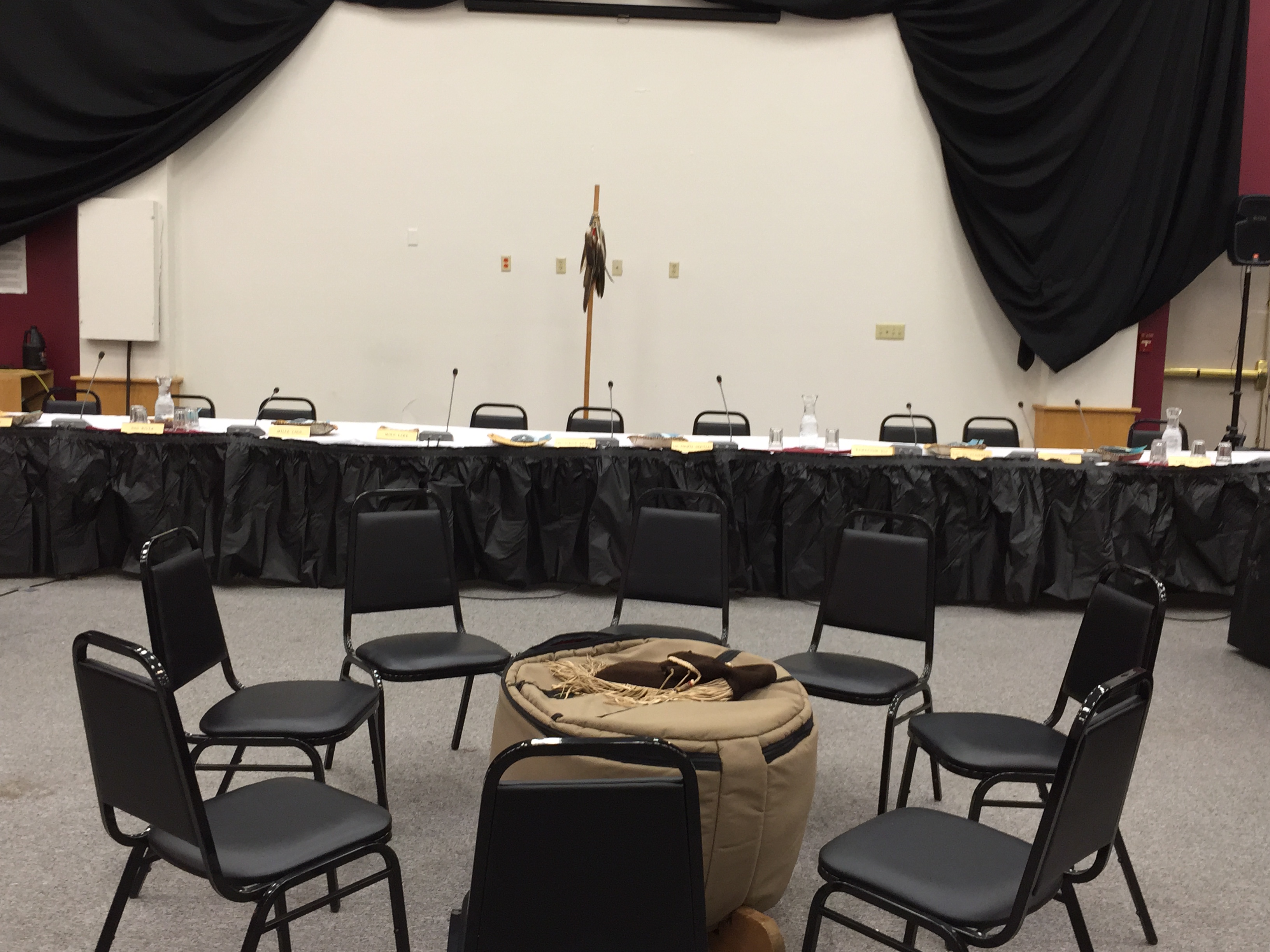
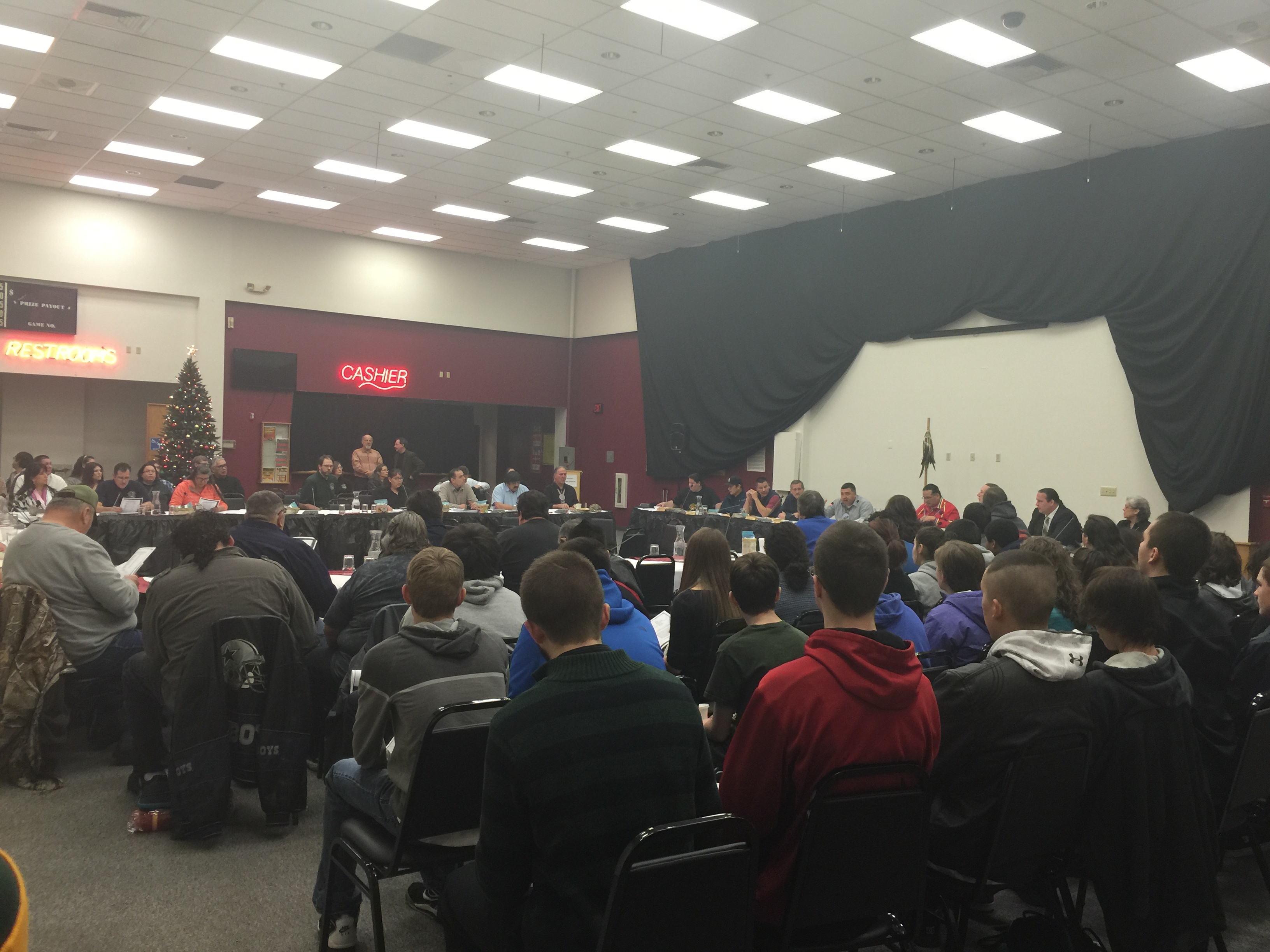
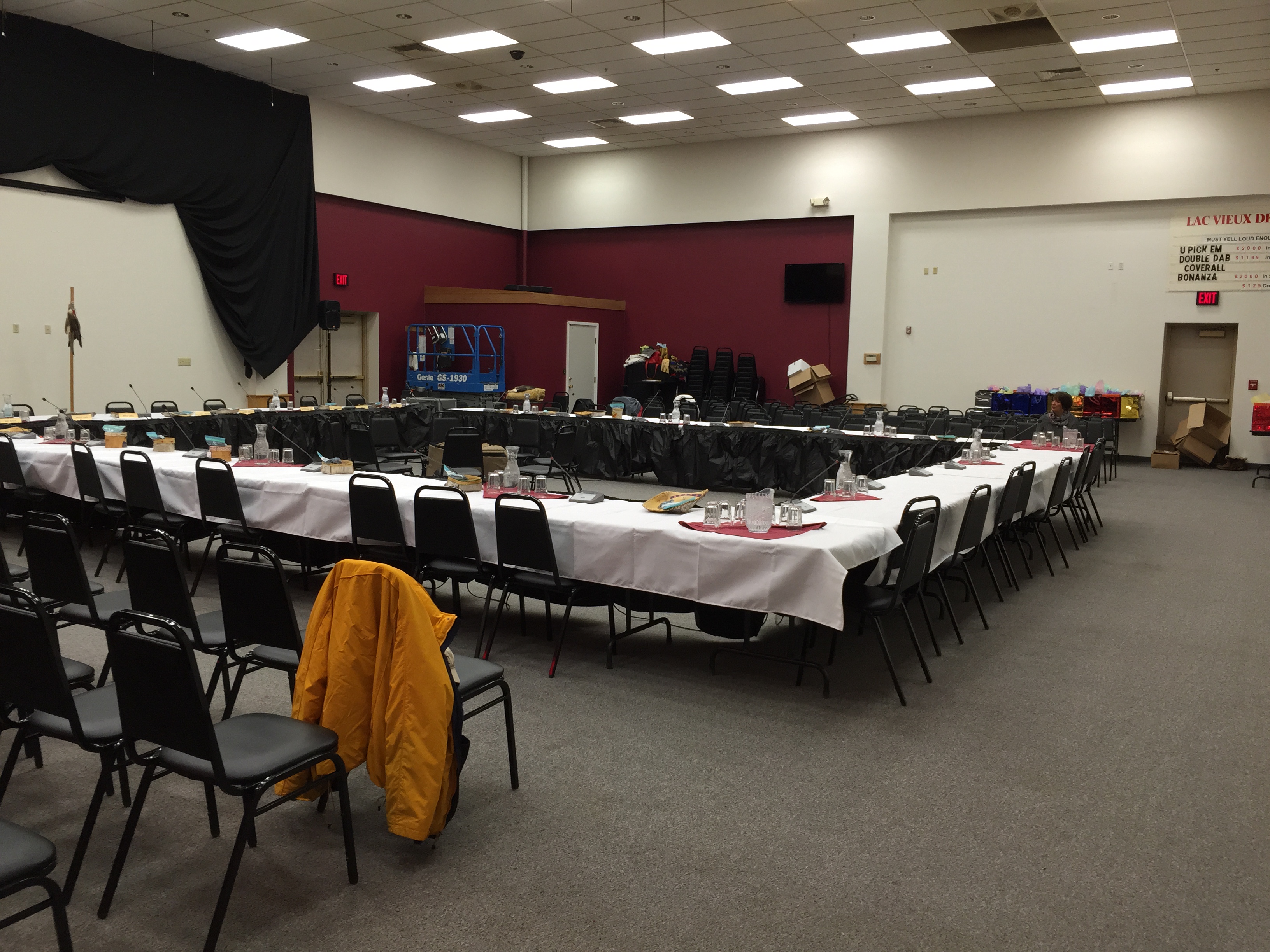
Participants: Lac Vieux Desert, Lac du Flambeau, Mole Lake, St. Croix, Red Cliff, Fond du Lac, Keweenaw Bay, Bad River, Lac Courte Oreilles
Here:


Kirsten Matoy Carlson has published “Congress and Indians” (PDF) in the University of Colorado Law Review. Here is the abstract:
Contrary to popular narratives about courts protecting certain minority rights from majoritarian influences, Indian nations lose in the United States Supreme Court over 75 percent of the time. As a result, scholars, tribal leaders, and advocates have suggested that Congress, as opposed to the courts, may be more responsive to Indian interests and have turned to legislative strategies for pursuing and protecting tribal interests. Yet very little is known about the kinds of legislation Congress enacts relating to American Indians. This Article charts new territory in this understudied area and responds to recent calls for more empirical legal studies in the field of federal Indian law by enhancing understandings of the amount and kinds of Indian-related legislation enacted by Congress. Based on an analysis of 7799 Indian-related bills, the Article expounds a basic typology of the kinds of Indian-related legislation introduced and enacted by Congress from 1975 to 2013. The Article reports a higher enactment rate for Indian-related legislation as compared to the enactment rate of all bills introduced in Congress. This finding problematizes traditional narratives about the success of minority groups in the political process and has serious implications for how scholars and advocates understand congressional policymaking. Further, the Article shows that much of this legislation does not affect Indians alone. Rather, Congress generates a substantial amount of legislation for the general welfare of its citizens, including Indians and Indian nations. It suggests that federal Indian law scholarship, which has focused on legislation specific to Indian nations, has overlooked an important part of the development of federal Indian law and policy. Finally, the Article considers some possible explanations for the higher enactment rate of Indian-related legislation and the implications of this study for congressional policymaking, especially federal Indian law and policy. It confirms the need for further investigation into the different kinds of Indian-related legislation and the complex relationships between Congress and Indians.
This is a highly anticipated and highly recommended paper. Counsel for tribal interests could be well served to consider routing resources away from litigation toward legislative efforts. Consider for one example the Gun Lake Tribe, which secured a legislative fix to the problem created by the Supreme Court’s interpretation of the Quiet Title Act.


You must be logged in to post a comment.