Eighth Circuit Affirms Conviction of Sisseton-Wahpeton Oyate Member for Misapplication of Tribal Funds

Here is the opinion in United States v. Wanna.

An excerpt:

A jury convicted Charlene Wanna of misapplication of funds from an Indian tribal organization and aiding and abetting in violation of 18 U.S.C. §§ 1163 and 2. The district court sentenced Wanna to 33 months imprisonment. Wanna appeals her conviction and sentence. Having appellate jurisdiction under 28 U.S.C. § 1291, we affirm.

The briefs:

Wanna Brief

US Brief

Wanna Reply

UCLA American Indian Studies Conference — March 7, 2014

Here. Fletcher et al. papers to be discussed (“Tribal Disruption and Indian Claims“; “(Re)Solving the Tribal No-Forum Conundrum: Michigan v. Bay Mills Indian Community“; and “Tribal Disruption and Labor Relations“), and panel:

Plenary 1: Innovations in Law

  • Kristen A. Carpenter, Associate Professor of Law, Co-Director of American Indian Law Program, University of Colorado, Boulder
  • Carole E. Goldberg, Vice Chancellor, UCLA Academic Personnel, and Jonathan D. Varat Distinguished Professor of Law, UCLA School of Law
  • Matthew L.M. Fletcher, Professor of Law, Director of the Indigenous Law & Policy Center, Michigan State University
  • Moderator: Angela R. Riley, Professor, UCLA School of Law, and Director, UCLA American Indian Studies Center

“An Essay on the Federal Origins of Disenrollment”

Here.

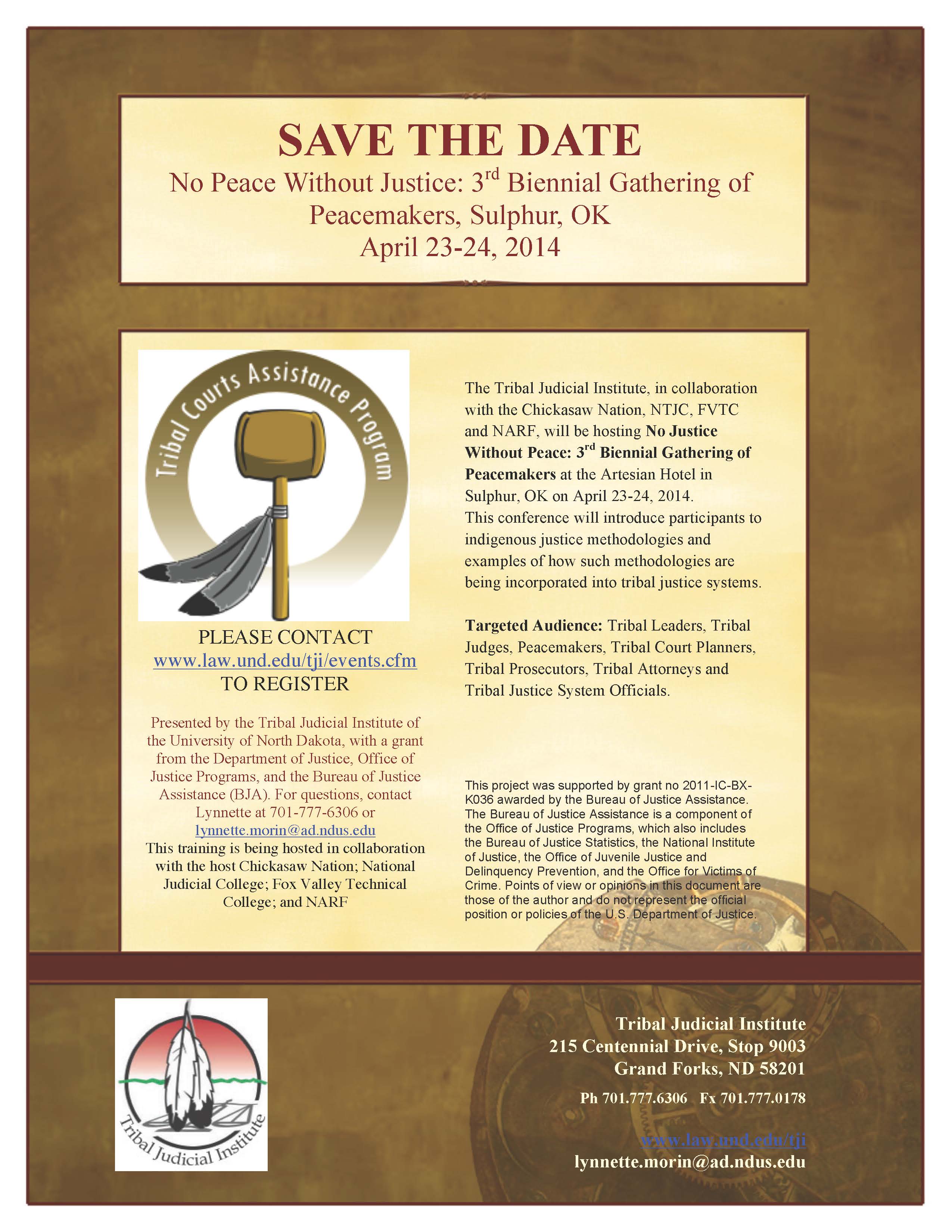
Peacemaking Event at Chickasaw — April 23-24, 2014

Here:

save the date_april2014 copy

All Pueblo Indian Council Resolution Supporting ILOC Roadmap

Here:

All Pueblo Resolution

3rd Midwest Peacemaking Conference — Little River Band — June 11-13, 2014

Here:

Peacemaking Conference

Kronk Warner and Abate on Climate Justice for Arctic Indigenous Peoples

Elizabeth Kronk Warner and Randall Abate have posted “International and Domestic Law Dimensions of Climate Justice for Arctic Indigenous Peoples,” published in the Ottawa Law Review. Here is the abstract:

Climate change is disproportionately impacting Arctic American indigenous peoples. Consequently, these communities are environmental justice communities. The environmental justice claims of Arctic American indigenous peoples result from the effects of climate change intersecting with indigenous peoples’ human rights. In order to explore these realities more fully, part I of this article discusses how American indigenous nations are environmental justice communities and discusses the unique factors that may apply to environmental justice claims arising in Indian country. The article then presents two case studies to explore how, if at all, these concepts have been previously applied to environmental justice claims brought by various American indigenous communities. Part II addresses the Inuit Circumpolar Conference’s (ICC) petition to the Inter-American Commission on Human Rights (IACHR) in December 2005. Part III considers the Native Village of Kivalina’s lawsuit filed in federal court in the United States in February 2008 against numerous private emitters of greenhouse gases.

Although the ICC and Kivalina claims involve different forums, defendants, and legal theories, both were brought by American indigenous communities in response to the negative impacts of climate change on their communities. Accordingly, evaluation of the ICC’s and Kivalina’s claims is helpful in understanding how environmental justice as applied to indigenous communities may include consideration of factors not applicable to environmental justice claims raised by other environmental justice communities.

Moreover, this article will underscore how Arctic American indigenous peoples’ environmental justice claims also involve human rights dimensions, as climate change is destroying their environment and, as a result, their culture. As fully explained in part I, environmental justice claims arising in Indian country must take into consideration indigenous sovereignty, the federal trust relationship and the unique connection between many indigenous communities and their land and environment. In both of the case studies examined here, the legal forums failed to take these legal factors into consideration. As a result, the indigenous communities suffered.
Kronk Warner on Tribes as Environmental “Laboratories”

Elizabeth Kronk Warner has posted “Tribes as Innovative Environmental ‘Laboratories‘” on SSRN.

Here is the abstract:

Indian tribes, because of their distinctive regulatory authority and significant connection to the environment, possess unique capacities to innovate within the field of environmental law in the over 56 million acres that makes up Indian country. In this first scholarly work to address this aspect of tribal environmental law, this article advocates for the idea of tribes as “laboratories” for examining environmental regulation. Tribes enact environmental regulation by two primary means – in their capacity as “tribes as states” (TAS) and in their capacity as inherent sovereigns – both of which create unparalleled space for innovation. Moving first to the TAS setting, the article examines synergies between federal and tribal environmental law. Following an expansive discussion of laws adopted by several tribes under their TAS authority, the article next turns to a discussion of the implications of tribal environmental innovations. Here, the article begins by looking at the emerging trends in tribal adaptation of federal environmental law. The article turns next to a look at tribal environmental law adopted purely as a result of tribal inherent sovereignty. Here, the article begins the foundational discussion of how tribes may take lessons learned from the TAS setting and, by the exercise of inherent sovereignty, truly be innovators in the development of environmental law. The article then develops some initial thoughts of how tribes, the states and the federal government may benefit from innovations occurring within the tribal environmental laboratory. Tribal environmental law is particularly exciting given its ability to transcend federal environmental law. Ultimately, the article concludes that, by enacting environmental laws to meet their unique tribal needs, many tribes are creating and innovating in the field under their unique powers as separate sovereigns within the United States, truly acting as laboratories of the future.

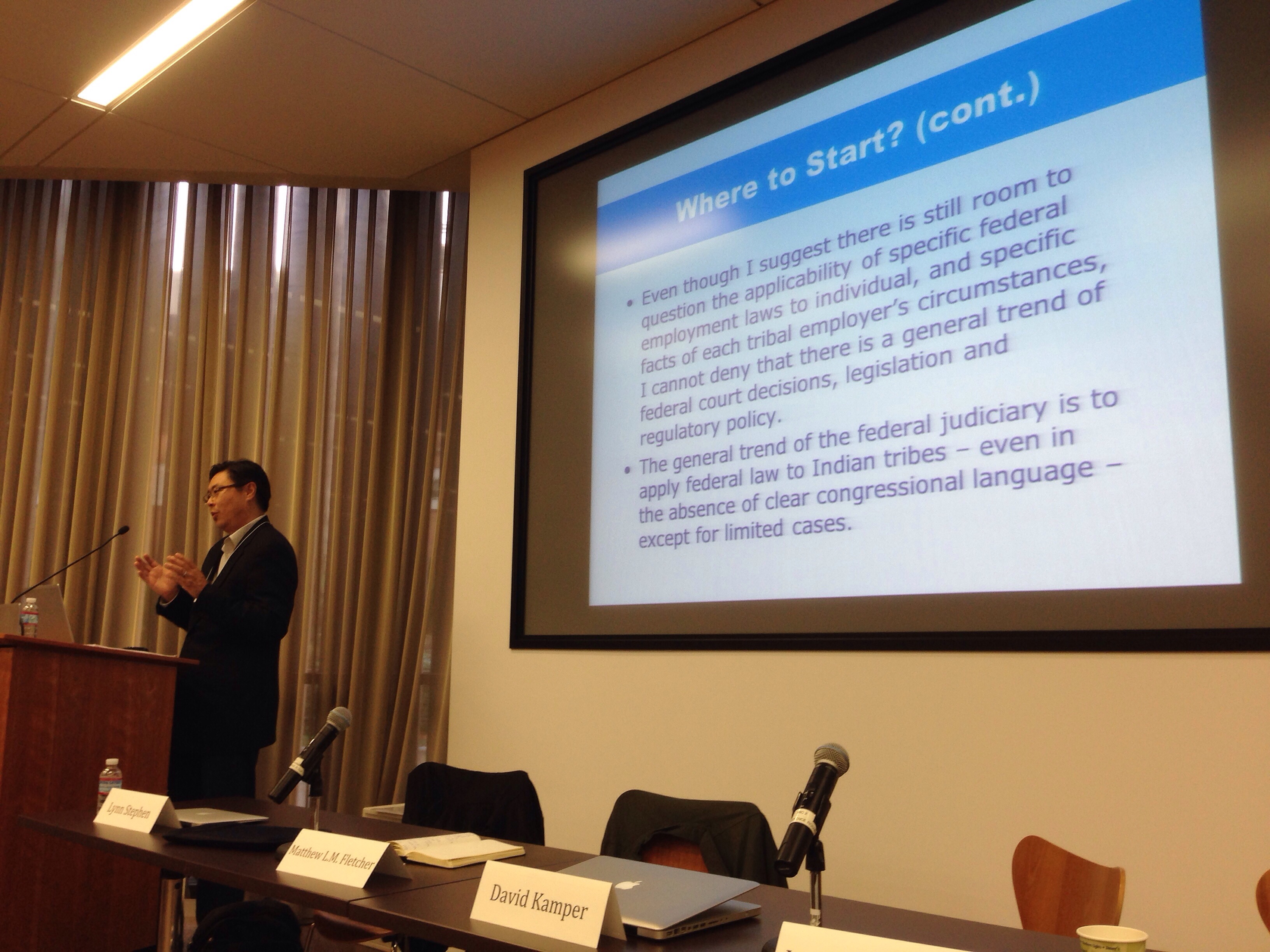
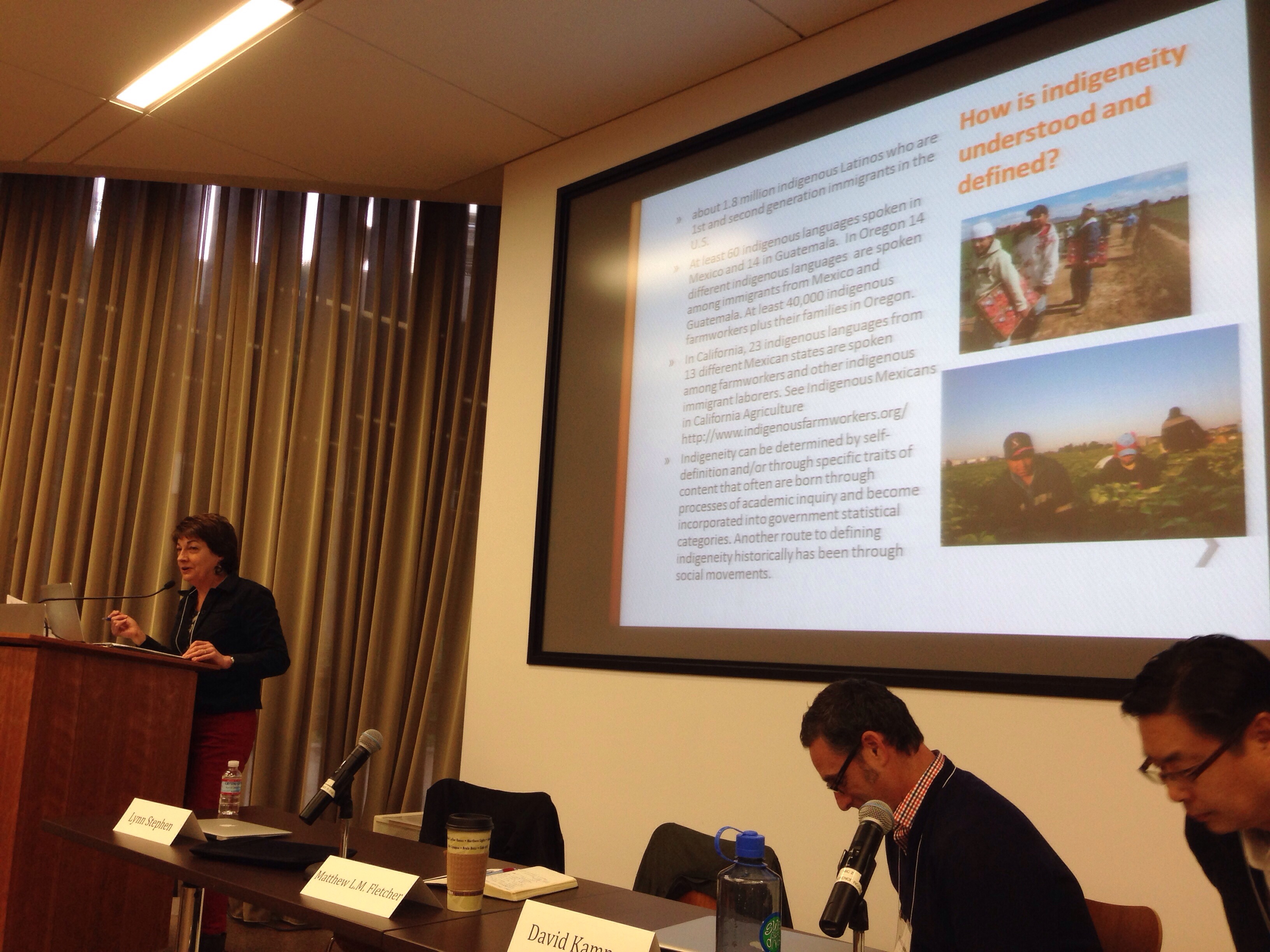
UCLA IRLE Indigenous Peoples Panel

Lynn Stephen, MF, David Kamper, and James Kawahara

20140301-105514.jpg

James Kawahara

20140301-105617.jpg

Lynn Stephen

20140301-105648.jpg

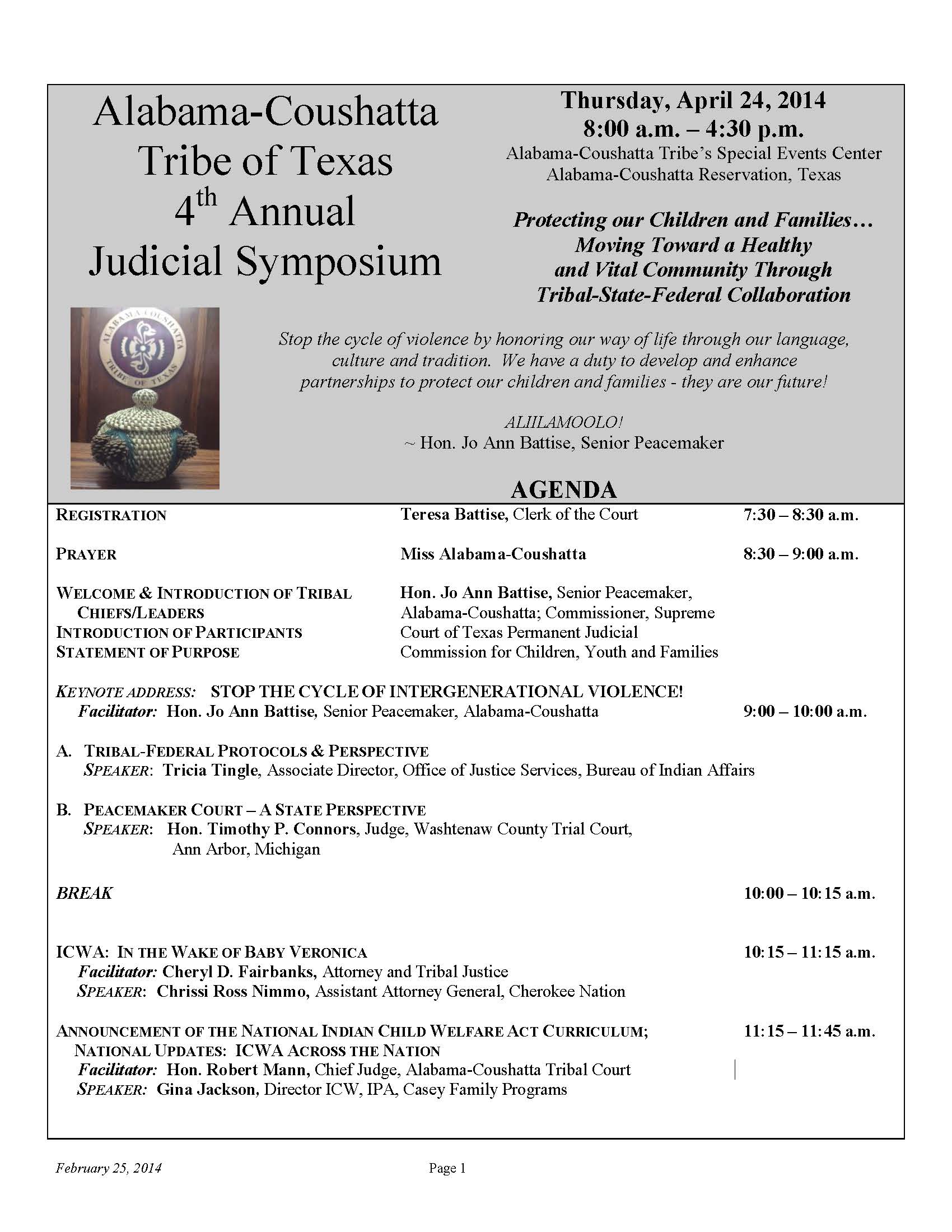
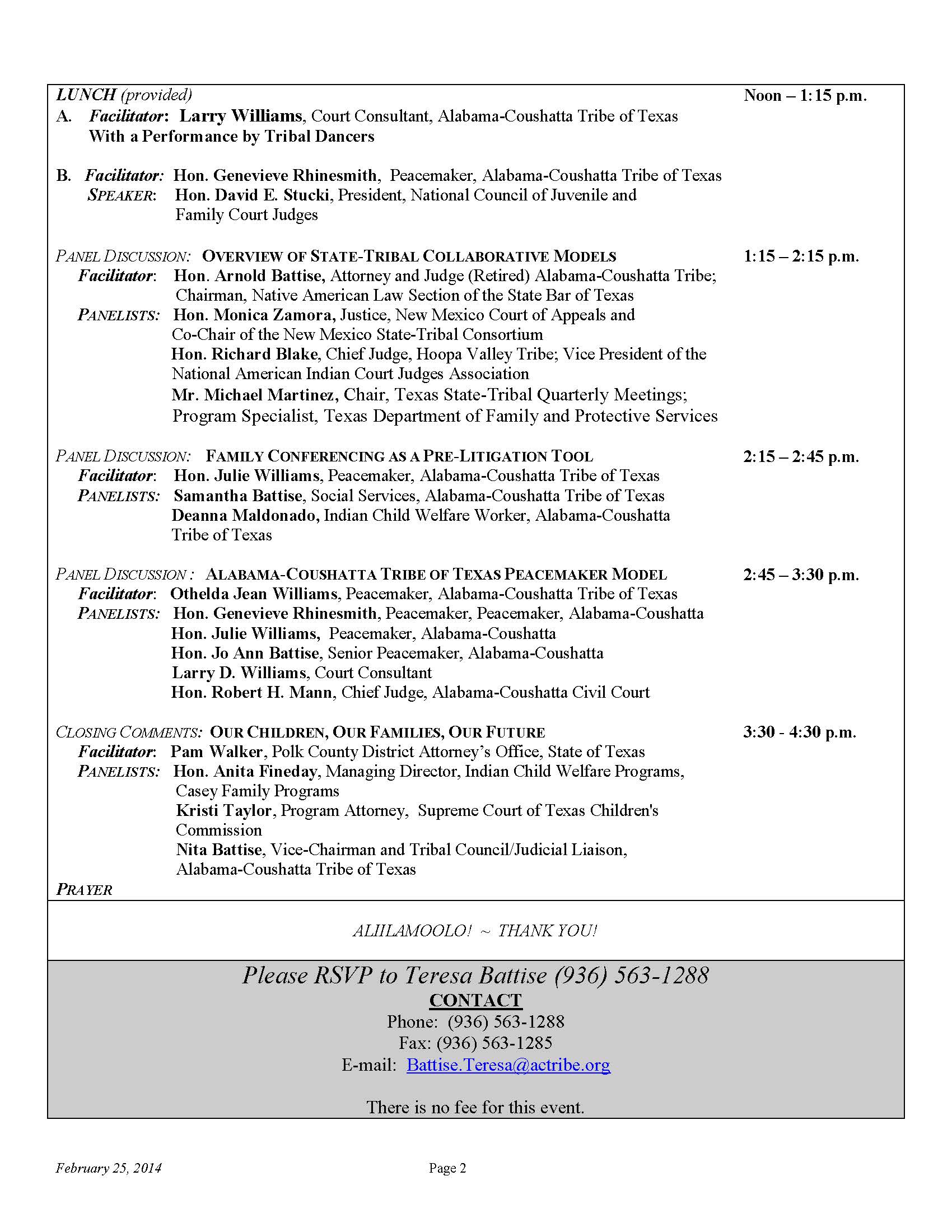
Agenda for Alabama-Coushatta Judicial Symposium April 24, 2014

Here (PDF):

Agenda 25FEB2014_Page_1 Agenda 25FEB2014_Page_2