Survey of Pending Litigation against Tribal Payday Lenders

Here. As opposed to individual Indian payday lenders like Western Sky Financial.

An excerpt:

To date, state actions, class action cases, and federal agency actions have yielded mixed results. Most agree that federally recognized, sovereign tribes have the authority to engage in internet lending to state residents without those tribes being subjected to state authority. However, the extent to which tribal sovereign immunity shields service providers that assist tribes engaging in this business remains to be seen, as does the proper role of federal agencies such as the FTC and CFPB. Ultimately, Congress may be asked to establishlaws regulating various tribal lending practices and jurisdiction over them.

Tribal Lending and the Consumer Financial Protection Bureau

Hilary B. Miller has published “The Future of Tribal Lending under the Consumer Financial Protection Bureau” in the ABA trade journal Business Law Today.

Senate Judiciary Committee Hearing for Patricia Millett Set for July 10

Here.

Indians and the Fourth of July

They usually ask us to be in the parade…

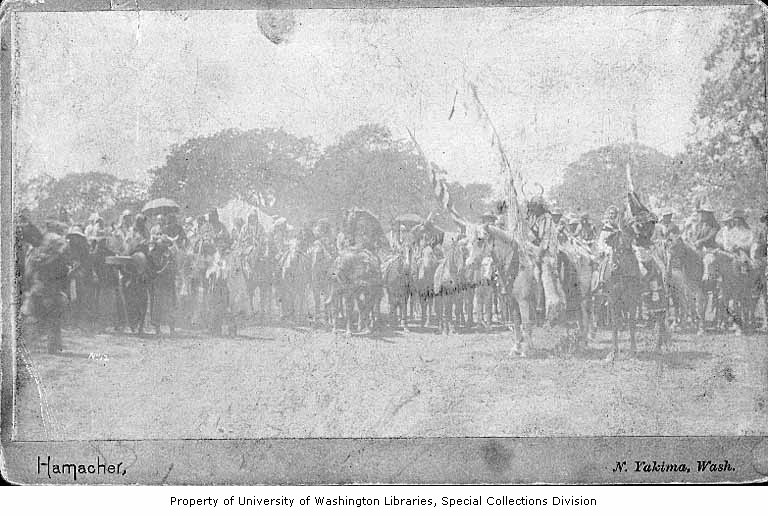
Yakama Indians Fourth of July 1894

Yakama Indians in 1894

Taos Pueblo -- Madrid Fourth of July 1930 Float

Pueblo Indians 1930

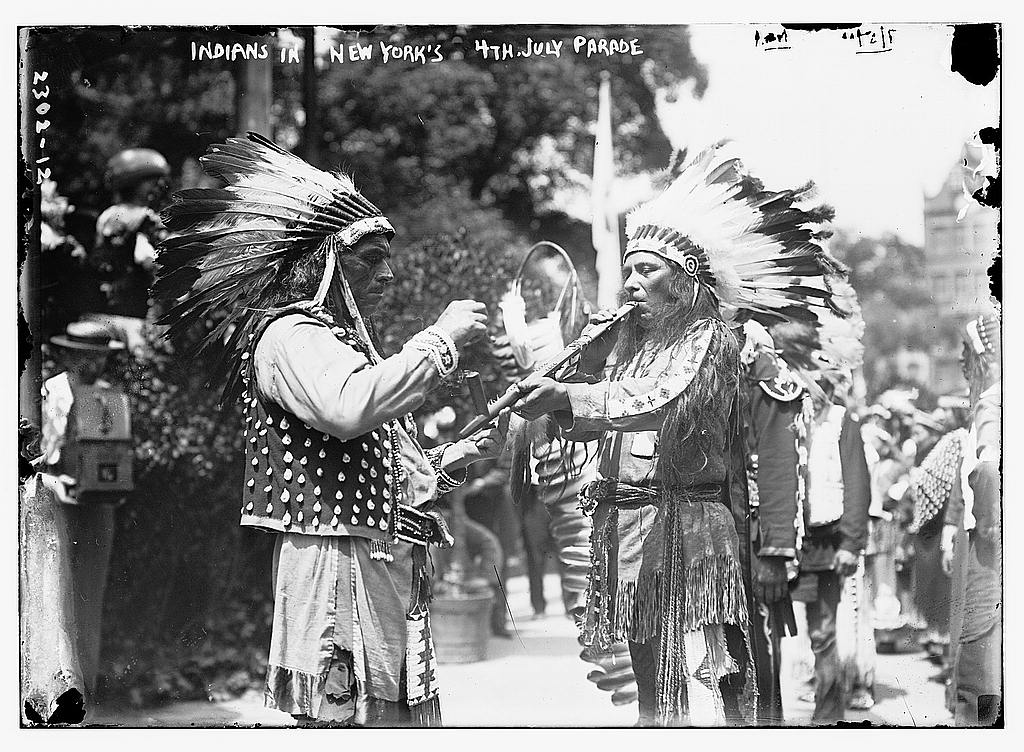
New York Indians Fourth of July

New York City Indians (n.d.) — it’s getting bad, but the worst is yet to come….

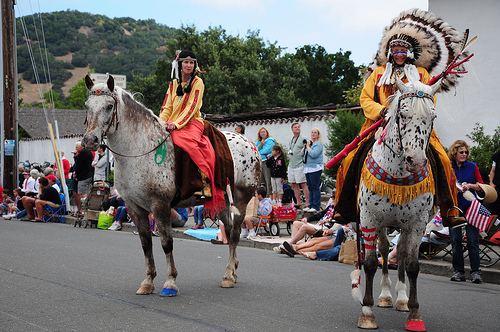
Sonoma Indians 2009

“Sonoma Indians” 2009. And even worse….

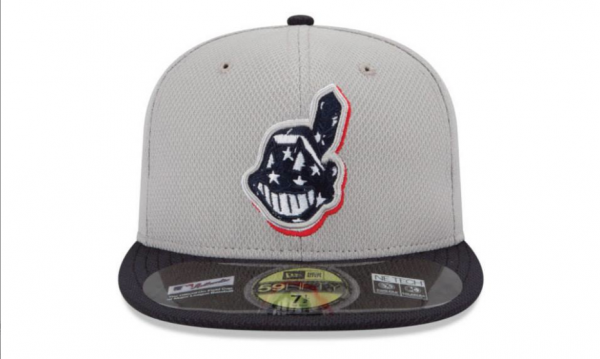
Cleveland Indians

The “abandoned” Cleveland Indians commemorative ballcap (2013)

Injunction Granted in Wells Fargo v. Chukchansi EDC (N.Y. Supreme Court) — UPDATED

Materials here:

Wells Fargo Motion

BofA Opposition

Wells Fargo Reply

Transcript

Chukchansi order part 1

Chukchansi order part 2

Sad News: Chairman Bill Houle Walks On

William J. Houle

8/22/1931 – 6/30/2013

William J. “Bill” Houle, 81, enrolled member of the Fond du Lac Band of Lake Superior Chippewa passed at home surrounded by his family. Visitation will be held on Friday, July 5, 2013 from 4 – 7 pm in the Handevidt Funeral Home, 900 Washington Ave, Cloquet. Vistiation will continue on Saturday, July 6, 2013 from 10:00 am until the 11:00 am Funeral Service also in the funeral home. Full military honors by the Cloquet Combined Honor Guard and the Fond du Lac Honor Guard.

Bill, a Navy veteran, served the people of the Fond du Lac Band as a member of its tribal council and as Chairman of the tribe for 20 years. He came from that old style of tribal leadership that taught the importance of tribal sovereignty and felt strongly about improving the life of the people at Fond du Lac, at the Minnesota Chippewa Tribe and tribal governments and American Indians nationally.

Bill understood the importance of building a reservation economy to provide employment, health, housing and education to Indian people. He also knew of the importance of creating a discretionary source of revenue for tribal governments through developing enterprises. From manufacturing to gaming Bill fought to create opportunities for all Indian people.

Under Bill Houle’s leadership the Fond du Lac Band started one of the first High Stakes Bingo facilities in Minnesota. He served on the BIA National Task Force to study Gaming on Indian Reservations in the early 80’s. He and a handful of other leaders were frustrated by the BIA’s lack of interest in establishing regulations to protect the gaming. Bill, Purcell Powless (Oneida of Wisconsin), Josephine Jackson (Saginaw Chippewa), James Billie (Seminole), Stan Jones (Tulalip), Rocco Knight (Rumsey Rancheria), Fred Thomas Sr., (Kansas Kickapoo) and the Wisconsin Winnebago (now Ho-Chunk) Merlin Red Cloud decided to do something about it. This group met in December of 1985 with Seminole as host at the Eden Roc hotel and decided to seek protective federal legislation for gaming on Indian lands. This, they decided was to be spearheaded by a new tribal entity that in 1986 became the National Indian Gaming Association. Bill Houle was the first Chairman of NIGA and served through the adoption of the Indian Gaming Regulatory Act of 1988. Also under Bill’s tenure the Band was the first to issue bonds under the Indian Tribal Government Tax Status Act and to have off-reservation land placed into trust for gaming purposes before the passage of the Indian Gaming Regulatory Act.

Bill also treasured his first love of fishing. As Chairman he pursued the reaffirmation of treaty hunting and fishing rights in the 1837 and 1854 Treaty areas of Minnesota for Fond du Lac Band members.

Bill, as a family man, and tribal leader had shown us the importance of securing the future for our children. He will be missed by all.

— Henry M. Buffalo, Jr.
 

Federal Magistrate Decides (Non-)Indian Status of Defendant in General Crimes Act Case

Here are the materials in United States v. Loera (D. Ariz.):

DCT Order Denying Motion to Dismiss

Loera Motion to Dismiss — Indian Status

USA Response

An excerpt:

Defendant’s motion and the government’s response raise matters for the Court’s consideration which other courts have left for another day. See Means v. Navajo Nation, 432 F.3d 924, 934–35 (9th Cir.2005). The resolution of the issues requires the Court to journey into the world of “Indian Law” which has been described as a “complex patchwork of federal, state and tribal law, which is better explained by history than by logic.” United States v. Bruce, 394 F.3d 1215, 1218 (9th Cir.2005) (internal quotations omitted). Indian law has also been described as “schizophrenic”: “Federal Indian policy is, to say the least, schizophrenic. And the confusion continues to inform federal Indian law …” United States v. Lara, 541 U.S. 193, 219, 124 S.Ct. 1628, 1644–45 (2004) (Thomas, J., concurring).

Another:

This case presents a unique factual and jurisdictional conundrum apparently of first impression. Notwithstanding the 1990 amendments to the Indian Civil Rights Act, codified at 25 U.S.C. § 1301 et seq., the Fort Mojave Indian Tribe has declined to prosecute a defendant who may be an “Indian” and the Tribe’s decision is apparently based solely on the defendant’s lack of tribal membership, i.e., the Tribal Court has determined it does not have jurisdiction under its laws.

And finally:

Since its first enactment in 1817 (3 Stat. 383), additions added in 1854 (10 Stat. 270), sequent codification in 18 U.S.C. § 1152, and the enactment and amendment of the Indian Civil Rights Act, the language of section 1152 has never been amended, yet the government has entered into nine separate treaties with thirteen separate and distinct tribes obligating the federal government to remove all “bad men” from those tribes’ lands and prosecute them in federal courts when requested by the Tribe, exactly what occurred in this matter. In order to give validity to those treaties, as the Court is obligated to do, and which Congress has not repealed, and even though the treaties are with tribes other than the Fort Mojave Indian Tribe, the use of the term “Indian” in section 1152 must, as Judge Sneed concluded, mean an Indian who is a tribal member. As such, should this Court have concluded Defendant was an “Indian” section 1152 would not grant him immunity from federal prosecution as he is not a tribal member.

BIA-OJS Tribal Court Trial Advocacy Training Program (August 2013)

Here:

Training Announcement – Philadelphia, Mississippi 2013

New Scholarship Arguing PL 280 is Unconstitutional

Kyle Conway has published “Inherently or Exclusively Federal: Constitutional Preemption and the Relationship Between Public Law 280 and Federalism” in the University of Pennsylvania Journal of Constitutional Law (SSRN link). Here is the abstract:

The basic principles of Indian-law jurisprudence often appear disconnected with basic principles of American constitutional law. Indian law, however, has a special significance to important issues of state and federal power. This Article seeks to build on the work of prior scholars who have sought to connect Indian law to American constitutional values.

Public Law 280 is a federal law that gives states control over certain aspects of Indian affairs that were traditionally within the scope of the federal government. This Article argues that Public Law 280 is unconstitutional under a doctrine of constitutional preemption. Constitutional preemption is grounded in the system of overlapping sovereignty that forms the structure of the Constitution and should be understood as prohibiting the federal government from delegating inherently and exclusively federal powers to the states. The power to manage Indian affairs is entrusted exclusively to the federal government, and Congress cannot constitutionally delegate it to the states.

The constitutional difficulties raised by Public Law 280 are particularly relevant in an era when issues of federalism are at the forefront of legal discussion. It is often accepted that courts may limit the federal government’s authority to exercise powers reserved to the states, but we should also take seriously the idea that courts may limit the states’ authority to exercise powers reserved to the federal government.


Ninth Circuit Affirms Dismissal of Tort Claim against Alaska City for Actions of Tribal Police

Here are the materials in M.J. v. United States:

CA9 Opinion

MJ Opening Brief

City of Quinhagak Answer Brief

MJ Reply Brief

The court’s syllabus:

The panel affirmed the district court’s summary judgment in this diversity action seeking to hold the Alaskan city of Quinhagak liable for injuries caused by the negligence of Derrick Johnson, a Native Village of Kwinhagak tribal police officer.

The panel noted that under Alaska state law, an employee’s immunity from tort liability precludes an employer from being held vicariously liable for the employee’s negligence. The panel held that Johnson was immune from individual liability for plaintiffs’ tort claims, both under the Federal Tort Claims Act and the tribe’s sovereign immunity. Accordingly, because plaintiffs sought to hold the City vicariously liable on a non-delegable duty theory for the negligent conduct of an immune independent contractor, plaintiffs’ claims against the City failed.