Gov. Snyder Refuses to Concur with Interior on KBIC Off-Reservation Casino Application

Here, via Pechanga.

This is interesting:

Governor Snyder did state that he was open to relocation as part of a broader agreement between the tribe and the state. Potential points for such an agreement include:

·         Allowing local governments to have some say in the disposition of the 2 percent local casino revenue sharing payments

·         The tribe entering into an agreement requiring the tribal businesses to collect tax on transactions with non-Native Americans

·         Working out a revised revenue sharing agreement so the tribe would continue to make some level of payments to the state, even if future gaming competition develops elsewhere in the state.  Currently, the KBIC is the only tribe with gaming operations in the state that has an agreement that would stop revenue payments if state-authorized gaming was expanded in Michigan.

In a two-part determination, which allows the governor to concur or not, these points are irrelevant. However, in a compact negotiation, these points appear to put KBIC in a very strong negotiating position in that the governor’s demands appear to violate IGRA’s requirement that the governor negotiate in good faith. Asking for more revenue sharing without any meaningful economic concessions, and demanding tribal tax collection, and demanding the institution of a local revenue sharing board — way overboard, in my view. Will be interesting to see what KB does — go with the Secretarial procedures, or simply sue the governor under the 1993 compacts and litigate good faith.

Federal Court Denies Emergency Motion to Allow Cherokee Freedmen to Vote

Here are the materials in Cherokee Nation v. Nash (N.D. Okla.):

DCT Order Denying TRO

Robin Mayes Motion for TRO

News coverage here.

Wrongful Death Action arising from Hot Pursuit against Warm Springs Police Dismissed

Here are the materials in Estate of Kalama v. Jefferson County (D. Or.):

DCT Order Adopting Recommendations

Magistrate Recommendations

Warm Springs Motion

Plainitffs’ Response

Warm Springs Reply

Fletcher Trip Up to the Soo

Here’s the Soo Locks, once the home of one of the greatest fisheries in the northern hemisphere, the subject of this treaty:

St. Mary's River Fishery

Now:

Soo Locks

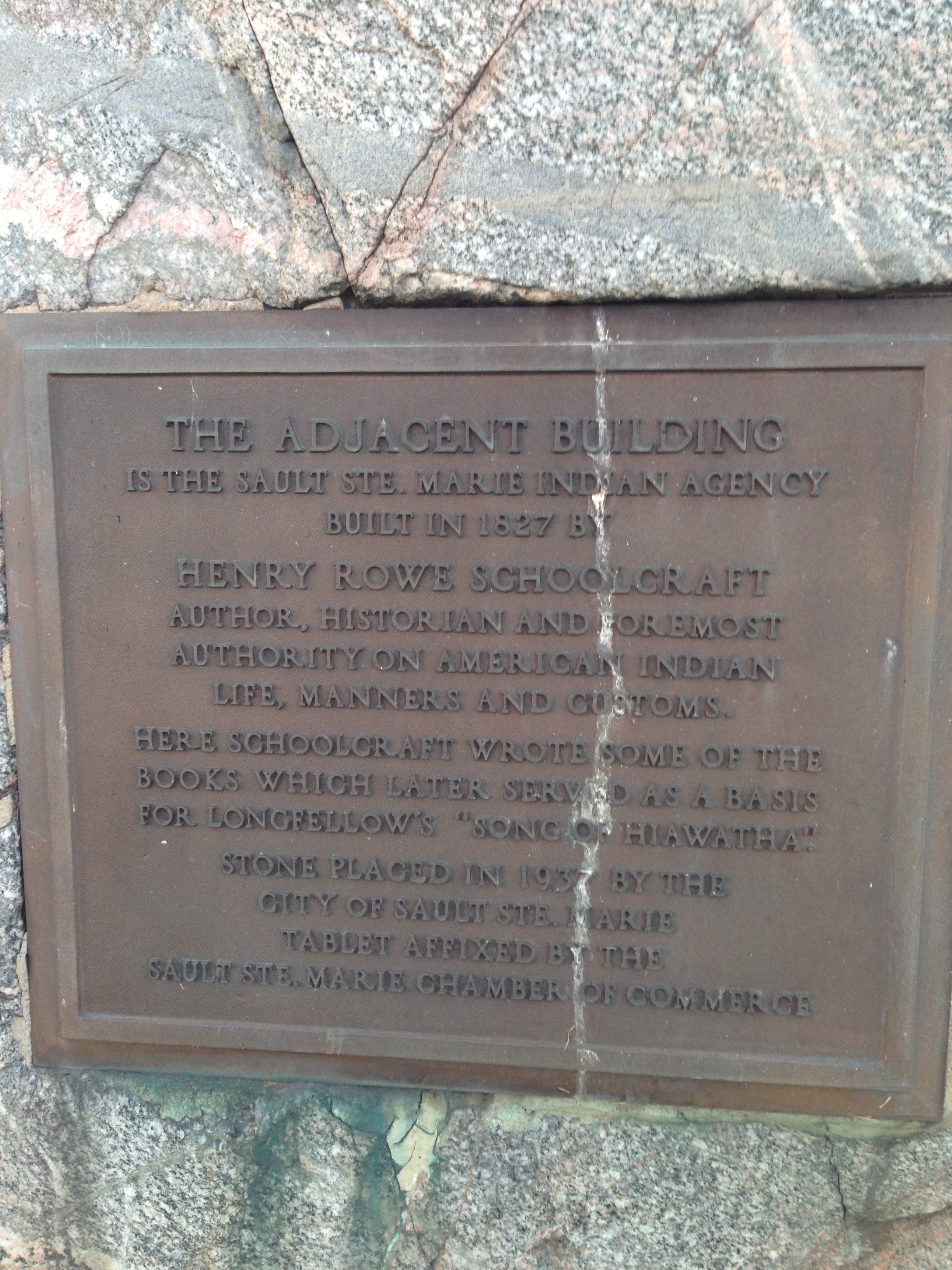
Dropped by Henry and Jane’s place, but I missed them by damn near 200 years:

Schoolcraft

Huh. Interesting inscription. Wonder what Jane would say about that.

Wells Fargo Sues Chukchansi for Trust Indenture Violations arising from Leadership Dispute

Here are the materials in Wells Fargo Bank v. Chukchansi Economic Development Authority (N.Y. Sup. Ct.):

Summons and Complaint

Order to Show Cause

Memorandum of Law

Michigan Sixth Circuit Answer Brief in Michigan v. Sault Ste. Marie Tribe

Here:

Michigan Brief

Opening brief is here.

Gaming Facility Lease Dispute Dismissed from Conn. Courts

Here is the opinion in Big Bubba’s BBQ, LLC v. Mohegan Tribal Gaming Auth. (Conn. Super.) (PDF).

An excerpt:

As a matter of fact and of law, this court finds no waiver of sovereign immunity that would permit this court to proceed with this case.   More specifically, the court finds no such waiver as to a suit under Conn. Gen.Stat. § 47a–43, whether the trial be by court or jury (see Conn. Gen.Stat. § 47a–44 and § 47a–45), or as to the equitable relief sought in this case (see Conn. Gen.Stat. § 47a–45a(a), including restitution, and § 52–471 et seq., as to an injunction with or without bond) or as to any potential (but not pled) double damages claim (see Conn. Gen.Stat. § 47a–46).

New Scholarship on Winters Rights

Jesse H. Alderman has posted his paper, “Winters and Water Conservation: A Proposal to Halt ‘Water Laundering’ in Tribal Negotiated Settlements in Favor of Monetary Compensation,” on SSRN. The final version of the paper appears in the Virginia Environmental Law Journal. Here is the abstract:

In the century since the U.S. Supreme Court, in Winters v. United States, granted Indian tribes reserved water rights, few tribes have received the promised delivery of water, while at the same time, the Department of Interior — the same agency tasked with a fiduciary duty to hold all tribal assets in trust — constructed massive, multibillion-dollar water projects without cognizance of senior Indian rights. The water transformed much of the West from arid desert to a green expanse of farmland and steel-and-mirrored urban centers with populations rivaling cities in the water-rich East. However, the pace of development has placed unsustainable strain on the groundwater aquifers and surface waters of the parched Interior West, all while untold millions of acre-feet of water are still owed to Indian tribes under Winters. As state courts and the U.S. Supreme Court have proven hostile to Indians, tribes have increasingly settled their Winters claims through negotiation with states, cities, and other junior appropriators. The benefits of these negotiated settlements have proven illusory. While tribes turn their “paper rights” into “wet water,” they are often shortchanged, and bound by agreement to market water to competing municipal economies off-reservation. The linchpin of most negotiated settlements is federal investment in otherwise politically unpalatable water delivery projects, made possible by the purported necessity of settling senior Indian claims. This form of exchange might critically be called “water laundering.” This Article argues that negotiated settlements are bad public and environmental policy. As an alternative to those negotiated settlements, this Article proposes that tribes should instead seek financial compensation for their inchoate Winters rights by suing the federal government for a century of abject breach of its fiduciary duty to hold water in trust for the benefit of tribes. This suit should be modeled on the recent Cobell class action litigation, where Congress ratified a $3.4 billion settlement with the Departments of Interior and Treasury for similar mismanagement of Indian allotment lands. A class action approach would allow the tribes to receive the maximum financial value, and vindicate rights long neglected by the federal fiduciary, all while averting further overconsumption of the West’s perilously scarce water resources.

Grand Canyon Skywalk Developer David Jin Dies of Cancer

Here.

Tribal Court Brief in Muscogee (Creek) Nation Tribal Court Jurisdiction Appeal

Here is the appellee brief in Thlopthlocco Tribal Town v. Stidham:

16-Answer brief of Defendant-Appellees

Opening brief here.

Lower court materials here.