Here’s an interesting perspective from PERC. It’s hard to tell if it’s a termination/allotment perspective dressed up in new clothes or a true self-determination perspective.
Environmental
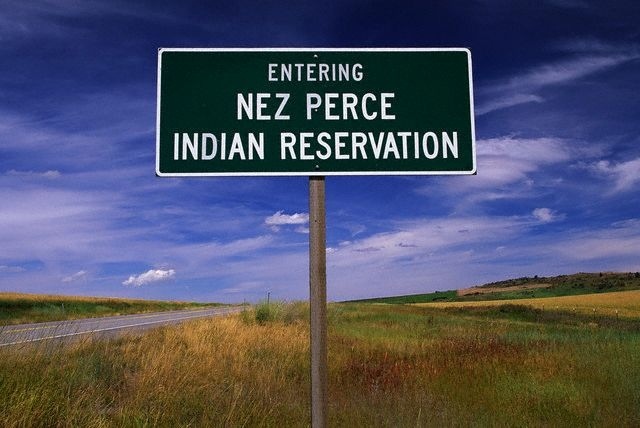
NYTs Coverage of Nez Perce Fight against MegaLoads and Climate Change
Here.
New State Motion in Penobscot Tribe & United States v. Mills (Maine)
Here:
2013-08-26 Defendant State_s Motion to Amend Answer and Counterclaim (3)
Affirmation in Support of State Defendant_s Motion to Amend Answer and Counterclaim (2)
Exhibit A – Amended Answer and Counterclaim (3)
Exhibit B – letters from Banks (3)
Exhibit C – 2012-05-24 Statement by Counsel (3)
Elizabeth Warner on Tribal Environmental Law
Elizabeth Warner has posted “Examining Tribal Environmental Law” on SSRN. Here is the abstract:
Federal environmental law recently celebrated its 40th birthday and much has been said about it in the past four decades. Today, however, little is said about the role the third sovereign, tribal nations, plays in the development of environmental law. Although some scholarship exists regarding the development of tribal environmental law, little is known about the extent to which tribes nationwide have enacted such laws. This article fills that vacuum by taking a first look at how tribal environmental law has developed and exploring the laws of one tribal nation that has enacted several environmental laws. The article also begins the discussion of what may be normative practices in the development of tribal environmental law.
Where the federal government has not pre-empted them, tribes may develop their own tribal environmental laws. The time has never been better for an examination of tribal environmental laws. From a historical perspective, Indian country has been the location of substantial environmental contamination. Today, Indian country possesses a substantial potential for natural resource development. Additionally, two recently enacted federal laws, the Indian Tribal Energy Development and Self-Determination Act of 2005 (specifically the Tribal Energy Resource Agreement or TERA provisions) and the Helping Expedite and Advance Responsible Tribal Homeownership Act (HEARTH Act), may spur development of tribal environmental laws. To take advantage of “streamlined” development provisions under both the TERA provisions and HEARTH Act, tribes must develop certain environmental review provisions. These factors in combination with the fact that the environment plays an important cultural and spiritual role for many tribal communities mean that now is an optimum time to consider tribal environmental law.
To start this important discussion on existing tribal environmental law, the article begins in Part II with an introduction to environmental law that is applicable in Indian country, establishing a foundation from which to explore the development of tribal environmental law. Next, in Part III, the article examines facts that may drive the development of tribal environmental law today. In addition to the fact that many tribes have historically faced substantial environmental contamination, modern factors likely to impact most tribal nations include the promotion of tribal sovereignty and also the need to respond to emerging environmental concerns. The article next describes and classifies the laws of 74 federally recognized tribes, highlighting environmental laws the tribes have enacted. This portion of the article concludes that a significant number of federally recognized tribes have no publically available tribal environmental laws. In light of this finding, Part V examines the existing laws of one tribal nation, the Navajo Nation, which has actively developed its tribal environmental laws. Moreover, Part V also begins the discussion of what may be norms for the development of tribal environmental law in the future. In this regard, this article establishes the foundation for the development of a robust examination of tribal environmental law.
Ninth Circuit Vacates Large Attorney Fees Award in Pakootas v. Teck Cominco Metals
Here are the materials:
The attorney fees award, I believe, is discussed here.
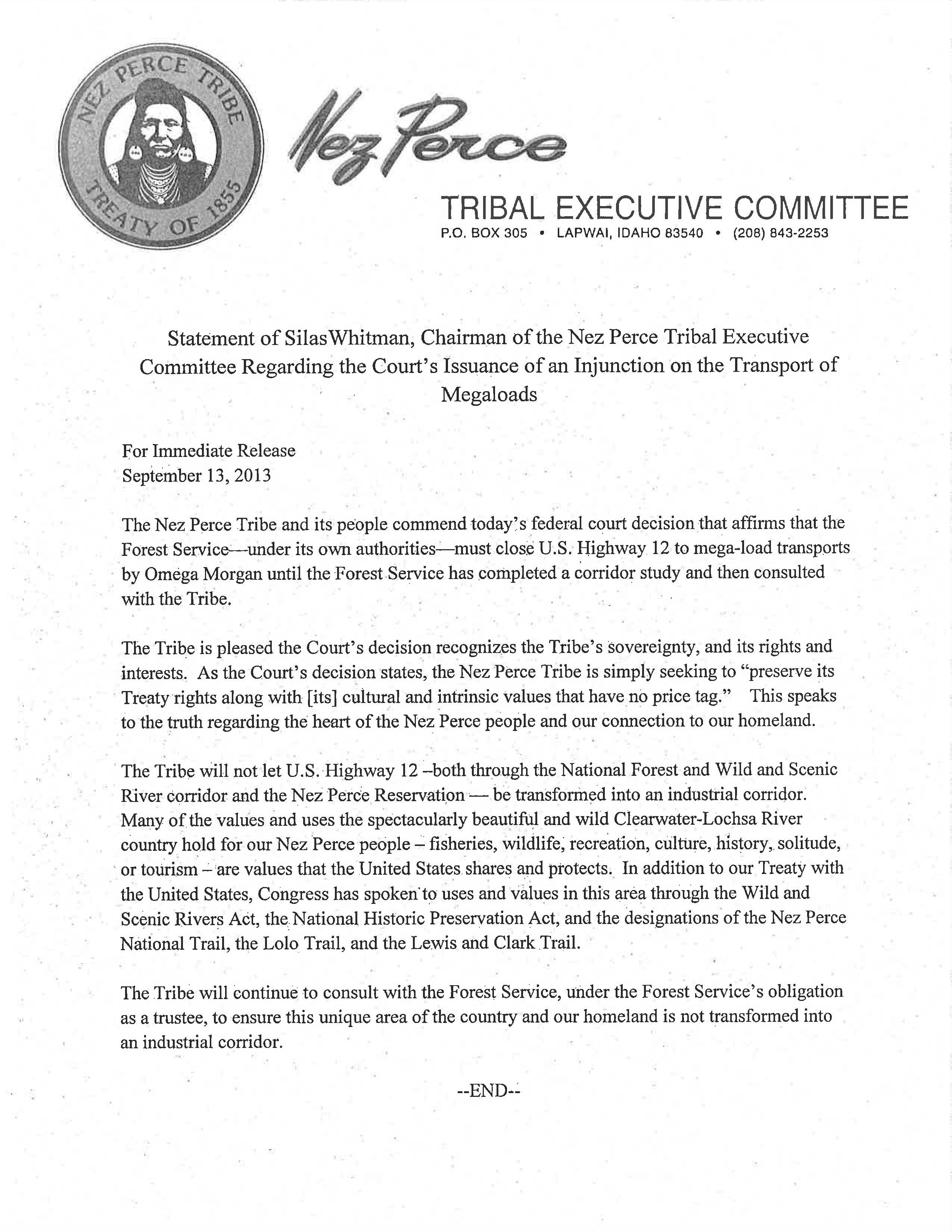
Nez Perce Tribe Press Release on MegaLoads Decision
D.C. Circuit Briefing Complete in Oklahoma DEQ v. EPA
Here:
UPDATE Dec. 2013 — Supplemental Briefs:
I believe this is the rule being challenged:
Briefs in Quechan Challenge to Ocotollo Wind Energy Facility in S. California
Here are the briefs in Quechan Tribe of the Fort Yuma Indian Reservation v. Dept. of Interior:
Doc 11_1 Appellant’s Opening Brief 090413. wo Addendum
Reply brief TK
Lower court materials here.
Federal Court Enjoins MegaLoads on Nez Perce Land — Lack of Tribal Consulation
Here are the materials in Nez Perce Tribe v. United States Forest Service (D. Idaho):
Nez Perce (Mega-load) Consultation decision (Sept 2013)
New Study on Eagle Mortalities at Wind Energy Facilities
This study, collected by United States Fish and Wildlife Service employees, was published in the Journal of Raptor Research.
Here:
 Turtle Talk
You must be logged in to post a comment.