Michigan SCT Justice Mike Cavanagh OpEd: “Inaugural tribal-state court forum addresses child welfare issues”

Justice Cavanagh’s op/ed is available here.

An excerpt:

Our inaugural Tribal State Federal Judicial Forum meeting this week focused on issues of Indian child welfare, on outlining the scope of the Forum’s work, and on organizing our leadership. We examined what forums in other states are doing to find examples of best practices and innovations. Also, we delved into the ICWA as the “gold standard,” as well as the importance of judicial leadership and collaboration.

Because we can’t know where we should be headed if we don’t know where we are now, the Forum also received updates on Michigan Indian child welfare data, and child welfare services and resources from the State Court Administrative Office.

Most importantly, the Forum finalized our Naakonigewin, or Charter, which defines our make-up, appointment process, and governance. The Charter will not only solidify and formalize a valuable, long-standing relationship, but it also will lay the groundwork for future collaborations among the courts. The Charter will guarantee that while the names may change, the mission will continue.

As we opened our meeting with a traditional tribal pipe ceremony and drums, I had the honor of sharing some reflections on my lifelong commitment to improving relations between our sovereign governments and our people. I am also excited to hand over my role as Supreme Court Tribal Liaison Justice to the Forum to Justice Bridget McCormack. I have no doubt she will bring even more passion and dedication to the task.

I am positive that the Forum, under the guidance of Justice McCormack, its tribal and state judge co-chairs, and the participation of many of the state’s and tribes’ most dedicated jurists, will continue to find common ground to accomplish wonderful things for all our children. The measure of our success will be reflected in strong relationships, linking our peoples, learning from the lessons of the past and leading our children to a better future.

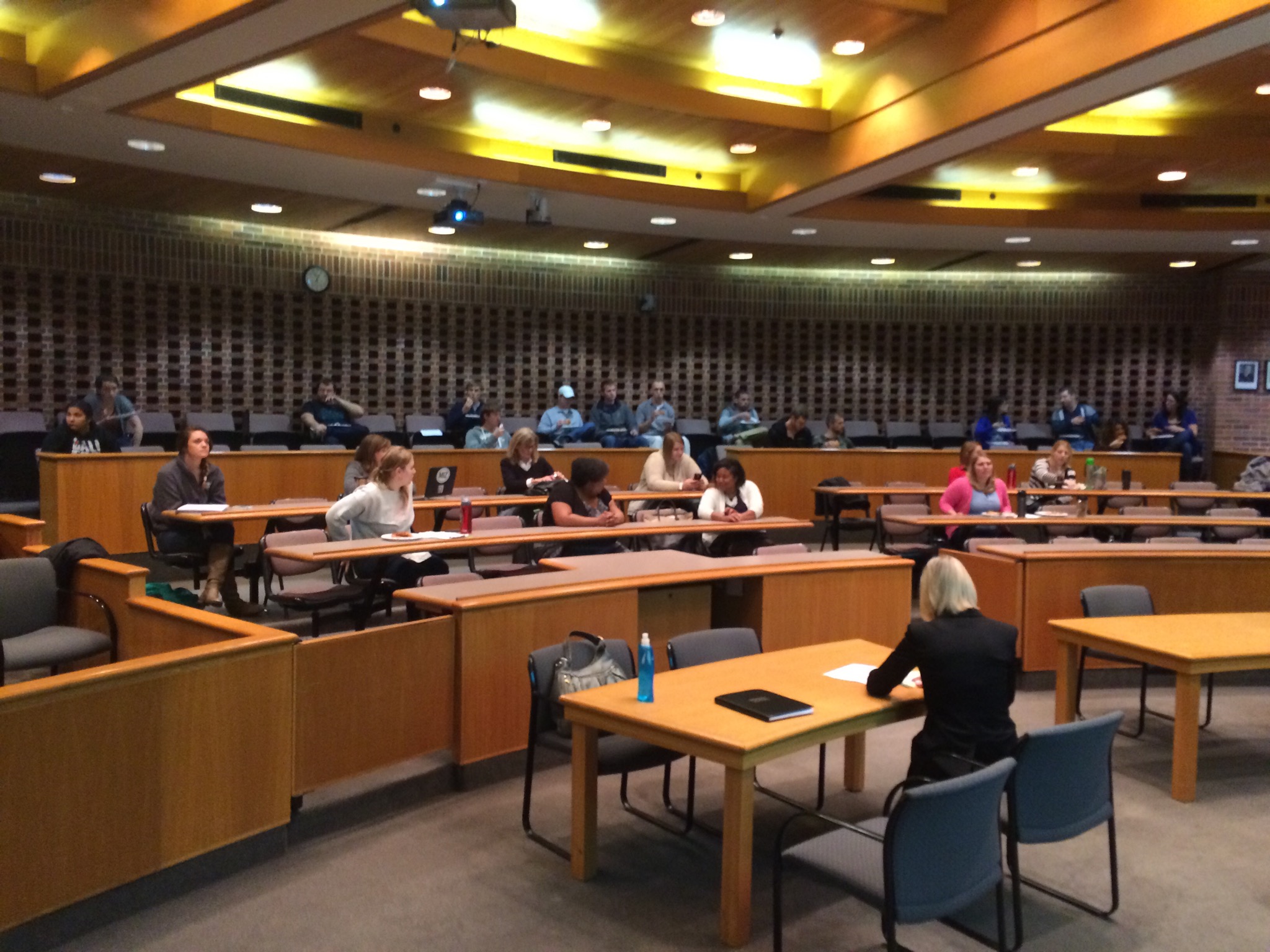
Adoptive Couple/ICWA Talk at Mizzou Law

The founding members of Mizzou’s brand new NALSA, Justin Trueblood and Kristen Stallion. Look for them at Moot Court 2016.

IMG_4788-0

Their first event (with Prof Mary Beck and Kate Fort)

IMG_4790

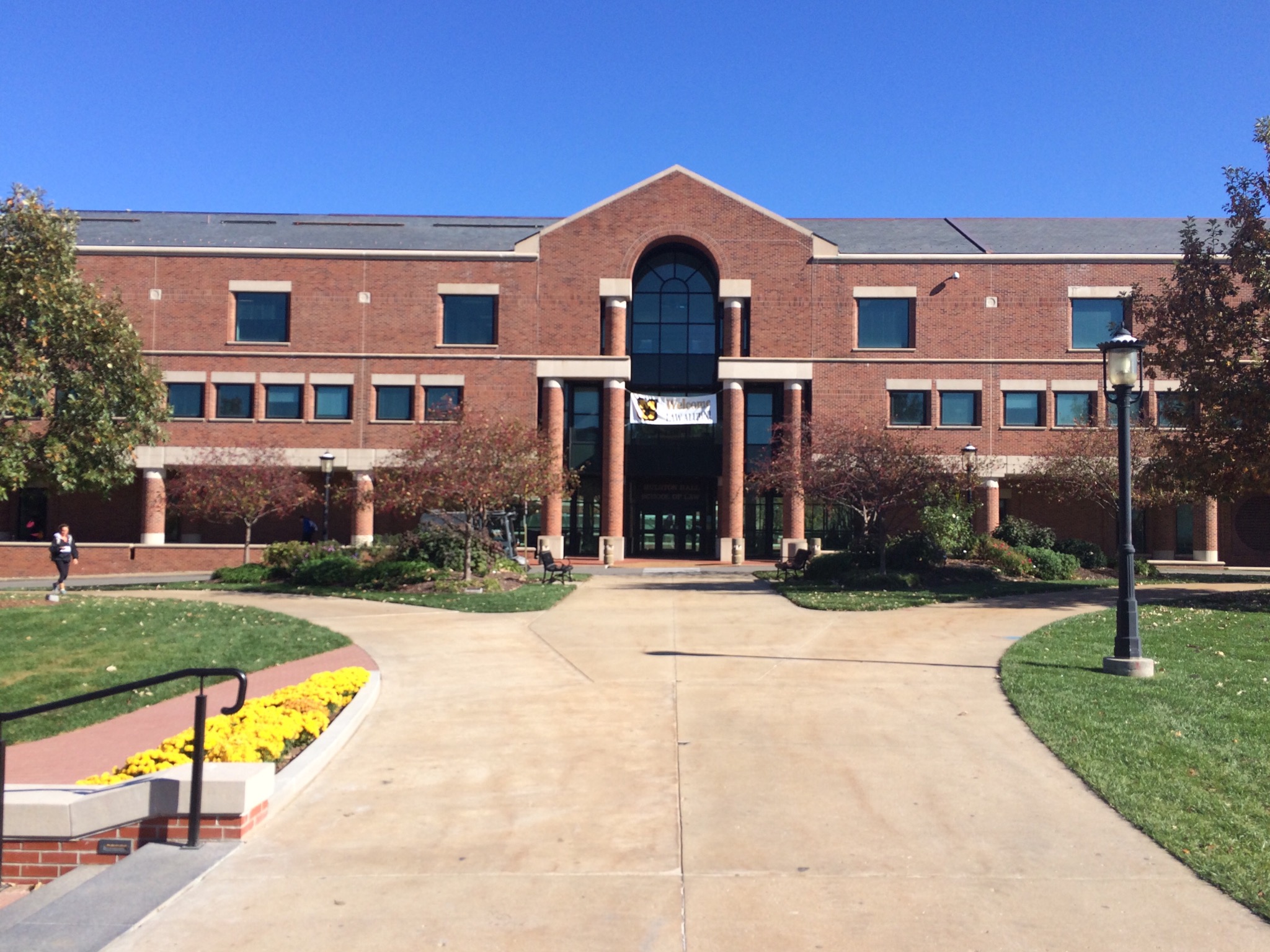
The administration building and the law school on a gorgeous day.

IMG_4794

IMG_4793

MIFPA/ICWA Expert Witness and Active Efforts Case out of Michigan COA

Here.

The court conditionally reversed the trial court because of a lack of proper expert witness testimony (citing ICWA, MIFPA and the Guidelines). It also finds that the agency made active efforts–even if there was no testimony for each element in the MIFPA definition of active efforts.

Interestingly, this case also addresses what child protective orders may be appealed (or not) in Michigan, and advises the Michigan Supreme Court to revise the Michigan Court Rules to allow for an appeal of right of a removal of a child:

We also suggest that the Supreme Court consider modifying MCR 3.993 in order to permit a parental appeal of right, at least under some circumstances, from removal order when a child is removed from his or her parents at a stage prior to adjudication. Where a parent’s action or neglect threatens a child’s safety sufficient to justify removal at the outset of a child protective proceeding, it is neither surprising nor objectionable that such removal would correlate with a higher likelihood of termination. However, as several recent cases have shown, the decision to remove a child can substantially affect the balance of the child protective proceedings even where the initial concerns are eventually determined to have been overstated.

In such cases, the parent may find his or her parental rights terminated not because of neglect or abuse, but because of (1) a failure to adequately comply with the Department’s directives and programs and (2) a loss of bonding due to a lack of parental visitation.

Unpublished Expert Witness Case out of Nebraska

Here.

In this case, the State called Patterson to testify that returning Eyllan to Nathaniel’s care was likely to result in serious emotional or physical damage to him. Patterson is currently employed as a school psychologist. Her educational background includes an education specialist degree and a bachelor’s degree in social work. Previous to her current employment position, she has worked as a social worker who specialized in and worked exclusively with Native American families. As a part of this employment, she provided expert testimony in NICWA cases, developed activities for children living outside of their tribe to maintain “cultural connectiveness,” and worked with tribes to facilitate enrollment of Indian children. In addition,Patterson has experience providing parental supervision, parenting education, and in-home counseling for Native American families. Patterson testified that she continues to have knowledge of “the prevailing social and cultural standard for rearing children within the Native American community.” She also indicated that she has experience with the Sioux Tribe, which is the tribe in which Eyllan is eligible for enrollment.

One side note–the Nebraska Court of Appeals only cites to the Nebraska ICWA rather than the federal ICWA (they do also cite to the BIA Guidelines via an NE Supreme Court case). Without reading through the whole statute, the state version does appear to essentially mirror the federal one. However, this week I had a conversation about how important it turned out to be for Michigan, specifically regarding investment in state education and state training on ICWA issues, to have a state ICWA law passed. Cases like this reinforce that belief.

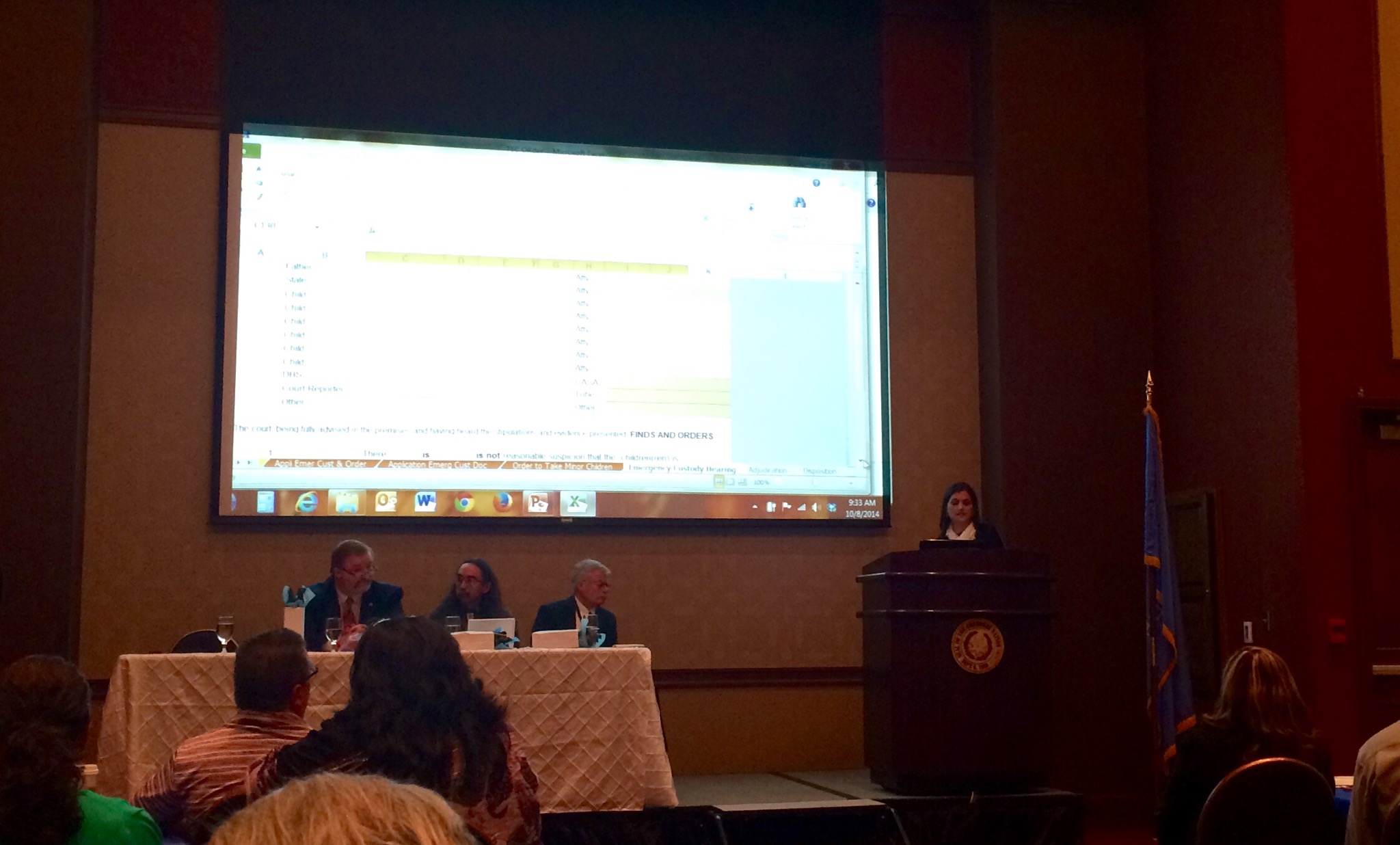
Final Panel of the Day at NAICJA

Melody McCoy doing the federal litigation update. Joined by Rodina Cave and Gina Jackson talking about BIA ICWA Guidelines.

IMG_4676.JPG

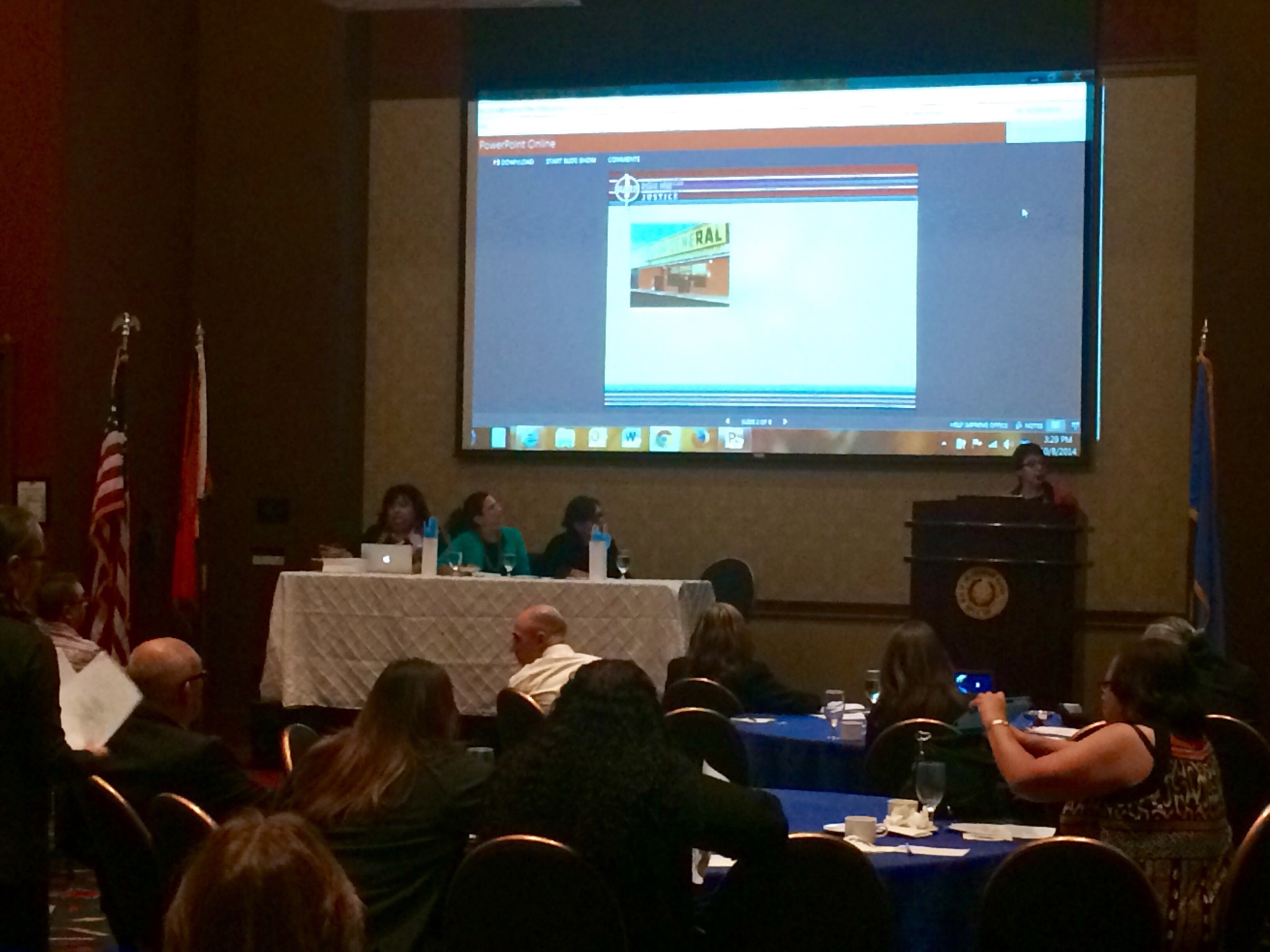
Oklahoma Tribal & State Judges ICWA Panel at NAICJA

Justice Hagar, Judge Bigler, Judge Denney, and Judge Brown.

IMG_4665.JPG

Unpublished Notice Case out of California

We don’t post all of the unpublished ICWA notice cases, but they are obviously still out there. An appellate court cannot determine if ICWA notice has happened if there is nothing in the record at the trial court level:

Nor can we find that the error was harmless. While father filed an ICWA–020 form indicating that he was not aware of any Indian ancestry, no such form appears in the record with respect to appellant. Similarly, the record contains no copies of either the certified notices sent to the Cherokee tribes in 2009 or 2010 or any responses from those tribes. Finally, it does not appear that any proof of the juvenile court’s ICWA finding from the prior matter was submitted to the juvenile court in this matter. Consequently, it was not possible for the juvenile court in the present case to assess the propriety of the notice given, whether all three federally recognized Cherokee tribes received notice, whether either of the two Cherokee tribes besides the Cherokee Nation responded, or precisely what the juvenile court’s finding that ICWA did not apply was based on. (Cf. In re Jennifer A. (2002) 103 Cal.App.4th 692, 703 [finding prejudicial error where Agency stated in a report that it had sent notices to tribes in compliance with ICWA, but no evidence was presented to juvenile court concerning Agency’s communications with tribes].)


Case here.

Kate Fort on Observing ICWA Cases in State Courts

Our own Kate Fort has posted her paper, “Observing Change: The Indian Child Welfare Act and State Courts,” published in the New York State Bar Association Family Law Review earlier this year. It is available on SSRN.

Here is her abstract:

ICWA is one of the foundational laws of federal Indian law, but it usually arises in the broader public consciousness when there is a voluntary adoption subject to the law. Recently, the law was subject to Supreme Court review in Adoptive Couple v. Baby Girl. A heart-wrenching case, but ICWA is far more regularly applied in abuse and neglect cases. Any involuntary removal of an American Indian child, as defined by the Act, requires the application of ICWA. While cases of voluntary adoptions designed to thwart the requirements of ICWA require constant vigilance from states and tribes, the law provides broader protections for those families in the state child welfare system.

This article posits one way to both collect data about abuse and neglect compliance within the framework of ICWA, and increase that compliance through collaborative change to the systems. QUICWA, a project by the Minneapolis American Indian Center, consists of a group of interested stakeholders who have created a checklist to measure what happens in each individual hearing where the court must apply ICWA. While other groups, such as the National Council of Juvenile and Family Court Judges, use a different checklist format, the goal of the projects are similar — to find ways to increase compliance with ICWA. Funded in collaboration with Casey Family Programs, law schools and social work programs in key states have started observing ICWA hearings using the QUICWA checklist. In Michigan, the Michigan State University College of Law has observed ICWA hearings in three counties, using law students as observers. Though family law is driven by narrative, collecting data is vital to identify patterns surrounding fairness and due process in the individual stories.

Montana ICWA Case: Notice, Active Efforts and a Look at Adoptive Couple Citations

Here.

A footnote in the case,

The record does not clarify whether G.S. ever had custody of M.S. The record is silent regarding G.S.’s relationship with M.S. prior to his incarceration. We recognize that 25 U.S.C. 1912(d) does not apply where the “breakup of the Indian family” has long since occurred. In re J.S., 2014 MT 79, P29, 374 Mont. 329, 321 P.3d 103 (citing Adoptive Couple v. Baby Girl, 570 U.S. __, 133 S.Ct. 2552, 2559 (2013)). Although the District Court asked during the April 22, 2013 hearing, before Baby Girl was decided, how the ICWA standard for termination applies in a situation where the child was never in the parent’s custody, the parties did not dispute that ICWA’s active efforts were required. Because this potential issue was not raised, we will not address it in this appeal.

got me looking for other cases that have cited Adoptive Couple. According to Westlaw, that would be 19 cases, including this one. Striking four of them as not child welfare cases, all 15 remaining were involuntary proceedings. Five from California, two from Montana, and one in Alaska, Nebraska, Oklahoma, North Carolina, North Dakota, Minnesota, Michigan, and Virginia.  Three cases “distinguished” Adoptive Couple, though that included the Alexandria P. case, so distinguishing Adoptive Couple doesn’t necessarily mean the court followed ICWA. Seven of the cases only cited the case (including this one).

Those that used the Adoptive Couple reasoning (instead of citing the case for fairly standard ICWA language)  include:

Native Villiage of Tununak v. State (holding that the adoption preferences of ICWA didn’t apply if the preferred placement didn’t “formally” move to adopt the child);

In re J.S. (applying the “continued custody” reasoning to a guardianship); and

In re Elise W. (discussing whether the case would change notice requirements when a parent never had custody)(unpublished case out of California’s First District).

In re T.S. (discussing when active efforts must start, in light of 1922 and 1912(d))

Oglala Sioux Tribe v. Van Hunnik Briefing Complete

Here:

Brief in Support of First Motion (July 2014)

Statement of Undisputed Facts (First Motion)

Due Process Motion (Second PSJ)

Due Process Undisputed Facts

Exhibit 1 (Hearing Transcripts) 502 pp

Exhibit 2 (Custody Orders) 113 pp.

Exhibit 7 (ICWA Affidavits) 145 pages

Exhibit 8 (Petitions for Temp Custody) 7 pages

DOJ Amicus Brief

128 Defendants Response to 1922 Motion

129 Defendants Response to Due Process Motion

OST46(ReplyBrief1922)

OST48(ReplyBriefDueProcess)