Ted White on Indians in American History

From the Faculty Lounge:

Here’s a link to a panel discussion of G. Edward White’s Law in American History: From the Colonial Era Through the Civil War, which was held at UVA Law School back on February 22. The speakers are Tomiko Brown-Nagin, Fred Konefsky, and John Witt. Tomiko and Fred have a number of observations about White’s methodology (in particular his contrast with Lawrence Friedman’s law and society approach and Tomiko is particularly interested in Native American ideas about law and their contact with European Americans and also the role of the law in the development of capitalism) and John asks some meta questions about why we do legal history (and he hypothesizes what White might be doing here). All of this reminds me that I want to talk soon about what why I write legal history and also about what we’re increasingly calling applied legal history. And also what role law has as a form of technology that’s used to implement basic desires and why others see law as more of an independent variable that controls us and what we do. There’s a lot to talk about here and I hope that at some point Tomiko’s, Fred’s, and John’s papers appear somewhere, to extend the conversation.

Lewis & Clark Law Review Indian Law Symposium

Here:

SYMPOSIUM
 The Future of International Law in Indigenous Affairs:The Doctrine of Discovery, the United Nations, and the Organization of American States

THE INTERNATIONAL LAW OF COLONIALISM: A COMPARATIVE ANALYSIS

Robert J. Miller

15 Lewis & Clark L. Rev. 847 (2011)

The majority of the non-European world was colonized under an international law that is known as the Doctrine of Discovery. Under this legal principle, European countries claimed superior rights over Indigenous nations. When European explorers planted flags and religious symbols in the lands of native peoples, they were making legal claims of ownership and domination over the lands, assets, and peoples they had “discovered.” These claims were justified by racial, ethnocentric, and religious ideas of the alleged superiority of European Christians. This Article examines the application of Discovery by Spain, Portugal, and England in the settler societies of Australia, Brazil, Canada, Chile, New Zealand, and the United States. The comparative law analysis used in this Article demonstrates that these three colonizing countries applied the elements of the Doctrine in nearly identical ways against Indigenous peoples. Furthermore, the six settler societies analyzed here continue to apply this law today to restrict the human, property, and sovereign rights of Indigenous nations and peoples. This Article concludes that basic fairness and a restoration of the self-determination rights of Indigenous peoples mandates that these countries work to remove the vestiges of the Doctrine of Discovery from their modern day laws and policies.

RECONCEPTUALIZING TRIBAL RIGHTS: CAN SELF-DETERMINATION BE ACTUALIZED WITHIN THE U.S. CONSTITUTIONAL STRUCTURE?

Rebecca Tsosie

15 Lewis & Clark L. Rev. 923 (2011) Continue reading

Ann Tweedy on Unjustifiable Expectations

Highly recommended!!!!

Ann Tweedy has posted her paper, “Unjustifiable Expectations,” on SSRN. Here is the abstract:

When the Supreme Court decides whether a tribe has jurisdiction over non-members on its reservation or addresses the related issue of reservation diminishment, it sometimes refers implicitly or explicitly to the non-Indians’ justifiable expectations, and Philip Frickey has argued that a concern with non-Indians’ justifiable expectations drives Court decisions about tribal jurisdiction even when the Court does not express that concern directly. The non-Indians’ assumed expectations arise from the fact that, when Congress opened up reservations to non-Indians during the allotment era, its assumption, and presumably that of non-Indians who purchased lands on reservations during that period, was that the reservations would disappear due to the federal government’s assimilationist policies, along with the tribes who governed them. To refute the idea that such non-Indian expectations were justifiable, I examine historical newspaper articles and other historical sources regarding the opening up of reservations to non-Indian purchasers, specifically focusing on articles relating to cessions by the Sioux Nation and especially the Cheyenne River Sioux Tribe. Such sources suggest that non-Indian purchasers were on notice, in at least some cases, of a potential violation of tribal rights in the opening of portions of reservations to non-Indian settlement. Based on my argument that “justifiability” encompasses both reasonableness and a notion of justice, this information is used to show that the non-Indian purchasers’ presumed expectations about the disappearance of reservations were not justifiable because the purchasers had notice in many cases that lands were unjustly being taken from the Sioux Nation and other tribes. If, as I will argue, non-Indian expectations of tribal disappearance were unjustifiable, such expectations should not be given weight in determinations of tribal jurisdiction today.

Minnesota Struggles with 150 Year Anniversary of Dakota War/Mass Executions

Here.

“The Eagle Returns” Noted in Indian Country Today’s Books Recommended for 2012 New Year

Here. An excerpt:

A new year has begun, and with it comes a crop of intriguing new books. From the first indigenous science fiction anthology, to studies of American Indian history, to a memoir or two, here is a sampling of what’s in store for the first few months of 2012.

Readers interested in the law awoke to a new find on January 1: erstwhile attorney and Turtle Talk blogger Matthew L.M. Fletcher’s The Eagle Returns: The Legal History of the Grand Traverse Band of Ottawa and Chippewa Indians (Michigan State University Press). It may sound a tad scholarly for a post-holiday-torpor read, but the book itself covers beginnings, as it recounts the struggle of a group bound by kinship, geography and language to become self-governing again. It’s a handy reference for people who need to know more about how the Grand Traverse Band held its own to preserve its culture, language and other existential corner­stones in the face of legal and other intangible attempts to eradicate same.

Read more:http://indiancountrytodaymedianetwork.com/2012/01/15/whetting-the-literary-appetite-books-to-jump-start-your-reading-year-70480 http://indiancountrytodaymedianetwork.com/2012/01/15/whetting-the-literary-appetite-books-to-jump-start-your-reading-year-70480#ixzz1jjsJFbZE

Charles Cleland’s New Book: “Faith in Paper: The Ethnohistory and Litigation of Upper Great Lakes Indian Treaties”

Charles Cleland’s heavily anticipated new book (Univ. of Michigan Press website here) is now available! I’ve read the first few chapters and it’s wonderful.

Here is the book blurb:

Faith in Paper examines the reinstitution of Indian treaty rights in the upper Great Lakes region during the last quarter of the twentieth century, focusing on the treaties and legal cases that together have awakened a new day in Native American sovereignty and established the place of Indian tribes in the modern political landscape. The book discusses the development of Indian treaties in historic time and their social and legal context; specific treaties regarding hunting, fishing, and gathering rights as well as reservation issues; and the impact of treaty litigation on the modern Indian and non-Indian communities of the Great Lakes region. The book is both an important contribution to the scholarship of Indian legal matters and a rich resource for Indians themselves as they strive to retain or regain rights that have eroded over the years.

And here is the Traverse City Record-Eagle news coverage of the release of the book. An excerpt:

Written over the last five years, this 390-page book is the first comprehensive examination of 18 primary and 21 secondary treaty court cases in Michigan, Wisconsin and Minnesota. Cleland was the only person to be involved in all of the cases.

The decisions significantly changed perceptions of Native American tribes and their fishing, hunting and gathering rights, Cleland said.

The treaties gave Native Americans a different status under the law than other Americans, he said. Native Americans had always had fishing, hunting and gathering rights. The rights were not granted by the state or federal government.

“The string of court victories gave today’s Indians a legitimacy in the eyes of the larger population,” Cleland said. “It gave them a newfound political sovereignty, real clout and power.”

State governments claimed the treaties were “dead” and irrelevant at the time the cases were filed.

The Michigan Department of Natural Resources argued that the state had a right to regulate tribal fishermen who used gill nets because Michigan had banned the nets in the 1960s.

State attorneys also claimed that the nets were not native technology but introduced by the French in the early 17th century.

But Cleland’s 1966 dissertation, “The Prehistoric Animal Ecology and Ethnozoology of the Upper Great Lakes Region,” noted that Michigan’s earliest Native Americans had been using the nets at least 1,000 years before European contact.

U.S. District Judge Noel Fox reaffirmed treaty rights for Michigan’s federally recognized Ottawa and Chippewa tribes in a landmark 1979 ruling.

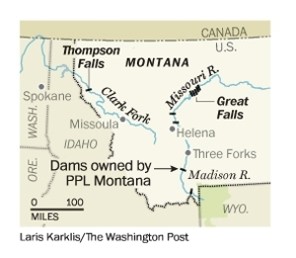
Lewis & Clark Expedition and PPL Montana v. Montana in the SCT

Here is the news coverage (h/t How Appealing) of this interesting historical case involving the notes from the Lewis & Clark expedition. An excerpt:

Both the state and the company say Lewis and Clark’s experiences make their case.

Clement points out that the expedition never even attempted to navigate one of the rivers at issue, and that the record shows Lewis and Clark bypassed the 17-mile Great Falls Reach of the Missouri “not out of convenience, but out of necessity — the stretch was impassable.”

Historians who agree with PPL said the state’s evidence of the commercial history of the rivers is in part based on notoriously unreliable frontier-era newspapers with boosterish and fabricated tales of “28-pound radishes and steamboat traffic between Denver and the Gulf of Mexico.”

Montana replies with Lewis’s observation that he did not believe “that the world can furnish an example” of how rivers can run through such mountainous country as Montana and yet be “so navigable as they are.”

It is beyond dispute that the rivers played an important part of the new nation’s economic development, Montana argues.The state’s supportive historian is Stephenie Ambrose Tubbs, who has written extensively about Montana and is the daughter of Lewis and Clark scholar Stephen Ambrose.

“For those of us who have spent our lives on these Rivers, retracing Lewis and Clark’s historic footsteps,” she told the court in a brief, a piecemeal approach to ownership is threatening.

And, for those who look to original meaning, she proposed that the court affirm the Montana Supreme Court, which she said recognized “that these rivers were navigable, as that term was understood by President Jefferson and the Founders before him.”

Continue reading

Ann Tweedy on Indian Self-Defense and the Second Amendment

From the crit:

Ann E. Tweedy

“[H]OSTILE INDIAN TRIBES . . . OUTLAWS, WOLVES . . . BEARS . . . GRIZZLIES AND THINGS LIKE THAT?” HOW THE SECOND AMENDMENT AND SUPREME COURT PRECEDENT TARGET TRIBAL SELF-DEFENSE

Here is the introduction:

This article examines the history of self-defense in America, including the right to bear arms, as related to Indian tribes, in order to shed light on how the construction of history affects tribes today. As shown below, Indians are the original caricatured “savage” enemy that white Americans believed they needed militias and arms to defend themselves from. Since the early days, others have ably documented that the perceived enemies have multiplied to include African-Americans, immigrants, and the lower classes. But this has not meant that Indians have been let off the hook. Instead, they not only remain saddled with whites’ nightmare images of their savagery, but they continue to be punished for the popular perception of them in very concrete ways. Specifically, they are repeatedly and increasingly denied the right to govern on grounds of their untrustworthiness, and it is entirely possible that the lawlessness on Indian reservations has continued as a result of this very racialization.
This article first examines evidence that the historical meaning of self-defense in America (including that of the Second Amendment) was predicated largely on the premise that European, especially English, colonists needed to defend themselves against “savage” Indians. The article then argues that the cultural myth of white America’s need to defend itself against Indians obscures the fact that Indians who engaged in armed conflicts with the United States or the colonies were, in many instances, actually defending themselves and their homelands from white aggression and encroachment on the lands they owned and had been using for centuries.
The article next argues that this self-defense mythology and the oppressive history that it obscures have had important historical consequences for tribes and continue to have concrete consequences for tribes today. These continuing consequences are largely due to the fact that tribes today continue to be viewed as “savage” in the popular imagination and by Supreme Court Justices. The article further argues that such consequences can be understood as a deprivation of the right to self-defense in a figurative sense.
More specifically, as scholars such as Robert Williams have documented, the Supreme Court implicitly relies on this racialized characterization to deny tribes their sovereign powers. Thus, despite the fact that federal and state governments no longer have statutes and rules in place that deny Indians the right to carry guns, because tribes continue to be punished for their past efforts to defend themselves, in a very real sense Indians today lack the right to self-defense. Furthermore, the Supreme Court’s continual abrogation of tribal sovereign rights render tribes and the individuals living on reservations, both Indian and non-Indian, virtually defenseless against everything from predatory lending to violent crime. As a result, the depictions of tribes as savages are depriving tribes and Indians of their right to self-defense in a figurative sense on a macroscopic level. Additionally, America’s cultural understanding of tribes as warlike savages who perpetrated aggressions on innocent white colonists may well be working to subconsciously motivate the federal government to turn a blind eye to the horrific levels of violent crime that plague Indian reservations in the United States.
This article concludes that, as a nation, we must make an honest attempt to reckon with this checkered history and that, ultimately, we need to reevaluate both key Indian law precedent and the right to self-defense embodied in the Second Amendment. At a minimum, Indians’ and tribes’ constitutional rights must be protected prospectively, both in the context of self-defense as traditionally understood and more widely. Moreover, limitations on tribal jurisdiction are, in many cases, grounded on notions of savagery and should be regarded as inherently suspect. Finally, as a society, we must question all of our assumptions about tribes and Indians.

Tom Bell on the Third Amendment, Property Rights, and the Displacement of Alaska Natives During WWII

Tom Bell has posted his paper “‘Property’ in the Constitution: The View from the Third Amendment“, forthcoming in the William and Mary Bill of Rights Journal.

Here is the abstract:

During World War II, after Japan attacked the Aleutian Islands off Alaska’s coast, the United States forcibly evacuated the islands’ natives and quartered soldiers in private homes. That hitherto unremarked violation of the Third Amendment gives us a fresh perspective on what “Property” means in the U.S. Constitution. As a general legal matter, property includes not just real estate – land, fixtures attached thereto, and related rights – but also various kinds of personal property, ranging from tangibles such as books to intangibles such as causes of action. That knowledge would, if we interpreted the Constitution as we do other legal documents, tell us just about everything we need to know about the scope of constitutional property. Case law and commentary do not speak as plainly, however, raising troubling questions about what “Property” means each of the four times it appears in the Constitution. In particular, some authority suggests that the Takings Clause protects personal property less completely than it does real property. The unjust treatment of Aleutian natives during World War II shows the risk of giving constitutional property so peculiar and narrow a definition. This paper describes the troubling inconsistencies that afflict the law of constitutional property and invokes the Third Amendment, that oft-forgotten relic of the American Revolution, to argue for giving “Property” a plain, generous, and consistent meaning throughout Constitution.

Newberry Library Opens Site on Indian Peoples of the Midwest

The Newberry Library has developed a very nice website, “Indians of the Midwest, Past and Present.”

Here is a description:

The Newberry Library announces the launch of a multimedia educational website supported by National Endowment for the Humanities, titled “Indians of the Midwest, Past and Present”. The website focuses on Native people of Minnesota, Wisconsin, Michigan, Illinois, Indiana, and Ohio to explore several contemporary issues with roots in the history of the region: tribal sovereignty, hunting and fishing rights, casinos, treaties, identity, repatriation, and stereotypes.

Dr. Scott Manning Stevens (Mohawk) is the director of the Indians of the Midwest project and Dr. Loretta Fowler is the editor. Stevens also directs the D’Arcy McNickle Center for American Indian and Indigenous Studies and Fowler is an anthropologist and Professor Emerita at Indiana University. The site was developed in consultation with an advisory committee consisting of members of tribal colleges and university scholars. The site features Newberry-produced, videotaped interviews with several scholars, including Raymond J. DeMallie, Larry Nesper, Dave Edmunds, Nancy Lurie, and John Low.