Here:
Senate Committee on Indian Affairs Report on Tribal Labor Sovereignty Act
Here:
Here:
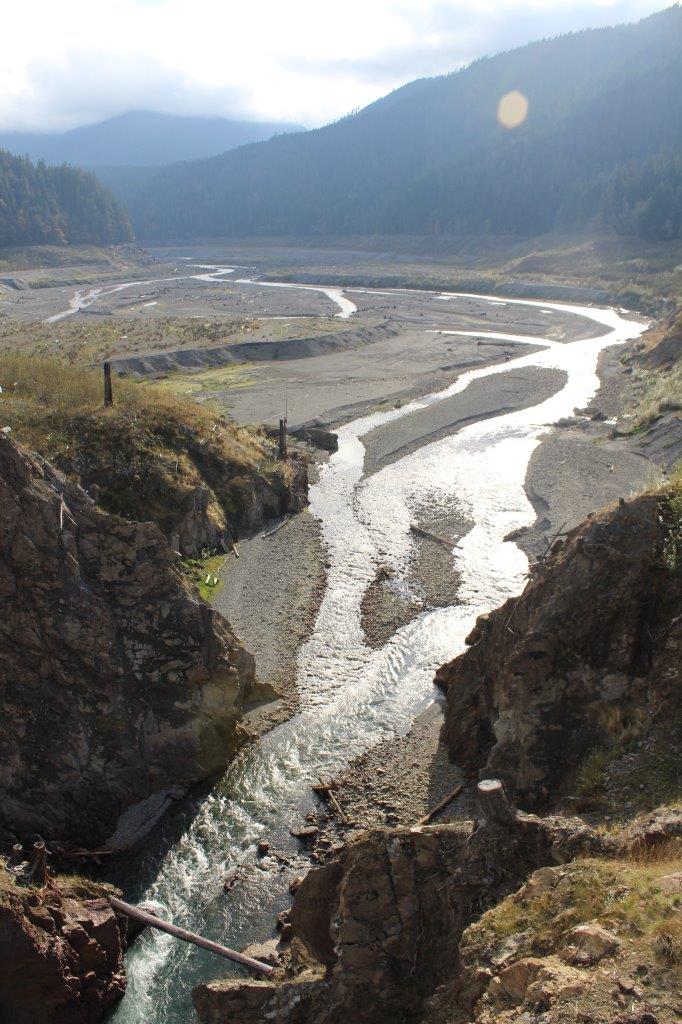

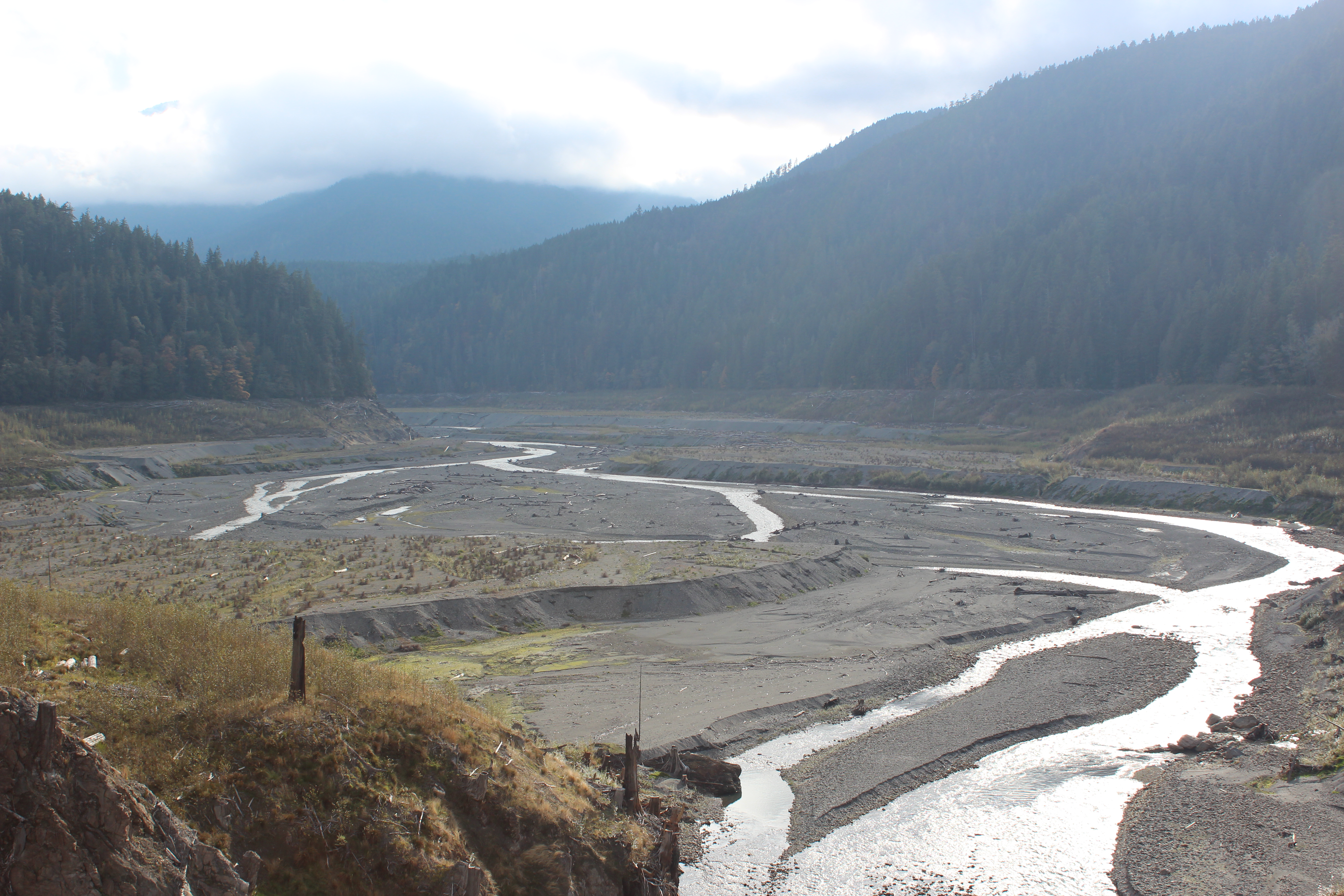

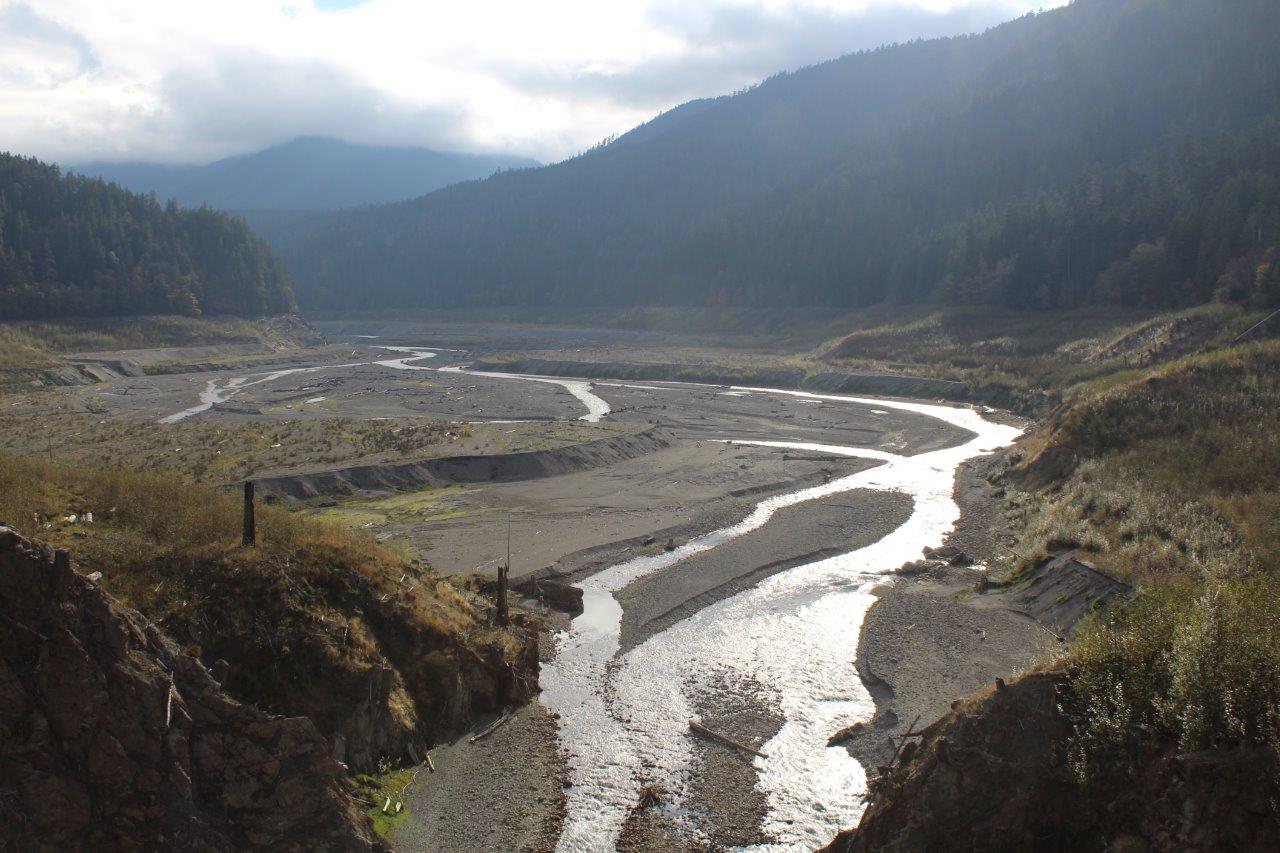
Here are some pictures from Sunday’s Seattle U. field trip to view the progress of the Elwha River’s restoration. The trip was led by Robert Elofson, Director of the River Restoration Project for the Lower Elwha Tribe. It was part of a class on the restoration of the River after the removal of the two dams, which is taught by Professors Catherine O’Neill and Eric Eberhard. What lucky students to have the chance to examine the mechanics of a tribal triumph like this one and then to see the on-the-ground evidence firsthand!

Announcement and agenda here.
The workshop is offered by Odawi Law PLLC and Harris Moure PLLC and will be at the Embassy Suites in Sacramento, CA, on Monday, October 5, 2015. It is free to Tribal officials.
Here.
A conference will be held July 29-31, 2015 at the Indian Pueblo Cultural Center in Albuquerque, NM.
Day one will be devoted to discussing ICWA, its original intent, and current court cases around the country that have impacted ICWA compliance.
Day two is focused on the term “competent jurisdiction” and how it has been interpreted. Participants will discuss ways that tribes can help educate parties in the legal system to understand cultural and sovereign rights.
Day three will explore the potential for implementing peacemaking in tribal legal systems, particularly in the context of children in need of care.
Full agenda here: Agenda For July 2015 ABQ.
Kirsten Matoy Carlson has posted her paper, “Congress, Tribal Recognition, and Legislative-Administrative Multiplicity,” on SSRN.
Here is the abstract:
For over thirty years, tribal leaders, state officials, members of Congress, and scholars have decried the process by which the United States recognizes Indian tribes. Most accounts have focused exclusively on the administrative process, omitting Congress from their analyses and suggesting that Congress plays a minor role in tribal recognition. The widely-accepted proposition that Congress has relinquished control over recognition is a testable hypothesis. This article tests this proposition empirically. The results call into question the dominant narrative about the congressional role in federal recognition and show that it is just plain wrong. In addition to debunking prevailing misconceptions, the data exposes an intriguing puzzle — a more complicated tale of legislative-administrative multiplicity. Federal recognition is not a uniform administrative process. Instead, parallel legislative and administrative processes exist and often intersect in complex ways. This discovery is an important first step towards understanding these dual processes and their implications for federal Indian law and understandings of legislative-administrative relationships more generally.
Highly recommended.
Today the Department of Justice proposed legislation that would require states or localities whose territory includes part or all of an Indian reservation, an Alaska Native village, or other tribal lands to locate at least one polling place in a venue selected by the tribal government. “The Department of Justice is deeply committed to ensuring that every eligible individual is able to exercise his or her fundamental right to vote,” said Attorney General Loretta E. Lynch. “That’s why, today, I am calling on Congress to help remove the significant and unnecessary barriers that for too long have confronted American Indians and Alaska Natives attempting to cast their ballots. The legislation we recommend today will make this nation stronger by extending meaningful voting opportunities to native populations, by encouraging full participation in our democratic institutions, and by bringing us closer to our most cherished ideals.”
“As citizens of a nation founded upon the principles of liberty and equality, Native Americans have faced unacceptable barriers to participating in the franchise, a situation aggravated by a history of discrimination, poverty and — significantly — great distances from polling places,” said Acting Associate Attorney General Stuart Delery. “In spite of many reforms made possible by the Voting Rights Act and other measures, voting rates among Native Americans remain disproportionately low. The legislation proposed today would address this unacceptable gap and we look forward to working with Congress to see it enacted.”
American Indians and Alaska Natives have faced significant obstacles that have prevented them from enjoying equal access to polling places and equal opportunities to cast a ballot. In addition to suffering from a long history of discrimination, the distance many American Indian and Alaska Native citizens must travel to reach a polling place presents a substantial and ongoing barrier to full voter participation. Following formal consultations with Indian tribes, the Department of Justice believes that there is a pressing need for federal legislation to ensure equal access to voting by Native American voters.
Today, the Department of Justice sent a letter to Congress with a legislative proposal, which would ensure that American Indian and Alaska Natives have access to at least one polling place in their communities to cast their ballots and require a number of additional obligations to ensure parity with other polling places.
This legislative proposal, a stand-alone bill, would:
Enable Native Americans to vote on or near tribal lands, by requiring any state or local election administrator whose territory includes part or all of an Indian reservation, an Alaska Native village, or other tribal lands to locate at least one polling place in a venue selected, and made available for the purpose of conducting elections, by the tribal government.
Require states to make voting machines, ballots, and other voting materials and equipment available at these tribally located polling places to the same extent that they are available at other polling places in the state.
Require states to provide compensation and other benefits to election officials and poll workers at these polling places to the same extent as at other polling places in the state.
Require states to use the same voting procedures at these polling places as at other polling places in the state — potentially including election-day voting, early voting, the hours during which polling places are open, the operation of voting mechanisms or systems, and same-day registration.
Allow states to meet their obligations by either creating new polling places or relocating existing ones.
Allow tribes with larger populations or land bases to request more than one polling place.
Make the states’ obligations contingent on the tribe filing a timely request and certifying that it has arranged for access to, and appropriate staffing for, the polling facility.
Require the tribe to ensure that the staffers for the polling place are properly trained.
Require the tribe to ensure that the polling place will be open and accessible to all eligible citizens who reside in the precinct, regardless of whether they are Indians or non-Indians.
The Department of Justice is committed to ensuring equal access to voting for Native American voters. This proposal would address serious voting obstacles faced by citizens who are members of Indian tribes and Alaska Native villages; provide equal access to polling places for all eligible citizens, including members of tribes and villages; reinforce our nation’s commitment to the fundamental right to vote; and strengthen the government-to-government relationship between the United States and tribal nations.
In 1975, recognizing the barriers to full participation that Native Americans continued to confront, Congress expressly included American Indians and Alaska Natives as protected groups under the special provisions of the Voting Rights Act. Sections 4 and 5 of the Voting Rights Act prohibited many jurisdictions with large American Indian or Alaska Native populations from changing their voting laws until they could prove that the change would not create new barriers to effective participation. A number of jurisdictions with large Native American populations that have limited English proficiency — in six states, including Alaska — are also covered by Section 203 of the Voting Rights Act, which requires bilingual election materials and assistance.
Despite these reforms, participation rates among American Indians and Alaska Natives continue to lag behind turnout rates among non-Native voters. For example, in Alaska, turnout among Alaska Natives often falls 15 to 20 or more percentage points below the non-Native turnout rate. The causes of these disparities are complex, but the reality is that political participation by Native Americans consistently trails that of non-Natives and unequal access to polling places is a significant contributing factor.
Review the legislation at http://www.justice.gov/tribal/department-justice-proposes-legislation-improve-access-voting-american-indians-and-alaska.
###


You must be logged in to post a comment.