Commentary on the Final Dismissal of the Onondaga Nation’s Land Claims: “Tribal Disruption and Indian Claims”

Today, the Court surprised no one by denying the cert petition in Onondaga Nation v. New York. The Court did the same thing twice before, in the claims of the Cayuga and Oneida Nations. You may recall that the Second Circuit affirmed the dismissal of the Onondaga land claims using this language: “The disruptive nature of the claims is indisputable as a matter of law.” According to the Second Circuit, all Indian land claims are too disruptive to be heard on the merits, as a matter of law.

Later this year, Kate Fort, Nick Reo, and myself will publish a short paper in the Michigan Law Review’s online supplement, First Impressions, titled “Tribal Disruption and Indian Claims.” It is our intention to demonstrate that even the most disruptive tribal claims are beneficial to the governance of Indians and non-Indians alike on or near Indian country. We will expand this nub of an idea in a full-scale paper next year. We also thank Wenona Singel for her significant intellectual contributions to this idea.

Here is an excerpt:

We agree that Indian claims are inherently disruptive, and may implicate the settled expectations of state and local governments and non-Indians going back centuries, but it is empirically and categorically false that the remedies sought by tribal interests are impossible to enforce or implement in a fair or equitable manner. Every year Indian tribes settle long-standing claims against state governments and their political subdivisions that at their outset often appear intractable, if not downright impossible to remedy. The recent settlement of claims by the Oneida Indian Nation of New York,[1] the Saginaw Chippewa Indian Tribe,[2] and five Michigan Anishinaabe tribes[3] demonstrates the falsehood that Indian claims are too disruptive to be remedied. These negotiated settlements powerfully illustrate that the disruption produced by Indian claims has an important function, forcing federal, state, and tribal governments to creatively seek solutions to difficult governance issues in Indian country.

We argue that ecological disruption theory offers a useful analog to the disruptive nature of Indian claims. These claims can be compared to disturbances in rivers, forests or other ecosystems. Floods, forest fire, and windstorms break down existing structures, allowing space for reorganization, diversification and new growth. Tribal claims similarly clear out a legal space for creative and improved governance institutions.


[1] See Settlement Agreement by the Oneida Nation, the State of New York, the County of Madison, and the County of Oneida (May 2013), available at https://turtletalk.blog/wp-content/uploads/2013/05/142783486-oneida-indian-nation-settlement-agreement.pdf.

[2] See Joint Motion to Enter Order for Judgment Upon Completion of a Public Comment Period and Opportunity For the Parties To Respond, Saginaw Chippewa Indian Tribe of Michigan v. Granholm, No. 05-10296-BC (E.D. Mich., Nov. 9, 2010), available at https://turtletalk.wordpress.com/2010/11/10/saginaw-chippewa-reservation-boundaries-settlement-materials/.

[3] See Consent Decree, United States v. Michigan, No. 2:73-cv-00026-RAE (W.D. Mich., Nov. 2, 2007), available at https://turtletalk.wordpress.com/2007/11/07/inland-settlement-consent-decree-materials/.

Update in Little River Off Reservation Casino Proposal

Here, from LRB:

Little River Band of Ottawa Indians Ogema Larry Romanelli made a surprise announcement at the tribe’s Fall Membership meeting shortly before 2 p.m. this afternoon. He announced that Michigan Governor Rick Snyder has agreed to let the tribes’ petition to establish a casino proceed to the Bureau of Indian Affairs (BIA) for consideration.

Romanelli brought the Muskegon Casino task force members to the stage at the Makwa Endaat Entertainment Center as details of the announcement were told to the assembled tribal members. Romanelli thanked the task force and past and present members who contributed so much to the four year long effort. The announcement was officially released on the state side by Senator Geoff Hanson in Muskegon.

Tribal Council Speaker Virg Johnson, reacting to the announcement stated that, “We are ecstatic that Governor Snyder has made this move in support of consideration of our project in Muskegon. Our tribe is excited about the potential of our proposed resort to help the people of the Muskegon area and Fruitport in particular…an area hard hit by economic challenges over recent years.”

The Muskegon region is home to a large concentration of tribal citizens who, along with all units of government in the area, actively support the casino project.

Ogema Romanelli, revealed that he and task force members have been waiting to share the information for several days in order for Senator Hanson to make the official announcement. This approval by the Governor is the first step in a multi-step process of due diligence that’s required of the Secretarial Determination Process.

The proposed casino would be on the site of the old Great Lakes Downs race park just off of the intersection of I-96 and US31.

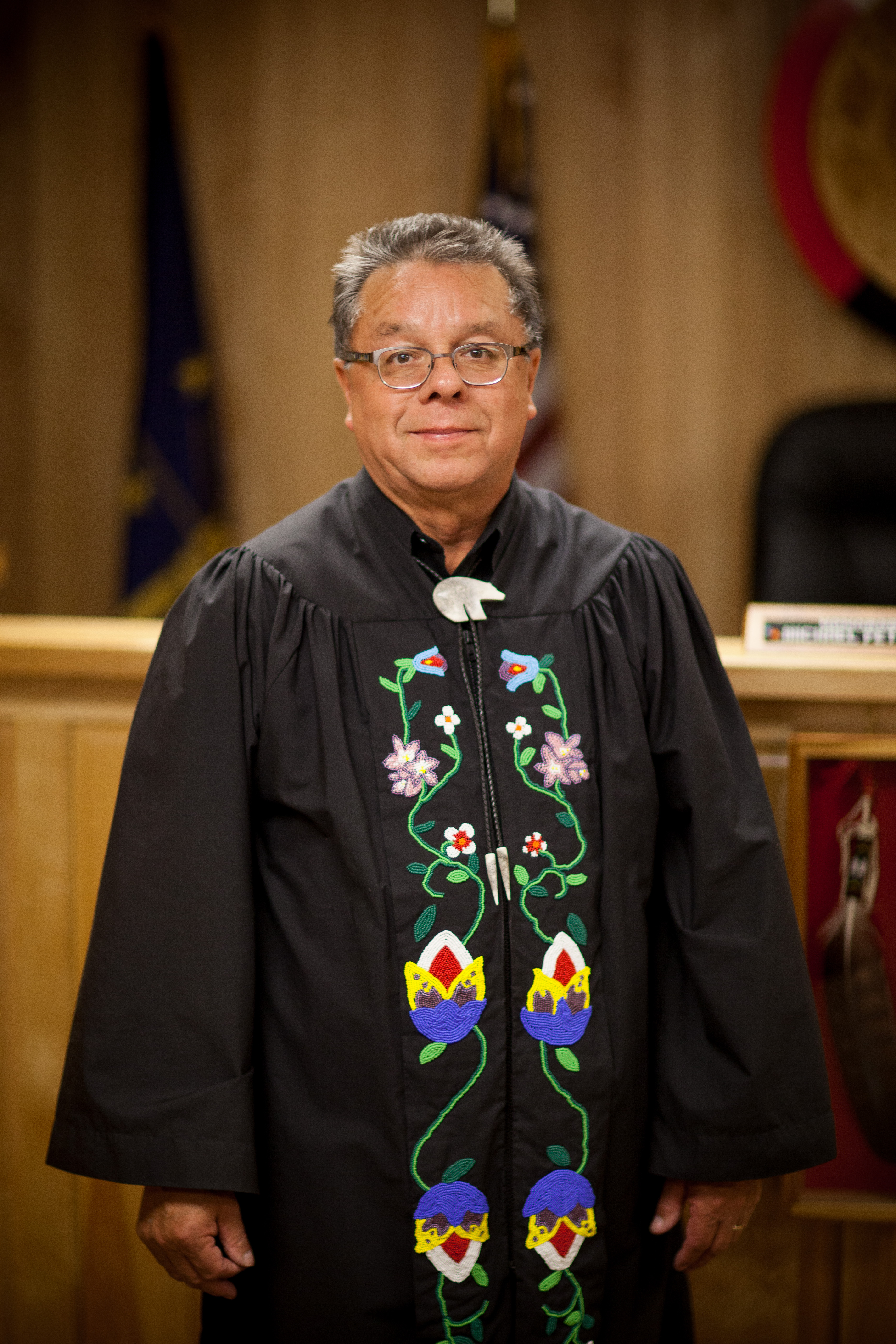
Judges Connors and Petoskey at NAICJA

20131010-191523.jpg

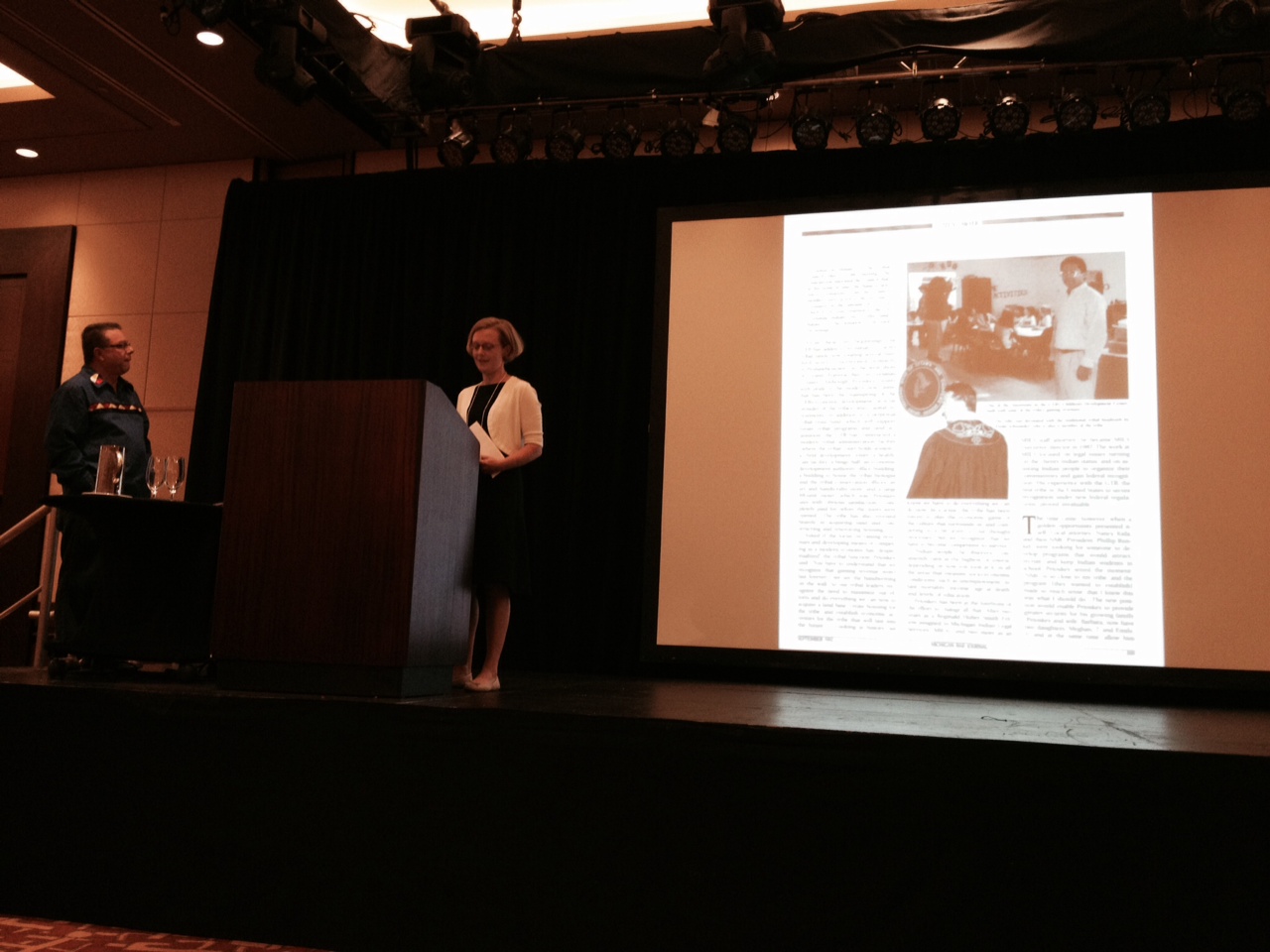
NAICJA Recognizes Michael Petoskey With Lifetime Achievement Award; Dean Stacy Leeds with Service Award

Here:

Mike Petoskey Award

Kate Fort, Mike Petoskey, and Jill Tompkins (miigwetch to Dylan Miner for designing the drum).

A more regal Mike…

Chief Judge Petoskey by Kaity Fuja

More pics as we get them…..

Kate presenting3

And Dean Leeds waits to accept her award from Judge Amanda Rockman:

NAICJA Stacy

Federal Court Allows KBIC Member’s Treaty Rights Case re: Pig Farming to Proceed

Here is the order denying Michigan’s motion to dismiss in Turunen v. Creagh (W.D. Mich.):

DCT Order

Briefs here.

Prior posts here and here.

Sixth Circuit Oral Argument Audio in LRB v. NLRB

Here.

IPR on LRB v. NLRB

Here.

Oral argument was today. We’ll post the oral argument audio when it becomes available.

Pokagon Chair Matt Wesaw Named Director of Dept. of Michigan Civil Rights

Here.

Little River Band Ottawa Signs Two More Collective Bargaining Agreements with Unions

For Immediate Release

(October 6, 2013) Manistee, MI ​

COLLECTIVE BARGAINING AGREEMENTS
COMPLETED UNDER TRIBAL LAW

Deepening a five year relationship under the labor law of the Little River Band of Ottawa Indians, the United Steelworkers Union and the Manistee, Michigan-based Little River Casino Resort have completed two new collective bargaining agreements. The contracts, which cover employees within the Resort’s security and slot tech departments, were ratified late last week by the USW.

“As far as we are aware, no other Indian tribe in the country has as many collective bargaining agreements entered into pursuant to tribal law,” said Wendell Long, the General Manager for the Resort, and a member of the Choctaw Nation of Oklahoma. “This exemplifies tribal sovereignty at work,” said Virgil Johnson, the elected Speaker of the Band’s Tribal Council, which is responsible for enacting the Band’s laws. “We are very proud of our success,” he said.

In 2007, the Band enacted its Labor Organizations and Collective Bargaining Law to cover employees within its public sector operations, including the Little River Casino Resort. The Band conducts gaming as a substitute for a tax base to generate revenue to support governmental services it provides to its members under the Indian Gaming Regulatory Act. The Band’s gaming revenues from the Resort provide the bulk of funds for its health programs, police department, and court system, as well as many other governmental programs.

The Band’s labor law establishes a structure for union elections, bargaining rules, and the resolution of unfair labor practice charges. “We found much to learn from the way state governments regulate collective bargaining,” said Speaker Johnson, “but in the end, this law reflects the unique values of our Ottawa community.”

The Resort and the USW have engaged in bargaining unit elections and collective bargaining over employment terms and conditions affecting more than 100 employees at the Resort. The first agreement was signed in December, 2010 and two others followed by October of 2012. According to Bill Laney, USW Staff Representative: “The USW and the Resort have developed a good working relationship and the successful outcome of these negotiations is proof that the Tribe’s collective bargaining law is now working. It gives employees a voice in determining their wages, hours and working conditions and the ratification of these two contracts shows that unit members are satisfied with the results.”

Ogema Larry Romanelli, the Band’s executive branch leader, has monitored management-union relations at the Band. “A lot of hard work and long hours have gone into the negotiation of these collective bargaining agreements,” he said. “They reflect the good faith of union and management, alike.”

Oral argument is scheduled before the United States Court of Appeals for the Sixth Circuit on Tuesday, October 8th in a case in which the National Labor Relations Board has challenged the authority of the Band to apply its labor law at the Resort.

For information on the Little River Band’s labor and employment laws, contact the Office of Public Affairs for the Little River Band of Ottawa Indians at 2608 Government Center Drive, Manistee, MI 49660. Office phone 231.723.8288. E-mail to gzaring@lrboi.com

Sixth Circuit Denies NLRB’s Motion for Stay in Little River Band v. NLRB

Here are the materials:

motion to extend oral argument

LRB Response to Motion for Stay – Filed

order denying motion to stay

Oral argument is Tuesday morning at 9AM in Cincinnati at Potter Stewart’s place.