Fletcher on the Michigan v. Bay Mills Case

Here is (Re)Solving the Tribal No-Forum Conundrum: Michigan v. Bay Mills Indian Community (PDF), published in the Yale Law Journal Online.

The abstract:

Michigan v. Bay Mills Indian Community, a dispute over a controversial off-reservation Indian casino, is the latest opportunity for the Supreme Court to address the doctrine of tribal sovereign immunity. The Court could hand Michigan a big win by broadly abrogating tribal immunity, and in turn wreak havoc on modern tribal governance. Alternately, the Court could hand Bay Mills a victory by affirming the tribe’s immunity, effectively precluding judicial review of the tribe’s casino project. In this Essay, Professor Matthew L.M. Fletcher argues that neither choice is preferable to a third option that would both advance tribal self-determination and hold tribes accountable to outsiders. The Court could condition tribal immunity in federal or state court on whether the tribe has solved the no-forum problem by providing a tribal forum for the resolution of important disputes.

MSU Indigenous Graduate Student Collective Panel — November 19, 2013

Here:

IGSC November 19th Panel Flyer - Final version

Exposé on Politics behind Push for Michigan Wolf Hunt

Here.

An excerpt:

But an MLive Media Group investigation found that half-truths, falsehoods and a single farmer have distorted reasons for the hunt. Among them:

• When state lawmakers asked Congress to remove wolf protections, they cited an incident in which three wolves were shot outside an Upper Peninsula daycare center where children had just been let out. That never happened, MLive found.

• A leading state wolf specialist said there are cases where wolves have stared at humans through glass doors, ignoring pounding on windows meant to scare them. That never happened as well. The expert now admits he misspoke.

Two Important ICT Commentaries on Michigan v. Bay Mills

The first commentary is from Native Nations Institute commentators Ryan Seelau and Dr. Ian Record:

Will the Supreme Court Use Bay Mills Case to Blow Up Tribal Sovereignty?

Read more at http://indiancountrytodaymedianetwork.com/2013/11/05/sovereign-immunity-and-bay-mills-case-how-tribes-can-prepare


The second commentary is from Gabriel Galanda and Ryan Dreveskracht of Galanda Broadman:

The Bay Mills Buck Stops With NIGC

Read more at http://indiancountrytodaymedianetwork.com/2013/11/06/bay-mills-buck-stops-nigc

Little Traverse Bay Bands Seeks Court Administrator

JD preferred:

Court Administrator revised 11-4-13

Supreme Court Amicus Briefs in Support of Bay Mills Indian Community

Actually, so far, we only have one….

Here:

12-515 bsac SCHOLARS OF AMERICAN INDIAN LAW

12-515 bsac National Congress of American Indians

Seminole amicus

US Amicus Brief

Bay Mills Indian Community Merits Brief

Here:

BMIC Brief


ILPC Conference Opening Panel

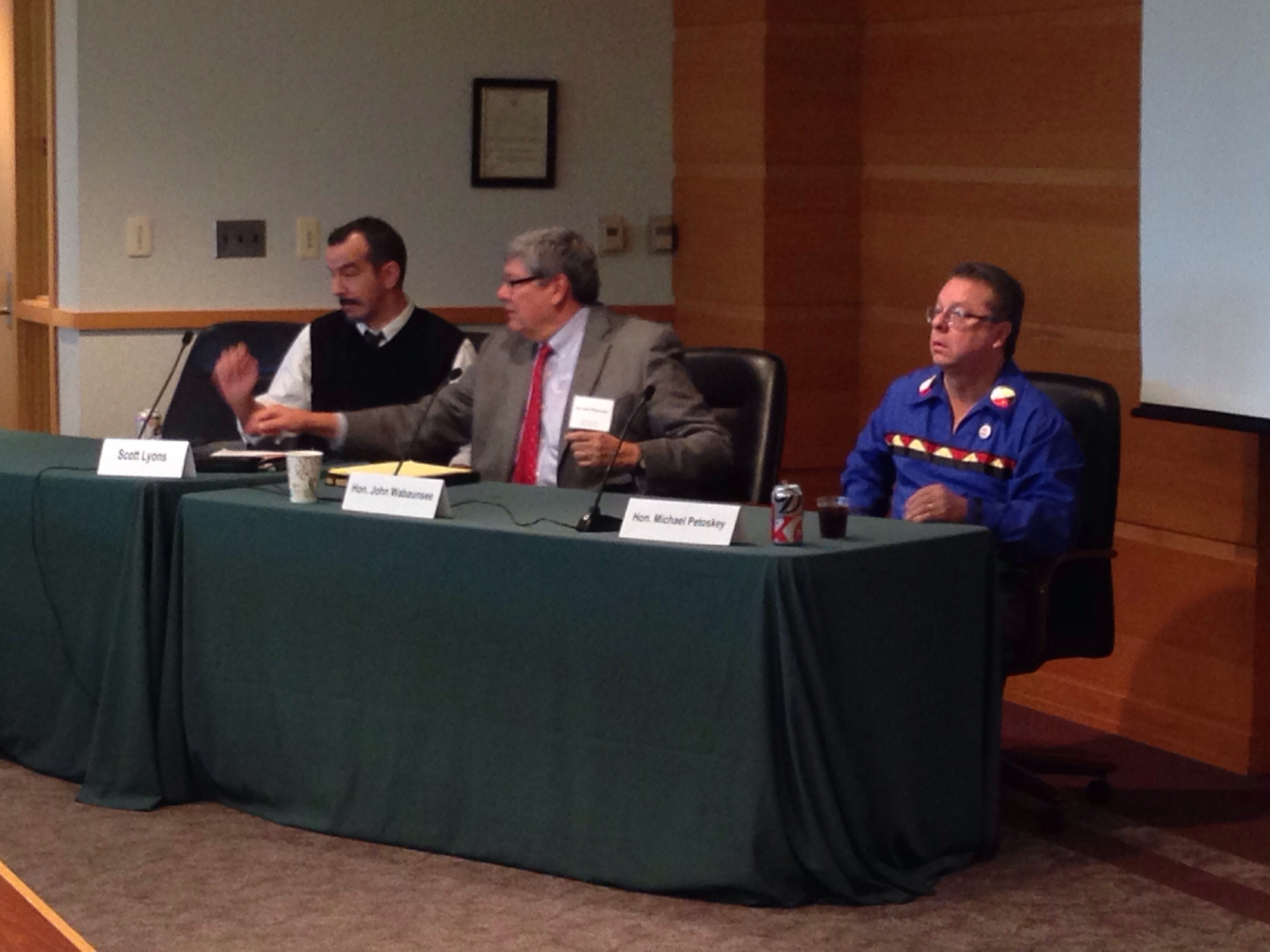
Scott Lyons, John Wabaunsee, and Mike Petoskey

20131024-102838.jpg

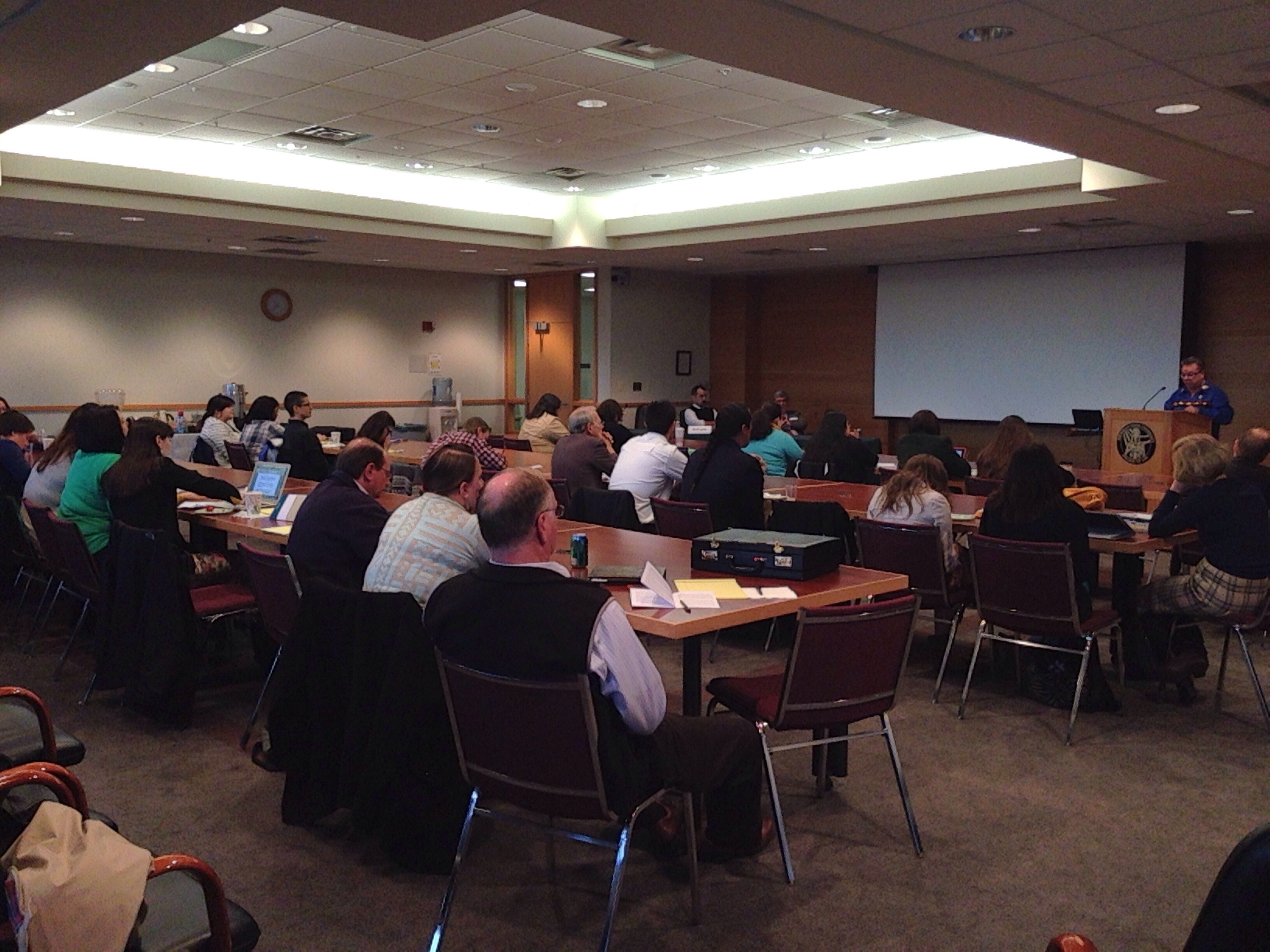
Crowd filling out

20131024-103659.jpg

Chairman Wesaw to Take Position as Executive Director of the Michigan Department of Civil Rights

Here.

DOWAGIAC, MI — Matt Wesaw will retire from his posts as chairman of the Pokagon Band Tribal Council and president/CEO of the Pokagon Gaming Authority as he takes on a new professional position.
Wesaw, who has been tribal chairman of the Pokagon Band of Potawatomi Indians and leader of the Pokagon Gaming Authority since 2008, has been named executive director of the Michigan Department of Civil Rights.

Commentary on the Final Dismissal of the Onondaga Nation’s Land Claims: “Tribal Disruption and Indian Claims”

Today, the Court surprised no one by denying the cert petition in Onondaga Nation v. New York. The Court did the same thing twice before, in the claims of the Cayuga and Oneida Nations. You may recall that the Second Circuit affirmed the dismissal of the Onondaga land claims using this language: “The disruptive nature of the claims is indisputable as a matter of law.” According to the Second Circuit, all Indian land claims are too disruptive to be heard on the merits, as a matter of law.

Later this year, Kate Fort, Nick Reo, and myself will publish a short paper in the Michigan Law Review’s online supplement, First Impressions, titled “Tribal Disruption and Indian Claims.” It is our intention to demonstrate that even the most disruptive tribal claims are beneficial to the governance of Indians and non-Indians alike on or near Indian country. We will expand this nub of an idea in a full-scale paper next year. We also thank Wenona Singel for her significant intellectual contributions to this idea.

Here is an excerpt:

We agree that Indian claims are inherently disruptive, and may implicate the settled expectations of state and local governments and non-Indians going back centuries, but it is empirically and categorically false that the remedies sought by tribal interests are impossible to enforce or implement in a fair or equitable manner. Every year Indian tribes settle long-standing claims against state governments and their political subdivisions that at their outset often appear intractable, if not downright impossible to remedy. The recent settlement of claims by the Oneida Indian Nation of New York,[1] the Saginaw Chippewa Indian Tribe,[2] and five Michigan Anishinaabe tribes[3] demonstrates the falsehood that Indian claims are too disruptive to be remedied. These negotiated settlements powerfully illustrate that the disruption produced by Indian claims has an important function, forcing federal, state, and tribal governments to creatively seek solutions to difficult governance issues in Indian country.

We argue that ecological disruption theory offers a useful analog to the disruptive nature of Indian claims. These claims can be compared to disturbances in rivers, forests or other ecosystems. Floods, forest fire, and windstorms break down existing structures, allowing space for reorganization, diversification and new growth. Tribal claims similarly clear out a legal space for creative and improved governance institutions.

[1] See Settlement Agreement by the Oneida Nation, the State of New York, the County of Madison, and the County of Oneida (May 2013), available at https://turtletalk.blog/wp-content/uploads/2013/05/142783486-oneida-indian-nation-settlement-agreement.pdf.

[2] See Joint Motion to Enter Order for Judgment Upon Completion of a Public Comment Period and Opportunity For the Parties To Respond, Saginaw Chippewa Indian Tribe of Michigan v. Granholm, No. 05-10296-BC (E.D. Mich., Nov. 9, 2010), available at https://turtletalk.wordpress.com/2010/11/10/saginaw-chippewa-reservation-boundaries-settlement-materials/.

[3] See Consent Decree, United States v. Michigan, No. 2:73-cv-00026-RAE (W.D. Mich., Nov. 2, 2007), available at https://turtletalk.wordpress.com/2007/11/07/inland-settlement-consent-decree-materials/.