American Indian boarding schools hit the Great Lakes Anishinaabeg very hard. This panel brings together survivors willing to share their experiences, helping us to never forget.
Facilitated by Matthew Fletcher, Harry Burns Hutchins Collegiate Professor of Law, University of Michigan; and Wenona Singel, Director of the Indigenous Law & Policy Center, Michigan State University.
Michigan judicial campaigns are down-ballot and nonpartisan but sometimes candidates reveal their ideological biases.
One Michigan Supreme Court candidate is a Republican member of the Michigan House of Representatives who recently made a speech in opposition to an amendment to the Michigan Indian Family Preservation Act. This candidate believes the Indian Child Welfare Act is unconstitutional because two members of the United States Supreme Court dissented in Haaland v. Brackeen. Dissents are not the law. He also made material misrepresentations about tribal membership rules and how the state law best interests of the child standard works in ICWA cases.
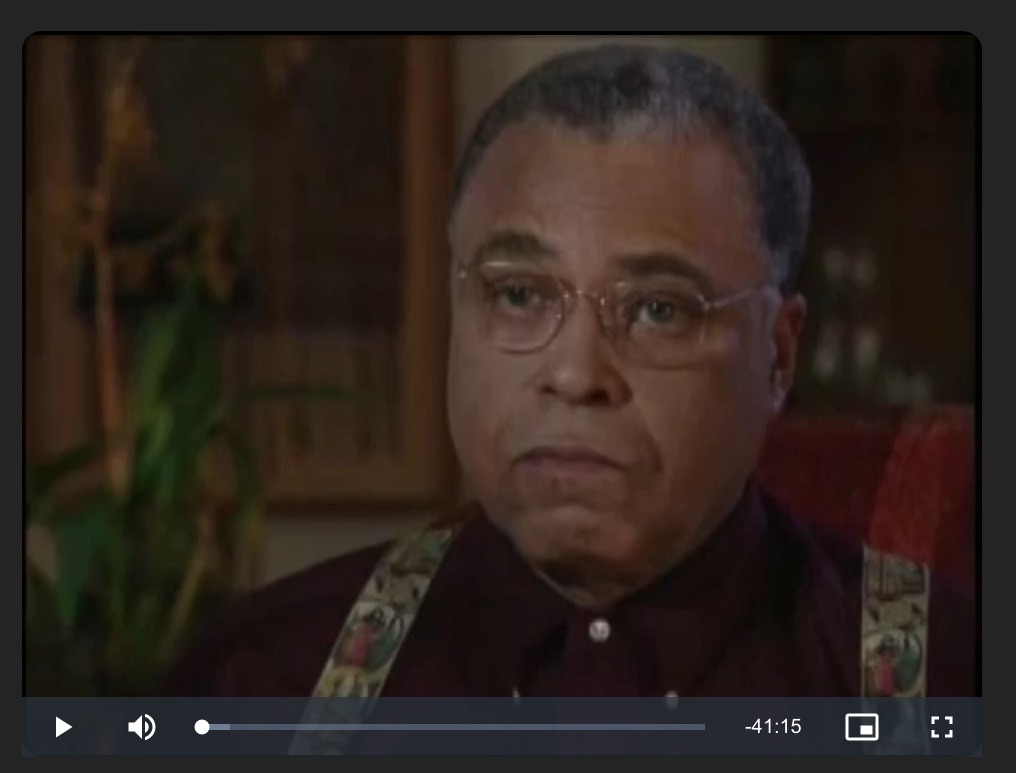
James Earl Jones: Well, the whole thing about black actors in leading roles began to, you know, occurred to me. And before that, I don’t think any. Hollywood sure didn’t worry about it. You know, where was the box office there they’d say, you know. And blacks weren’t in into complaining a lot about the images. I myself would watch John Wayne movies. I woke up to handle feeling like John Wayne. Didn’t matter to me. I didn’t need a black face to identify with, you know. But there was there was something that was missing in the American spectrum when I saw Jeff Turner playing all the Indians and not a real Indian. And I knew I was raised among Chippewa Indians and I knew what they looked like and what they were different culturally. And I kept wondering, well, why can’t I see them playing Cochise and so on and. And Sidney being Sidney and also Harry, both being from the Caribbean, that was somehow much more feasible in a way because they were they weren’t American black men. They were in touch with a different reality than guys like me from Mississippi, you know.
JEJ spent time in his childhood in Manistee, MI where he went to school with Michigan Anishinaabek from Little River.
What do you remember learning in United States or Michigan History classes? Matthew Fletcher explains the timeline of events that occurred after the signing of the Declaration of Independence up to the present time. Fletcher is the Harry Burns Hutchins Collegiate Professor of Law at the University of Michigan. He teaches and writes in the areas of federal Indian law, American Indian tribal law, Anishinaabe legal and political philosophy, constitutional law, federal courts, and legal ethics. He also sits as the Chief Justice of the Pokagon Band of Potawatomi Indians, the Porch Band of Creek Indians and the Grand Traverse Band of Ottawa and Chippewa Indians. Matthew is also the author of The Eagle Returns, The Legal History of the Grand Travers Band of Ottawa and Chippewa Indians. This interview was recorded on July 17, 2024.
Episode 16 is sponsored by the Grand Traverse Band of Ottawa and Chippewa Indians Tribal Council.




 Turtle Talk
You must be logged in to post a comment.