
For more information visit www.indigenouslawconference.com/call-for-art. Deadline to submit is April 1, 2021.
For more information visit www.indigenouslawconference.com/call-for-art. Deadline to submit is April 1, 2021.
With bipartisan support, Congress passed H.R. 1621 (VAWA 2021) yesterday. The bill, which expands crimes covered under VAWA’s special domestic violence criminal jurisdiction, is available here. The bill now heads to the Senate.
Register here.
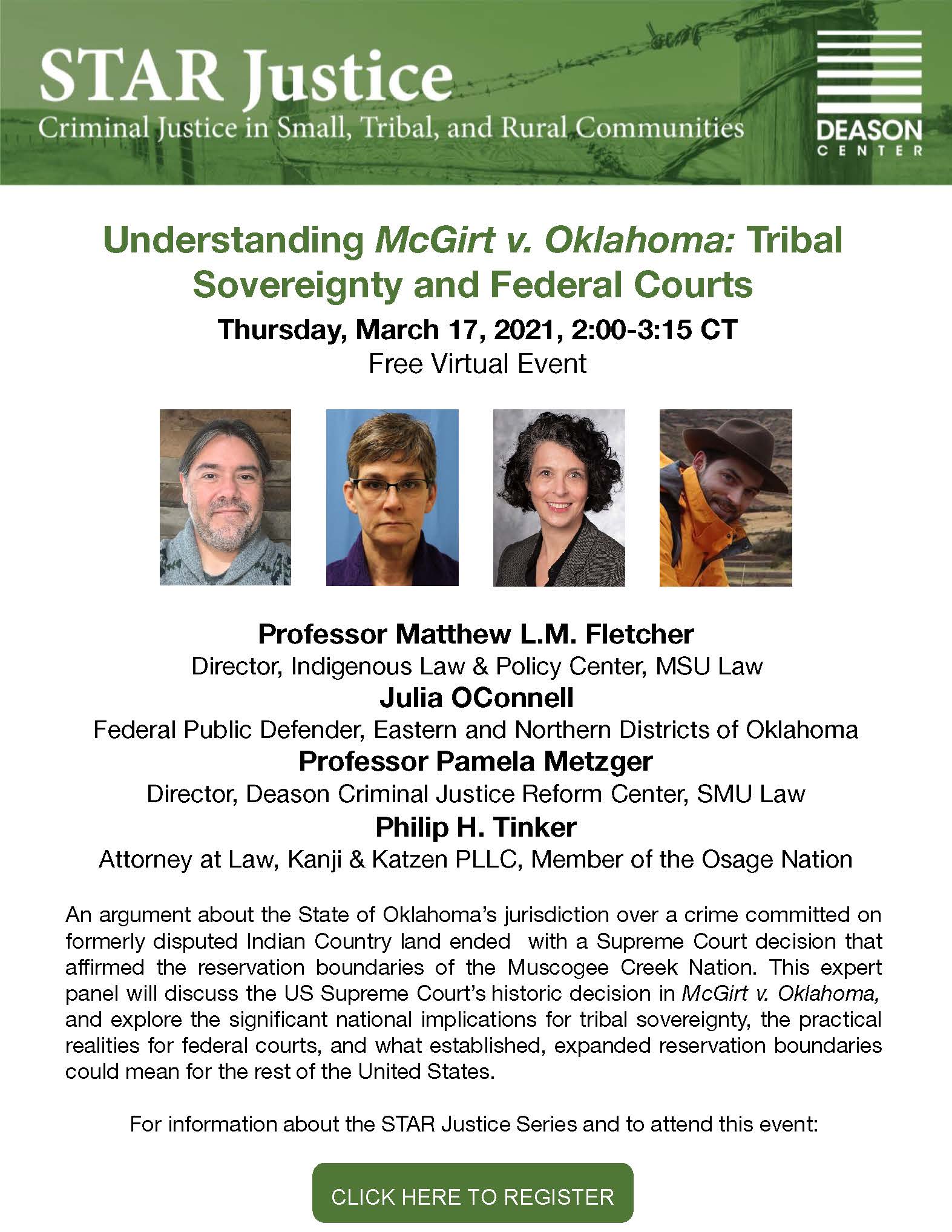
Here.

More information at miec.org/conference
Download the agenda at glance here.
Download the save the date flyer here.
Click here to register for $150 on Eventbrite and receive access to the password protected Participant Portal. The Participant Portal at miec.org contains the Zoom links needed to gain access to the conference.

Are you interested in applying to law school and want to learn more about the process? We want you to join us! Check out this FREE program offered by law school admissions professionals, law school staff and faculty, and attorneys this summer. For more information, please visit our website!

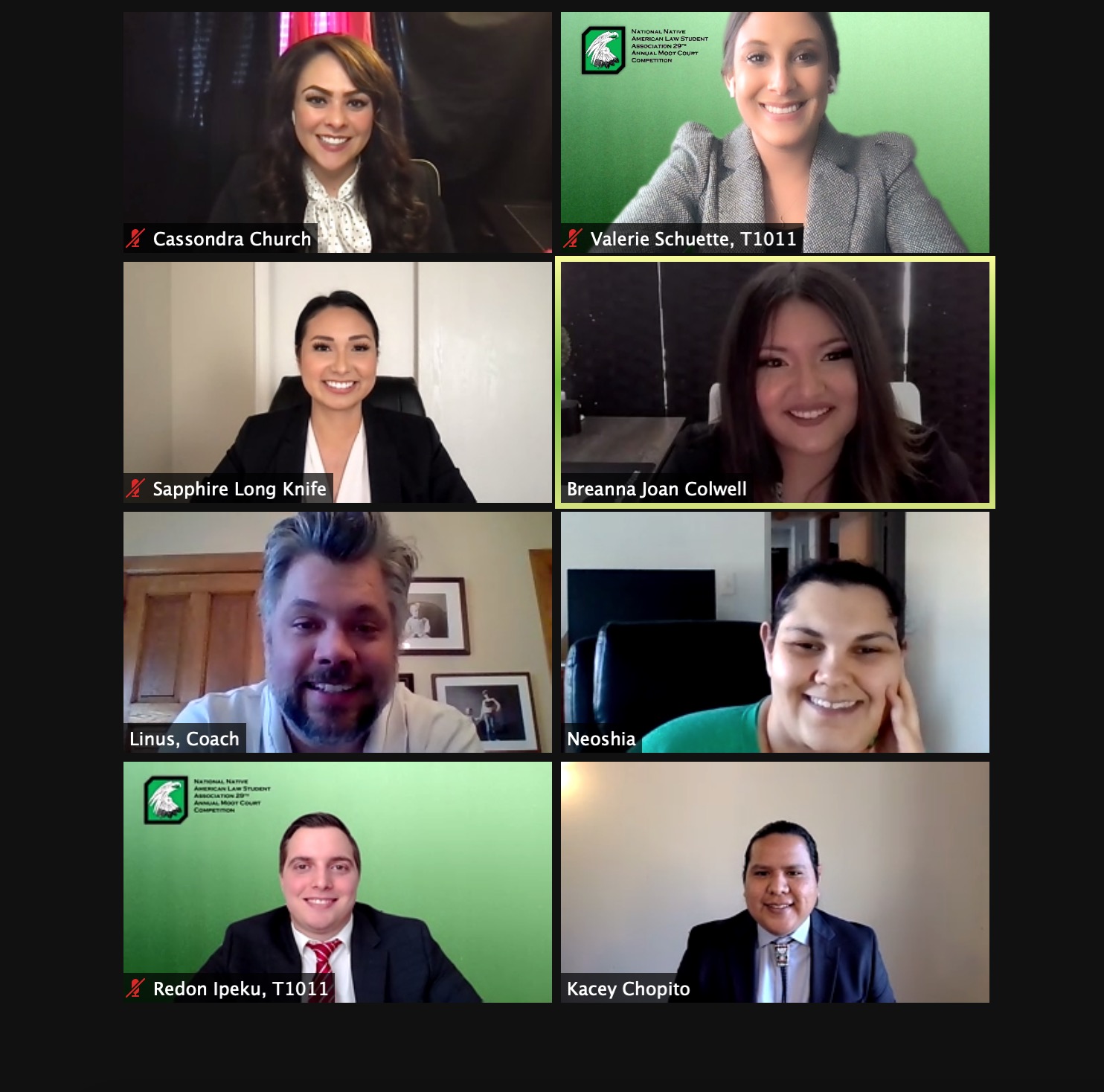
This weekend, three MSU LAW teams competed in the National NALSA Moot Court Competition at the University of North Dakota School of Law. While we are proud of all three of our teams, we are especially pleased to announce that 3Ls Kacey Chopito and Cassondra Church (pictured above) advanced to the Final Four round of this year’s competition, winning both a Semi-Finalist Award and 2nd Place for Best Written Advocates!
We are very proud of all three of our teams (pictured below), who were coached by Linus Banghart-Linn and Neoshia R. Roemer! Please join us in congratulating them on their hard work!
Previous post on this litigation here.
On Wednesday, February 24, 2021, in an order from Klamath County Circuit Court Judge Cameron F. Wogan, the Oregon court again affirmed the Klamath Tribes’ water and treaty rights. Wednesday’s order rejected attacks on the Tribes’ water rights determined by the Oregon Water Resources Department (OWRD) during the administrative phase of the Klamath Basin Adjudication (KBA), affirmed the senior priority date of the Klamath Tribes’ water rights in the Klamath Basin, and upheld the need to maintain a healthy and productive habitat to meet the Tribes’ treaty right to fish, hunt, trap, and gather.
Klamath Tribes Chairman Don Gentry responded to the order, “We are pleased that Judge Wogan upheld the rulings from the administrative phase of the KBA. He reaffirmed that the 1864 treaty entered into between the Klamath Tribes and the United States reserved to the Tribes sufficient water to keep our fisheries and other aquatic resources healthy so that we can protect our natural resources and cultural traditions.”
NARF Staff Attorney Sue Noe explained, “Judge Wogan correctly affirmed quantification of the Tribal water rights based on the habitat needs of the fish, wildlife, and plants. Although he ruled that opponents of the Tribal rights will have another chance to try to reduce the amounts by showing the Tribes don’t need all the water awarded by OWRD to meet their livelihood needs, Judge Wogan made clear in no uncertain terms that the amounts cannot be below what is necessary to provide healthy and productive habitat.”
Importantly, like all other courts that have considered the issue, Judge Wogan ruled that the Klamath Tribes’ water rights extend to Upper Klamath Lake. Upper Klamath Lake forms part of the border of the former Reservation and provides critical habitat for the endangered c’waam and koptu (Lost River and shortnose sucker fish), which are sacred fish species traditionally harvested by the Tribes.
Represented by NARF, the Klamath Tribes successfully achieved recognition of their treaty-reserved water rights in federal court litigation in the 1970s and 1980s in United States v. Adair, but the federal courts left quantification of the water rights to the state adjudication in the KBA. After the successful conclusion of the KBA’s 38-year administrative phase, the Tribes were able to begin enforcing their water rights for the first time in 2013. The administrative determinations are presently on review in the Klamath County Circuit Court and Judge Wogan’s ruling is the latest to come out of that process.
 Turtle Talk
You must be logged in to post a comment.