New Scholarship on the Morrill Act and Native Lands Dispossession

Teresa M. Miguel-Stearns, Samantha Ginsberg, and Kristen Cook have posted “More Than Morrill: The Intertwined History of Indian Land Dispossession, Arizona Statehood, and University Enrichment,” published by the Arizona Journal of Environmental Law and Policy, on SSRN.

Here is the abstract:

Through the federal government’s university land-grant programs, which began with the Morrill Act in 1862 and continue today, Congress has systematically allocated millions of acres of land in the western United States to states to create endowments to support the public higher education of its citizens. In Arizona, land was taken from Indigenous peoples, communities, tribes, and nations by treaty, act of congress, executive order, and force to accomplish this. As a result, by the time of statehood in 1912, the state of Arizona had accumulated approximately 850,000 acres of land around the state on behalf of higher education, including the University of Arizona, then the state’s only university and its designated land-grant institution. Today, the Arizona State Land Department still holds and manages 688,706 acres of land in trust for the benefit of public higher education. All three of Arizona’s public universities receive distributions from the revenue generated by these trust lands. The goal of this paper is to explore and analyze the University of Arizona’s historical and ongoing enrichment from land taken from Indigenous peoples by the federal government and transferred to the territory and, later, the state of Arizona in the nineteenth and early twentieth centuries for the benefit of institutions of higher education. A comprehensive understanding of Arizona’s history and the state’s current holdings and financial benefits is required to examine the policy implications and moral and legal obligations that Arizona and its universities have to Indigenous peoples in Arizona. 

Christian McMillen on Forced Fee Patents

Christian McMillen has published “I Didn’t Know That a Patent Was a Dangerous Thing”: Forced Fee Patents, Native Resistance, and Consent” in the Western Historical Quarterly.

Here is the abstract:

Between 1906 and 1920 the Bureau of Indian Affairs (BIA) issued more than 32,000 fee patents, covering 4.2 million acres of land. More than half of the patents were issued between 1917 and 1920. The BIA forced many of these patents upon Native people without their consent. When individually allotted land went from trust to fee, the land was taxed and could be sold. The consequences were devastating. Was this legal? Many Native people protested their fee patents, but others did not. Indeed, protesting dispossession was an act of courage and defiance. Native protest led to a legal precedent that had an impact across Indian country: consent was required. But was compliance synonymous with consent? Must one resist a policy found to be illegal in order for it not to apply? For a time, the answer was yes. Ideas about consent began to change leading to another series of legal challenges to the Bureau’s forced fee patent policy.

New Scholarship on the Boarding School Initiative

Diane Marie Amman has posted “Child-Taking Justice and the Federal Indian Boarding School Initiative,” published in the American Journal of International Law and the Supreme Court Law Review, on SSRN.

Here is the abstract:

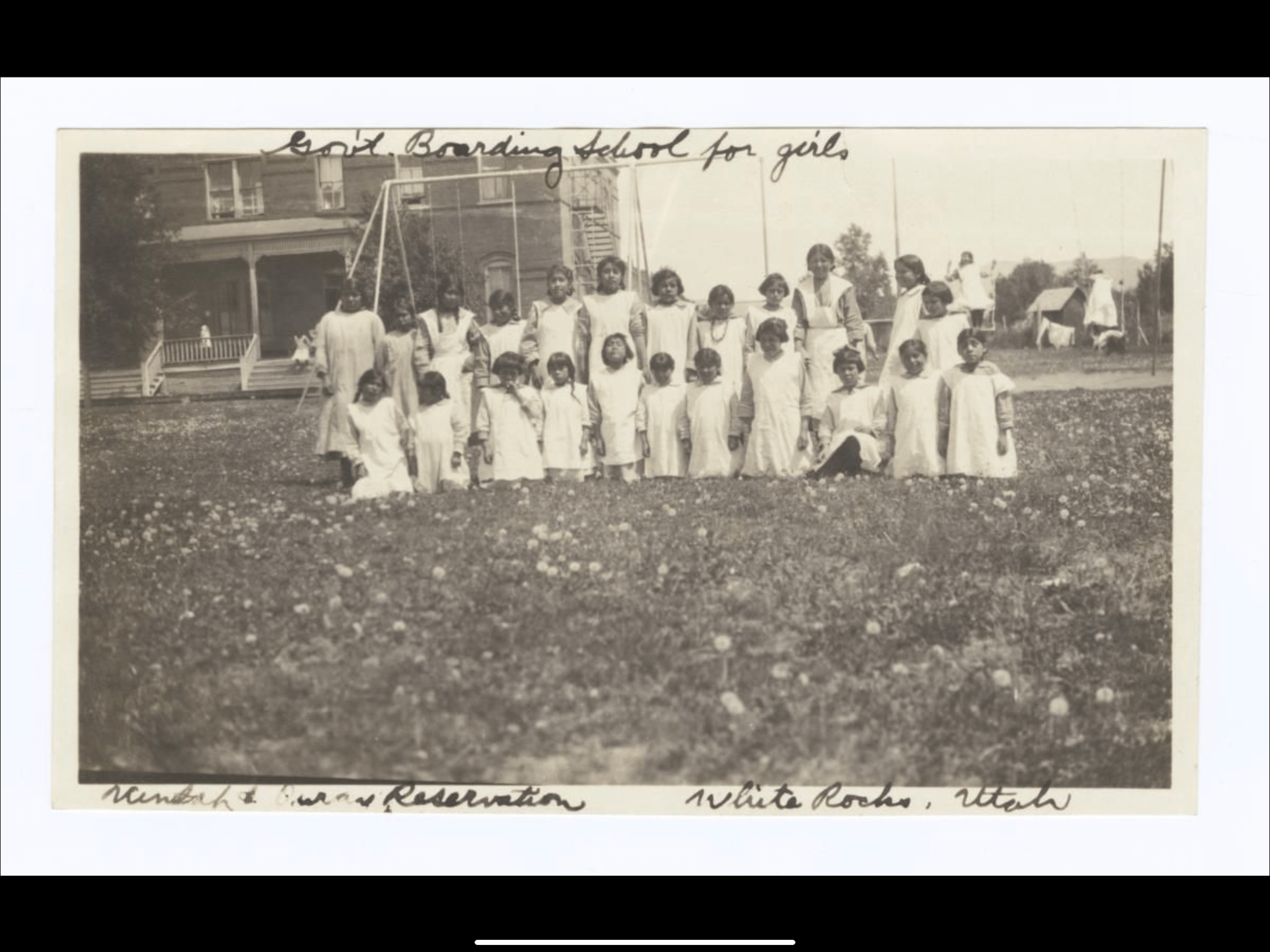
The focus of this article is the 2022–2024 Federal Indian Boarding School Initiative undertaken the U.S. Executive Branch. The article chronicles this three-year process, which included sessions with survivors and their descendants, and which resulted in a two-volume report, in an apology by President Joe Biden, and in designation of a national memorial at one of the most notorious school sites. This article examines the initiative as an example of “child-taking justice”; that is, as a process of what is called “transitional justice”, done in an effort to redress the takings of children from their community, followed by efforts to alter, erase, or remake the children’s identities. The initiative shed glaring light on the past history and present effects of a centuries-old practice by which the United States took Indigenous children from their families and forced them to attend residential schools where they were compelled to submit to Westernized and Christianized notions of “civilization.” 

Unfolding within the internal constitutional framework of the United States, the U.S. initiative benefited from meaningful engagement with affected communities. This article nonetheless argues for a framing that also addresses external frameworks; to be specific, one that engages fully with applicable international law and lessons learned elsewhere. The argument runs counter to the United States’ longstanding practice of holding international human rights law at arm’s length, while pressing other countries to conform to that law’s strictures. Efforts of a U.S. human-rights-at-home movement have not reversed that trend. Thus the U.S. initiative made only a hesitant overture to international issues and to three countries, Canada, Australia, and New Zealand, with which it claimed kinship. The 2025 inauguration of a President hostile to rights-based justice pointed to limitations of this approach.

Kelly Church

Alex Pearl on NAGPRA

M. Alexander Pearl has published “Corporeal Property and the Limits of NAGPRA” in the Fordham Law Review.

Here is an excerpt:

The Native American Graves Protection and Repatriation Act represents a pivotal but incomplete legislative effort to confront the enduring legacy of colonialism in the United States. NAGPRA addresses a specific and deeply troubling consequence of colonialism: the unlawful appropriation of Native American ancestors and cultural items by federal and federally funded institutions. Although it lays a critical foundation for repatriation and a sense of cultural justice, NAGPRA’s effectiveness is constrained by its grounding in Western legal traditions—especially its emphasis on corporeal, material property. To redress a wider range of harms suffered by Native communities, we must look beyond the statute’s current framework and embrace an expanded understanding of property, one that includes intangible rights based
in cultural harms and rights.

New Scholarship on Tribal Taxation Authority

Alex Zhang has posted “The Other Taxation: Tribes, Territories, and Fiscal Autonomy,” forthcoming in the Columbia Law Review, on SSRN.

Here is the abstract:

Native Americans pay taxes. Residents of the territories do not. Both live with the legacy of American imperialism. Both seek the elusive fiscal self-governance and autonomy promised by Congress. The Supreme Court—through preemption, the plenary-power doctrine, and tax interpretive principles—has hollowed out the Native tax base, forcing tribes to compete fiercely with Congress, states, and localities for revenue. By contrast, territorial residents pay no federal or state taxes on territorial-sourced income by edicts of Congress and geography. But such tax exemption enabled the creation of incentive regimes that have only invited more criticism of subordination. This Article argues that the conceptual underpinnings of the divergent tax treatment of tribes and territories are unsound. Under a more robust vision of fiscal autonomy, judicial limits on Native tax sovereignty are misguided. The territories’ wide latitude in designing revenue streams merits heightened scrutiny. While imperfect, a uniform, nonrefundable federal income-tax credit for tribal and territorial taxes paid is a promising path forward. This Article thus provides the first systematic study of subfederal taxation beyond states and localities—the “other” American taxation often overlooked in scholarship.

New Scholarship on Emerging Indigenous Restorative Justice in Canada

The Honourable Leonard S. Tony Mandamin has published “Emergence of Contemporary Indigenous Restorative Justice in Canada” in Constitution Forum constitutionnel.

Excerpt:

Michalyn Steele on NAGPRA and Protecting Sacred Sites

Michalyn Steele has posted “The Native American Graves Protection and Repatriation Act as a Model of Cultural Sovereignty for Protecting Indigenous Sacred Sites” on SSRN.

Here is the abstract:

This Essay argues that NAGPRA provides a model for reassessing how to measure sacred site protection against competing values. Part I briefly maps the scope and history of Indigenous dispossession of sacred sites that has resulted in the unique challenges Indigenous people face in gaining access to and protection of these sites. Part II illustrates the values that most frequently compete with (and defeat) sacred site access and protection claims. Finally, Part III argues that NAGPRA offers a case study for reordering these values to recognize and prioritize the human rights and religious interests of Indigenous peoples in their sacred sites.

New Scholarship on RFRA and Indian Sacred Sites

David C. Scott has published Making Space for Sacred Lands: From the Harsh Glare of Lyng to Apache Stronghold in the Stanford Journal of Civil Rights & Civil Liberties.

Here is the abstract:

Federal courts have routinely held—under the Free Exercise Clause and Religious Freedom Restoration Act (RFRA)—that government actors operating on government-owned land may desecrate, destroy, modify, or restrict access to landmarks that are sacred to Native American tribes, even if doing so would “virtually destroy” the tribes’ ability to practice their religion. Beginning with Lyng v. Northwest Indian Cemetery Protective Association in 1988, courts have justified these results on the grounds that tribal litigants are asserting a positive right that would permit them to “exact something” from the government. The Free Exercise Clause and RFRA, however, only protect “substantial burdens” on religious practice, or rather, violations of negative rights (i.e., rights to be free from coercion). In its recent decision in Apache Stronghold, the Ninth Circuit’s 6-5 per curiam decision ostensibly expanded the scope of “substantial burdens” to include “preventing access to religious exercise.” A different 6-5 majority opinion in this case, however, retreated to Lyng’s analysis and denied the Western Apaches’ claims. The Supreme Court has declined to hear the case, over a vociferous dissent from Justice Gorsuch calling the decision to not review the Ninth Circuit’s “questionable reasoning” a “grievous mistake” with “consequences that threaten to reverberate for generations.” Indeed, the Ninth Circuit’s confused reasoning writes the Western Apache and other minority religions, especially those using public land, out of RFRA and the Free Exercise Clause. If federal courts do not revisit this analysis, land-based tribes are powerless to prevent the extinction of their religious and communal traditions.

This Article argues that the conceptual distinctions on which courts rely in sacred land cases—along with the policy arguments that support them—are simplistic and ahistorical. Holding onto the positive-negative rights distinction in these cases results in the mischaracterization of the harms that tribes have suffered and the attendant rights they seek to protect. In place of this binary distinction, this Article employs resources from social and political philosophy to argue for a more nuanced and historical context-sensitive inquiry, pursuant to which courts ask whether a religious litigant has access to a non-hostile religious atmosphere. After Part I presents a brief history of sacred land cases, Part II both makes a philosophical case for the right to a non-hostile atmosphere and argues this is what the Court intended in Wisconsin v. Yoder. Part III then presents additional resources from First Amendment doctrine and related areas of law, each of which suggest that this principle is already implicit in our doctrinal history.

Evan Burnick on a Canon Against Conquest

Evan D. Burnick has published “Canon Against Conquest” in the University of Illinois Law Review.

The abstract:

The interpretive rules that require judges to read treaties, statutes, and other legal texts in favor of Native nations and people have always been contested. But seldom has the future of the “Indian canon” seemed so uncertain. Several sitting Supreme Court Justices have questioned the legitimacy of the Indian canon, expressing skepticism about the roots of the specific rules that constitute it and raising doubts about whether “Congress has always framed statutes in a way that are favorable to Indian tribes.” Other Justices have written or joined opinions that have narrowed and diluted the Indian canon.

This Article maps the origins and development of the Indian canon and defends it on originalist and textualist grounds. It then contends that the canon should be codified to ensure its survival. This codification should be expressly grounded in a constitutional commitment to tribal sovereignty. Tribal sovereignty was part of the law of nations at the Founding; it was built into the original meaning and structure of the Constitution; and it persists today, in spite of state and federal efforts to extinguish it.

Codification is necessary because it is not enough to answer criticisms of the Indian canon from the standpoint of originalism, textualism, or any other methodology that holds sway on the Supreme Court. The canon has been diminished, disparaged, and nearly discarded by judges of a variety of methodological persuasions. Codification will increase the likelihood that the canon will be deployed to protect Native lands, governance, and culture. As an act of legislative constitutionalism, it will be at once entitled to respect and tailored to receive it.

Yale Center for Environmental Justice Report — “Tribal Co-Management of Federal Lands: Opportunities and Challenge”

Here.

Blurb:

The report, Tribal Co-Management of Federal Lands: Opportunities and Challenges, distills key findings from the 2023 Tribal Co-Management Symposium in Washington, D.C., by the Yale Center for Environmental Justice. It calls for urgent reforms to federal land management practices and outlines pathways for stronger Tribal participation in the stewardship of public lands. The report highlights that while federal consultation with Tribes is long-standing, it has too often been narrow in scope and limited in impact. Symposium participants emphasized the need for reforms that expand the role of Tribal Nations in shaping the stewardship of federal lands. Co-management represents not only environmental stewardship but also restorative justice. The report highlights how integrating Tribal knowledge with Western science strengthens conservation, while also supporting Tribal sovereignty, economic development, and cultural continuity.