Ryan Stoa on the Tribal Cannabis Agriculture

Ryan Stoa has posted “Tribal Cannabis Agriculture Law,” forthcoming in the Utah Law Review, on SSRN. Here is the abstract:

Indian tribes have some freedom to develop their own approach to cannabis agriculture, but what is the nature of that freedom, and how have tribes acted upon it? This Article investigates the current legal framework surrounding tribal cannabis agriculture and tribal participation in legal cannabis markets. It is generally believed that tribes have some freedom to determine the legality of cannabis cultivation on their lands, and to create rules and regulations governing that practice. However, this freedom is nascent and inconsistently granted by the federal government. In addition, the legal frameworks tribes are developing with respect to cannabis agriculture are still evolving and poorly understood, since each tribe is free to craft their own unique approach to the cannabis industry. This Article examines the current tribal cannabis agriculture landscape in several ways. First, a big-picture snapshot of the U.S. cannabis industry in 2023 is provided in order to place tribal cannabis policies in an appropriate context. Second, the Article attempts to discern the federal government’s opaque perspective on tribal cannabis law, including the contours of tribal freedom to self-regulate in this area. Third, the Article identifies trends and approaches to tribal cannabis agriculture that have emerged to date, with examples of cannabis policies from tribes around the country. Finally, a case study of the Hoopa Valley Tribe is presented in order to bring to life the legal complexities of this topic.
Student Note on the Exclusionary Rule and the Indian Civil Rights Act

Seth E. Montgomery has published “ICRA’s Exclusionary Rule” in the Boston University Law Review.

The abstract:

The Fourth Amendment does not limit the actions of the 574 federally recognized Indian tribes. In an affront to tribal sovereignty, Congress enacted the Indian Civil Rights Act (“ICRA”) in 1968. The ICRA provides limitations on tribal governments that parallel the Bill of Rights. For example, the ICRA provides that no Indian tribe shall “violate the right of the people to be secure . . . against unreasonable search and seizures.”
But the ICRA—like the Fourth Amendment—does not state what happens when police obtain evidence from an unreasonable search or seizure and prosecutors seek to introduce that evidence in a criminal trial. Federal courts have developed an exclusionary rule for evidence obtained in violation of the Fourth Amendment: subject to myriad exceptions, if police obtain evidence unconstitutionally, then that evidence may not be introduced in a criminal trial. This Note asks whether the ICRA’s search-and-seizure provision incorporates such an exclusionary rule.
This Note advances an interpretation of the ICRA based on the statute’s 1968 meaning: the ICRA’s text compels an exclusionary rule, conditioned on deterring tribal police misconduct, but not subject to the myriad exceptions that apply in the Fourth Amendment context. And, with important qualifications, this Note explains why a court applying this interpretation should turn to tribal law. A deterrence-based exclusionary rule requires courts to consider whether exclusion deters police misconduct, how to measure the benefits of deterrence against the harms of excluding probative evidence, and how much deterrence is necessary for exclusion. Comity, self-determination, and federalism all compel deference to tribal law in answering these questions. Thus, tribal law can and should guide the application of the ICRA’s search-and-seizure provision in a criminal prosecution.
This Note contributes to the legal and academic landscape in three ways. First, it adds to an ever-growing body of literature advocating for federal and state deference to tribal law. Second, this Note fills a gap in the literature by addressing a remedy that the ICRA does not expressly provide—namely, exclusion. Most academics and courts describe federal habeas review as the ICRA’s only available remedy outside of tribal courts. Finally, this Note provides a roadmap for litigants arguing for or against a suppression motion based on an ICRA violation. Only a limited number of reported cases address whether the ICRA incorporates an exclusionary rule, and even fewer provide a full analysis. This Note thus answers an open question in a way that harmonizes constitutional criminal procedure with deference to tribal legal precedent.

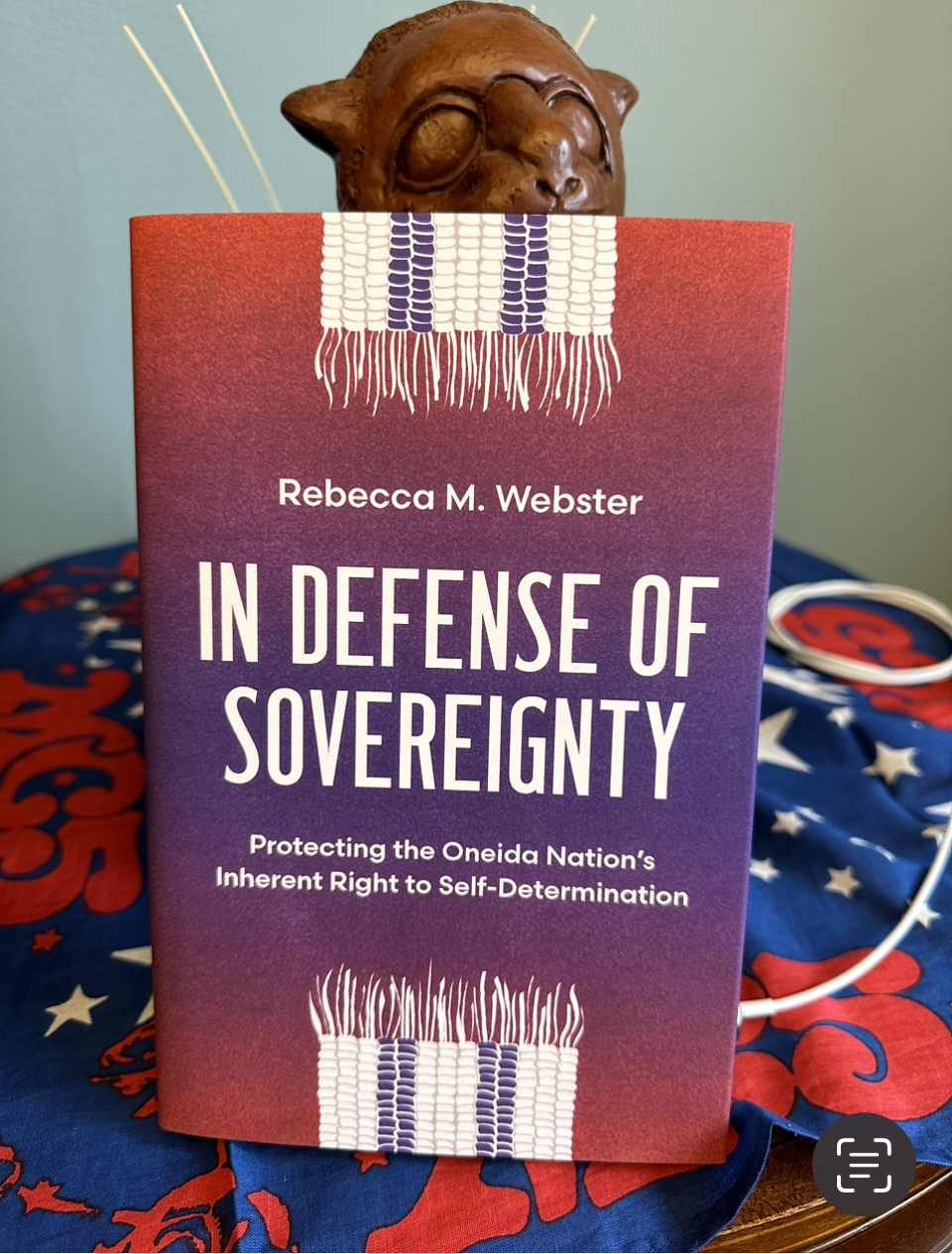
New Book by Rebecca Webster: “In Defense of Sovereignty”

You can buy it here.

In Defense of Sovereignty
Protecting the Oneida Nation’s Inherent Right to Self-Determination
Rebecca M. Webster
Foreword by Richard Monette
With contributions by James R. Bittorf, William Gollnick, Frederick E. Hoxie, Arlinda F. Locklear, and James W. Oberly
“This valuable book lays out the features of a legal and political strategy to defend a reservation boundaries case. This material is thrilling where tribal citizens detail their ongoing, real-world struggles with the Village of Hobart. Successful and compelling.”
—Matthew L. M. Fletcher, author of Ghost Road: Anishinaabe Responses to Indian-Hating

A nuanced history by an Oneida Nation citizen directly involved in the litigation

The Oneida Nation has been engaged in legal conflicts to retain its sovereignty and its lands since forced removals in the 1820s from New York to what would become the state of Wisconsin. Legal scholar Rebecca M. Webster examines this history, including the nation’s treaties with the US and focusing especially on its relationship with the village of Hobart, Wisconsin. Since 2003, six disputes have led to litigation—the result of attempts by the local government to regulate the nation, repudiate its sovereignty, and relegate its government to the position of a common landowner, subject to municipal authority.

In Defense of Sovereignty shares the perspective of a nation citizen directly involved in the litigation, augmented by contributions from historians, attorneys, and a retired nation employee. It is an intimate and unflinching account of the impact of these jurisdictional battles and what is at stake for the future. Its lucid analysis is an invaluable contribution to public debates about the inherent right of Indigenous nations to continue to exist and exercise self-governance within their territories without being challenged at every turn.
 Rebecca Webster. Photo credit, Stephanie Stevens.Rebecca M. Webster, an assistant professor in the American Indian studies department at the University of Minnesota, Duluth, is a former senior staff attorney for the Oneida Nation.
New Student Scholarship on Tribal Courts and Environmental Tort Litigation

Helia Bidad has published “The Power of Tribal Courts in Ongoing Environmental-Tort Litigation” in the Yale Law Journal. Here is the abstract:

Cities, counties, and states across the country are bringing environmental and climate tort suits to hold environmental tortfeasors accountable. These cases are commonly brought in state and federal court, but the possibility of bringing these suits in tribal courts has largely been left out of the discussion. In the wake of attacks on tribal sovereignty in the form of tribal jurisdiction stripping, this Essay uses an original empirical analysis of 308 cases to understand the circumstances in which tribal-court jurisdiction currently exists for tribal members to sue nonmembers for environmental torts in tribal court. This Essay makes recommendations for how to strategically bring these suits and highlights important considerations for tribal sovereignty.

Kristen Carpenter on Human Rights and Cultural Property

Kristen A. Carpenter has posted “A Human Rights Approach to Cultural Property: Repatriating the Yaqui Maaso Kova,” forthcoming in the Cardozo Arts & Entertainment Law Journal, on SSRN. Here is the abstract:

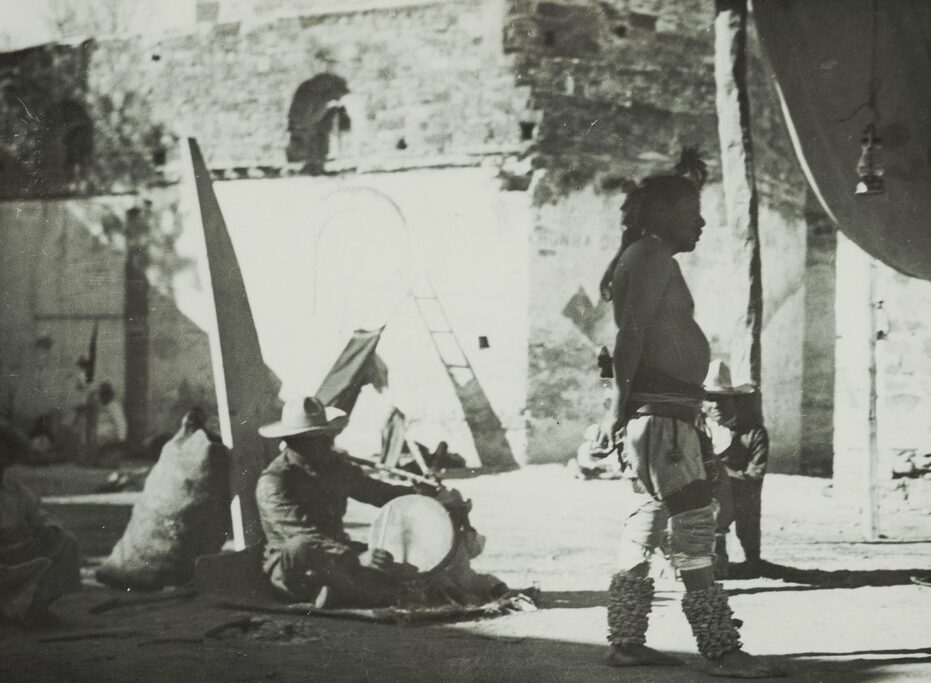
Claims for repatriation of cultural property are emerging across the international community, with increasing attention to the inequities of acquisitions made during colonial periods. Yet the State-centric nature of legal instruments, such as the Convention on the Means of Prohibiting and Preventing the Illicit Import, Export and Transfer of Ownership of Cultural Property of 1970, remains a stumbling block to advancing meaningful remedies for past harms, especially in the Indigenous Peoples’ context. States often pursue repatriation to advance national identity or replenish museum collections, but for Indigenous Peoples, repatriation often has to do with restoring dignity to ancestors through reburial, returning ceremonial objects to religious use, and healing the community from cultural assimilation and oppression. Against this backdrop, the essay reviews the recent case of the Yaqui People, an Indigenous nation spanning the U.S.-Mexico border, who negotiated a pathbreaking agreement to repatriate a sacred deer head, the Maaso Kova, from the national museums of Sweden. Working with the United Nations Expert Mechanism on the Rights of Indigenous Peoples, the parties expressly invoked the United Nations Declaration on the Rights of Indigenous Peoples, along with Yaqui and Swedish law, as bases for repatriation. The Yaqui-Sweden matter advances a human rights approach to repatriation that begins to transcend the hegemony of States in cultural property claims, while recognizing Indigenous Peoples’ equality and self-determination, along with religious and cultural freedoms.

Greg Ablavsky and Tanner Allread on How Indigenous Peoples Debated the U.S. Constitution

Gregory Ablavsky and W. Tanner Allread have posted “We the (Native) People?: How Indigenous Peoples Debated the U.S. Constitution,” forthcoming in the Columbia Law Review, on SSRN.

Here is the abstract:

The Constitution was written in the name of the “People of the United States.” And yet, many of the nation’s actual people were excluded from the document’s drafting and ratification based on race, gender, and class. But these groups were far from silent. A more inclusive constitutional history might capture marginalized communities’ roles as actors, not just subjects, in constitutional debates.

This Article uses the tools of legal and Native history to examine how one such group, Indigenous peoples, argued about and with the U.S. Constitution. It analogizes Native engagement to some of the foundational frames of the “Founding” to underscore its significance for current constitutional discourse. Like their Anglo-American neighbors, Native peoples, too, had a prerevolutionary constitutional order—what we here dub the “diplomatic constitution”—that experienced a crisis during and after the Revolution. After the Constitution’s drafting, Native peoples engaged in their own version of the ratification debates. And then, in the early republic, Native peoples both invoked and critiqued the document as they faced Removal.

This Article’s most important contribution is proof of concept, illustrating what a more inclusive constitutional history might look like. Still, some of the payoffs are doctrinal: broadening the “public” in original public meaning, for instance. But the more significant stakes are theoretical. As this Article contends, by recognizing Indigenous law and constitutional interpretations as part of “our law”—in other words, the pre- and post-constitutional legal heritage of the United States—Native peoples can claim their role as co-creators of constitutional law.

Student Note on Native Voting Rights

Noelle N. Wyman has published “Native Voting Power: Enhancing Tribal Sovereignty in Federal Elections” (PDF) in the Yale Law Journal. Here is the abstract:

Members of tribal nations are disproportionately burdened by barriers to voting, from strict voter identification and registration requirements to inadequate language assistance and inaccessible polling locations. Restrictive voting laws are on the rise, while the avenues for challenging them under the prevailing model of voting rights are narrowing. This Note advocates for a different approach to conceptualizing and combatting Native American voter suppression.

First, it advances a new jurisprudential theory centered on tribal sovereignty: suppressing the Native vote not only denies rights to individual citizens but also denies sovereign power to tribes. Historically, states required Native American people to renounce tribal membership, culture, and lands to vote. Today, states and localities continue to denigrate tribal sovereignty in the administration of elections, such as by rejecting tribal-issued IDs and interfering with tribes’ organization of their own political communities. Apart from securing the fundamental rights of individual Native citizens, Congress has a substantive duty to secure tribal sovereignty in federal election administration that is rooted in its trust obligation to tribes.

Second, this Note proposes a new legal framework for enhancing Native voting power: Congress should require states and local election officials to negotiate with federally recognized tribes toward the formation of tribal-state compacts governing federal election administration in Indian Country. This framework would relieve tribes of the burdens that they currently carry to initiate collaboration with local election officials, fill gaps in voter assistance, and challenge unlawful voting restrictions in court. Meanwhile, it would involve tribes in the process of lawmaking and regulation, enabling them to exert a measure of sovereign power over federal elections in Indian Country.

Fletcher on Due Process and Equal Protection in Michigan Anishinaabe Courts

The Michigan State Law Review Forum has published my short article, “Due Process and Equal Protection in Michigan Anishinaabe Courts.” Check it out.

Angela Riley & Sarah Glenn Thompson on Dual Sovereignty and Indian Country Crimes

Angela Riley & Sarah Glenn Thompson have posted “Mapping Dual Sovereignty and Double Jeopardy in Indian Country Crimes,” recently published in the Columbia Law Review, on SSRN.

Here is the abstract:

The Double Jeopardy Clause guarantees no individual will be put in jeopardy twice for the same offense. But, pursuant to the dualsovereignty doctrine, multiple prosecutions for offenses stemming from the same conduct do not violate the Clause if the offenses charged arise under the laws of separate sovereigns, even if the laws are otherwise identical. The doctrine applies to tribal prosecutions, but its impact in Indian country is rarely studied. Such an inquiry is overdue, particularly as the scope of crimes potentially subject to dual tribal and federal prosecutions has broadened in recent years. This Article is the first to undertake a preliminary examination of the dual-sovereignty doctrine in the tribal–federal context and describe the complex interplay between the doctrine and the rest of the criminal law fabric in Indian country. Perhaps most significantly, it includes an original typology highlighting when a defendant may be subject to the doctrine, which sovereigns have the authority to prosecute, pursuant to what source of power each sovereign operates, and when and how the sequence of prosecutions matters, if at all. This leads to the Article’s central thesis: Indian tribes are separate sovereigns with inherent sovereignty, and, under current conditions, the dual-sovereignty doctrine plays a central role in ensuring safety in Indian country. The doctrine’s application in Indian country, however, creates unique complexities that may threaten tribal sovereignty and raise issues of unfairness for defendants. This Article offers numerous reforms—some highly ambitious and others more modest—to address these issues.

two police officers staring at each other in the style of miro

Jack Fiander on the Constitutional Foundation of Federal-Tribal Relations

Jack Fiander has posted “The Melding of International Law and the Customary Law of Tribal Nations; The Constitutional Origin of Federal-Tribal Relations” on SSRN.

Here is the abstract:

To seek understanding of the basis for the relationship of the government of the United States with tribal nations it is necessary to examine not only the intent of the “Founding Fathers” but also that of the tribal nations with whom those framers of the United States Constitution dealt at the time of America’s founding. To do otherwise is ethnocentric, at best, and omits half the equation. Establishing a Constitutional relationship requires the perspective of both sides, not only that of those acting on behalf of the fledgling United States. At the time this nation’s founding, tribal nations were mighty in number and therefor treated by Colonists as sovereign nations to be dealt with in conformity with respect for their respective forms of customary and international law. Recognizing tribal sovereignty required adherence to what might be described as tribal laws of nations to manage their own internal affairs, as is evident in the framers’ deferential dealings with Tribal Nations in the founding era and thereafter. Because Colonists understood the need to gain alliances with the powerful tribal nations to secure protection against foreign powers, the Framers appropriated concepts from Tribal nations, which paralleled those in the international Law of Nations, to which much Constitutional authority for the relationship of the United States with tribal nations is traceable.

Dyani White Hawk, Detroit Institute of Arts