William R. Norman Jr., Kirke Kickingbird, and Adam P. Bailey have published “Tribal Disenrollment Demands a Tribal Answer” in the ABA Human Rights Journal.
tribal constitutions
Differing Scholarly Opinions on the Ethics of Representing Tribes Engaged in Disenrollments
Here is George K. Komnenos, Tribal Advocates as Ministers of Justice: A Potentially Problematic Concept, 29 Geo. J. Legal Ethics 1079 (2016): GeorgeKKomnenosTribalAdvo
An excerpt:
In June 2015, the National Native American Bar Association (NNABA) adopted its first Ethics Opinion entitled Formal Duties of Tribal Court Advocates to Ensure Due Process Afforded to All Individuals Targeted for Disenrollment (“Opinion”). The Opinion is not intended to prescribe an overarching code of professional conduct for tribal advocates. On the contrary, the Opinion serves as a reminder to attorneys and Indian bar associations that “lawyers’ ethical obligations to their licensing jurisdictions do not stop at reservation boundaries.” The Opinion puts forward the notion that tribal advocates have a dual duty: they are bound not only to their individual clients, but to the Native American community at large. According to the Opinion, “[t]he responsibility of a tribal advocate differs from that of the usual advocate; his or her duty is to further justice in the greater Native American community, not merely to win his or her case.” Though this statement is made in the context of encouraging lawyers to be vigilant in defending their clients’ constitutional rights, it bears grave dangers.
And here is Nicole Russell, “To Further Justice in the Greater Native American Community”: Ethical Responsibilities of a Tribal Attorney in Disenrollment Disputes, 30 Geo. J. Legal Ethics 911 (2017):
TO FURTHER JUSTICE IN THE GREATER NATIVE AMERICAN COMMUNITY ETHICAL RESPONSIBI
An excerpt:
This Note will explore the ethical challenges faced by attorneys when representing member clients in two contexts. Part I will examine the generally heightened ethical obligations facing attorneys in their representations of tribal clients. This section will provide an analysis of procedural and ethical requirements, detail their variances, and point to recent attempts by tribal coalitions to develop a more coordinated code to guide nonmember representation. The discussion will necessarily involve the Model Rules of Professional Conduct(Model Rules) and their state derivations because many tribes have used these codes as the foundation for their own standards. Part II will examine what has been termed the tribal “disenrollment epidemic” and interrogate the premise that tribal advocates have a duty to distance themselves from disenrollment proceedings. Ultimately, this Note posits that not only are tribal advocates held to more– and sometimes higher–ethical standards than those put forth in the Model Rules, but that they are barred from representing tribes in many of the ongoing disenrollment proceedings which take place without the trappings of due process.
Update on Same Sex Marriage Case at Ak-Chin Community
Tavares v. Whitehouse Cert Petition (United Auburn Indian Community Banishment)
Here:
Question presented:
This case presents a question that divides the circuits: Should the “detention” requirement for habeas review under the ICRA be construed “more narrowly than” the “custody” showing required under other federal habeas statutes?
Lower court materials here.
UPDATE (10/27/17): Amicus Brief
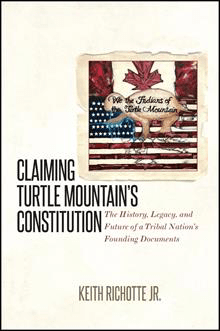
New Book: “Claiming Turtle Mountain’s Constitution: The History, Legacy, and Future of a Tribal Nation’s Founding Documents” by Keith Richotte
Claiming Turtle Mountain’s Constitution: The History, Legacy, and Future of a Tribal Nation’s Founding Documents
By Keith Richotte Jr.

In an auditorium in Belcourt, North Dakota, on a chilly October day in 1932, Robert Bruce and his fellow tribal citizens held the political fate of the Turtle Mountain Band of Chippewa Indians in their hands. Bruce, and the others, had been asked to adopt a tribal constitution, but he was unhappy with the document, as it limited tribal governmental authority. However, white authorities told the tribal nation that the proposed constitution was a necessary step in bringing a lawsuit against the federal government over a long-standing land dispute. Bruce’s choice, and the choice of his fellow citizens, has shaped tribal governance on the reservation ever since that fateful day.
In this book, Keith Richotte Jr. offers a critical examination of one tribal nation’s decision to adopt a constitution. By asking why the citizens of Turtle Mountain voted to adopt the document despite perceived flaws, he confronts assumptions about how tribal constitutions came to be, reexamines the status of tribal governments in the present, and offers a fresh set of questions as we look to the future of governance in Native America and beyond.
For more information and to read an excerpt, visit the book page.
Osage Nation Supreme Court Decision in Separation of Powers Issue Redux
Here is the opinion in Standing Bear v. Pratt:
SCO-2016-01 Standing Bear v Pratt Slip Opinion 8-11-17
Prior case here.
New Scholarship on Federal Restrictions on Tribal Customary Law
Concetta Tsosie de Haro has posted “Federal Restrictions on Tribal Customary Law: The Importance of Tribal Customary Law in Tribal Courts.” The paper was published in the Tribal Law Journal.
Here is the abstract:
This article examines the adverse effects of federal case law and legislation on tribal courts and tribal courts’ ability to incorporate tribal customary law. Tribal customary law is the law given to tribes by holy deities which governs tribal ways of life. It is important to maintain tribal customary law because it strengthens tribal communities’ identities and cultural foundations. While Supreme Court precedent has, at different times, both restricted and promoted tribes’ ability to use tribal customary law to adjudicate the cases of tribal members, federal legislation including the Major Crimes Act, the Indian Civil Rights Act, the Tribal Law and Order Act, and the Violence Against Women Act continues to restrict tribes’ ability to apply customary law in tribal courts. To illustrate one way in which current federal Indian policy limits tribes’ ability to use customary law, the author highlights the ways in which two-spirit tribal members are excluded and ignored by the protections established in the Violence against Women Act. As the use of tribal customary law is critical to the maintenance of tribal sovereignty, this article advocates for corrections to these legislative restrictions to promote tribal court’s use of tribal customary law.
Transcripts of “Who Belongs? From Tribal Kinship to Native Nation Citizenship to Disenrollment”
Federal Magistrate Recommends Immediate Release of Indian Prisoner for ICRA Right to Counsel Violation
Here are the materials so far in Fragua v. Casamento (D.N.M.):
You must be logged in to post a comment.