Here is the opinion in In re Coughlin:

Briefs here.
Here.

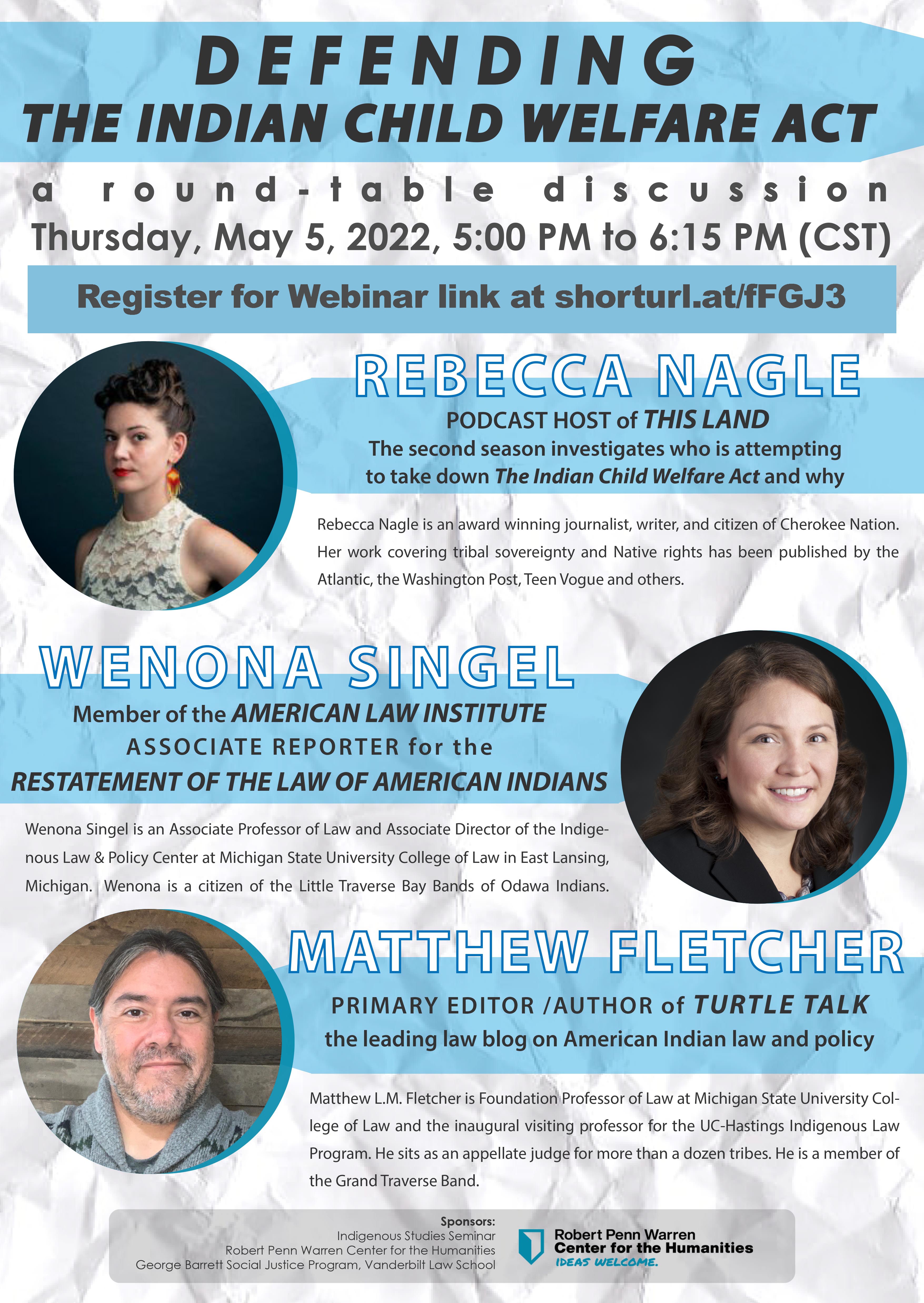
Register here.
Matthew L.M. Fletcher

The goal of this Essay for the Wisconsin Law Review’s Symposium on the Restatement of the Law of American Indians is to develop a framework on the durability of this Restatement. The aadizookaanag are unusually durable in terms of their transmission of underlying, foundational lessons, but the stories change all the time. The earth diver story explores and describes the critically important connection between the Anishinaabeg and the creatures of Anishinaabewaki, but only at a very broad level of generality. How the Anishinaabe tribal government in the twenty-first century translates those principles into modern decision- making requires new analysis, new stories. Additionally, old aadizookaanag may fade into irrelevance, even disrepute, as times and conditions change.
Law is the same. Restatements are intended to be durable and persuasive, supported by the great weight of authority, but not permanent. There are provisions in the Indian law Restatement I believe are truly timeless, while the law restated in some sections is likely to change a great deal over the next few decades. I choose four sections in the Restatement and match each with one of the four directions sacred to the Anishinaabeg. The youngest direction, Waabanong, the east, is the most likely to change. The next youngest, Zhaawanong, the south, is older, but still subject to change. Niingaabii’anong, the west, is still older, wiser, less likely to change, but also very dark in its philosophies. Kiiwedinong, the north, is the oldest, wisest, and most durable, yet distant. A Restatement section includes blackletter law, law that is well-settled and indisputable. The reporters’ notes that accompany the blackletter law constitute the legal support for that statement of law. The stronger the legal support, the more durable the black letter.
In the east, I choose one of the plainest, easiest-to-restate principles of federal Indian law, the bar on tribal criminal jurisdiction over non- Indians. In the south, I choose the law interpreting the federal waivers of immunity allowing tribes to sue the United States for money damages. In the west, I choose the darkest, yet perhaps the most foundational, principles, the plenary authority of Congress in Indian affairs. For the north, I choose tribal powers, the oldest and most durable of all of the principles in the Restatement.
Diane P. Wood
Almost 200 years ago, in the Cherokee Nation cases, Chief Justice John Marshall famously described Indian tribes as “domestic dependent nations.” It’s a catchy phrase, but it falls far short of a clear description of the complex relationship between the Indian tribes, bands, nations, and similar groups in the territory encompassed by the United States and the government of that territory. It also elides the equally complex issue of the relationship between Indian tribes and the constituent states of the United States. In the end, the problem may be that modern notions of self- determination, integrity of national boundaries, and conquest simply do not map well onto the history of our part of the North American continent from the late fifteenth century to the present. The best we can do is to articulate rules, canons of interpretation, and principles from the law that has developed in the hope of clarifying and settling the law we now have.
No one could have undertaken that task with more sensitivity, expertise, and objectivity than the Reporters of the American Law Institute’s soon-to-be-published Restatement of the Law of American Indians—Professors Matthew L.M. Fletcher and Wenona T. Singel and Attorney Kaighn Smith, Jr. Indeed, this may have been one of the most challenging Restatements the ALI has ever undertaken. Most of the time, the common law (or interstitial law relating to a statute) has developed organically in the state and federal courts, and the job of the Reporters is to distill the rules that have emerged. This isn’t always easy, of course: sometimes no single rule floats to the top of the barrel, and so the Reporters must choose the one that seems best to represent the state of the law. Sometimes (though less often) the Reporters propose that the ALI adopt a minority position that is better reasoned or that seems to capture a trend of thinking.
Brian L. Pierson
Effective April 21, 2016, the Department of the Interior adopted new right-of-way regulations at 25 C.F.R. Part 169 that fundamentally change the Department’s historical approach. While the Right of Way Act still requires that the BIA approve rights-of-way, the new rules reflect a reinterpretation of the federal government’s trust responsibility with respect to rights-of-way. Instead of the federal government continuing to retain virtually all regulatory authority and substituting its judgment for that of tribes, the rules explicitly support tribal decision-making and the exercise of tribal regulatory authority.
This Essay briefly reviews the history of rights-of-way through Indian country, describes the new paradigm adopted under the 2016 regulations, and suggests how tribes can harness that paradigm to strengthen tribal sovereignty and generate revenue.
Lorenzo E. Gudino
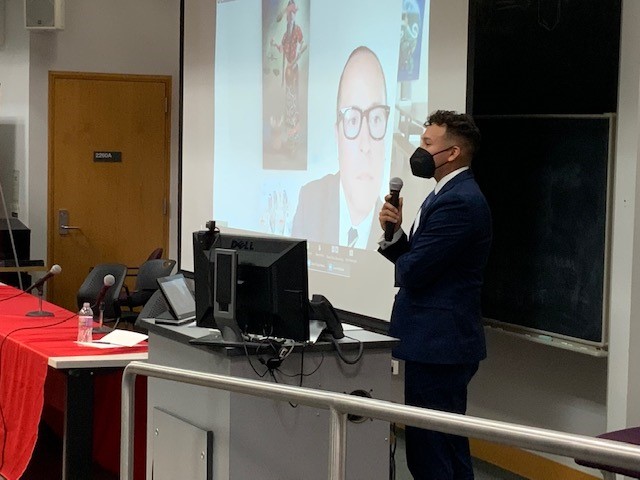
Gregory Bigler has posted “Foundations of Tribal Society: Art, Dreams, and the Last Old Woman,” published in the UCLA Indigenous Peoples’ Journal of Law, Culture & Resistance, on SSRN. Here is the abstract:
The Last Old Women is a story written in the traditional Euchee de’ela style. These de’ela, told in our language, often involved animals, usually told to children. Unfortunately, these are seldom heard any more for many reasons, not the least of which is the changing, or disappear-ing, structure of Euchee society. This de’ela, is a parable about what can happen when we no longer tell our stories, no longer use our language, no longer gather together to remember. The story illustrates how simple structures within our traditional tribal society may require explanation to those not of our tribal society, sometimes including own people. When we discuss traditional people and their beliefs rarely do we articulate the issues using the forms to which they themselves subscribe. Forms matter, process matters.
Following the Last Old Woman an essay lays out how art, language and ceremony comprise our tribal societies. But these cannot exist in-dividually if we wish self-determination to mean anything. Art, culture, language, traditions, and ceremony—society—are intricately woven together. One is the other: art (for us mostly song and dance) is sacred and the sacred has life. One can look to various markers to see how this lack of a coherent society impacts tribal people. Our languages disappear, ceremonies cease. Native Art is produced for outsiders. Many traditional Indigenous People face an uncertain future unless space is created for our society. Yet our traditional people still dream this future into existence. But our advocates and attorneys must help to implement this dream. Thus, we must celebrate our tribal forms, and recognize the work done by such as Rabbit and the Last Old Woman so that their end does not arrive.
HIGHLY RECOMMENDED! Greg is Euchee strong.
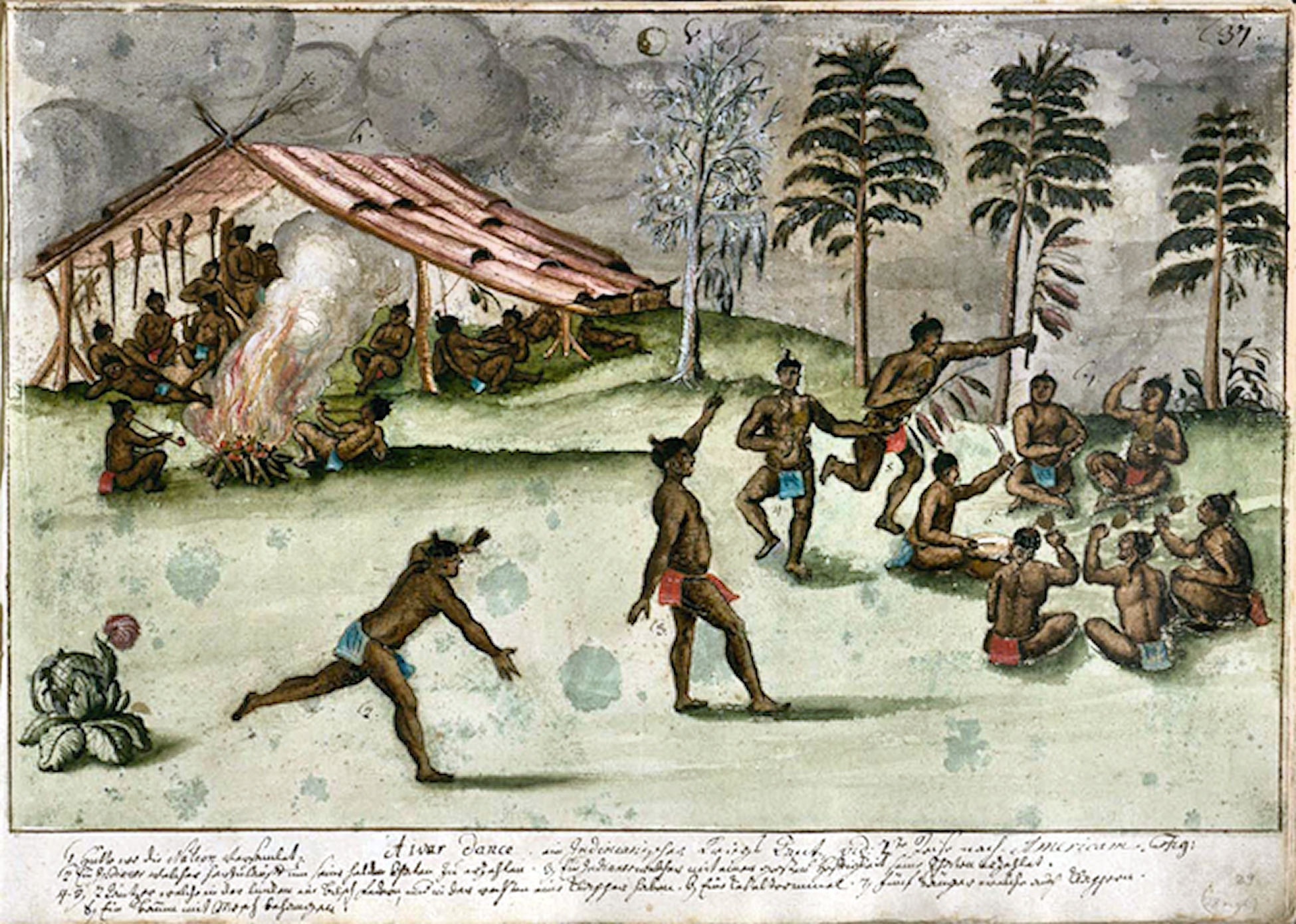
David H. Moore and Michalyn Steele have published “Revitalizing Indian Sovereignty in Treatymaking” in the N.Y.U. Law Review.
Abstract:
In the current model of federal-Indian relations, the United States claims a plenary legislative power, as putative guardian, to regulate Indian tribes. Under this model, tribes are essentially wards in a state of pupilage. But the federal-tribal relationship was not always so. Originally, the federal government embraced, even promoted, a more robust model of tribal sovereignty in which federal-Indian treatymaking and diplomacy figured prominently. Through treaties, the United States and tribes negotiated territorial boundaries, forged alliances, facilitated trade, and otherwise managed their relations. In 1871, Congress attempted to put an end to federal-Indian treatymaking by purporting to strip tribes of their status as legitimate treaty partners. In a rider to the 1871 Appropriations Act, Congress prohibited the recognition of tribes as sovereign entities with whom the United States could negotiate treaties. Since that time, the 1871 Act and the plenary power-pupilage model it entrenched have grown deep roots in federal Indian law and the policies of the United States. Congress has aggrandized its role in tribal life at the expense of tribal sovereignty, and the coordinate branches of the federal government have acquiesced in this foundational shift.
The literature of federal Indian law has wrestled with the doctrine of plenary power, contemplated the fate of the federal-tribal treaty relationship, and questioned the constitutionality of the 1871 rider. This Article posits new arguments for the unconstitutionality of the 1871 Act, uprooting the presumptions underlying the Act and revitalizing the prospect of federal-Indian treatymaking. Two recent developments provide an opportunity for such a transformation. In Zivotofsky v. Kerry, the Supreme Court held that the President alone possesses the power to recognize foreign states and governments. While Zivotofsky was a landmark case for U.S. foreign relations law, its potential significance for federal Indian law has gone underappreciated. Zivotofsky did not directly address the locus of power to recognize tribal sovereignty to enter treaties, but it prompts the question and provides a blueprint for arriving at an answer. Engaging that blueprint, this Article argues that the President possesses the exclusive power to recognize tribes’ sovereign capacity to enter treaties. The result: The 1871 Act is unconstitutional because it attempts to limit that power. In our view, the President can and should unilaterally reengage in federal-Indian treatymaking, revitalizing treatymaking and reanimating the sovereignty model of federal-Indian relations.
A second development, the Supreme Court’s decision in McGirt v. Oklahoma, is less fundamental to the argument but also significant for revitalizing tribal sovereignty. In McGirt, the Court recognized the ongoing vitality of federal-Indian treaties that were entered when the sovereignty model prevailed, strengthening both claims to tribal sovereignty and the viability of treatymaking in the federal-Indian relationship.
The implications of these developments are significant. Deracinating the 1871 Act disrupts the dominance of the plenary power doctrine and pupilage model with their attendant abuses, more fully realizes the promise of the United States’ policy of Indian self-determination and commitment to international norms, and generates positive ripples for Indigenous-state relationships across the globe.
HIGHLY recommended.
Sarah Deer, Elise Higgins, and Thomas White have published “Editorializing ICWA: 40 Years of Colonial Commentary” in UCLA’s Indigenous Peoples’ Journal of Law, Culture & Resistance.
An excerpt:
Despite studies concluding ICWA has been a successful law to curb the crisis of child removal in Indian country when implemented correctly, a significant number of attorneys, think tanks, and politicians argue that ICWA actually harms Native children and should be repealed. Oth- ers argue that ICWA has served its purpose and is no longer necessary. This article considers how newspaper editorials perpetuate misinformation about ICWA, its history and its purpose. Moreover, we explore how anti-ICWA authors employ “words of colonialism”—in particular, the use of derogatory words and phrases to portray Native people as bad parents and Tribal Nations as dysfunctional. Providing inaccurate and racist characterizations of ICWA is one of the primary tactics used by editorials to delegitimize ICWA. Emotionally triggering and wholly inaccurate language is often employed as a sensationalist method to grab the reader’s attention by presenting the law in terms of clear-cut morality.


 Turtle Talk
You must be logged in to post a comment.