Caballero v. United States Cert Petition

Here:

Cert Petition

Questions presented:

  1. Whether the Trial Court and the Court of Appeals committed prejudicial error in barring/blocking a Native American tribe from pursuing in rem / quiet title remedies on lands promised and granted to them by the USA from that tribe, but stolen by another tribe based on lack of subject matter jurisdiction due to the non-justiciable political question doctrine.
  1. Whether or not, the Court committed prejudicial error by blocking a native American tribe from pursuing an in rem/quiet title/stolen tribal lands case, on the basis of USA sovereign immunity tribal sovereign immunity.
  2. Whether the waiver by the United States of America of its sovereign immunity over quiet title claims
    impermissibly discriminates in violation of the Equal Protection Clause of the 14th Amendment against Native American tribes having quiet title claims that are barred by the Native American lands express exceptions set forth in 28 USC section 2409a.
  3. Whether the Trial Court and the Court of Appeals committed prejudicial air in barring/blocking the
    Indian tribes pursuit of Land title claims constitutes an impermissible denial of the right to access to
    courts as guaranteed by the First Amendment right to petition the court government for redress of grievances.

Lower court materials here.

Idaho Federal Court Dismisses Suit against Tribally-Owned Business for Lack of Diversity Jurisdiction

Here are the materials in Whittle v. Zims Hot Springs (D. Idaho):

1 Complaint

12 Motion for Summary

16 Response

20 Reply

40 DCT Order

Anti-NAGPRA Scholar Sues San Jose State for Free Speech Violations

“Here Come the Anthros”

Here is the complaint in Weiss v. Perez (N.D. Cal.):

1 Complaint

San Jose Mercury News: “San Jose State: Professor smiling with Native American skull ignites fiery debate

Springer and Weiss: “Responding to Claims of Archaeological Racism

Akwesasne Notes, March 1971

Split Sixth Circuit Vacates Conviction and Sentence of D.V. Perpetrator of Saginaw Chippewa Tribal Citizens

Here are the materials in United States v. Johnson:

CA6 Opinion

Opening Brief

US Brief

Reply


The University of Michigan federal appellate clinic represented the appellant.

Deadline Extended – Call for Articles: Special Indian Law Edition of the Arizona Attorney 2022

DEADLINE EXTENDED – CALL FOR ARTICLES: SPECIAL INDIAN LAW EDITION OF THE ARIZONA ATTORNEY 2022

Deadline for 1-2 Paragraph Article Proposals: February 7, 2022

Deadline for Article Drafts: March 18, 2022

The Indian Law Section has extended the deadline for article proposals to be included in the 2022 special Indian Law edition of the Arizona Attorney magazine. Proposals should focus on an issue of interest to those who practice Indian Law in Arizona. Publication in the Indian Law Edition of the Arizona Attorney magazine is a wonderful opportunity for Indian legal practitioners to showcase their expertise in the field of Indian law.  The Indian Law Section relies on you to contribute articles in order to preserve this outstanding tradition.

Past articles from the 2021 Indian Law edition were:

A View from Tribal Court: Tips for Best Practices

By M. June Harris

Thawing the Freeze: COVID-19’s Effect on the Former Bennett Freeze Area of the Navajo Nation

By Susan I. Eastman

The Words of the Talking God: Sustaining Native Nations Through the Common Law

By Joseph Austin

An Opportunity Arises: Prop. 207 and Arizona Tribes’ New Beginnings for Marijuana Legislation

By Judith Dworkin, Joe Keene, and Candace French

Epidemic Hiding in Plain Sight

By Susan Filan

Spectrum Sovereignty: The U.S. Must Recognize Indigenous Rights to Spectrum

By Darrah Blackwater

Arizona–Tribal 2021 Gaming Compact Amendments: What You Need to Know

By Heidi McNeil Staudenmaier and Ed Hermes

Bent But Not Broken – ICWA Stands: A Summary of “Brackeen v. Haaland”

By Glennas’ba Augborne Arents and April E. Olson

Either a short or a long article may be proposed. Generally, a long article will be between 2,000 and 2,500 words (in a Microsoft Word document, about 9 to 12 pages including endnotes) and will be about 3 to 4 pages in the magazine. A short article will be approximately 1,500 words and typically will be 2 pages in the magazine.

The proposal should provide the following information: author’s name and contact information (e-mail address, phone number, and name of employer/firm); the subject matter of the article relevant to the practice of Indian law in Arizona (e.g., ICWA, NAGPRA, Water Rights, Land Use, Tribal Sovereignty, etc.); the anticipated title; and a concise summary of the thesis of the article. 

Proposal authors will be notified on whether their proposed article has been accepted by February 11, 2022.  The draft of the article for a selected proposal will be due on March 18, 2022.  Final drafts of selected articles are due by April 25, 2022.

If you would like to submit a proposal or if you have questions, please contact:

Glennas’ba Augborne Arents, Secretary, Indian Law Section
gaugborne@rothsteinlaw.com

Or

Hon. M. June Harris, Member-at-Large, Indian Law Section
JHarris@sc.pima.gov

Iowa SCT Acknowledges End of State Jurisdiction over Indian Lands, but Federal Statutory Repeal Not Retroactive

Here are the materials in State v. Cungtion (Iowa S. Ct.):

Appellant Brief

Appellee Brief

Reply

Supplemental Brief

United States Amicus Brief

Sac and Fox Tribe Amicus Brief

Cungtion Opinion

And here are the materials in the companion case, State v. Bear:

Appellant Brief

Appellee Brief

Supplemental Brief

United States Amicus Brief

Sac and Fox Tribe Amicus Brief

Bear Unpublished Opinion

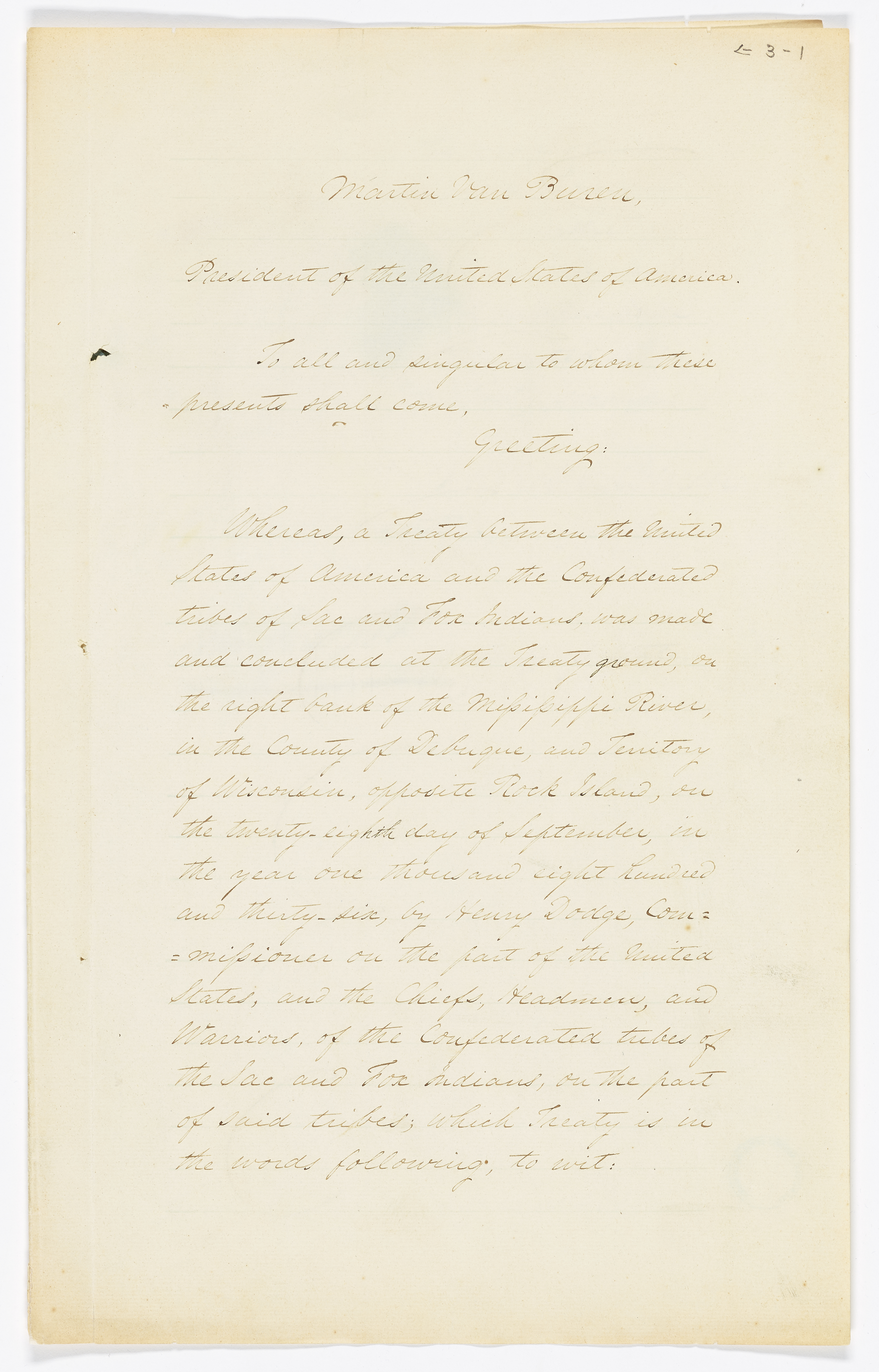
Ratified Indian Treaty 216: Sauk and Fox-Rock Island, Dubuque, Wisconsin Territory September 28, 1836 RG 11 General Records of the U.S. Government

American Indian Law Journal Publishes Volume 10, Issue 1

Here:

Volume 10, Issue 1 (2022)

Articles

PDF

Healthcare Self-Governance
Danika Watson

PDF

Analyzing the Implications of the Supreme Court’s Application of the Canons of Construction in Recent Federal Indian Law Cases
Meredith Harris J.D.

PDF

This Land Is Not Our Land, This Land is Their Land: Returning National Park Lands to Their Rightful Protectors
Sierra Kennedy

PDF

John Locke’s Theory of Property, and the Dispossession of Indigenous Peoples in the Settler-Colony
Calum Murray

PDF

How Alaska Native Corporations Can Better Support Alaska Native Villages
E. Barrett Ristroph Esq.

PDF

The Importance of Abolition of the Carceral State for Native Survivors
Christina M. Schnalzer

Nez Perce man named Chief Lawyer, ca. 1861

Donut for the First One to Name the Author of the Embedded SCOTUS Quote in Stacy Leeds’ Post on Men Devaluing Women and POC in the Politics of Justice Breyer’s Replacement

From Indigenously Well, “Asterisk This.”

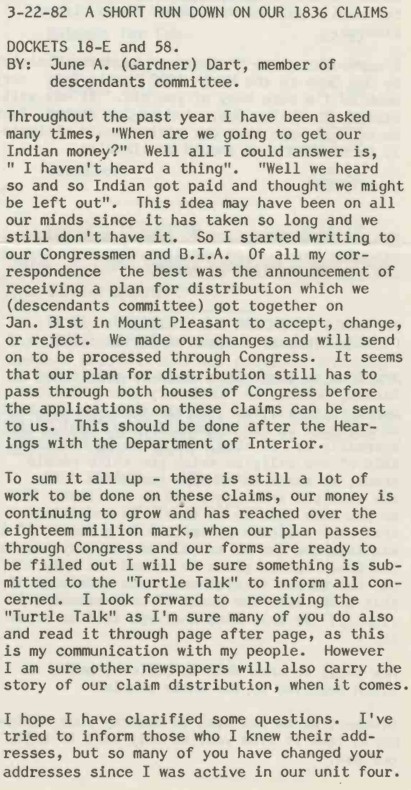
“When are We Going to Get Our Indian Money?” — The Saga of the Michigan Ottawa Indian Claims Commission Judgment Told in the Pages of Turtle Talk

The Michigan Indian Land Claims Settlement Act of 1997 took some time to get past Congress after the Indian Claims Commission judgment came out in 1972. Here is some of that history told in the pages of the original Turtle Talk newsletter and its precursor, Indian Talk of Southern Michigan.

Indian Talk, April 1975
Turtle Talk, Dec. 1979
Reprinted in February 1980 issue of Turtle Talk, published by the Grand Rapids Inter-Tribal Council.
Turtle Talk, April 1982
Letter to the Editor, Turtle Talk, Feb. 1980 [I know, I know, this is about the Potawatomi Indian money, but it’s too rich to leave out. . . .]
Continue reading