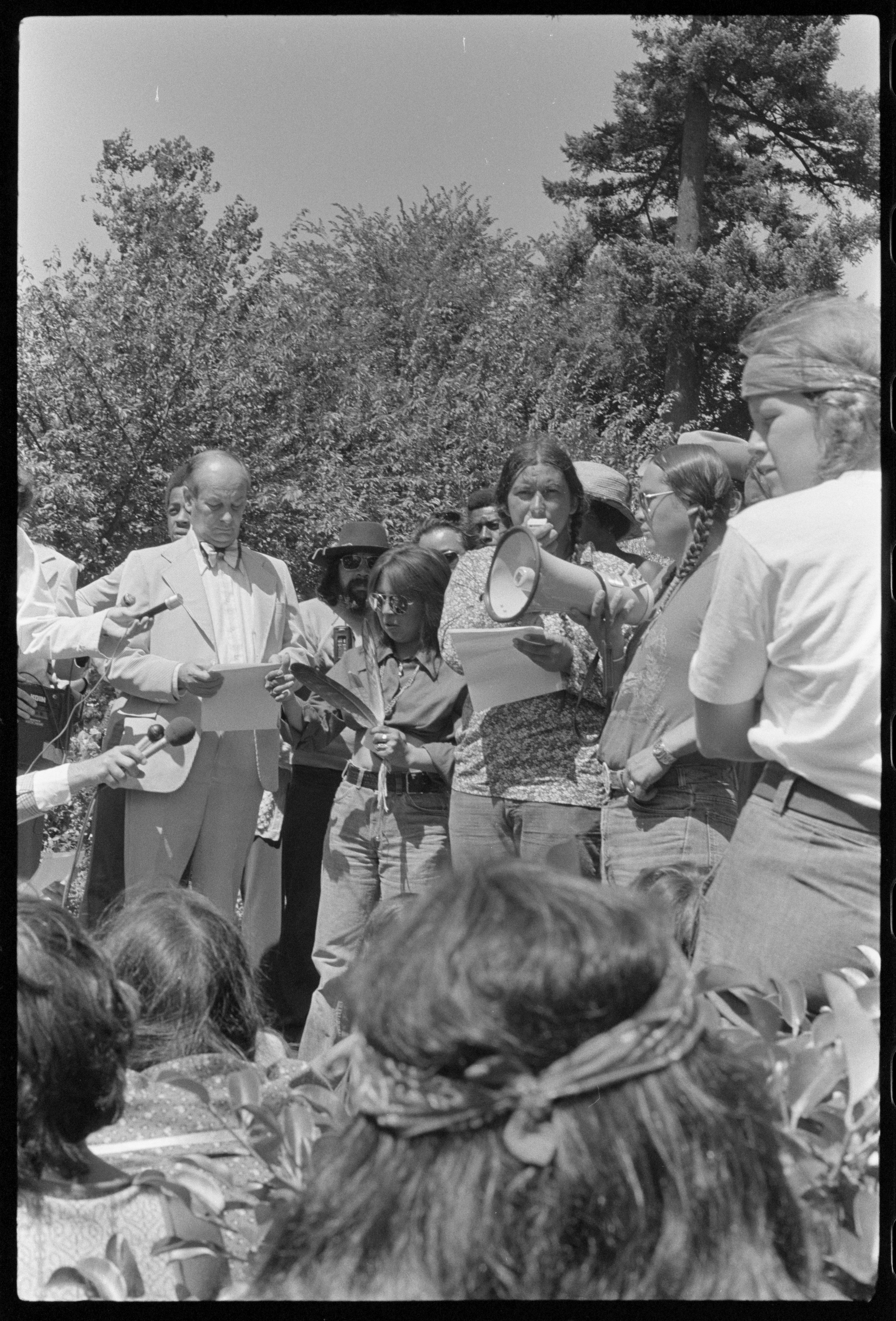
Indian Claims Commission
Chinook Wins $117K Attorney Fee Award over Federal Acknowledgement Dispute

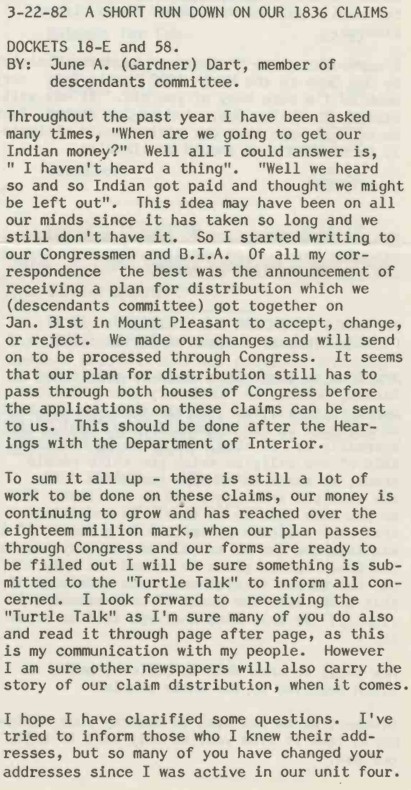
“When are We Going to Get Our Indian Money?” — The Saga of the Michigan Ottawa Indian Claims Commission Judgment Told in the Pages of Turtle Talk
The Michigan Indian Land Claims Settlement Act of 1997 took some time to get past Congress after the Indian Claims Commission judgment came out in 1972. Here is some of that history told in the pages of the original Turtle Talk newsletter and its precursor, Indian Talk of Southern Michigan.



Chinook Recognition Suit Remanded to Agency
Here are the materials in Chinook Indian Nation v. Bernhardt (W.D. Wash.), formerly Chinook Indian Nation v. Zinke:
113 DCT Order on Motions for Summary Judgmet
114 Motion for Reconsideration
118 DCT Order Granting Motion for Reconsideration
128 Motion for Partial Summary Judgment
Prior post here.
Federal Court Strikes Ban on Chinook Federal Acknowledgment Petition, Violates APA
Here are the materials in Chinook Indian Nation v. Bernhardt (W.D. Wash.), formerly Chinook Indian Nation v. Zinke:
93-us-motion-for-partial-summary-judgment.pdf
101-chinook-motion-for-partial-summary-j-1.pdf
102-chinook-motion-for-partial-summary-j-2.pdf
Prior posts here.
Federal Court Denies Siletz Intervention in Chinook Suit against US
Quapaw Partially Prevails in Dispute over Undistributed Indian Claims Commission Judgment Funds
Here are the materials in Quapaw Tribe of Oklahoma v. United States (Fed. Cl.):
59 US Motion for Partial Summary J
An excerpt:
In deciding the cross-motions for partial summary judgment on this issue, the Court considered at least two factors. Foremost, the Court notes that fact discovery was still ongoing in this case when the motions were filed. As of March 31, 2015, the Government anticipated producing over 452,000 document images to Plaintiff before the close of fact discovery on April 16,2015. Gov.’s Status Report, Dkt. No. 81, at 5. The Court declines to draw evidentiary conclusions when material facts are in dispute and ongoing discovery may yet shed more light on the issues. Second, the Court must consider the parties’ respective burdens. To prevail at the summary judgment stage, Plaintiff must sufficiently allege a breach of trust by the Government through affirmative evidence of nonpayment so that the finder of fact could not reasonably rule in favor of the Government. See Anderson v. Liberty Lobby, Inc., 477 U.S. 242, 249–50, 106 S.Ct. 2505, 91 L.Ed.2d 202 (1986). The Court finds that the Government’s evidence of accounting records and meeting minutes sufficiently rebuts Plaintiff’s argument so as to create a continuing and genuine dispute. On the other hand, the Government has not convinced the Court that records of emptied Treasury accounts and presumptions of regularity are sufficient to decide this issue. Plaintiff’s evidence of meeting minutes and the conclusions of the Quapaw Analysis satisfy the Court, again, that the issue is in genuine dispute. Therefore, the Court denies both motions for partial summary judgment on the question of whether the Tribe is entitled to recover some or all of the trust funds.
We posted earlier on this matter here.
Brian Pierson on Wisconsin Indian Treaty Rights and Proposed Mining Activities
Here.
An excerpt:
The Wisconsin Legislature has approved amendments to Wisconsin law intended to pave the way for Gogebic Taconite to mine iron ore in the Penokee Hills of Ashland County. Wisconsin’s tribes have been outspoken in their opposition. The Bad River Chippewa, whose reservation lies directly in the path of any mine runoff, has been especially vocal.
The six Chippewa tribes have asserted that their treaties with the federal government give them special status and entitle their concerns to greater weight. They are right.
By the 1842 treaty at La Pointe, the Chippewa ceded to the United States approximately 12 million acres, including the Penokee Hills, receiving in return an amount that the Indian Claims Commission later called “unconscionable.” A treaty, the Supreme Court observed in United States vs. Winans, is “not a grant of rights to the Indians, but a grant of right from them – a reservation of those not granted.” In the 1842 treaty, the Chippewa reserved “usufructuary” rights in the territory they ceded, including the right to hunt, fish, trap, harvest wild rice and engage in other activities to make a living from the land.
Federal Circuit Affirms Dismissal of Claims by “Florida Choctaws”
Here is the opinion in Williams v. United States.
We’d have briefs but the Federal Circuit PACER doesn’t have them available.
Lower court materials here.
“Choctaws East of the Mississippi River” Claims against USA Fail
Here is the unpublished opinion in Williams v. United States (Fed. Cl.):
 Turtle Talk
You must be logged in to post a comment.