Final Rule: Patchak Patch

Here:

11-13-13 Patchak_Final Rule

Press release:

11-12-13 PR Land Into Trust Procedures

Excerpt:

“This rule provides greater certainty to tribes in their ability to develop lands acquired in trust for purposes such as housing, schools and economic development,” said Assistant Secretary Washburn. “For such acquisitions, the rule will create a ‘speak now or forever hold your peace moment’ in the land-into-trust process. If parties do not appeal the decision within the administrative appeal period, tribes will have the certainty and peace of mind to begin development without fear that the decision will be later overturned.”

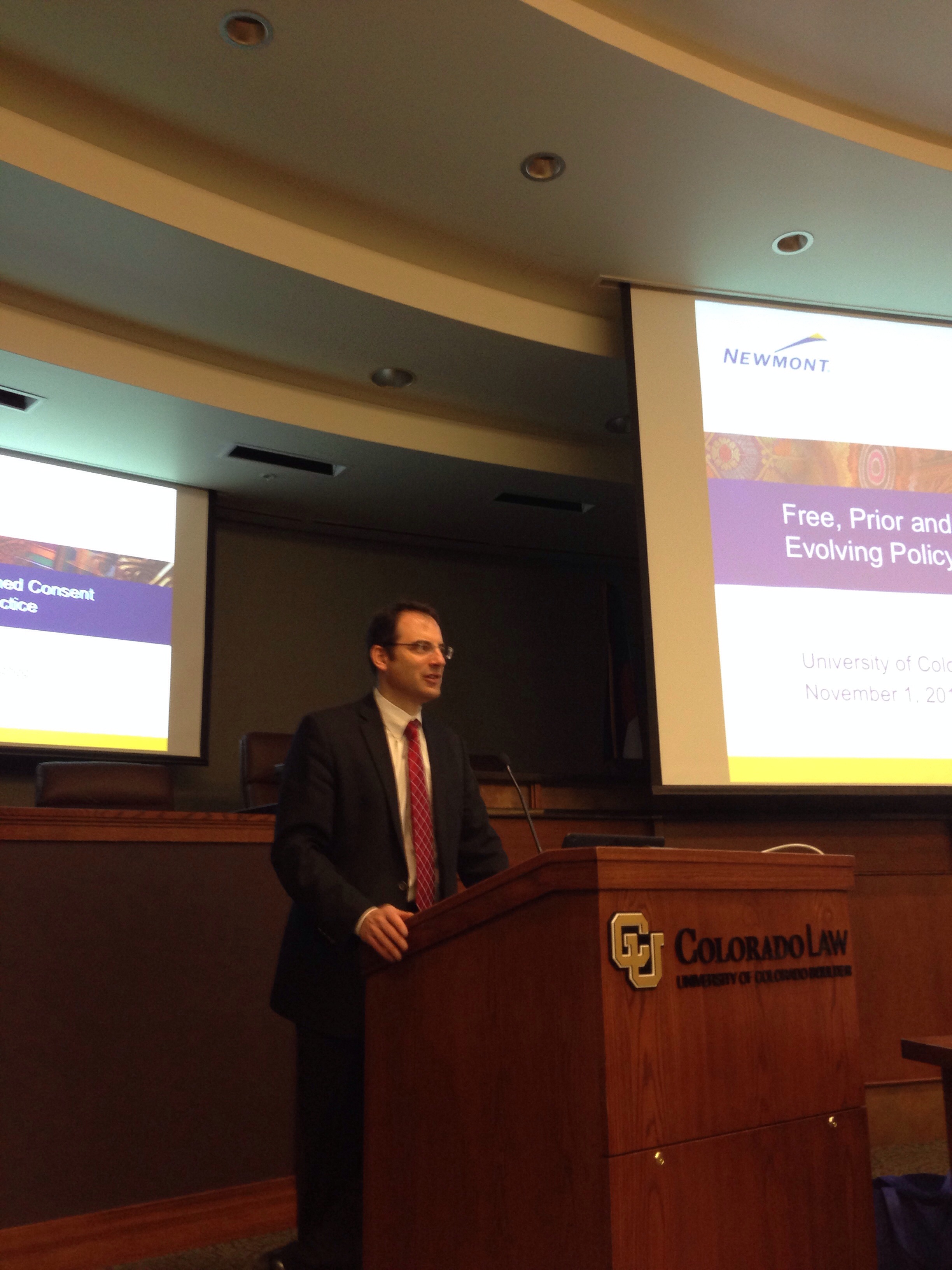
CU Indian Law Conference Keynote Speaker Kevin Washburn

Assistant Secretary Washburn

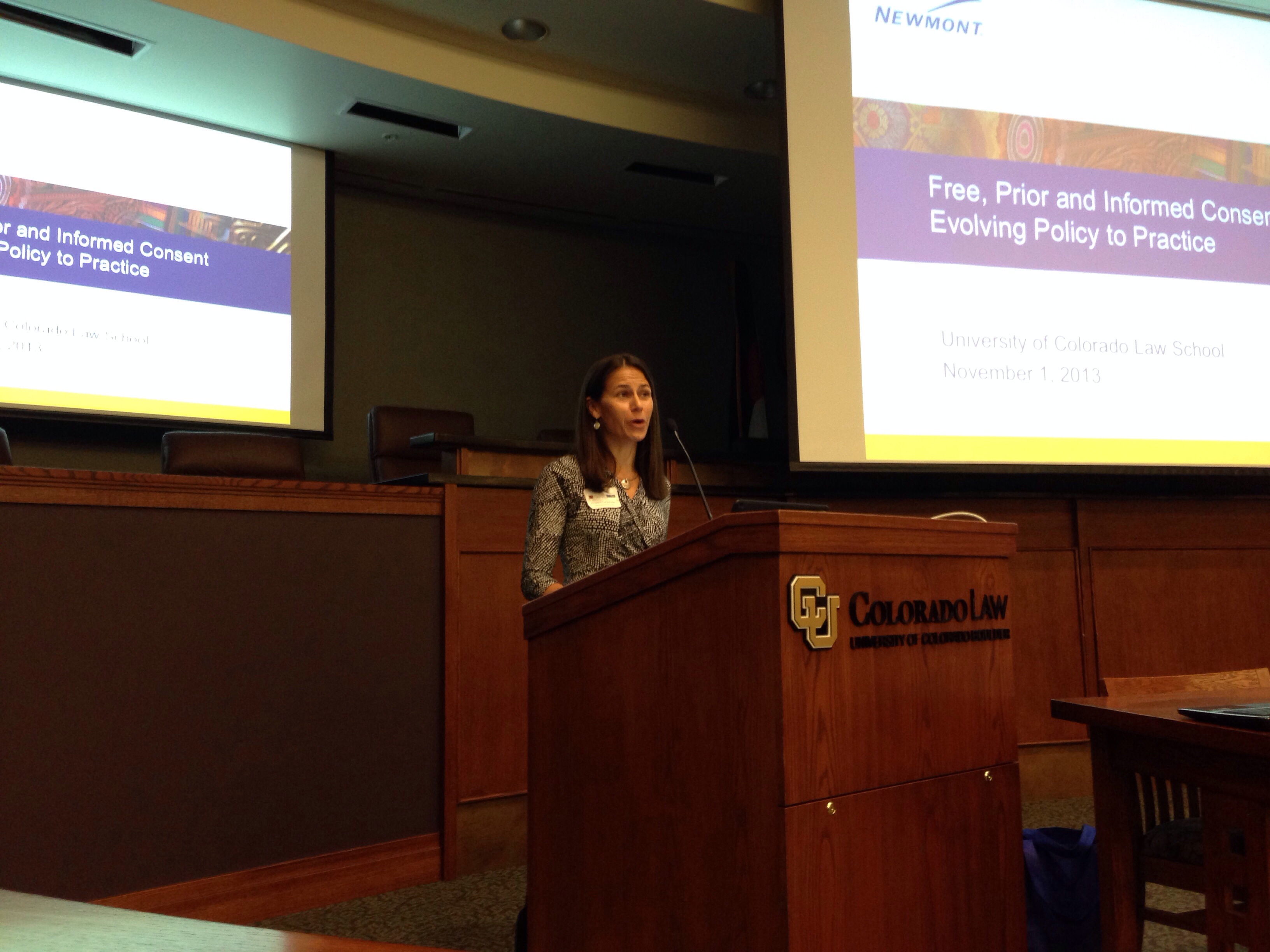
20131101-092307.jpg

CU Indian Law Program Co-Director Kristen Carpenter

20131101-092436.jpg

CU Law Dean Phil Weiser

20131101-092532.jpg

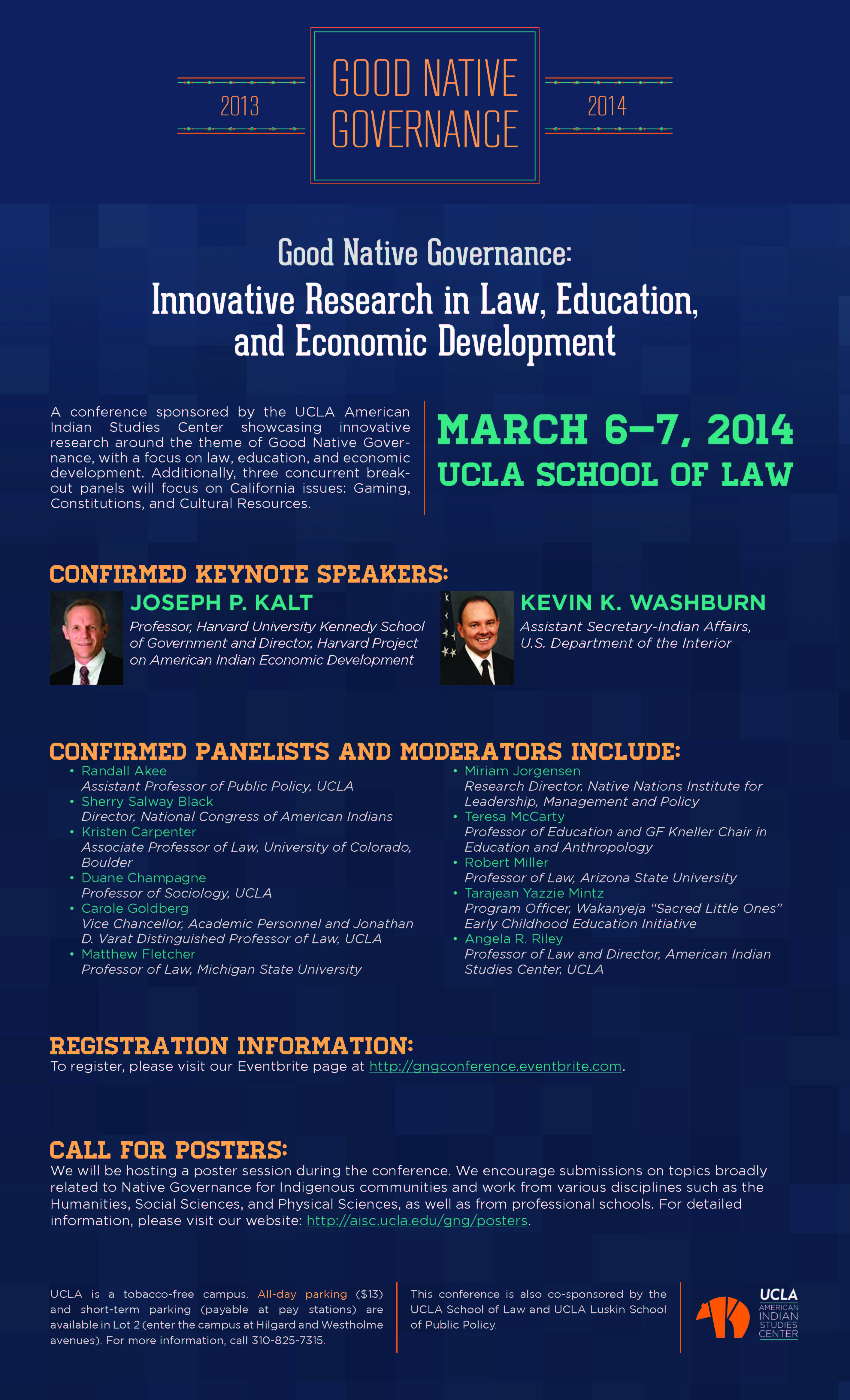
UCLA Good Native Governance Conference Flyer

Here (PDF):

gng_conference_flyer_v1B

House Resources Subcommittee Hearing on Federal Trust Acquisitions for Gaming Purposes

Here:

Oversight Hearing on:

  • Executive Branch standards for land-in-trust decisions for gaming purposes”

Member Statements:

The Honorable Don Young
Subcommittee Chairman

Witnesses and Testimony:

PANEL I

Kevin Washburn
Assistant Secretary for Indian Affairs
U.S. Department of the Interior

PANEL II

The Honorable Todd Mielke
County Commissioner
County of Spokane

Hazel Longmire
Vice-Chairperson
Colusa Indian Community Council

Alexander Skibine
Professor
University of Utah

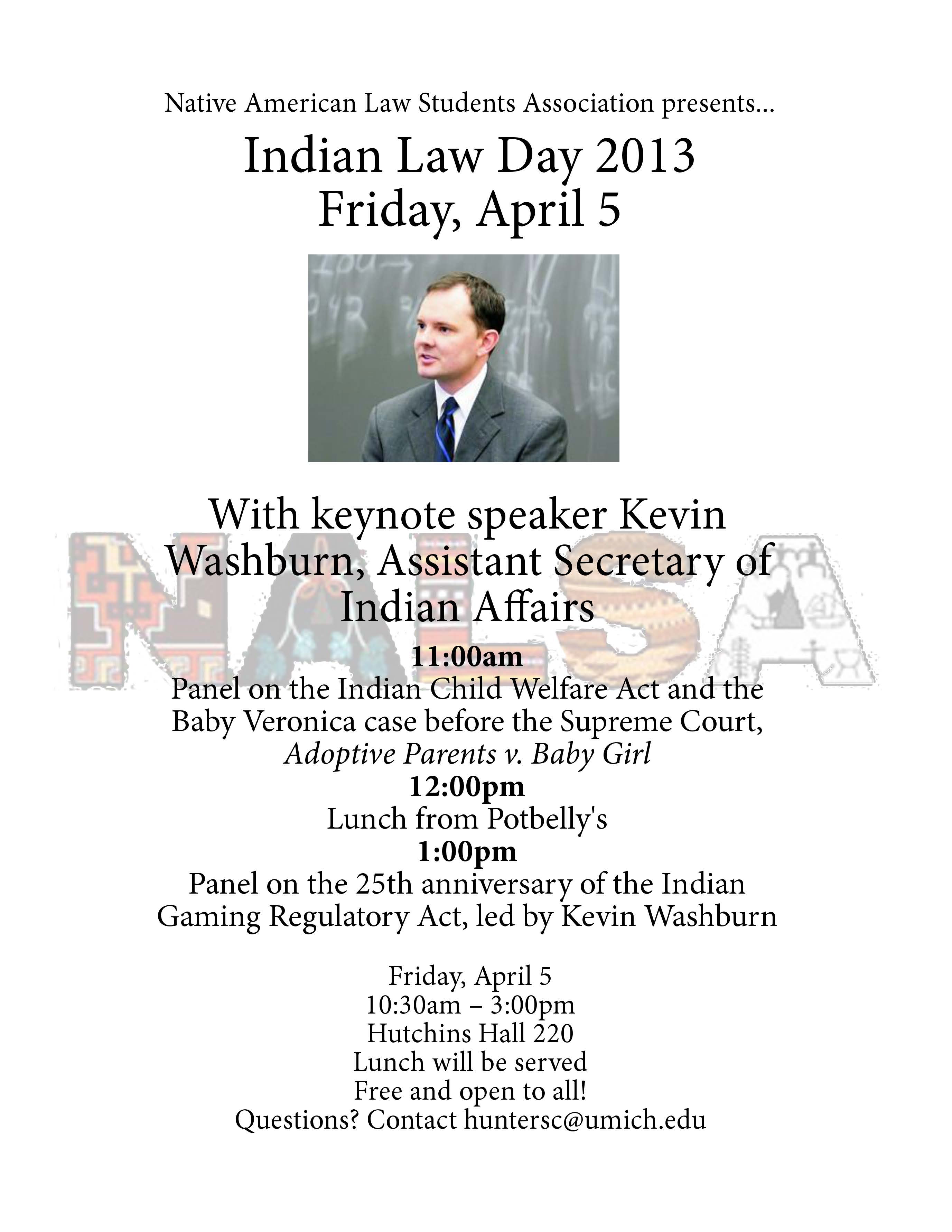
2013 Michigan Indian Law Day — This Friday — UM Law School

ILD2-1

Here:

ILD2-1

On Federal Juries and American Indian Defendants

Commentators (for example, here and here) have been noting in response to Grassley’s concern that white male perpetrators will not benefit from a jury of their peers in tribal courts that Indian defendants (almost) never stand trial before federal juries with American Indians in the jury box. Let us not forget ASIA Kevin Washburn’s Michigan Law Review article from a few years back that made that perfectly clear. He wrote:

Despite the normative principle of representativeness, Indians tend not to be well represented in federal juries in Indian country cases. Even in states with large Indian populations, Indians remain a very small fraction of the population. As a result, Indians would be expected to have minimal representation in the jury venire. However, the statistics indicate lower numbers than one would expect.

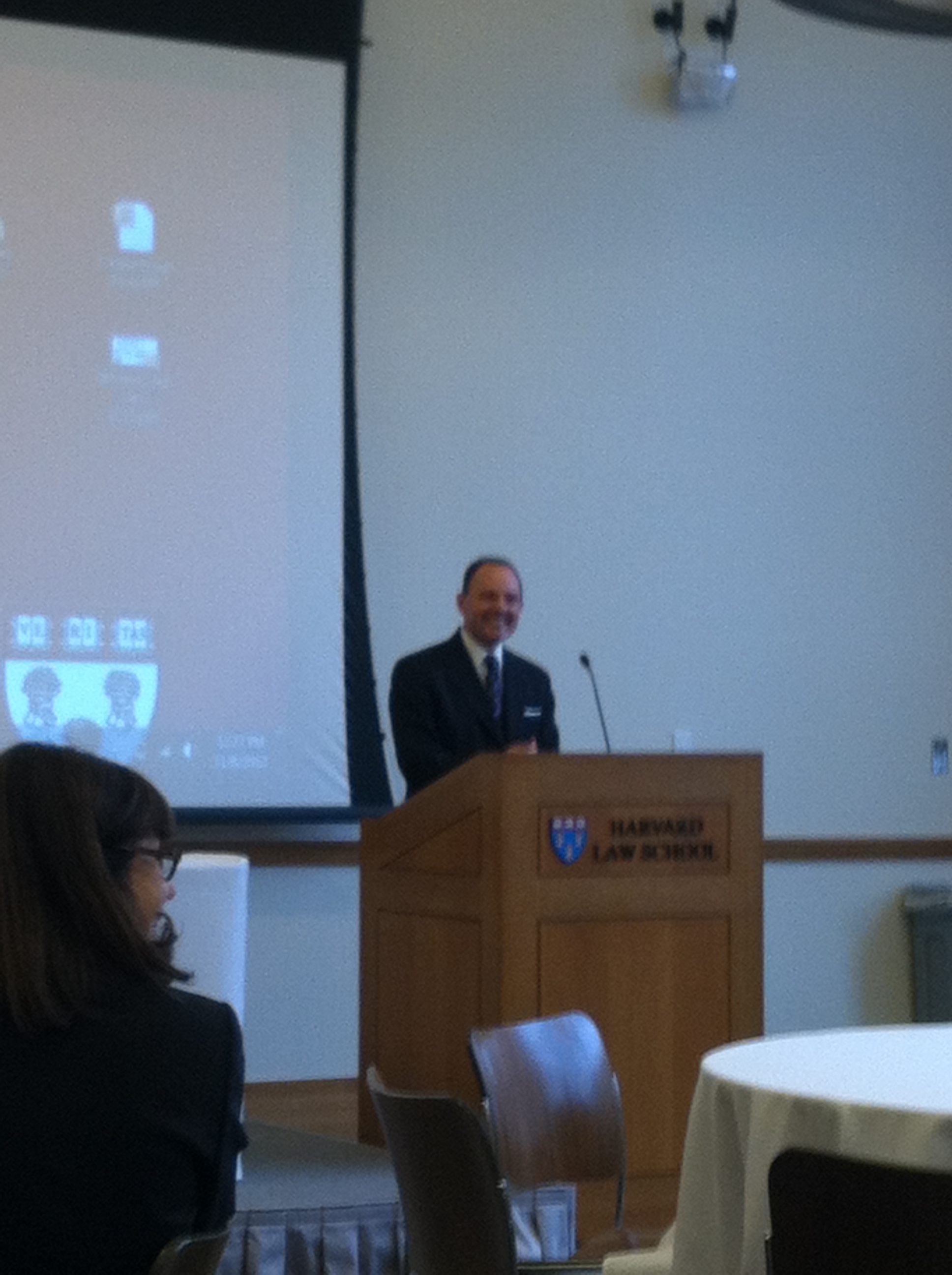
Harvard Law School Tribal Courts Conference — Kevin Washburn Lunch Keynote

Agenda for Harvard Law School Tribal Courts Symposium — This Thursday and Friday

Tribal Courts and the Federal System

Cambridge, MA

November 8th and 9th, 2012

Tribal Courts and Criminal Law: Assessing the Work of the Tribal Law and Order Commission

November 8, 2012

8:30–8:45 am              Introductions and Overview of Conference

Robert Anderson, Oneida Nation Visiting Professor of Law, Harvard Law

School, and Professor of Law, University of Washington School of Law

Seth Davis, Climenko Fellow and Lecturer on Law, Harvard Law School

8:45–9:30 am              Introducing the Work of the Tribal Law and Order Commission (TLOC)

Commission Chairman Troy Eid

9:30–11:30 am                        Improving Criminal Law Enforcement in Indian Country

Professor Carole Goldberg, Professor of Law and Vice-Provost, UCLA; Honorable Theresa Pouley, Tulalip Tribal Court and TLOC Commissioner; Kristen Carpenter, Professor, University of Colorado School of Law

What are the major issues that arise in adjudication of crimes covered by the Major Crimes Act and Indian Country Crimes Act?  What is the relationship between tribal and state authorities in jurisdictions where Congress has authorized state criminal jurisdiction within Indian country?  Who is an Indian for federal criminal jurisdiction purposes?

11:30 am–12:15 pm    Break

12:15–1:45 pm                        Lunch and Keynote Address

Honorable Kevin Washburn, Assistant Secretary for Indian Affairs, U.S. Department of the Interior

2:00–3:30 pm              Tribal Criminal Jurisdiction:  Theory and Practice

Angela Riley, Professor of Law, UCLA; Professor Ron Whitener, University of Washington Public Defense Clinic; Anita Fineday, Annie E. Casey Foundation (former White Earth Tribal Judge)

What are the major jurisdictional issues that tribal courts confront?  How do tribal courts approach sentencing alternatives?  What should be the long-term plan for strengthening tribal courts?  What is being done to provide defense for indigent defendants?

3:30–3:45 pm              Break

3:45–5:00 pm              Intergovernmental Cooperation Among Tribes, States, and the United States

Robert Anderson, Oneida Nation Visiting Professor of Law, Harvard Law School and Professor of Law, University of Washington School of Law; Carole Goldberg, Professor of Law and Vice-Provost, UCLA; Wenona Singel, Associate Professor of Law, Michigan State University

What are the legal and practical relationships between federal, state, and tribal courts and law enforcement officials in the area of criminal law?  What are the opportunities for retrocession at the state level to return criminal jurisdiction to Indian tribes and the federal government?  How can cooperative public safety agreements be a solution to jurisdictional complications in Indian Country?

Tribal Civil Jurisdiction and Sources of Tribal Law

November 9

8:30–8:45 am              Introductions and Overview of Day 2

Robert Anderson, Oneida Nation Visiting Professor of Law, Harvard Law

School, and Professor of Law, University of Washington School of Law

Seth Davis, Climenko Fellow and Lecturer on Law, Harvard Law School

8:45–9:45 am              Tribal Civil Jurisdiction

Judge William C. Canby, Jr., Ninth Circuit Court of Appeals

9:45–10:15 am                        Break

10:15–11:45 am                      Tribal Civil Law Development

Judge Michael Petoskey, Pokagon Band of Potawatomi Indians; Professor Matthew Fletcher, Michigan State School of Law; Julie Kane, General Counsel, Nez Perce Tribe; Seth Davis, Climenko Fellow and Lecturer on Law, Harvard Law School

How do tribal courts approach the task of developing common law?  To what extent do they focus on tribal norms and to what extent do they borrow from state or federal law?  How do tribal courts understand their relationship to tribal councils or other legislative bodies?  How do tribal courts relate to tribal executives?

11:45 am–12:00 pm    Break

12:00–1:30 pm                        Lunch and Closing Address

Honorable Hilary Tompkins, Solicitor, U.S. Department of the Interior, Washington, D.C., The Importance of Tribal Courts in the Federal System

Interior Secretary Press Release on ASIA Kevin Washburn Confirmation

Salazar Applauds Senate Confirmation of Kevin Washburn as Interior’s Assistant Secretary for Indian Affairs

WASHINGTON, DC – Secretary of the Interior Ken Salazar today applauded the Senate’s confirmation of Kevin K. Washburn, a member of the Chickasaw Nation of Oklahoma, to serve as Assistant Secretary for Indian Affairs at the Department of the Interior. The Senate confirmed Washburn’s nomination, which President Obama announced in early August, by unanimous consent last night.

“As we continue to strengthen the integrity of the nation’s government-to-government relationship with federally-recognized Indian tribes and empower Native American and Alaska Native communities, Kevin Washburn will be an outstanding addition to our leadership team and a vital asset for President Obama’s initiatives in Indian Country,” Salazar said. “Kevin’s professional and academic achievements and his thorough knowledge of the critical issues facing the Nation’s First Americans will help us to fulfill the President’s commitment to empower tribal governments and advance their economic and social goals.”

Washburn is Dean of the University of New Mexico School of Law, a position he has held since June 2009. Prior to that, he served as the Rosenstiel Distinguished Professor of Law at the University of Arizona James E. Rogers College of Law from 2008 to 2009 and as an Associate Professor of Law at the University of Minnesota Law School from 2002 to 2008. From 2007 to 2008, Mr. Washburn was the Oneida Indian Nation Visiting Professor at Harvard Law School. Previously, he served as General Counsel for the National Indian Gaming Commission from 2000 to 2002, and as an Assistant United States Attorney in Albuquerque, New Mexico, from 1997 to 2000. Mr. Washburn was a trial attorney in the Indian Resources Section of the U.S. Department of Justice from 1994 to 1997. Mr. Washburn is a member of the Chickasaw Nation of Oklahoma. He earned a B.A. from the University of Oklahoma and a J.D. from Yale Law School.

Washburn will lead a team that includes Lawrence S. “Larry” Roberts as Deputy Assistant Secretary for Indian Affairs. An enrolled member of the Oneida Tribe of Wisconsin, Roberts, who joined Interior on September 5, is an accomplished federal attorney with extensive experience in federal Indian law and programs. He had been serving as General Counsel of the National Indian Gaming Commission since July 2010.

Donald “Del” Laverdure, the Principal Deputy Assistant Secretary for Indian Affairs, has been serving as the Acting Assistant Secretary. During his tenure, Laverdure has worked to resolve long-standing water rights issues, improve public safety and education in tribal communities, accelerate the restoration of tribal homelands, and help Indian nations pursue the future of their choosing.

Kevin Washburn Confirmed by Senate

About 2am last night….