Bethany Berger on the McClanahan Case and the DNA Lawyers Who Litigated It

Bethany R. Berger has posted “Rosalind’s Refund: The Woman, the Lawyers, and the Time that Created McClanahan v. Arizona,” forthcoming in the Kansas Law Review, on SSRN.

Here is the abstract:

Rosalind McClanahan was just twenty-two when she set one of the most important cases in federal Indian law into motion.  On April 1, 1968, she filed her Arizona tax return, along with a protest that all the money withheld from her pay—$16.29—should be refunded because she was a Navajo citizen whose income was earned entirely on the Navajo reservation.   The Arizona Tax Commission ignored her claim and the Arizona courts rejected it. But the Supreme Court ruled unanimously in her favor, building a foundation for many more decisions rebuffing state jurisdiction as well as  landmark legislation such as the Indian Child Welfare Act  and Indian Gaming Regulatory Act. This Essay, the first full history of McClanahan,  examines the origins of the decision as part of the Kansas Law Review’s symposium on impact litigation in Indian country.

Rosalind McClanahan was born in an era of renewed pressure for Indian assimilation but came of age as tribes and Indigenous people increasingly insisted on self-determination.  This moment had a direct influence on her case: her education at Window Rock High School (where she was elected Class Treasurer) resulted from new pathways to challenge Indian exclusion from public schools; her employer was the First Navajo National Bank, which opened in 1962 as the first bank on the 16-million-acre Navajo Nation; and her lawyers came from Diné be’iiná Náhiiłna be Agha’diit’ahii-Legal Services (shortened to “DNA”),  which the Navajo Nation brought to the reservation as part of a new wave of federally funded organizations providing legal services to the poor.  Each of these developments shaped both the decision and its impact.

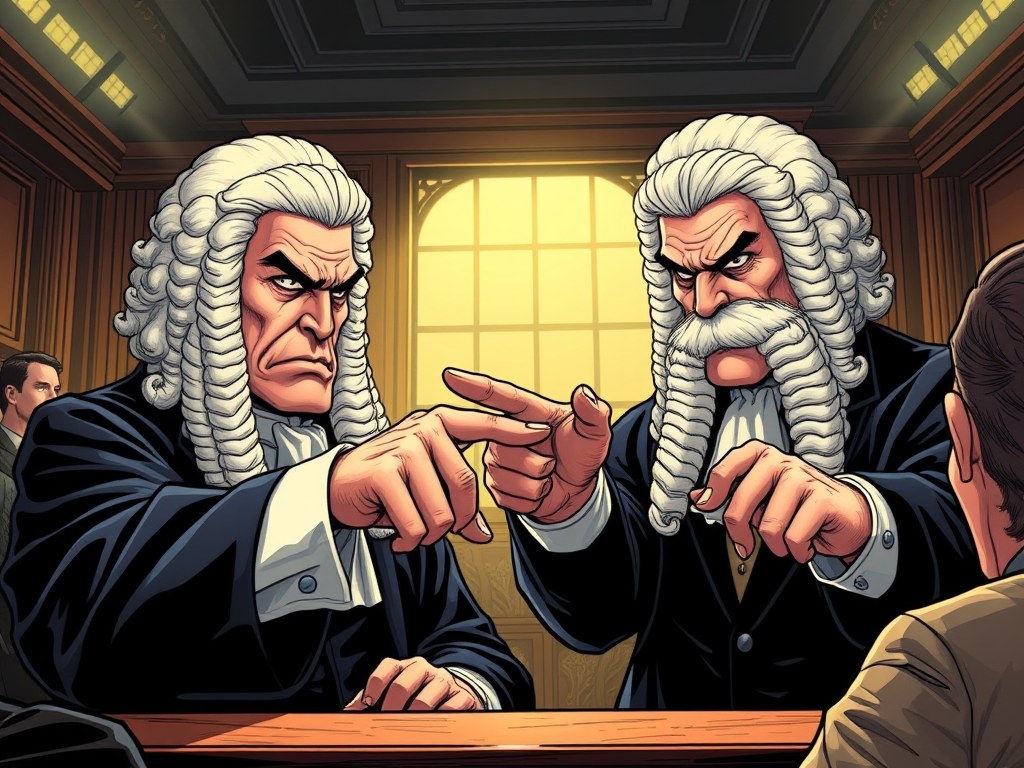
Translation: I am a sad tax collector.

Neoshia Roemer on Equity for American Indian Families

Neoshia Roemer has published “Equity for American Indian Families” in the Minnesota Law Review. PDF

Here is the abstract:

For the better part of two centuries, the cornerstone of federal Indian policy was destabilizing and eradicating tribal governments. In the process, federal Indian policy also dismantled American Indian families via child removal. Attempting to equalize American Indians through the practice of assimilation, decades of Indian child removal policies destroyed Indian families. In 1978, Congress responded to these horrors by passing the Indian Child Welfare Act (ICWA), a revolutionary law that was responsive to its trust responsibility to American Indian Tribes. By providing for the best interests of Indian children, heightened protections for parents of Indian children in certain child custody proceedings, and vesting Tribes with a legally recognizable interest in their children’s futures, Congress issued a referendum on equality for American Indians and the very nature of colonialism.

For nearly fifty years, ICWA has governed certain child custody proceedings involving Indian children in state courts. In 2018, a group of state and private actors decided to challenge ICWA’s constitutionality in Haaland v. Brackeen. Among their claims, these parties alleged that ICWA violated the equal protection rights of potential adoptive parents who are non-Indian and that ICWA placed Indian children at a disadvantage. However, just beneath the surface of these claims lies the real allegation: American Indian children should be available for the “good families” or for the “right kind of families” to adopt them. By claiming American Indians had special rights via ICWA, these plaintiffs hoped to re-introduce a version of equality that allowed generations of federal, state, and individual actors to enact assimilationist policies. Ultimately, the goal of equality in this area remains to ensure that “good families” maintain access to Indian children. Contrary to congressional goals, Indian children remain a commodity in demand for “good families” looking to save Indian children.

Blending family law, federal Indian law, and constitutional law, this Article evaluates the fallacy in applying the Equal Protection Clause to claims about ICWA. In doing so, this Article demonstrates that ICWA contains an anti-colonial equity principle that is contrary to the equal protection doctrine—a doctrine that Congress knew could never apply when the matter came to accessing the rights of American Indian families against those of the settlers, primarily because the rights of American Indian individuals are intricately linked to the federal trust responsibility. This Article argues that given ICWA’s character as an anti-colonial statute, applying the Equal Protection Clause to it will only stand to yield absurd results in furtherance of a colonial project that Congress has abandoned. Instead of the equality the Supreme Court promises through its equal protection doctrine, ICWA’s mandate requires equity.

Claire Charters on Indigenous Rights and Democracy

Claire Charters has posted “Engaging with the Public: Synergies between Democracy and Indigenous Peoples’ Rights” on SSRN.

Here is the abstract:

There is a belief that Indigenous peoples’ rights are undemocratic because they privilege the interests of some individuals and groups over others, contrary to the fundamental principle of one person, one vote.  In this paper, I explain ways in which, in fact, Indigenous peoples’ rights are consistent with democratic and other liberal ideas, such as self-determination. 

California Sues Interior over Koi Nation Trust Land Acquisition

Here is the complaint in State of California v. Dept. of the Interior (N.D. Cal.):

Oklahoma Federal Court Dismisses Wrongful Death Action against Feds and Tribe in Shooting of Unarmed Cherokee Man

Here are the materials in Englebright v. Buhl (N.D. Okla.):

9 Amended Complaint

34 Cherokee MTD

36 Federal MTD

39 Response to 36

40 Response to 34

41 Motion to Amend re Feds

42 Motion to Amend re Cherokee

43 Cherokee Reply ISO 34

44 Federal Reply ISO 36

45 Cherokee Response to 42

46 Federal Response to 41

47 Reply ISO 41

48 Reply ISO 42

49 DCt Order 

Alex Fay on Elk v. Wilkins

Alexandra Fay has posted “”Subject to the Jurisdiction Thereof”?: Citizenship and Empire in Elk v. Wilkins,” forthcoming in the Washington & Lee Law Review, on SSRN.

Here is the abstract:

In 1884, the Supreme Court held that the Fourteenth Amendment’s guarantee of birthright citizenship did not apply to Native Americans. In Elk v. Wilkins, the Court denied John Elk the right to vote on the grounds that he was born a tribal member, not subject to the jurisdiction of the United States, and thus ineligible for citizenship. This Article explores that decision, its context, and its consequences. It considers the radical promise of the Fourteenth Amendment’s text alongside the intentions of its Framers and the expectations of minority litigants. It situates Elk in a transformative period for both federal Indian policy and American federalism. The Article offers several readings of the Elk decision. It explores both the racist paternalism and the respect for tribal sovereignty evident in the Court’s reasoning, as well as the rapid shifts in Indian policy coinciding with Reconstruction. It ultimately argues that Elk v. Wilkins is emblematic of a distinct inflection point in federal Indian law, in which the Court’s formal adherence to longstanding principles of tribal sovereignty could simultaneously service federal assimilationist policy goals and a larger turn to American empire.

WSBA Indian Law Section 37th Annual CLE

37th Annual CLE presented by Stokes Lawrence, P.S., and the WSBA Indian Law Section!

Register Now!

During the annual CLE on May 15 and 16, 2025, seasoned practitioners will discuss some of the most important developments and pressing issues affecting tribes in Washington State and beyond. For the first time in its history, this year’s CLE will be held virtually and in-person in Indian Country on the Tulalip Reservation.

While the agenda is still being finalized, we are excited to share a first look at several of our programs:

  • Tribal Warrants Act Panel
  • Tribal Civil Jurisdiction after Lexington Insurance Co. vs. Smith
  • ISDEAA Contracting
  • Truth and Reconciliation: Analysis and Outreach by the Washington Attorney General’s Office Tribal Advisory Committee to Address the Impact of Indian Boarding Schools
  • A Judicial Update Impacting Indian Country

Where: Tulalip Administration Building6406 Marine Drive, Tulalip, WA 98271

When: May 15-16, 2025

Time:
May 15, 8 a.m.–5 p.m.
May 16, 8 a.m.–12:30 p.m.

Tuition:
$245: 
Indian Law Section Members
$275: Standard/Non-Section Members
FREE: Current Law Students

Credits: 8 credits

For more information, or to register for In-Person or Virtual, please visit WSBA Indian Law Section’s 37th Annual CLE Registration.

Pommersheim and Drapeau on the Black Hills SCT Case

Frank Pommersheim and Bryce Drapeau have published “United States v. Sioux Nation of Indians Revisited: Justice, Repair, and Land Return” in the South Dakota Law Review. PDF

HIGHLY RECOMMENDED!! A Frank Pommersheim joint is always worth it.

The abstract:

The amazing legal journey of this case begins in 1923 and ends with a Sioux Nation of Indians “victory” in the Supreme Court in 1980. Before reaching the Supreme Court, the case was litigated four different times before the Court of Claims because of the ineffective assistance of counsel and the necessity of a congressional statute to clear away the threatening ghost of res judicata. The historical backstory begins not in 1923, but with the signing of the Fort Laramie Treaty of 1868 and the United States’ illegal taking of the sacred Black Hills in1877. And the case does not end with the Sioux “victory” before the Supreme Court and its award of “just compensation” for the illegal taking. The Sioux Nation of Indians rejected—and continues to reject—the remedy of financial compensation without an attendant search for mutual repair and a justice that includes some form of land return. Despite some modest examples of land return in other parts of Indian country, no such efforts involve the Black Hills. This article seeks to inform all, but particularly those two generations of Lakota and non-Native citizens born since 1980, that now is the time for renewed effort and commitment to realize reconciliation and a justice that includes land return. This must be done before history closes its door for a second and final time and the Black Hills will remain stranded in historical infamy. No, this article is not just another twist on classic Indian Law principles gone awry, but the first of something we might call the Historical (Trauma) Trilogy of stealing Lakota land (and breaking treaties), suppressing the teaching and learning of the Lakota language and culture, and the battering ram of boarding schools to break-up Lakota families where a core value has always been to be a “good relative.” In its own careful way, this article is also about the persistence of Lakota resistance and the hard work of restoring the (sacred) hoop of land, language, and family for these new days.

Round Valley Indian Tribe + Citizens Sue Mendocino + Humboldt Counties over Weed Raids

Here is the complaint in James v. Kendall (N.D. Cal.):

Fletcher Comic Book for FBA 2025

Continue reading