Here are the materials in the consolidated cases, Makah Indian Tribe v. Exxon Mobile Corp. (W.D. Wash.) and Shoalwater Bay Indian Tribe v. Exxon Mobile Corp. (W.D. Wash.):

Here are the materials in the consolidated cases, Makah Indian Tribe v. Exxon Mobile Corp. (W.D. Wash.) and Shoalwater Bay Indian Tribe v. Exxon Mobile Corp. (W.D. Wash.):
Here are the materials in Roemen v. United States (D.S.D.):

Here is the news coverage. We posted the complaint in 2016.
Here are some additional materials in what is now captioned Gopher v. Wells Fargo Bank N.A. that detail the issues at trial:
Plaintiffs Motion for Directed Verdict
Wells Fargo Motion for Directed Verdict
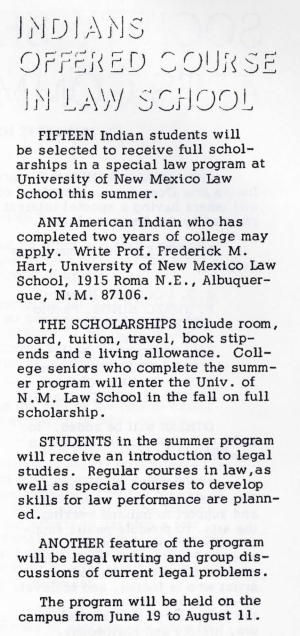
The rest of the issue is here.

Here are the materials in R.D. Offutt Farms Co. v. White Earth Division of Natural Resources (D. Minn.):

Alexandra Fay has posted “Courts of Indian Offenses, Courts of Indian Resistance,” forthcoming in the Michigan Law Review (Go Blue), on SSRN. Here is the abstract:
In the late nineteenth century, the Department of the Interior created the Courts of Indian Offenses with the express goal of eliminating elements of Native culture through the coercive power of criminal law. The courts stood on dubious constitutional grounds, they were almost universally replaced by tribal courts in the twentieth century, and they have been widely derided as crude assimilationist tools.
This Article examines the Courts of Indian Offenses to study how law and legal institutions operate as sites of colonial struggle in the American context. The Courts of Indian Offenses were formally created to criminalize Native culture. In practice, they were more complicated. Native judges entrusted with Washington’s assimilationist designs frequently declined to enforce the “Indian offenses,” instead using the courts to resolve crimes and disputes recognized by their tribal communities.
The Article uses three decades of annual reports from the Commissioner of Indian Affairs and archival records from three Courts of Indian Offenses to illustrate the structure and function of the courts at the turn of the twentieth century. It engages with concepts from subaltern studies, tribal legal studies, and law and colonialism literatures to explore how tribal law adapted and survived despite the formal imposition of Anglo-American legal forms. The Article ultimately suggests that the Courts of Indian Offenses may be understood as contested institutions through which tribal leaders preserved tribal self-government against the imperatives of empire.
This article is highly recommended. Very interesting legal history!



 Turtle Talk
You must be logged in to post a comment.