Here is the opinion in In the Matter of MB and EB.
Here is the opinion in In the Matter of MB and EB.
Luke Colvard has posted “Uncivilized Procedure,” forthcoming in the UCLA Law Review, on SSRN.
Here is the abstract:
This Comment addresses a persistent and under examined feature of federal Indian law: the adjudication of tribal rights without tribal participation. From the Marshall Trilogy to present day disputes, the rules of access to U.S. courts have repeatedly excluded tribes from cases that define their property and jurisdiction. The procedural barriers that facilitate this, including representation by the United States of tribal interests and the complete lack of tribal notice and intervention rights in Indian country criminal cases, are not relics of a bygone era. They continue to shape foundational Indian law decisions today.
This exclusion is unjust and destabilizing. When the United States purports to represent tribal interests while pursuing its own, tribes are silenced and later barred from relitigating outcomes that fail to reflect their needs. In criminal cases, Indian defendants may raise tribal jurisdiction to contest state authority while the tribe whose jurisdiction is contested remains unaware of the proceeding and unable to intervene. The already existential consequences of this system are worsened by denying tribal governments a right of action under §1983 to affirmatively challenge violations of their members’ rights. As a result, courts are often deprived of the expertise of the sovereigns most affected by their rulings and the deprivation of the rights of Native peoples is streamlined. This Comment contributes to the literature by emphasizing procedure as a central battleground of tribal sovereignty and concomitantly, Native cultural survival.
The Comment proceeds in three parts: it traces the history of tribal exclusion from courtrooms, identifies modern hurdles to tribal participation, and proposes reforms drawing on the Indian Child Welfare Act as a model. These reforms would not decolonize the courts, but they would help civilize their procedures.
Gregory Ablavsky has posted “State Criminal Jurisdiction in Indian Country: A History,” forthcoming in the Virginia Law Review, on SSRN.
Here is the abstract:
In Oklahoma v. Castro-Huerta (2022), the Supreme Court dismantled the long-standing black-letter principle that states lack criminal jurisdiction in Indian country absent congressional authorization by embracing a revisionist historical account emphasizing inherent state sovereignty. The consequences have been predictable: intense uncertainty and ongoing litigation. Oklahoma’s highest courts, for instance, have repeatedly endorsed inherent state jurisdiction over Native people within Indian country, employing Castro-Huerta to distinguish considerable contrary federal law and precedent.
The challenge, especially given the current history-minded judiciary, is that the claim that states have never asserted inherent criminal jurisdiction over Indian country is too simplistic and easily disproven, making it tempting to toss out the old rules. But the revisionist claim, advanced by some scholars and embraced by Justice Thomas, that states enjoyed expansive criminal jurisdiction, is also wrong. This Article attempts to offer a more rigorous legal history, moving beyond the handful of Supreme Court decisions to survey every identifiable state and federal case on inherent state criminal jurisdiction in Indian country. It depicts four distinct periods: an initial headlong assault on federal authority (1787–1834) ; an era of “great confusion” in which states pressed on the many uncertainties of federal Indian law (1835–1886) ; the jurisdictional chaos of the allotment era (1880s–1930s); and a period of relative statutory stability (1948–2022) that Castro-Huerta has now abruptly terminated. What this history shows above all is contestation—a cat-and-mouse game in which states seized on ambiguities to claim authority, only to be periodically rebuffed by the federal courts. But the mere existence of past conflict does not support broader state jurisdiction in Indian country. Rather, every conventional method of legal and constitutional interpretation undercuts the argument that such jurisdiction was ever meaningfully positive law. There are also strong normative reasons for skepticism, since state claims of authority were rarely motivated by public safety but were instead tools to facilitate Native dispossession and erode tribal self-governance. By recounting these complexities, the Article challenges the current legal instability that threatens the foundations of modern tribal sovereignty.
Here are the materials in Muscogee (Creek) Nation v. Free (N.D. Okla.):
8 Motion for Preliminary Injunction
Here are the materials in Cherokee Nation v. Free (N.D. Okla.):
Kirsty Gover has posted: “Membership and Self-identification in The United Nations Declaration on the Rights of Indigenous Peoples: a Commentary on Article 33” on SSRN.
Here is the abstract:
This chapter addresses two broad themes within the United Nations Declaration on the Rights of Indigenous Peoples (UNDRIPS): self-identification and membership, as addressed in international jurisprudence on UNDRIP Article 33. The article protects the rights of Indigenous Peoples to ‘determine their own identity or membership in accordance with their customs and traditions’. It should be read with Article 9, which protects the right of individuals ‘to belong to an indigenous community or nation’. Together the articles protect both individual and collective self-identification, but UNDRIP does not specify what should happen when groups and individuals disagree on a person’s membership status. Recent applications of the UNDRIP in international forums link ‘self-identification’ to collective self-determination, in a way that prioritises the authority of group decisions on membership. This is a positive step that promises a more nuanced and jurisdictional approach to identity issues, one that supports the authority of Indigenous law and can potentially bring international human rights law closer to a fully realised appreciation of Indigenous-State legal pluralism. This chapter outlines the history of Article 33, discusses its recent application and interpretation and explains its potential impact on membership disputes.
Here are the opening briefs in United States v. Ruiz and United States v. Hebert:
Prior post with en banc petition materials and links to panel materials here.
Here.
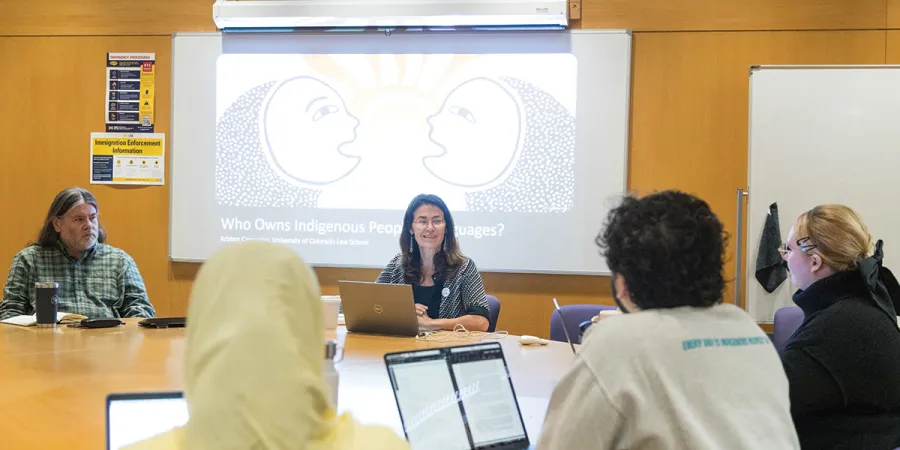
A new American Indian Law Workshop led by Matthew Fletcher, ’97, the Harry Burns Hutchins Collegiate Professor of Law, provides students with the opportunity to engage with a wide range of scholars and examine more granular, niche issues relating to American Indian law.
Here is the opinion in Ruby C. v. State of Alaska Dept. of Family and Children’s Services:

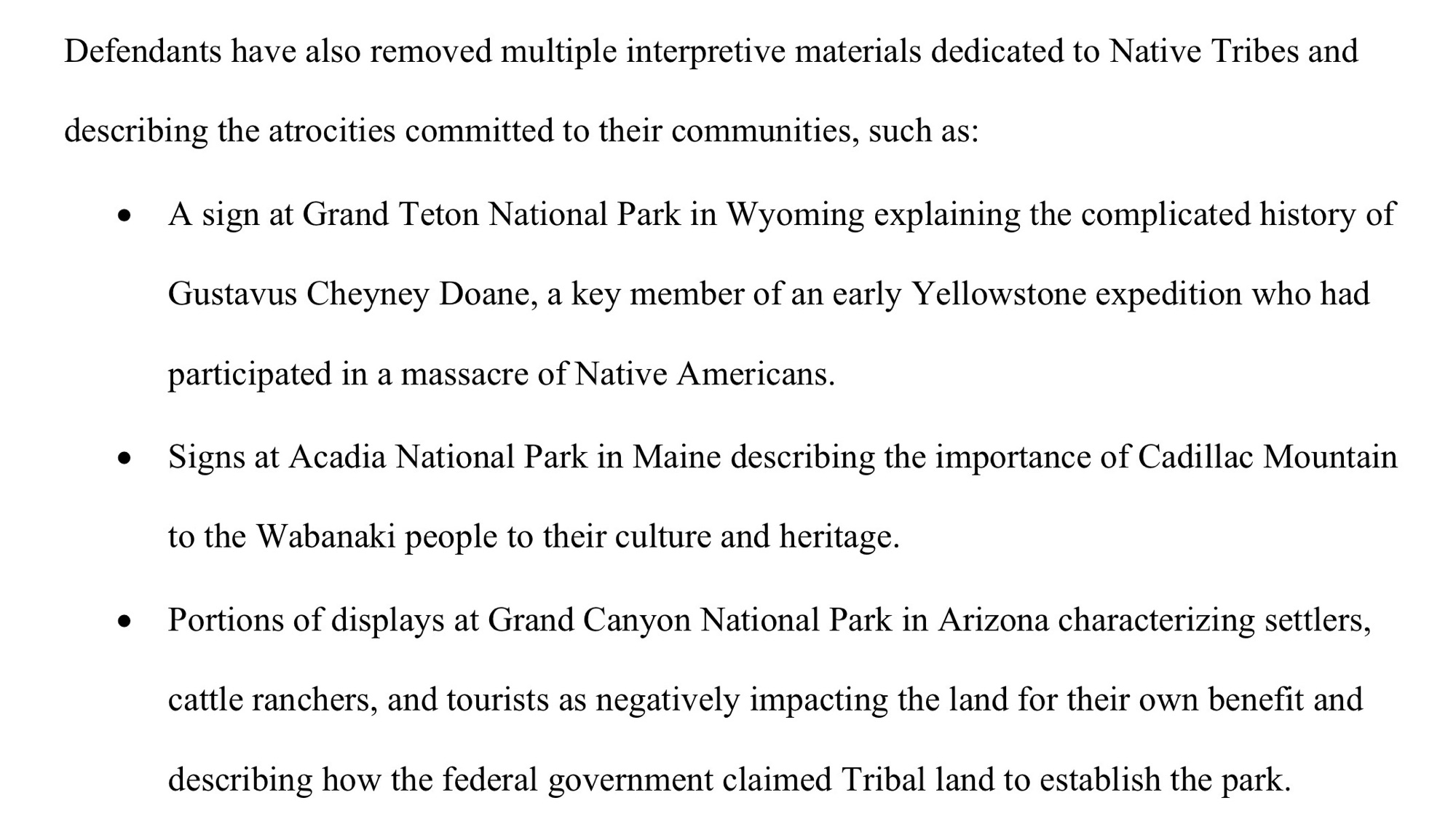
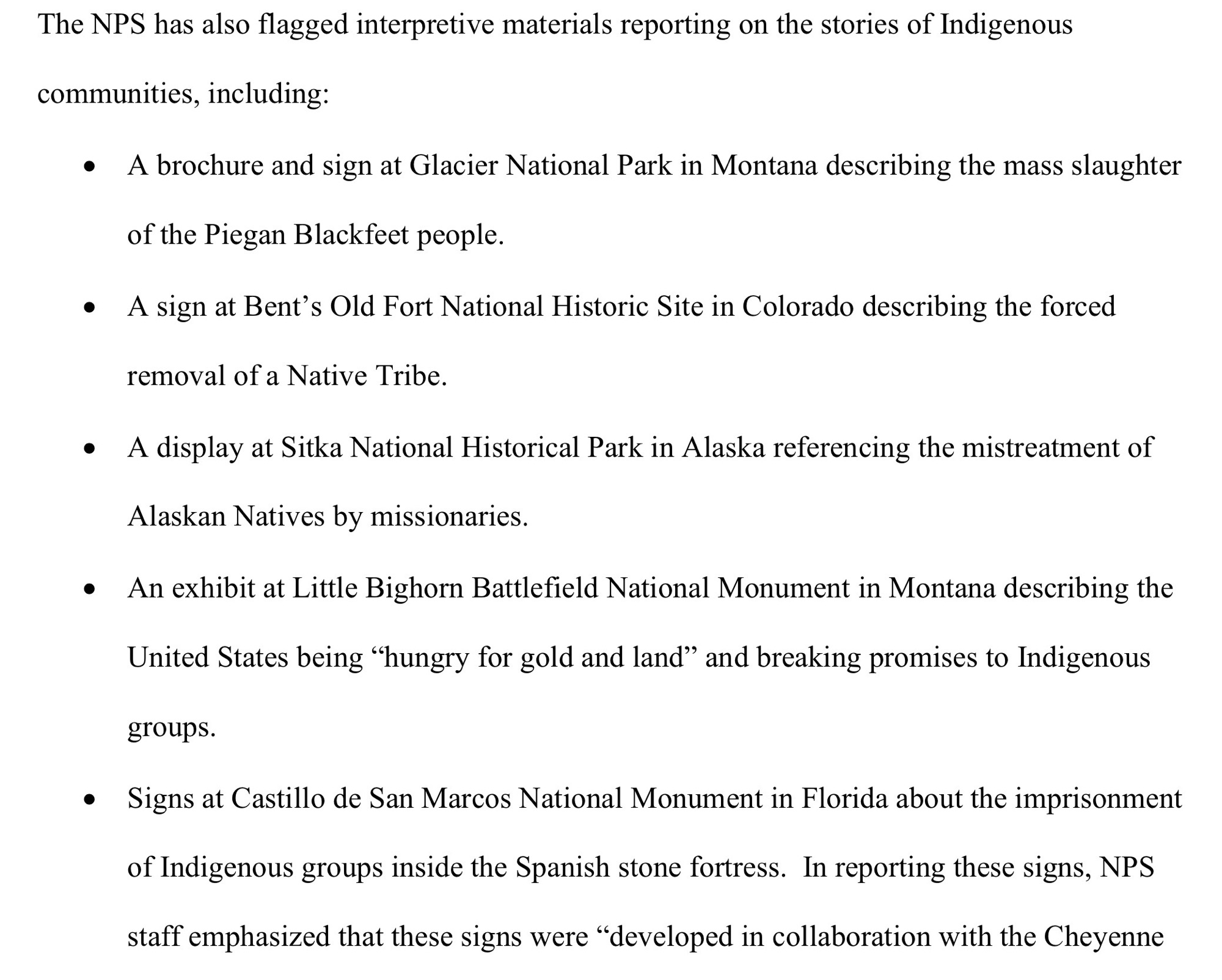
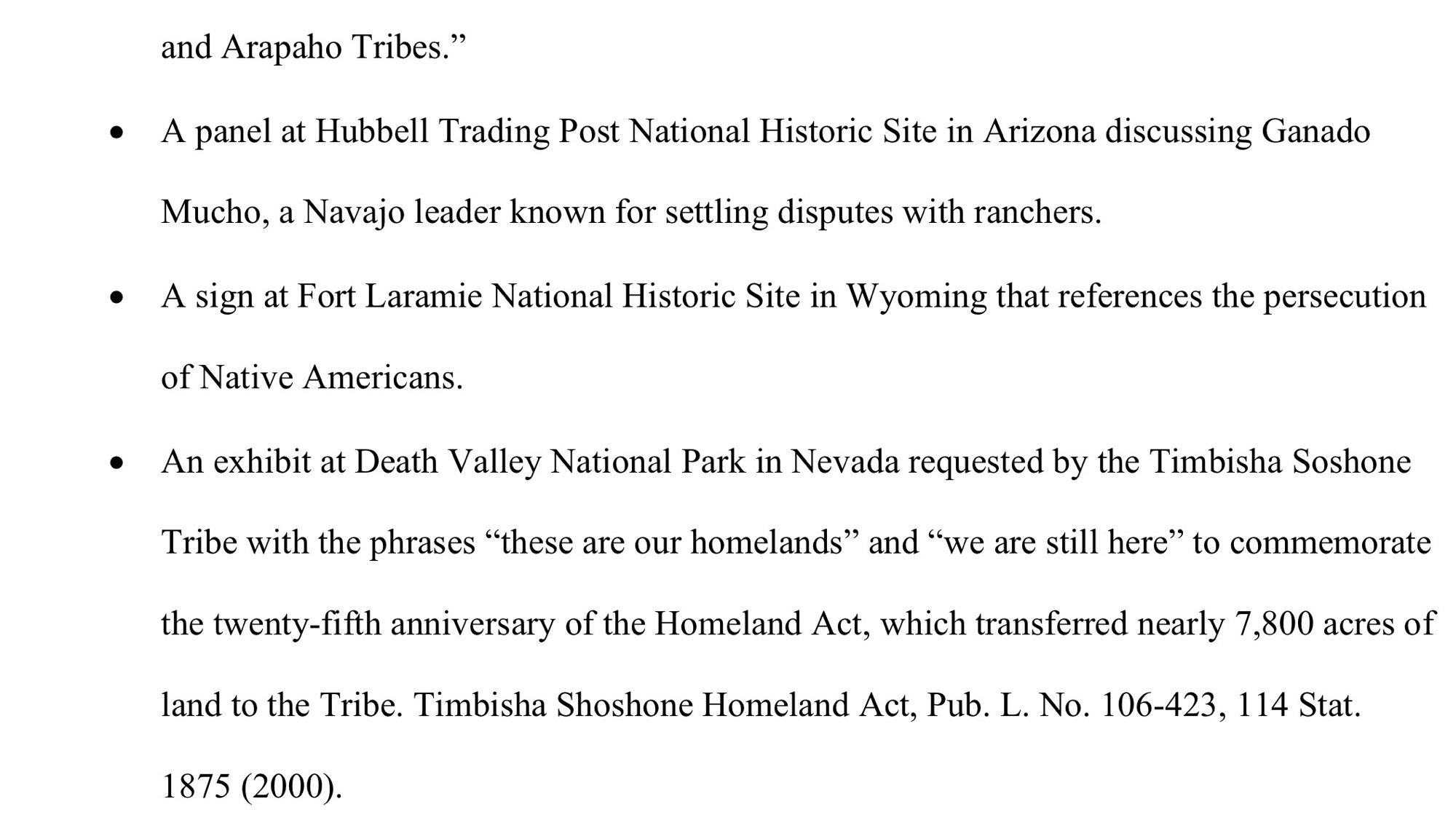
Here is the order is National Parks Conservation Association v. Dept. of the Interior (D. Mass.):
Excerpts:
 Turtle Talk
You must be logged in to post a comment.