NARF Launches The Headwaters Report

The Headwaters Report – is a new digital blog site, bulletin, and source for Tribal water law information and resourcesThe Headwaters Report presents accessible information on foundational Tribal water law concepts and practices as well as current and emerging water-related issues.

    The first article focuses on the Clean Water Act, a 50-year-old law that, among other things, allows Tribes to assert regulatory jurisdiction over water quality and activities that impact water quality within reservation boundaries. In our next Report update, we plan to address the changes the Trump Administration is attempting to make to the Clean Water Act and how that may affect Tribal Nations.

    In the Report you will also find several slide decks on Tribal water rights information, including one on the basics of Tribal water rightsgeneral stream adjudications, and Indian water rights settlements. We intend The Headwaters Report to act not only as a clearinghouse for Tribal water law and policy information, but as a place to bring questions and to get guidance.

    U.S. Supreme Court denies cert in Montana voting rights case

    On January 21, 2025, in Jacobsen, MT Sec. of State v. Montana Democratic Party, et al., the U.S. Supreme Court declined to review the Montana Supreme Court’s decision that two Montana laws that disenfranchise Native American voters are unconstitutional. The Blackfeet Nation, the Confederated Salish and Kootenai Tribes of the Flathead Reservation, the Fort Belknap Indian Community, the Northern Cheyenne Tribe, Western Native Voice, and Montana Native Voice have repeatedly won their challenges to two Montana laws that suppressed the Native vote in Montana by restricting access.

    The Montana Legislature passed HB 176 to eliminate Election Day registration, which Native American voters disproportionately rely on to cast votes in Montana. Legislators passed HB 530 to restrict third-party ballot assistance, a service that aids Native voters living on reservations who may have to travel hours to the nearest polling location due to systemic inequities. The lower courts ruled, and the Montana Supreme Court affirmed, that the laws violate provisions of the Montana Constitution, including the right to vote, equal protection, free speech, and due process.

    This is the second time that Montana Legislators passed restrictions on ballot collection that the courts determined discriminated against Native voters.

    More here.

    North Dakota Native Voting Rights Upheld by Supreme Court

    On January 13, 2024, the U.S. Supreme Court decided the Walen v. Burgum redistricting lawsuit and affirmed the U.S. District Court for the District of North Dakota decision that preserves North Dakota House District 4A, a subdistrict that gives Mandan, Hidatsa, and Arikara Nation voters a long-awaited opportunity to elect representatives of their choice. The lower court determined that state legislators were endeavoring to comply with Section 2 of the Voting Rights Act and redistricting best practices by creating an election subdistrict along the boundaries of the MHA reservation as part of 2021 redistricting.

    While the MHA Nation sided with the state to defend subdistrict 4A, North Dakota abandoned its own win during the appeal to the Supreme Court, failing to advocate for the state legislature’s voting map and citizens’ rights.

    More here and here.

    The Every Day Fight for Voting Rights in North Dakota

    Volunteer with the Native American Rights Fund’s Election Protection Project

    You can learn more about protecting the Native vote at https://vote.narf.org/

    World Intellectual Property Organization (“WIPO”) Adopts Treaty on Genetic Resources and Associated Traditional Knowledge

    In a historic step toward protecting Indigenous Peoples’ genetic resources and associated traditional knowledge, on May 24, 2024, Member States of WIPO, a specialized agency of the United Nations, adopted a landmark new treaty. Culminating over two decades of negotiations, the treaty requires patent applicants to disclose when they seek to patent inventions that are based on genetic resources and/or traditional knowledge associated with genetic resources.  The disclosure requirement is aimed at preventing the erroneous granting of patents based on “prior art” (e.g., the use of plant medicine known to Indigenous Peoples for centuries) and can also help to curb instances of biopiracy by pharmaceutical companies and others who seek to profit from use of traditional knowledge to develop new medications or other products. The treaty, WIPO’s first involving Indigenous Peoples, references the UN Declaration on the Rights of Indigenous Peoples, as well as States’ commitment to achieving the ends of the Declaration. It also includes provisions allowing for Indigenous Peoples’ participation in the treaty’s implementation.

    The treaty will enter into force following ratification by 15 countries. Negotiations will continue at WIPO in December 2024, on other potential treaties for the protections for Indigenous Peoples’ traditional knowledge and traditional cultural expressions.  The Native American Rights Fund participates in the negotiations on behalf of the National Congress of American Indians. 

    WIPO Member States Adopt Historic New Treaty on Intellectual Property, Genetic Resources and Associated Traditional Knowledge

    You can learn more here.

    North Dakota Flips Argument at Supreme Court in Seeking to Overturn Redistricting Win for MHA Nation

    To defend a challenge to a North Dakota State House subdistrict that the North Dakota Legislature approved in 2021, the the Mandan, Hidatsa, and Arikara (“MHA”) Nation intervened as a defendant to support North Dakota.  After MHA Nation and the state successfully won summary judgment in the district court, North Dakota is now asking the Supreme Court to vacate the state’s (and the MHA Nation’s) win in the lower court.

    Here is the jurisdictional statement from the Plaintiffs.

    Here is MHA Nation’s Motion to Dismiss or Affirm.

    And here is North Dakota’s Response.

    Media coverage:

    North Dakota changes course on tribal redistricting case, asks US Supreme Court to rule – InForum | Fargo, Moorhead and West Fargo news, weather and sports

    North Dakota’s 180-Degree Turn in Redistricting Case Sparks Outcry from MHA Nation | Currents (nativenewsonline.net)

    More here.

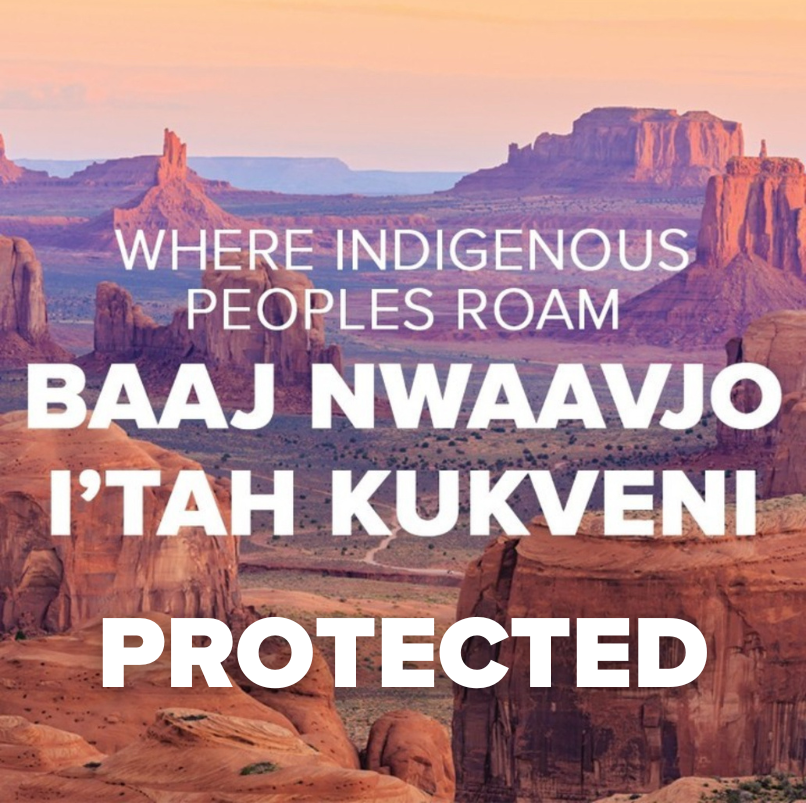
    Tribal Nations Move to Intervene to Protect Baaj Nwaavjo I’tah Kukveni

    Motion to Intervene in Arizona State Legislature v. Biden

    Motion to Intervene in Heaton v. Biden

    More here.

    Request for Applications; Tribal Issues Advisory Group

    In view of two upcoming vacancies in the at-large membership of the Tribal Issues Advisory Group, the United States Sentencing Commission hereby invites any individual who is eligible to be appointed to the at-large membership of the Tribal Issues Advisory Group to apply. An applicant for membership in the Tribal Issues Advisory Group should apply by sending a letter of interest and resume to the Commission as indicated in the ADDRESSES section below. Application materials should be received by the Commission not later than December 26, 2023.

    Here is the official notice:

    Turtle Mountain and Spirit Lake Win Redistricting Lawsuit Against North Dakota

    On November 17, 2023, the North Dakota federal district court ruled in favor of the Turtle Mountain Band of Chippewa Indians and the Spirit Lake Nation against the North Dakota Secretary of State. The Plaintiffs proved at trial that the North Dakota legislative redistricting plan violates Section 2 of the Voting Rights Act (VRA) by diluting the voting strength of Native American voters living on and near both reservations.  The state has been ordered to submit a VRA compliant redistricting plan to the court by December 22, 2023.

    The Order is here:

    Previous post on this matter here and PR here.