Author: Matt Campbell
Turtle Mountain and Spirit Lake Win Redistricting Lawsuit Against North Dakota
On November 17, 2023, the North Dakota federal district court ruled in favor of the Turtle Mountain Band of Chippewa Indians and the Spirit Lake Nation against the North Dakota Secretary of State. The Plaintiffs proved at trial that the North Dakota legislative redistricting plan violates Section 2 of the Voting Rights Act (VRA) by diluting the voting strength of Native American voters living on and near both reservations. The state has been ordered to submit a VRA compliant redistricting plan to the court by December 22, 2023.
The Order is here:
Previous post on this matter here and PR here.
MHA Nation Prevails in Redistricting Lawsuit
On November 2, 2023, the North Dakota federal district court ruled in favor of the MHA Nation and North Dakota on motions for summary judgment. The Plaintiffs were alleging that the newly created MHA state legislative district was an illegal racial gerrymander. North Dakota’s 2021 redistricting plan resulted in the election of an MHA tribal member to the state legislature in 2022. The order means that the district will remain unchanged and MHA tribal member Representative Lisa DeVille will continue to serve as a state legislator.
Order here.
MHA Motion for Summary Judgment here:
State Motion here:
Plaintiff Motion here:
You can see a press release here and previous post on this matter here.
Utah District Court Dismisses Utah and Individual Challenges to Bears Ears National Monument
On Friday, August 11, 2023, United States District Judge David Nuffer of the United States District Court of the District of Utah granted motions to dismiss the cases challenging the Bears Ears National Monument designation.
Here is the Order:
Previous post with briefs here and here.
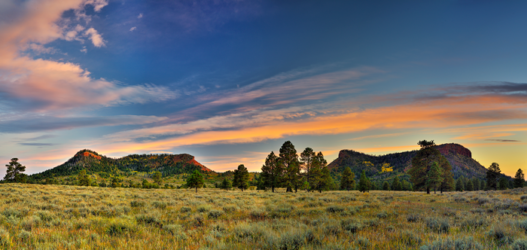
Bears Ears at Sunset. Photo credit: Tim Peterson.
10th Cir. Decision in Crow Tribe of Indians v. Repsis
Despite the Supreme Court’s decision in Wyoming v. Herrera, which affirmed that the Crow Tribe’s treaty-reserved right to hunt in the Big Horn National Forest remained intact following Wyoming’s statehood, the State continued to prosecute Mr. Herrera for taking an elk in the Forest. The State argued that notwithstanding the Supreme Court’s decision in Herrera, Mr. Herrera was precluded from asserting his treaty defense because he (being in privity with the Crow Tribe as a Tribal member) was bound by the Tenth Circuit’s decision in Crow Tribe of Indians v. Repsis, which held that the Tribe’s treaty right was extinguished upon Wyoming’s statehood. Accordingly, the Crow Tribe sought relief from the Repsis judgments pursuant to Rule 60(b), so that the State could not continue to use Repsis. The Wyoming Federal District Court initially denied the Tribe’s Rule 60(b) motion, but the Tenth Circuit has now vacated that decision, remanding to the district court to consider the merits of the Tribe’s Rule 60(b) motion.
Here is the decision:
Prior posts on this matter here and here.
Motion to Dismiss briefing in Bears Ears Litigation
Court Grants Summary Judgment in favor of Rosebud and Oglala in NVRA Suit
Order Denying Motion to Dismiss in Rosebud and Oglala National Voter Registration Act Lawsuit
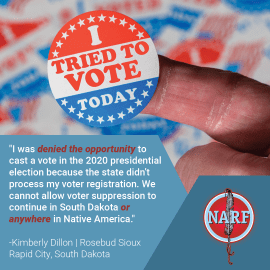
Here is the Order Denying South Dakota’s Motion to Dismiss Rosebud and Oglala’s Complaint that South Dakota is failing to comply with the National Voter Registration Act.
doc.-115-memorandom-and-order-denying-defs-motion-to-dismiss-rst-v-barnett0-2022.05.17-00234861x105fe6Download
Here is the Amended Complaint.
Previous post on this issue here.
Lower Brule Sioux Tribe v. Lyman County Board of Commissioners
Here is the complaint in Lower Brule Sioux Tribe, et al., v. Lyman County.
And here is the release on the litigation.
“Through this lawsuit we’re insisting Lyman County hold elections with a fairly drawn map in 2022,” said plaintiff, voter, and Lower Brule Sioux Tribe Vice Chairman Neil Russell.
The Lower Brule Sioux Tribe and three enrolled members filed the lawsuit to prevent Lyman County from continuing to violate Section 2 of the Voting Rights Act until 2026. “Like every other county already using new election district maps adopted after the 2020 Census in 2022, Lyman County must comply with the Voting Rights Act and implement the revised district map immediately,” said Native American Rights Fund (NARF) Staff Attorney Samantha Kelty. “Lyman County cannot continue to disenfranchise voters who live on the Lower Brule Sioux Reservation until 2026.”

MHA Nation moves to intervene in redistricting case in North Dakota.
The MHA Nation and individual Native American voters in North Dakota have filed a motion to intervene as defendants into a North Dakota District Court redistricting case. The plaintiffs have sued the State to overturn a legislative subdistrict for the Fort Berthold Reservation. The MHA Nation and tribal member intervenors are seeking to defend the Fort Berthold Reservation subdistrict that was approved by the North Dakota legislature.
Motion to intervene here:
Press release here.


You must be logged in to post a comment.