New Scholarship on ANILCA Compliance

Miranda Strong has published “Alaska National Interest Lands Conservation Act Compliance & Nonsubsistence Areas: How Can Alaska Thaw Out Rural & Alaska Native Subsistence Rights?” in the Alaska Law Review.

Here is the abstract:

The Alaska Constitution prevents the Alaska National Interest Lands Conservation Act’s (ANILCA) rural subsistence priority from being enforced. The Federal Government currently manages subsistence on federal lands in Alaska and Alaska can only resume management if it becomes ANILCA compliant. The current federal management system does not sufficiently protect rural and Alaska Natives’ subsistence rights. Alaska’s Legislature must overcome the rural-urban divide to amend its constitution to become ANILCA compliant again by providing a modified rural priority that includes urban Alaska Natives. The Alaska Legislature should repeal the nonsubsistence zones statute because it denies federally defined rural areas the state’s subsistence priority.

Radiolab on Baby Veronica Case (Adoptive Couple v. Baby Girl)

Here.

Nebraska COA Remands ICW Case for Failure to Notify Rosebud Sioux Tribe

Here is the opinion in In re Nery V. From the opinion:

The county court for Hall County, sitting as a juvenile court, terminated the parental rights of Mario V., Sr. (Mario Sr.), and Ida V. to their minor children. Mario Sr. appeals in case  No. A-12-629, and Ida appeals in case No. A-12-662. We initially determine that the  relinquishments that Ida executed some 3 years before these proceedings are valid and that her attempted revocation of such is of no force and effect. But, because there is no evidence that the Rosebud Sioux Tribe was given proper notice of these termination of parental rights proceedings as required by the Nebraska Indian Child Welfare Act (NICWA), we find that the termination proceedings conducted were invalid and thus that the order of termination in both cases must be vacated. We therefore remand the causes to the juvenile court for further proceedings consistent with our opinion.

Update in KBIC Member Suit against Michigan over Pig Farming

Here is the first amended complaint in Turunen v. Creagh (W.D. Mich.):

Turunen First Amended Complaint

Michigan previously moved to dismiss here:

Michigan Motion to Dismiss

First post was here.

Turtle Talk Poll: Will Washington Pro Football Team Change Nickname?

Members of Congress want them to….

Poll ongoing for a week, but you can see results as we go.

New Student Scholarship on Appropriation of Native Culture

Brian Sheets has published “Papers or Plastic: The Difficulty in Protecting Native Spiritual Identity” in the Lewis & Clark Law Review (also SSRN).

Here is the abstract:

Sellers of Native ceremonies offer the opportunity to non-Natives to participate in ceremonial traditions with roots in Native spiritual communities—for a price. These “plastic shamans” have appropriated some Native ceremonies, sometimes with fatal results. Commodifying these spiritual practices removes important communal identities from their sources and furthers the stereotype that Native communities and their cultural practices are relics of the past—a concept reinforced through divorcing cultural practices from vibrant, modern Native societies struggling to maintain an identity. In response to ceremonial appropriation by plastic shamans, some Native spiritual communities have sued operators of botched ceremonies, and have further advocated for legal protection of Native ceremonies in Western legal concepts. However, Western law misses the mark. While spiritual identity is offered protection through exemptions to generally applicable laws, the Western requirement of a bright-line object to represent spiritual identity does not allow for the protection of an intangible ceremony from appropriation. Furthermore, Western concepts of intellectual property are market based, and directly conflict with the intent to protect Native ceremonies from being commodified. These conflicting values demonstrate the tension in protecting spiritual identity. And when Native cultural composition, transformative ceremonial practice, and distributions of ceremonies between Native groups are taken into account, the difficulty becomes even more apparent.

This Comment explores the approach of current Western laws seeking to protect cultural heritage, and then applies one Native proposal through a First Amendment analysis to  demonstrate the difficulty of protecting Native spiritual identity in Western law. Some of the current means of protecting and preserving Native spiritual identity make  appropriation even easier through documentation requirements. While there is a compelling reason to protect Native ceremonies from appropriation, Western courts are limited in their ability to favor one group’s religious practices over another. This Comment concludes that while difficult to protect in law, public awareness is the most likely cure to prevent shopping for spirituality—enlightenment and selfactualization cannot be bought off-the-shelf with the clerk asking at checkout “paper, or plastic?”

Op-Ed on Indian Country Prosecutions and Investigations

Authored by:

Michael W. Cotter, U.S. Attorney, District of Montana

Calvin Wilson, Chief Prosecutor, Northern Cheyenne Tribal Court

Glen Littlebird, Sr., Prosecutor, Northern Cheyenne Tribal Court


This week the United States Department of Justice released a report to Congress entitled Indian Country Investigations and Prosecutions which provides a range of enforcement statistics required under the Tribal Law and Order Act of 2010.  The report, based on data compiled from the case management system used by U.S. Attorney’s Offices (USAO) with Indian Country jurisdiction, and FBI crime data from reservations, shows among other things a 54 percent increase in Indian Country criminal prosecutions since Fiscal Year 2009.

Here in the District of Montana, justice in Indian Country is achieved through both tribal and federal courts.  Currently, under the Indian Civil Rights Act, a tribal court’s authority to sentence a defendant is limited to a term of imprisonment of 1 year and a fine of $5000 per offense.  Because tribal court penalties are limited, the most serious of crimes are prosecuted in federal court by the USAO.  In Montana, the USAO shares prosecutorial responsibilities with tribal prosecutors on all of the reservations in the state, except the Confederated Salish and Kootenai Tribes of the Flathead Indian Reservation.

The Indian Country Investigations and Prosecutions report released this week by the Department of Justice previews a new era of partnership between the federal government and American Indian tribes.  The report documents an unprecedented level of collaboration with tribal law enforcement, regular consultation on a crime fighting strategy, joint federal/tribal task forces, information sharing, training of investigators, and cross deputizing tribal police and prosecutors to enforce federal and tribal law.  We certainly have seen the changes described by the report in the USAO’s relationships with its tribal partners in Montana.

Since 2010, the District of Montana USAO has implemented a bi-monthly meeting involving the federal prosecutors assigned to each reservation, the tribal prosecutors for the reservation and tribal and federal law enforcement officers.  During these meetings, cases arising on a particular reservation during the preceding two-week period are discussed and a joint decision is made concerning which jurisdiction – Federal or tribal or both – will prosecute a particular case.  Between 2010 and the present, the USAO in Montana has devoted six prosecutors to Indian Country.  With these additional resources, over the last two years, 76% of all cases staffed have been resolved in either federal or tribal court.  During the last two years, the Montana USAO has averaged 30 jury trials each year.  Each of the approximately 60 trials involved violent crimes committed in Indian Country. In addition, numerous trials have occurred in tribal courts across Montana resulting in convictions of defendants that have committed less serious crimes.

Tribal courts play an integral role in providing public safety in our Indian communities.  In Montana, federal and tribal prosecutors recognize and respect each other and the courts in which they work.  Tribal courts, like tribal governments, are important federal partners.  The members of federal law enforcement and the USAO Montana support partners in tribal law enforcement and the tribal court system, and vice versa.  That is why federal prosecutors and agents share investigative files with their counterparts in Indian Country.  Just as tribal law enforcement respond to federal court subpoenas, special agents from the FBI routinely respond to tribal court subpoenas to provide testimony in criminal proceedings and trials.

Tribal communities as a whole, and defendants as well as victims of crime in Indian country must have confidence that their tribal court systems are capable of delivering justice.  When that confidence is lacking for whatever reason, the Department of Justice and the USAOs must do all we can to develop that confidence.  The federal and tribal governments need a true partnership.  It is only through this “court to court” relationship that justice truly may be achieved in Indian Country for victims of crimes. We agree that the process in place is way better than it has ever been before.  It’s real.  It’s working.  It is also important to remember that often tribal court can provide quicker and better answers in various criminal matters.

Although it will take some time before we can understand the full impact of the recent efforts on crime in Indian Country, some things are clear.  The increase in enforcement will bolster the faith and confidence that American Indian communities have in the criminal justice system.  The increase in collaboration and communication strengthens the bond of trust between federal and tribal investigators, prosecutors, and other personnel in both federal and tribal criminal justice systems.  Finally, the efforts undertaken in the last few years by the men and women of the federal and tribal criminal justice systems will make communities safer in Montana.

Michael W. Cotter was nominated by President Barack Obama to serve as the United States Attorney for the District of Montana.  He was  sworn in as Montana’s 39th United States Attorney on December 30, 2009.

Calvin Wilson has been licensed to practice law in the State of Montana since 1977.  He is currently the Chief Prosecutor for the Northern Cheyenne Tribal Court.  He has also served as a tribal judge, a tribal attorney, an elected Country Attorney for Big Horn County and a prosecutor for the City of Hardin.

Glen Littlebird, Sr., who is also a prosecutor for Northern Cheyenne Tribal Court, has served as a special agent for the BIA, a tribal judge, and a tribal councilman.
DOJ Press Release on Tribal Law and Order Act Report

Report to Congress is Requirement under the Tribal Law and Order Act of 2010

WASHINGTON – The Department of Justice released today a report to Congress entitled Indian Country Investigations and Prosecutions which provides a range of enforcement statistics required under the Tribal Law and Order Act of 2010. The report, based on data compiled from the case management system used by U.S. Attorney’s Offices (USAO) with Indian Country jurisdiction shows among other things a 54 percent increase in Indian Country criminal prosecutions since Fiscal Year 2009.

“Across the country, U.S. Attorneys have been focused on fighting crime in Indian Country and reinforcing the bond between federal and tribal law enforcement, which also strengthens the faith that people have in their criminal justice system,” said Attorney General Eric Holder. “This report on federal law enforcement efforts in Indian Country is beginning to show the fruits of this labor with an increase in Indian Country cases prosecuted in federal courts over the past three years, but we have more work to do. The department will continue in its commitment to working with our tribal partners to build safe, sustainable, and healthy communities in American Indian and Alaska Native communities.”

“Every day, the men and women from U.S. Attorney’s Offices who prosecute violent crimes in Indian Country work hard to improve public safety in those communities,” said Timothy Purdon, U.S. Attorney for the District of North Dakota and Chairman of the Attorney General’s Advisory Subcommittee on Native American Issues. “The notable increase in prosecutions of Indian Country crime described in this report are the result of the many initiatives led by U.S. Attorney’s Offices across the country, including community prosecution strategies that place federal prosecutors on the reservations on a frequent basis to enhance criminal investigations and communication, and Tribal Special Assistant U.S. Attorney programs that have enhanced coordination with cross-deputized tribal prosecutors. These efforts and the resulting increase in prosecutions are a testament to the Justice Department’s commitment to public safety in Indian Country and they are an encouraging step toward safer, stronger native communities.”

“The FBI has a sustained commitment to enhancing public safety in Indian Country,” said FBI Assistant Director Ron Hosko. “As this report demonstrates our investigative strategy is focused on fully leveraging vital partnerships with federal, state, local and tribal agencies to address violent crime and victimization in tribal communities. This approach not only produces investigative results in the short term but also develops the trust and collaboration necessary to ensure sustained enhancements to public safety in the long term.”

The information contained in the report shows the following:

• The Justice Department’s prioritization of Indian country crime has resulted in a notable increase in commitment to overall law enforcement efforts in Indian country. Caseloads have increased overall from 1,091 cases filed in fiscal year (FY) 2009 to 1,138 in FY 2010 to 1,547 in FY 2011 to 1,677 in FY 2012. This represents a nearly 54 percent increase in the Indian country crime caseload.

• USAO data for calendar year (CY) 2011 indicate that just under 37 percent (1,041) of all Indian Country submissions for prosecution (2,840) were declined by USAOs. In CY 2012, USAOs declined approximately 31 percent (965) of all (3,145) Indian Country submissions for prosecution. Overall, a substantial majority of Indian Country criminal cases opened by USAOs were prosecuted.

• The most common reasons for declination by USAOs were insufficient evidence (61 percent in CY 2011 and 52 percent in CY 2012) and referral to another prosecuting authority (19 percent in CY 2011 and 24 percent in CY 2012).

• The most common reasons investigations during calendar years CY 2011 and 2012 were not referred included deaths determined to be due to non-criminal causes (e.g., natural causes, accidents, suicides) and allegations in which there was insufficient evidence to prove criminal activity.

•The report shows a new era of partnership between the federal government and American Indian tribes, including an unprecedented level of collaboration with tribal law enforcement. The increase in collaboration and communication strengthens the bond of trust between federal and tribal investigators, prosecutors, and other personnel in both federal and tribal criminal justice systems, and it will make communities safer as a result.

Read the entire report at www.justice.gov/tribal/tloa-report-cy-2011-2012.pdf

Read about the Justice Department’s efforts to increase public safety in Indian County at http://www.justice.gov/tribal/accomplishments.html

2013 Rincon Band Summer Legal Internship

The Rincon Band of Luiseño Indians, Office of the Attorney General, is establishing a summer internship program for a law student who has completed at least one year of law school in an ABA accredited institution. The Rincon Attorney General is seeking applicants with an interest in federal Indian law for a seven-week position, beginning June 17, 2013 and ending on August 2, 2013.
This internship will offer the opportunity to obtain practical knowledge and experience regarding both tribal and federal Indian law. A law student will assist the Attorney General to research and develop a land tenure inventory in compliance with the Rincon Band Land Assignment Ordinance. This position is full-time. A stipend equivalent to $900 per week will be paid to the selected candidate.

Applications are due by close of business on June 3, 2013. The selected candidate will be informed by June 7, 2013. To apply, please submit the following to Aimee Powers, by e-mail to apowers@rincontribe.org, or fax to (760) 749-5144, by the deadline:
(1) A cover letter;
(2) A current resume;
(3) A writing sample; and
(4) A copy of your transcript.

ELIGIBILITY REQUIREMENTS
In order to be eligible for selection and participation, an applicant must meet the following requirements at the time the internship begins and for the duration of the internship:
(1) Must be currently enrolled at an accredited law school and submit official transcript for the 2012-13 academic year prior to the start of the internship.
(3) Must not currently be subject to any disciplinary action by any institution or entity, including, but not limited to, any education or law enforcement agency.
(4) Must possess a high level of maturity with the ability to work with and maintain confidential information.
(5) Must possess a valid state driver’s license.

Please call or e-mail any questions to Aimee Powers at (760) 297-2680 or
apowers@rincontribe.org

Memorial Day

IndianMemorial

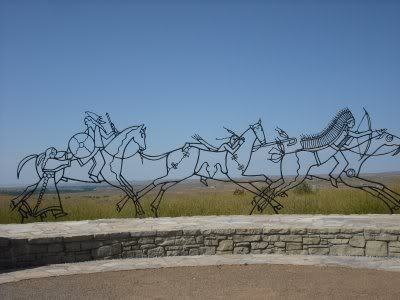
‘Spirit Warriors’ honors American Indians who fought at Little Big Horn