Perhaps as Many as Three Ninth Circuit Indian Criminal Cases Uncertain as Feds Ponder En Banc Petition in U.S. v. Zepeda

Today, the Ninth Circuit withdrew an opinion affirming a conviction in United States v. Alvirez. The Alvirez materials are here. The Zepeda materials are here. The federal government has until April 18 to file an en banc petition. A third decision that may be implicated as well is United States v. PMB (materials here).

The issue in Zepeda is here:

The panel held that a Certificate of Enrollment in an Indian tribe, entered into evidence through the parties’ stipulation, is insufficient evidence for a rational juror to find beyond a reasonable doubt that a defendant is an Indian for purposes of § 1153, where the government offers no evidence that the defendant’s bloodline is derived from a federally recognized tribe.

New Student Scholarship on VAWA’s Tribal Jurisdiction Provisions

Laura Saylor has posted “Back to Basics: Special Domestic Violence Jurisdiction in the Violence Against Women Reactivation Act of 2013 and the Expansion of Inherent Tribal Sovereignty” on SSRN.

Here is the abstract:

Indian Country is home to some of the highest rates of violent crime in the United States. Specifically, Indian women are at least twice as likely as women in any other demographic in the United States to be victims of domestic violence, dating violence, and sexual violence, and most Indian women report that their attacker was non-Native. On March 7, 2013, President Obama signed the Violence Against Women Reactivation Act of 2013, which contained provisions to help alleviate this crisis in Indian County. These provisions include Sections 904 and 905, which outline special criminal jurisdiction over certain non-Indian perpetrators of domestic violence, dating violence, and sexual violence in Indian Country. This Student Note proposes a method of interpretation of Sections 904 and 905 and argues that, upon a constitutional challenge to this special domestic violence jurisdiction, the Supreme Court should find that that these provisions validly expand inherent tribal sovereignty and do not represent a delegation of Congressional power. To reach this conclusion, Court should first return to the texts that form the foundation of tribal sovereignty, namely the Constitution and the Marshall Trilogy. Incorporating these early principles of robust inherent tribal sovereignty, the Court should then look to the legislative intent of Congress, as it has many times in Federal Indian law, to confirm that Congress has validly exercised its power to expand inherent tribal sovereignty. However, in explicating Congress’ power to enact such legislation, this Note further proposes that the Court should clarify that Sections 904 and 905 are consistent with a more limited understanding of Congress’ power to legislate in Indian Country that requires legislation to be rationally related to Congress’ unique obligations to the Indian tribes. Thus, on a constitutional challenge, this Note argues that the Court should uphold Sections 904 and 905 because they are both a valid exercise of Congress’ power to expand tribal inherent sovereignty and consistent with Congress’ unique obligations to the tribes.

MSU-E (Emily Proctor): “How VAWA Impacts Tribal Nations in Michigan”

Here. H/T Pechanga.

An excerpt:

Each of the 12 federally recognized tribes of Michigan have their own tribal court and social service departments that assist women and families who are in violent situations. Michigan State University Extension continues to work with Michigan tribal nations to address the needs of communities in the area of government and public policy.

For more information, please contact Emily Proctor, MSU Extension educator on tribal nations, with questions or comments at 231-439-8927 or proctor8@anr.msu.edu.

This article was published by Michigan State University Extension. For more information, visit http://www.msue.msu.edu. To contact an expert in your area, visit http://expert.msue.msu.edu, or call 888-MSUE4MI (888-678-3464).

Ninth Circuit Reverses Another Conviction under Zepeda (Tribal CDIB Insufficient Evidence of Indian Status)

Here is yesterday’s unpublished order in United States v. PMB.

The Zepeda post is here.

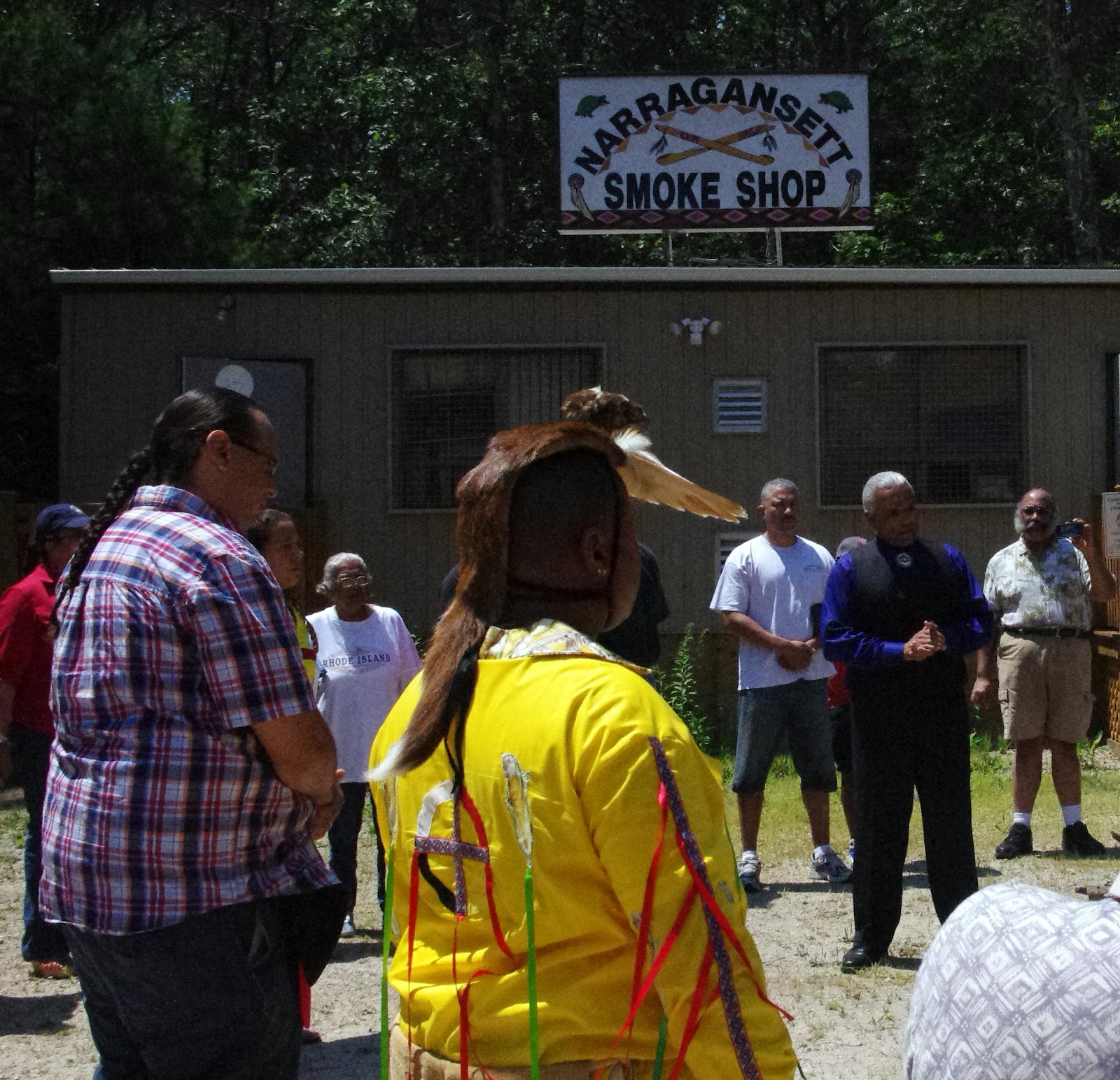
Rhode Island Supreme Court Affirms Conviction of (Presumably) Tribal Member in Narragansett Smoke Shop Raid

Here is the opinion in State v. Brown. smoke shop ceremonysmoke shop raidsmokeshop_247

Federal Court Finds Unkechauge Reservation Smoke Shops Liable for Violations of Federal Law in City of New York v. Golden Feather Smoke Shop

Here are the materials:

DCT Memorandum & Order

NYC Motion

Remaining Defendants’ Cross-Motion

An excerpt:

For the reasons below, the Court grants the City summary judgment as to defendants’ liability under the CCTA and the CMSA. With respect to relief, the Court (1) grants the requested permanent injunction against defendants’ “purchase, receipt, possession, sale, distribution, offer and advertisement of unstamped cigarettes-even to tribe members for personal use”; (2) awards damages as against the Peace Pipe and TDM defendants; (3) awards civil penalties as against the Red Dot defendants, the amount of which will be determined at a later hearing; and (4) awards the City attorney’s fees, the amount of which will be determined in the first instance by Magistrate Judge Vera Scanlon by report and recommendation.

And the bad news (liability):

For the reasons stated, the Court concludes the following: As to defendant Phillips, the City is directed to clarify whether it is still seeking monetary relief against him, and if so, to submit further damages briefing that identifies the amounts the City is seeking against Phillips only. As to the Peace Pipe, TDM, and Red Dot defendants, the Court finds that the City is entitled to summary judgment on (1) defendants’ liability under the CCTA and the CMSA, and (2) its requested permanent injunction against defendants’ “purchase, receipt, possession, sale, distribution, offer and advertisement of unstamped cigarettes-even to tribe members for personal use.” In addition, the Court awards to the City (1) damages in the amount of $10,041,075 as against the Peace Pipe defendants and $450,000 as against the TDM defendants; (2) civil penalties as against the Red Dot defendants, the amount of which will be determined at a later hearing; and (3) attorney’s fees, the amount of which will be determined in the first instance by Magistrate Judge Scanlon by report and recommendation.

Prior posts here and here.
 

Texas Dept. of Criminal Justice Response Brief in Fifth Circuit Religious Freedom Case

Here:

Chance – Appellee Brief

Opening briefs were here.

South Dakota SCT Remands Conviction Appeal for Hearing on Potential Batson Violation (Race Discrimination in Jury Selection)

Here is the opinion in State v. Scott.

An excerpt:

Defendant was convicted of aggravated assault. On appeal, he alleges multiple errors in his trial. We affirm all issues but one. On that issue, we remand for further proceedings on a potential Batson violation.

Federal Court Dismisses Treaty “Bad Men” Claim in Police Killing on Uintah and Ouray Indian Reservation

Here are the treaty claim materials in Jones v. Norton (D. Utah):

DCT Order Dismissing Treaty Claim

Motion for Judgment on Pleadings

Plaintiffs’ Opposition

Reply

United States v. Sun Bear — CA8 Rejects SORNA Challenge (Major Crimes Act Conviction)

Here is the opinion:

US v Sun Bear