Here is the press release:
Gun Lake Revenue Sharing Announcement 6.4.12
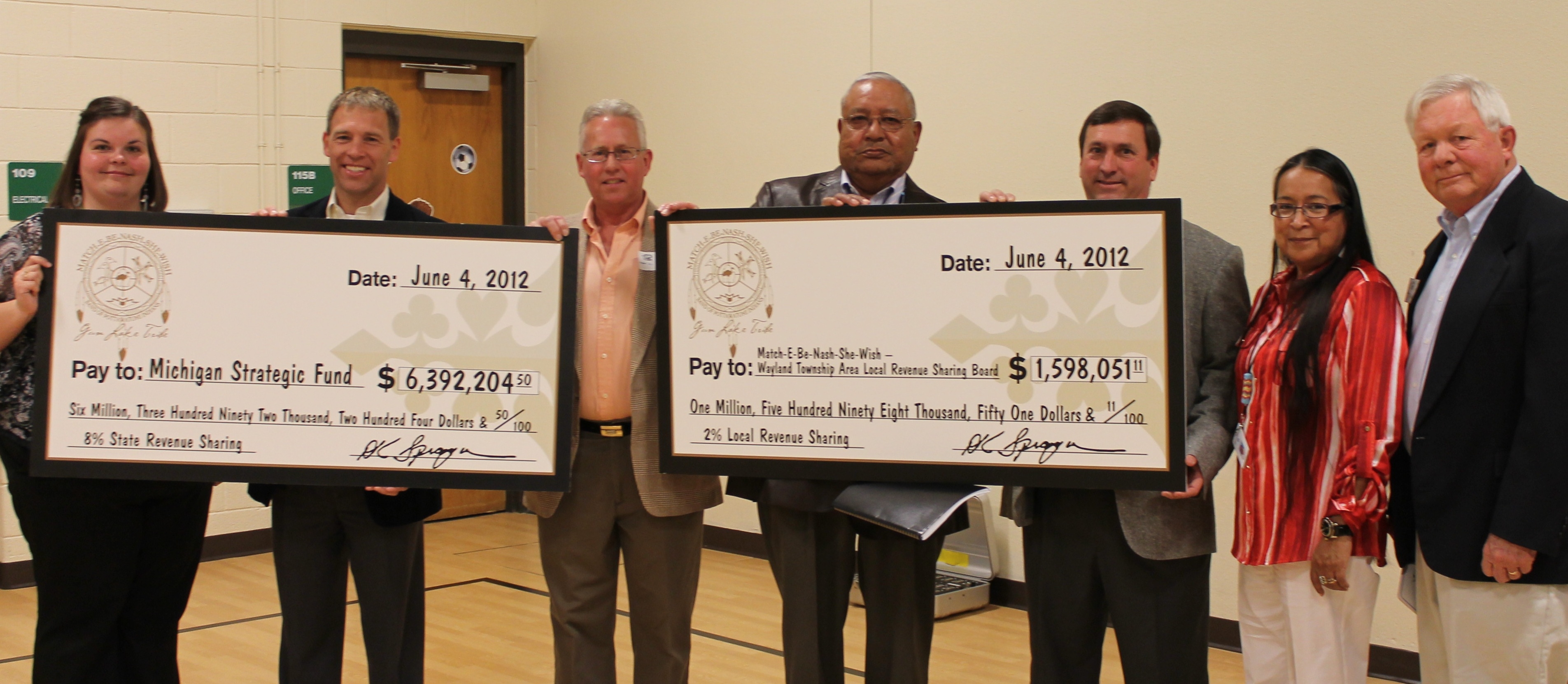
Photo courtesy Gun Lake Tribe.
Here is the press release:
Gun Lake Revenue Sharing Announcement 6.4.12
Photo courtesy Gun Lake Tribe.
Normally, we don’t post these kinds of updates from law firms, but this is so well done and has links to primary documents we crave (see bolded text under the fold), so here goes:
Three recent unfair labor practice cases leveled against Indian nation casinos by the National Labor Relations Board (NLRB) have gone in three different directions. There may be ominous implications.
First, there was the complaint against the WinStar World Casino, owned and operated by the Chickasaw Nation, filed before the NLRB’s Regional Office in Oklahoma. The NLRB charged casino managers with violating the National Labor Relations Act (NLRA) by disciplining employees who engaged in union organizing activities. The Chickasaw Nation sued the NLRB in federal court and secured an injunction to stop the case on the ground that the NLRB has no jurisdiction over labor relations within the Chickasaw Nation’s territory. The NLRB has appealed that decision to the U.S. Court of Appeals for the Tenth Circuit. It argues that federal courts have no authority to stop an NLRB unfair labor practice case until after the case has proceeded to final decision by the full Board. (Under a provision of the NLRA, parties can appeal final Board decisions to the federal courts of appeals.)
Second, there was the complaint against the Soaring Eagle Casino, owned and operated by the Saginaw Chippewa Tribe, filed before the NLRB’s Regional Office in Michigan. In that case, the NLRB charged the casino with violating the NLRA when it fired an employee for soliciting union support in violation of the casino’s non-solicitation policy. The Tribe sued the NLRB in federal court just like the Chickasaw Nation. This time, however, the federal court declined to hear the case. It said the Tribe needed to make all of its arguments to the Board before proceeding to federal court. The unfair labor practice case then went to hearing before an Administrative Law Judge (ALJ), and the casino lost. The ALJ ordered the casino to reinstate the employee and pay her back wages. The ALJ also ordered the casino to post notices to employees announcing their rights under the NLRA, stating that it had violated the NLRA, and announcing that it would revoke its non-solicitation policy. The casino has now appealed the ALJ’s decision to the full Board in Washington, D.C. It argues that the NLRB has no jurisdiction over employment relations at its casino.
Third, there was the complaint against the Fort McDowell Casino, owned and operated by the Fort McDowell Yavapai Nation. In that case, filed before the NLRB’s Regional Office in Arizona last February, the NLRB claimed that the casino maintained work rules that infringed on the ability of employees to engage in concerted activity in violation of the NLRA. Before the case proceeded to hearing before the ALJ, the casino settled with the NLRB. Under the settlement agreement on file with the NLRB’s Regional Office, the casino must post the following notice:
Here are the briefs:
Lower court materials here.
Here. Amazing article.
Thanks again to Patrick O’Donnell.
Here are the materials in Tassone v. Foxwoods Resort Casino (D. Conn.):
Nope, gambling doesn’t make Indians healthier. Having a little change in your jeans does. We reported on a similar study limited to the EBCI here.
The study is The Income and Health Effects of Tribal Casino Gaming on American Indians, 49 Demography 499 (2012).
If you want a copy, send me an email.
Supplementary materials to the article are here:
 Turtle Talk
You must be logged in to post a comment.