Rob Williams on Moyers

FULL INTERVIEW
http://billmoyers.com/episode/american-indians-confront-racism/

WEB EXTRA
http://billmoyers.com/2014/12/26/web-extra-american-indians-confront-savage-anxieties/

PERSPECTIVES COLUMN
http://billmoyers.com/2014/12/29/ralph-lauren-post/#at_pco=cfd-1.0

Karen Tani on Indian Affairs from 1935-1954

Karen Tani has published “States’ Rights, Welfare Rights, and the ‘Indian Problem’: Negotiating Citizenship and Sovereignty, 1935–1954” in the Law & History Review.

Here’s the abstract:

Starting in the 1940s, American Indians living on reservations in Arizona and New Mexico used the Social Security Act of 1935 to assert unprecedented claims within the American federal system: as U.S. and state citizens, they claimed federally subsidized state welfare payments, but as members of sovereign nations, they denied states the jurisdiction that historically accompanied such beneficence. This article documents their campaign, and the fierce resistance it provoked, by tracing two legal episodes. In 1948, through savvy use of both agencies and courts, and with aid from former government lawyer Felix Cohen, reservation Indians won welfare benefits and avoided accompanying demands for state jurisdiction; the states, in turn, extracted a price–higher subsidies–from the federal government. Arizona officials re-opened the dispute in 1951, by crafting a new welfare program that excluded reservation Indians and suing the federal government for refusing to support it. The 1954 dismissal of the case was a victory for Indians, but also leant urgency to efforts to terminate their anomalous status. Together these episodes illustrate the disruptive citizenship claims that became possible in the wake of the New Deal and World War Two, as well as the increasingly tense federal-state negotiations that followed.

Subscribers may access the full article here.

Prof. Tani blogged about the article at the Legal History Blog.

ILPC Conference Second Panel

Dr. Nicole Blalack, Melody McCoy, April Day, and Kristi Bowman

IMG_1045.JPG

IMG_1044.JPG

Treaties Symposium at NMAI Today

Here:

IMG_2250.JPG

Symposium website here.

Webcast here.

Carrie Menkel-Meadow on the Canadian Indian Residential Schools Settlement

Carrie Menkel-Meadow has posted “Unsettling the Lawyers: Other Forms of Justice in Indigenous Claims of Expropriation, Abuse, and Injustice” on SSRN. It is published in the University of Toronto Law Journal in a symposium on the Indian Residential Schools Settlement. When we have the other papers, we will post.

Here is her abstract:

This article considers, from the experience of the Indian Residential Schools Settlement, the limitations of the current formal justice system and the common ways that lawyers and parties act within it. Looking at the combinations of lawsuits, settlement negotiations, structured compensation schemes, truth and reconciliation processes, and memorial and education programs now provided for in the IRSS, the article suggests that we may need ‘process pluralism’ and different orientations to deal with modern mass harms: now recognized harms (like loss of culture, family, language, as well as physical, mental, and social injury) that the formal legal system has not yet developed the capacity to address. Placing the IRSS in a larger international context, the article suggests that some legal and social recognition of ‘new’ human harms and injuries has necessitated the development of different legal and quasi-legal processes. Whether called ‘restorative,’ ‘transitional,’ or ‘alternative’ justice, new forms of dealing with wrongs, harms, and conflicts will require redesigning legal processes and institutions; legal professional education; and social, cultural, and philosophical orientations to human injuries and ‘redress.’ Not all who are injured (both individually and in groups) want or require the same ‘remedies,’ and our conventional and historical common law and adversarial system must be adapted to the diverse needs of those who are injured by past and unconscionable wrongs, especially when inflicted by major governmental, religious, and civil society institutions and practices.

Angela Riley: “Native American Lands and the Supreme Court”

Angela Riley has posted her very impressive paper, “Native American Lands and the Supreme Court,” published in the Journal of Supreme Court History, on SSRN.

Here is the abstract:

The Supreme Court has been instrumental in defining legal rights and obligations pertaining to Indian lands since its first path-making decision in the field in Johnson v. McIntosh in 1823. But the groundwork for the Court’s contemplation of such cases predates Supreme Court jurisprudence, and it in fact predates the formation of the Court and the United States itself.

When Europeans first made contact with this continent, they encountered hundreds of indigenous, sovereign nations representing enormous diversity in terms of language, culture, religion, and governance. For those indigenous groups — as is a common attribute of indignity of similarly situated indigenous groups around the world — this land was and is holy land. Indigenous creation stories root Indian people in this continent — Turtle Island to many — as the focal point of life, creation, religion, culture, and language. In the settlement of the country, the colonial powers initially — and the United States subsequently — treated with Indian nations to negotiate the transfer of lands from Indians to Europeans, often in exchange for peace or protection.

Prof. Riley had previously presented this paper to the Supreme Court historical society, which was televised on C-SPAN.

New Book: “Our Cause Will Ultimately Triumph”

“Our Cause Will Ultimately Triumph”:Profiles in American Indian Sovereignty, edited by Tim Alan Garrison, has just been published by Carolina Academic Press.Our Cause Will Utimately Triumph

Here is the blurb:

“Our Cause Will Ultimately Triumph” examines the history of American Indian tribal sovereignty from a peoples’ perspective. An impressive group of historians and legal scholars offer up engaging biographies of the courageous leaders who helped establish and protect the autonomy of their people. Subjects range from early nineteenth-century leaders such as Alexander McGillivray (Creek) and John Ross (Cherokee), chiefs who helped bring their nations into the modern age of tribal sovereignty, to Ada Deer, Mary and Carrie Dann, and Elouise Cobell, women who worked for the benefit of all Indian people.

MSU ILPC alum Adrea Korthase wrote the chapter on Michigan tribal judge Michael Petoskey.

Supreme Court of Canada Aboriginal Law Stats

Here are the updated stats for the Supreme Court of Canada’s rulings in Aboriginal law cases since the patriation of the Constitution in 1982.  There have been some big changes since the last update a few years ago – Justices Binnie (14/33 – 42.4% in favor of Aboriginal interests), Charron (6/19 – 31.5%), and Deschamps (7/23 – 30.4) have left and Justices Moldaver (0/2 – 0%), Karakatsanis (0/2 – 0%) and Wagner (0/1 – 0%) are not off to a very auspicious start since coming on board.

Overall, as the court sits today, the Justices have collectively found in favor of Aboriginal interests only 30.7% of the time.  Here’s the breakdown by individual Justice – McLachlin: 35.1% (19/54); LeBel: 23% (6/26); Fish: 36.3% (8/22); Abella: 35% (7/20); Rothstein: 25% (4/16); Cromwell: 30% (3/10); Moldaver: 0% (0/2); Karakatsanis: 0% (0/2); and Wagner: 0% (0/1).

Supreme Court of Canada’s Aboriginal Law Stats

Interior Opinion on Meaning of “Under Federal Jurisdiction”

Here:

DOI Carcieri M opinion – M 37029

Here is the link to Interior opinions.

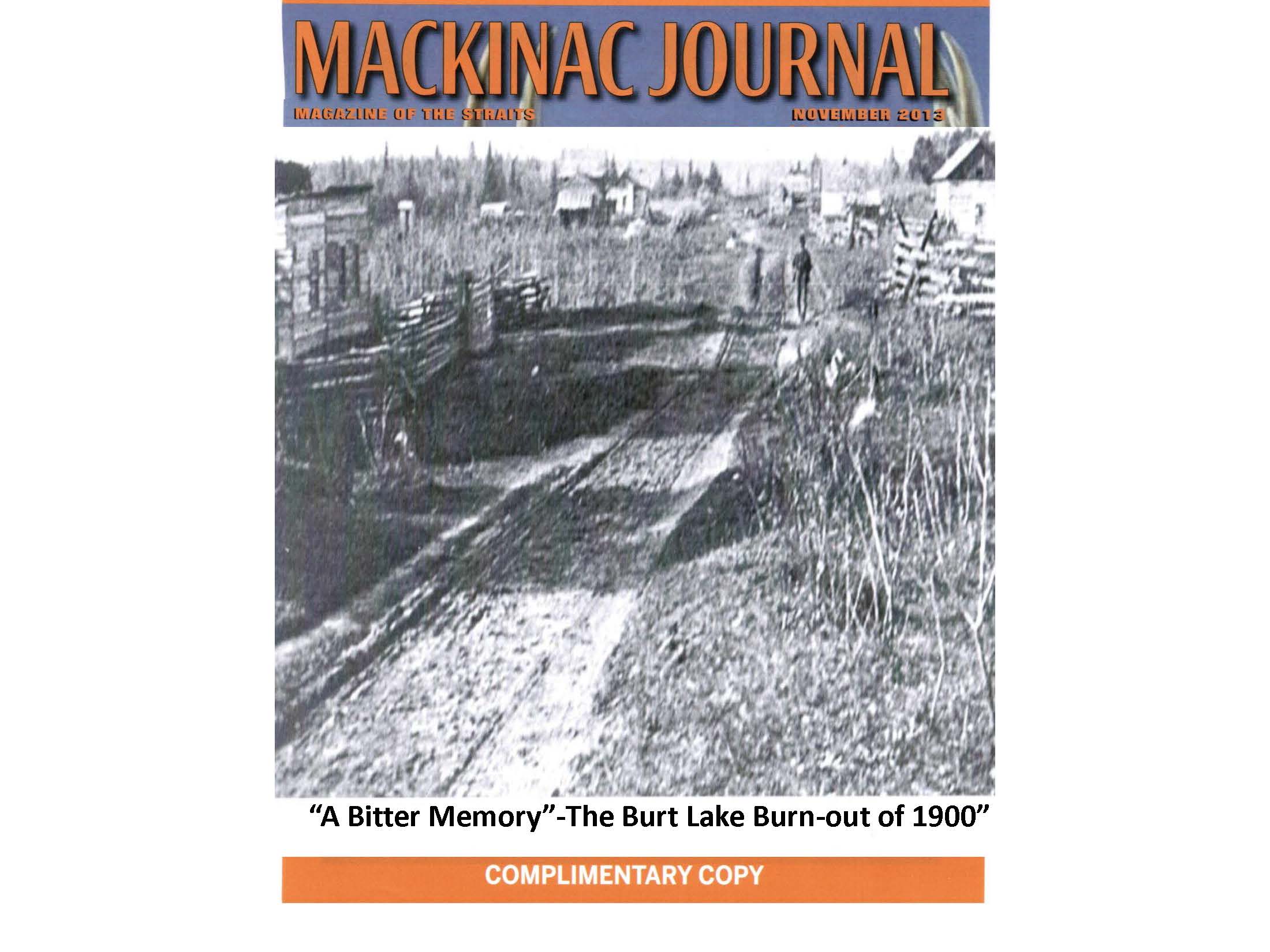
Mackinac Journal: “‘A Bitter Memory’ — The Burt Lake Burn-out of 1900”

An important read for anyone in northern Michigan:

A Bitter Memory’ — The Burt Lake Burn-out of 1900

Moreover, it is a fairly direct response to the recent Michigan Historical Review article (here) that essentially argues it was perfectly legal to resort to arson to enforce a foreclosure order. Imagine if that were really true — a bank or a sheriff could simply set alight a foreclosed home, with people inside, in order to enforce a foreclosure order. Obviously not.

Here is an imaged version of article as well, with pics:

Mack Burn article_Page_1 Continue reading