Here.
Oral argument was today. We’ll post the oral argument audio when it becomes available.
Here.
Oral argument was today. We’ll post the oral argument audio when it becomes available.
Here.
Here.
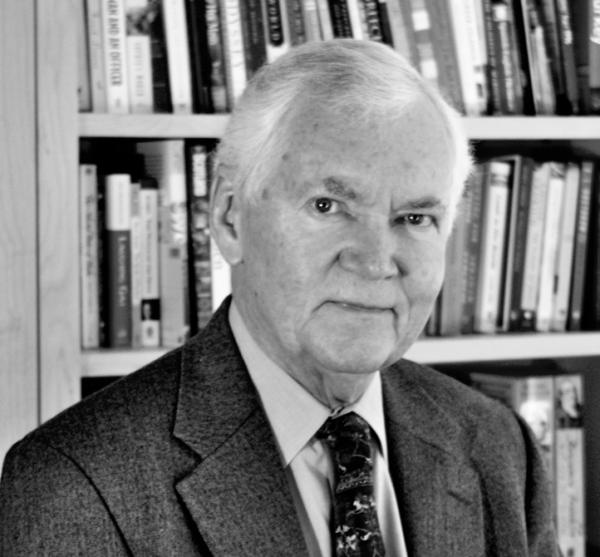 An excerpt:
Your 1983 and 2013 voting-rights lawsuits have striking similarities. In other recent cases, jurisdictions you sued years ago are defendants once again. Are Native voting rights running in place?
There’s been progress—no doubt about that. Lawsuits have resulted in the creation of districts that allow Indian people to elect representatives of their choice. Tribal members have become aware of the value of participating in non-tribal elections. If you don’t vote, you’re not only denied the benefits of the government or school board, but you become its victim.
When we filed the 1983 lawsuit, no tribal member had ever been elected to Big Horn County’s commission. After we won, redistricting meant an Indian was elected. The Indian population has increased since then, and tribal members now hold several county positions. There’s been enormous change, here and elsewhere.
Read more at http://indiancountrytodaymedianetwork.com/2013/10/05/7-questions-aclus-laughlin-mcdonald-native-voting-rights-151545
For Immediate Release
(October 6, 2013) Manistee, MI
COLLECTIVE BARGAINING AGREEMENTS
COMPLETED UNDER TRIBAL LAW
Deepening a five year relationship under the labor law of the Little River Band of Ottawa Indians, the United Steelworkers Union and the Manistee, Michigan-based Little River Casino Resort have completed two new collective bargaining agreements. The contracts, which cover employees within the Resort’s security and slot tech departments, were ratified late last week by the USW.
“As far as we are aware, no other Indian tribe in the country has as many collective bargaining agreements entered into pursuant to tribal law,” said Wendell Long, the General Manager for the Resort, and a member of the Choctaw Nation of Oklahoma. “This exemplifies tribal sovereignty at work,” said Virgil Johnson, the elected Speaker of the Band’s Tribal Council, which is responsible for enacting the Band’s laws. “We are very proud of our success,” he said.
In 2007, the Band enacted its Labor Organizations and Collective Bargaining Law to cover employees within its public sector operations, including the Little River Casino Resort. The Band conducts gaming as a substitute for a tax base to generate revenue to support governmental services it provides to its members under the Indian Gaming Regulatory Act. The Band’s gaming revenues from the Resort provide the bulk of funds for its health programs, police department, and court system, as well as many other governmental programs.
The Band’s labor law establishes a structure for union elections, bargaining rules, and the resolution of unfair labor practice charges. “We found much to learn from the way state governments regulate collective bargaining,” said Speaker Johnson, “but in the end, this law reflects the unique values of our Ottawa community.”
The Resort and the USW have engaged in bargaining unit elections and collective bargaining over employment terms and conditions affecting more than 100 employees at the Resort. The first agreement was signed in December, 2010 and two others followed by October of 2012. According to Bill Laney, USW Staff Representative: “The USW and the Resort have developed a good working relationship and the successful outcome of these negotiations is proof that the Tribe’s collective bargaining law is now working. It gives employees a voice in determining their wages, hours and working conditions and the ratification of these two contracts shows that unit members are satisfied with the results.”
Ogema Larry Romanelli, the Band’s executive branch leader, has monitored management-union relations at the Band. “A lot of hard work and long hours have gone into the negotiation of these collective bargaining agreements,” he said. “They reflect the good faith of union and management, alike.”
Oral argument is scheduled before the United States Court of Appeals for the Sixth Circuit on Tuesday, October 8th in a case in which the National Labor Relations Board has challenged the authority of the Band to apply its labor law at the Resort.
For information on the Little River Band’s labor and employment laws, contact the Office of Public Affairs for the Little River Band of Ottawa Indians at 2608 Government Center Drive, Manistee, MI 49660. Office phone 231.723.8288. E-mail to gzaring@lrboi.com
Here.
Here.
Before proceeding with the appeal, the state’s high court required last week’s mediation conference at the Court of Civil Appeals in Tulsa, where the families spent five days in negotiations and returned to the courthouse Monday morning for less than an hour.
The case now goes back to the Oklahoma Supreme Court.
ETA: Additional information with statement from Cherokee Nation Attorney General. It appears that the OK Supreme Court lifted the stay. Here.
“This order, just like any other order from a foreign jurisdiction needs to be filed for domestication with the Cherokee Nation District Court,” said Cherokee Nation Attorney General Todd Hembree. “There is a conflicting Cherokee Nation order concerning a Cherokee Nation citizen on Cherokee Nation land. We are a sovereign nation with a valid and historic court system.
“As Attorney General, I will require that our court system be honored and respected. I took an oath when assuming this office to uphold the laws and constitution of the Cherokee Nation and the United States. Nowhere in that oath is it required that I defend the laws of South Carolina.”
As a side note, Judge Thorne spent the last few days in Montana, doing an incredible job encouraging the tribes and state to work together to find ways to achieve better outcomes for Indian kids. Given the work he plans on doing in his retirement, we think “retirement” should really be in quotes. Which is lucky for all of us.
 Turtle Talk
You must be logged in to post a comment.