Here is the complaint in Cherokee Nation v. Free (N.D. Okla.):
Here is the amended complaint in Rourke-Rodriguez v. McMahon (N.D. N.Y.):

Here are the new materials in Muscogee (Creek) Nation v. City of Henryetta (N.D. Okla,):
Prior post here.

Here are the materials in Native American Guardian’s Association v. New York State Board of Regents (E.D. N.Y.):

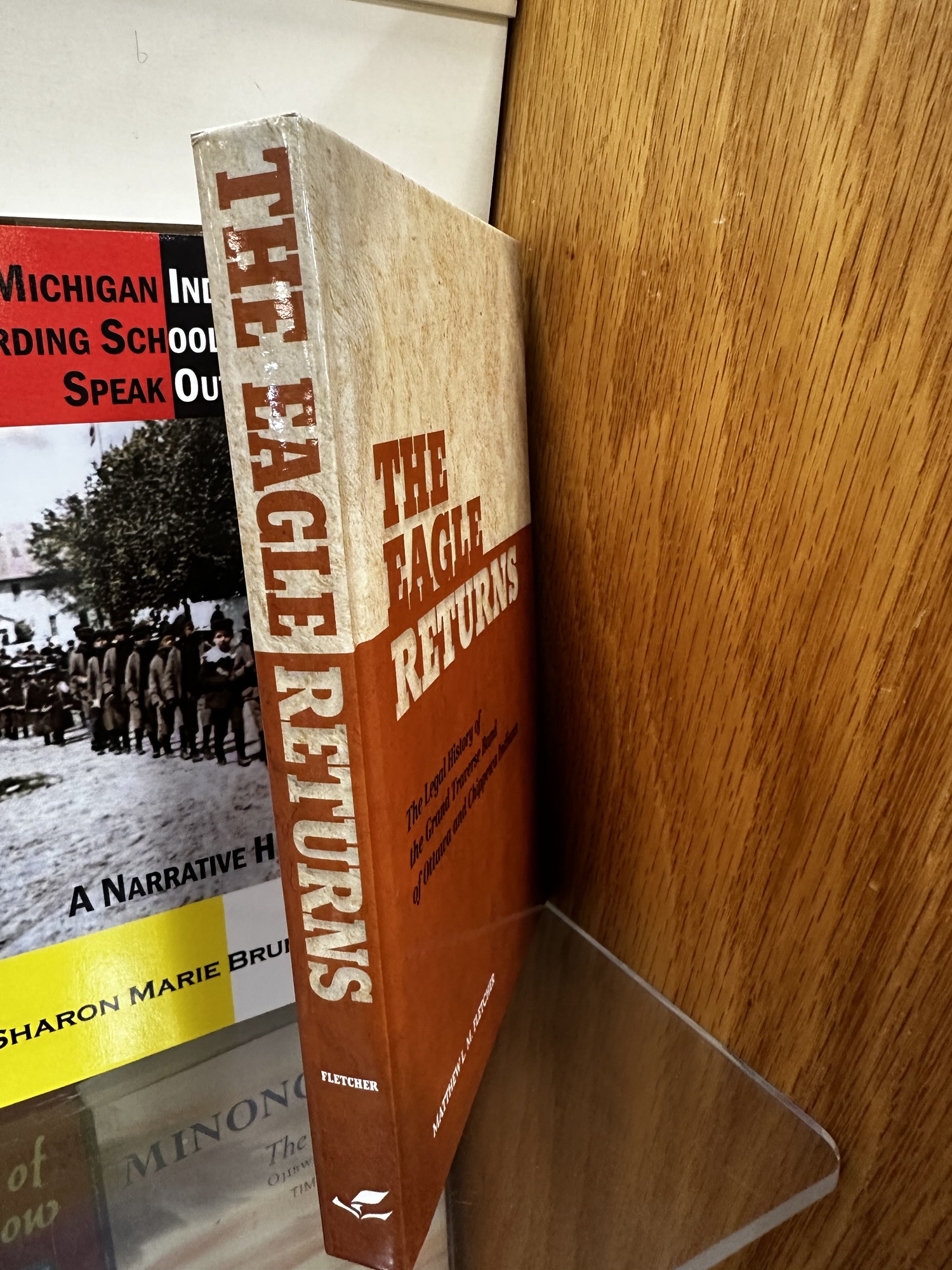
Here is the order in Grand Traverse Band of Ottawa and Chippewa Indians v. Burnette Foods Inc. (W.D. Mich.):
Prior post here.
If you have a new announcement, please share it with us by uploading the information requested on this Google Form. If you have any questions, please email the MSU College of Law Indigenous Law & Policy Center at indigenous@law.msu.edu.
Judicial Council of California, San Francisco or Sacramento, CA
The Attorney II provides legal support to the judicial branch, including the Tribal Court-State Court Forum and other advisory committees of the Judicial Council, individual judges, and other justice partners on matters related to the Indian Child Welfare ACT (ICWA), tribal issues related to the Violence Against Women Education Project (VAWEP), and other aspects of state and federal Indian law. This position drafts, develops, and revises rules and forms related to ICWA and federal Indian law issues as necessary; drafts legislative proposals on these issues; and provides technical assistance to judicial officers and justice partners concerning ICWA and federal Indian law issues. This position also develops curriculum, bench guides, and job aids (such as findings and orders charts, fact sheets, checklists, etc.) for judicial officers and justice partners concerning ICWA, VAWEP, and other aspects of state and federal Indian law. This position participates regularly in meetings convened by the California Department of Social Services, Office of Tribal Affairs, and assists judicial officers in several joint jurisdiction ICWA working groups and roundtables. Additional duties listed within the full job description. “Juris doctor, and three (3) years of relevant post-bar legal experience as a practicing attorney.
After passing a state bar, work experience as a Law Clerk to a federal or state judge prior to formal bar admission will be considered qualifying experience.
LICENSING AND CERTIFICATIONS
Current active membership with the State Bar of California prior to hire.
Desirable Qualifications:
Experience representing clients in juvenile dependency proceedings.
Experience practicing federal Indian law.
Experience working with tribes, tribal courts, and tribal communities.
Salary: $13,383 – $16,058 per month . Open until filled. https://careers.jud.ca.gov/psc/HRPRDCG/EMPLOYEE/HRMS/c/HRS_HRAM_FL.HRS_CG_SEARCH_FL.GBL?Page=HRS_APP_SCHJOB_FL&Action=U&
Intertribal Court of Southern California, Valley Center, California
Under the supervision of the court solicitor, this position has responsibility for the provision of legal research and writing in support of the operation of the Intertribal Court of Southern California. Completion of at least one year of juris doctorate coursework at an institution accredited by the American Bar Association or the State Bar of California. Demonstrated interest in federal Indian and tribal law preferred.
Pay: $26.00 per hour. Open until filled. www.intertribalcourt.org/employment-opportunities
Kickapoo Traditional Tribe of Texas, Eagle Pass TX
Work with Native American individuals, families, organizations, and Tribal governments in all areas of Federal Indian Law, including but not limited to, advising on issues involving jurisdiction, economic development, finance, tribal gaming, tribal governance, employment, and the Indian Child Welfare Act. May represent clients in court or before quasi-judicial or administrative agencies of government.
Minimum Qualifications: Must have a Juris Doctor (JD) or equivalent law degree from an accredited institution and be licensed to practice law and in good standing in Texas.
Zero to five years related experience.
Preferred Qualifications: Juris Doctor (JD) and be licensed to practice law in good standing in Texas.”
Salary: $150,000.00 / annually. Closes Sunday, December 14, 2025
In order to be considered for any vacancy within the Kickapoo Traditional Tribe of Texas, an application must be completed. If you are among the qualified candidates, you will receive a call or email from one of our coordinators to schedule an interview. Once your application is completed, please send it to the Human Resources Department at HR@ktttribe.org.
http://kickapootexas.org/wp-content/uploads/2017/04/KT-Employment-Application-08302016.pdf
Here are the materials in Blue Lake Rancheria v. Kalshi Inc. (N.D. Cal.):


 Turtle Talk
You must be logged in to post a comment.