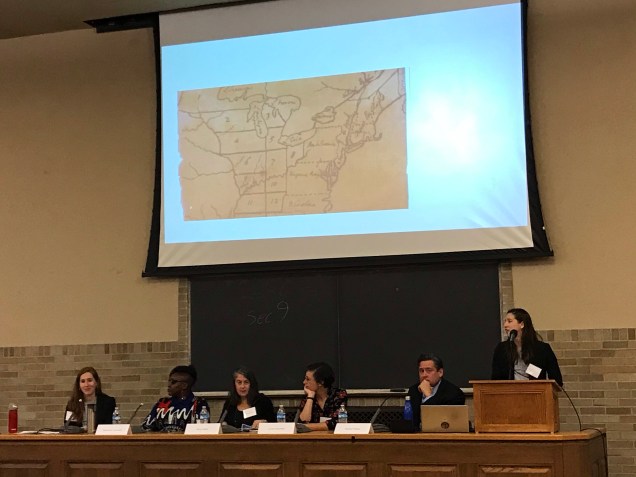
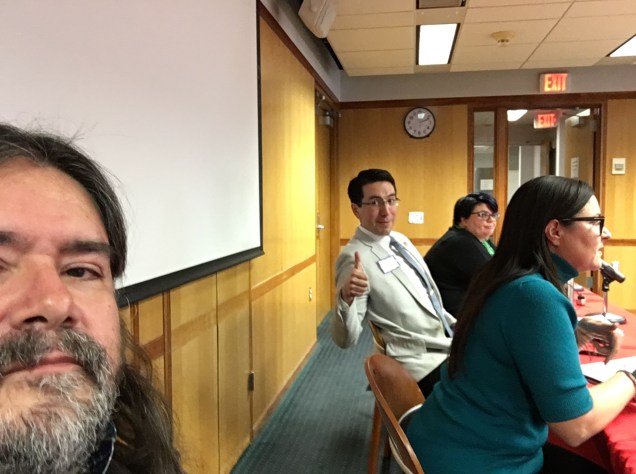
University of Michigan Journal of Law Reform Symposium — Panel on History of Property Dispossession
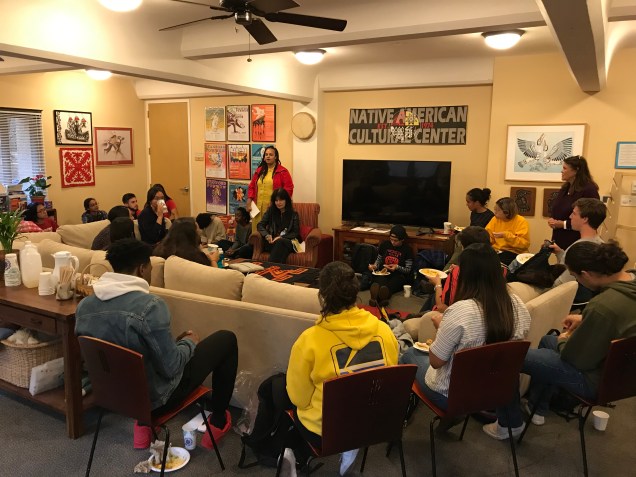
Wednesday, I was delighted to attend a reception for Joy Harjo (who read later on before a bigger audience).



Maurisa Bell grew up on the Wind River Reservation in Riverton, Wyoming. She is an enrolled member of the Eastern Shoshone Tribe and was also raised around her Northern Arapaho family. In 2015, she graduated from Montana State University in Bozeman, MT and completed the Pre-Law Summer Institute program during the summer of 2016. While in law school, Maurisa served as Vice President and Treasurer for the MSU-NALSA, an Area representative for National-NALSA, and volunteered as a student mentor for the Indigenous Law and Policy Center.
She spent her summers in Washington, D.C. working for the Department of Justice’s Office of Tribal Justice; the National Indian Gaming Commission; and Dentons, US LLP in their Native American Law and Policy practice group. She is a dedicated and driven leader who, in just a few weeks, will graduate from the Michigan State University College of Law.
Maurisa will work for Dentons upon graduation, pursuing her passion in helping tribes and tribal communities.
Congratulations, Maurisa!
Heidi L. Guzmán has published “Roe on the Rez: The Case for Expanding Abortion Access on Tribal Land” in the Columbia Journal of Race and Law.
Here is the abstract:
While the courts have codified and reaffirmed the right to abortion, some state legislatures have enacted increasingly burdensome restrictions on abortion. In a number of states, there is only one abortion clinic available for thousands of people. This Note explores whether Native American tribes, as sovereigns, may establish holistic reproductive health clinics on tribal land. It analyzes abortion law in Wisconsin under the framework of Public Law 280 jurisprudence to determine that clinics in Indian Country would not be subject to state abortion regulations. This Note also explores the practical implications of a Native-owned-and-operated clinic, and concludes that these clinics would greatly increase access to safe reproductive health care for Native and non-Native people.
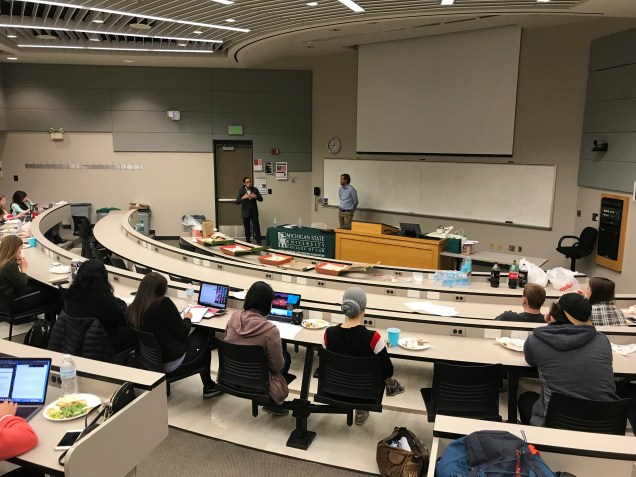
Doug Craven (LTBB) and Trevor VanDyke (Mich. DNR) — The Intersections Between Conservation Law & Indigenous Law
Here:
Here:
Trust Lands for the Native Hawaiian Nation: Lessons from Federal Indian Law Precedents
Lane Kaiwi Opulauoho
Indigenous Peoples, the International Trend Toward Legal Personhood for Nature, and the United States
Hannah White



Here is “Trespass or Vandalism or Protecting That Which is Holy? Religious Liberty Land-Use Claims,” published in the Columbia Law Review Online, by Edward K. Olds.


You must be logged in to post a comment.