Here.
Background materials here.
Here are the materials in Lac Courte Oreilles Band of Lake Superior Chippewa Indians v. Walker (W.D. Wis.):
2018.11.30 – Docket 01 – Complaint
2018.11.30 – Docket 1-1 – Civil Cover Sheet
2018.11.30 – Docket 1-2 – Exhibit Index
2018.11.30 – Docket 1-3 – Exhibit A – Treaty with Chippewa
2018.11.30 – Docket 1-4 – Exhibit B – Sample Red Cliff Patent
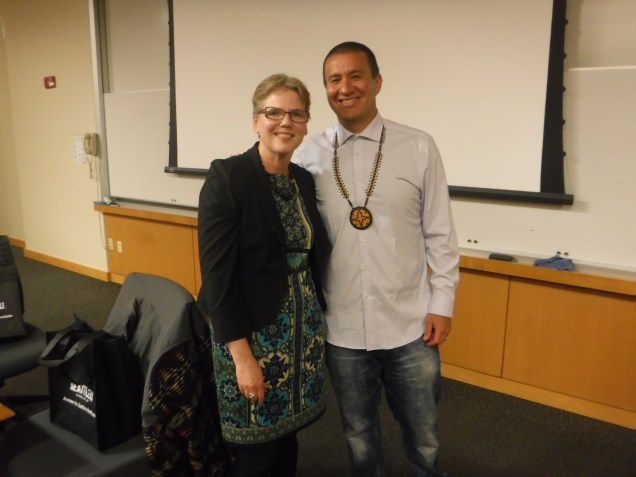
Nisqually Council Member Willie Frank III and Attorney and Law Professor Ann Tweedy
Here is “‘We were here first’: Tribes say Line 5 pipeline tunnel ignores treaty rights.”
Michael C. Blumm & Jeffrey Litwak have posted “Democratizing Treaty Fishing Rights: Denying Fossil-Fuel Exports Projects in the Pacific Northwest,” forthcoming in the Colorado Natural Resources, Energy & Environmental Law Review, on SSRN.
Here is the abstract:
Indian treaty fishing rights scored an important judicial victory recently when an equally divided U.S. Supreme Court affirmed the Ninth Circuit’s decision in the so-called “culverts case,” which decided that the Stevens Treaties of the 1850s give the tribes a right to protect salmon migration obstructed by barrier road culverts. The implications of that decision on other habitat damaging activities have yet to be ascertained, but even prior to the resolution of the culverts case there were significant indications that federal, state, and local administrative agencies were acting to protect treaty fishing rights from the adverse effects of large fossil-fuel export projects proposed throughout the Pacific Northwest. After briefly explaining the culverts decision, this article examines five recent examples of agencies denying permits for fossil-fuel developments at least in part of treaty rights grounds. We draw some lessons from these examples concerning the importance of tribal participation in administrative processes and explore some knotty evidentiary issues that tribal efforts to protect their historic fishing sites may entail. We conclude that safeguarding their treaty rights in the 21st century will require tribes to be as vigilant about the administrative process as they have been about seeking judicial protection.
Unsure of whether to attend the ILPC/TICA Conference this fall? Over the next week, we’ll be giving you inside peeks into the panels we’re very proud to host. Register and come visit us on the banks of the Red Cedar this fall:
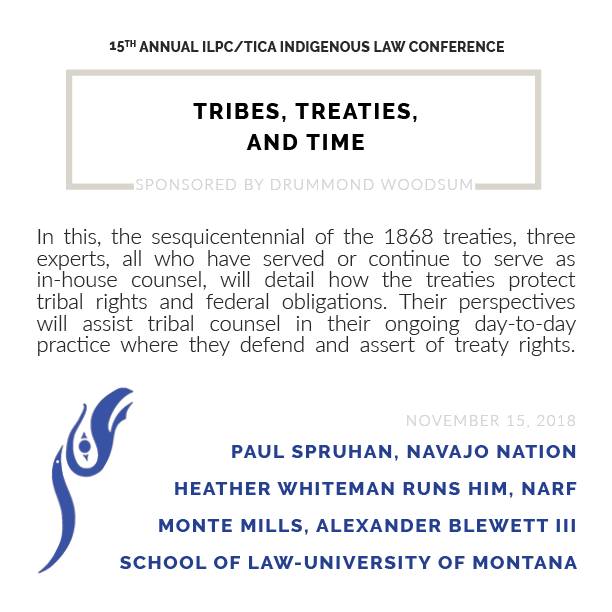
And remember: CLEs applied for (10 standard, 1.5 ethics, 1 elimination of bias)

Here are the merit stage briefs:
Petitioner
17-532 tsac Indian Law Professors
Natural Resources Law Professors Brief
PACIFIC AND INLAND NORTHWEST TREATY TRIBES Brief
Southern Ute Indian Tribe and Ute Mountain Ute Tribe
Respondent
Brief amici curiae of Western Association of Fish and Wildlife Agencies
Amicus Brief of Association of Fish and Wildlife Agencies
States Amicus Brief Supporting Respondent
Amicus brief of Safari Club International
Amici Curiae Brief of Wyoming Stock Growers Association
Here are the cert stage briefs:
2017-10-05 Herrera Cert Petition
17-532 Amici Brief Indian Law Professors
Wyoming opposition to Herrera petition
17-532 Herrera (ac pet) [US invitation brief]
Gerald Torres has published “No Ordinary Lawsuit: The Public Trust and the Duty to Confront Climate Disruption–Commentary on Blumm and Wood” in the American University Law Review Forum.
 Turtle Talk

You must be logged in to post a comment.