Here are the materials in Dakota Metal Fabrication v. Parisien (D.N.D.):
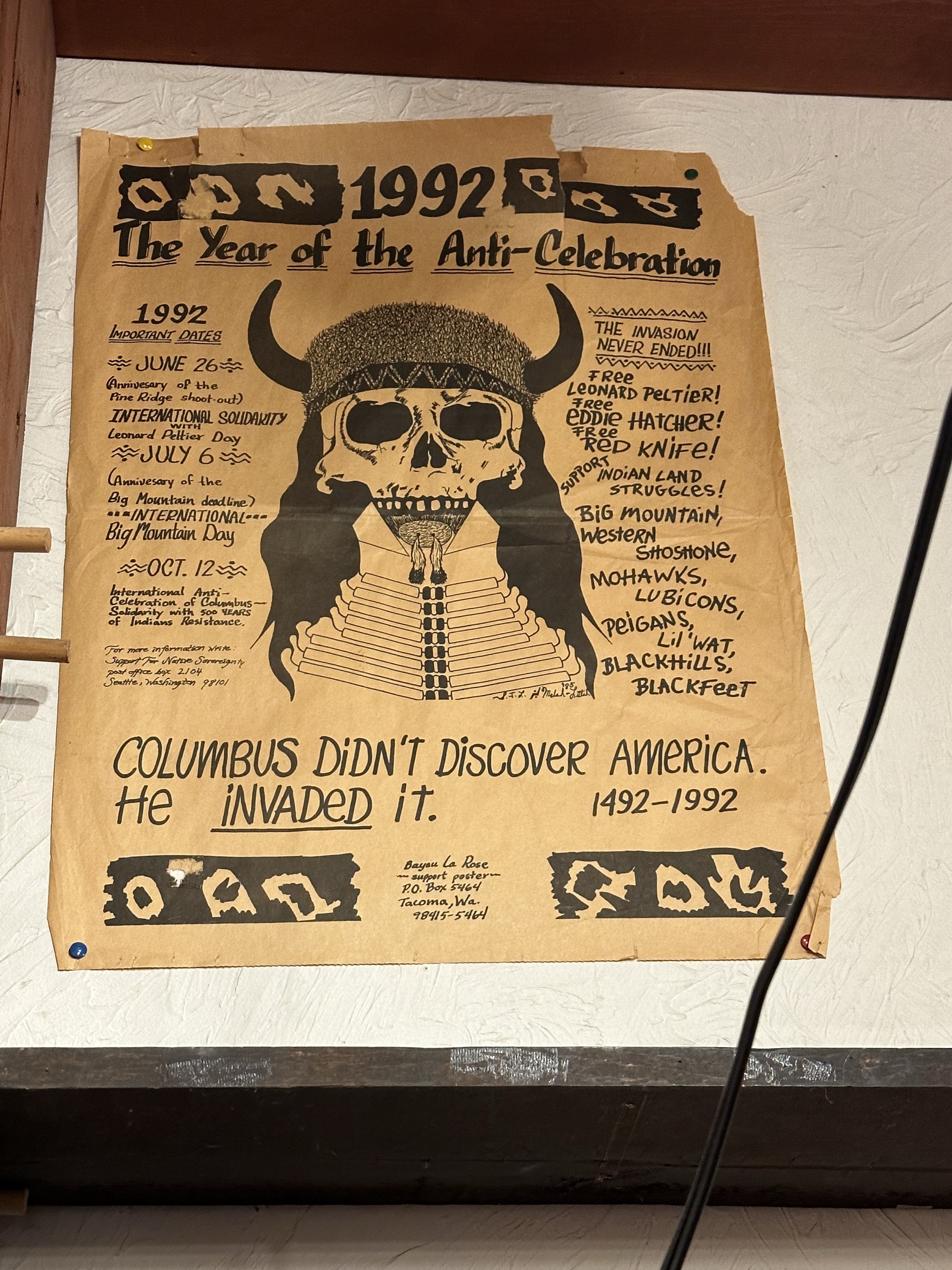
Here are the materials in Dakota Metal Fabrication v. Parisien (D.N.D.):
Here are the briefs in In the Matter of the Extradition of Moreno (Haw. Cir. Ct.):
Motion to Dismiss – Carlos Moreno

Interesting idea.
Adam Crepelle has published “An Intertribal Business Court” in the American Business Law Journal. Here is the abstract:
Few Indian reservations have any semblance of a private sector. Consequently, poverty and unemployment are major problems in much of Indian country. While there are many reasons why private enterprise is scarce in Indian country, one of the foremost reasons is businesses do not trust tribal courts. Businesses’ distrust of tribal courts is not unique as outsiders often fear bias in foreign tribunals. Similarly, businesses are often concerned about a court’s capacity to adjudicate complex disputes. Federal diversity jurisdiction was developed to allay fear of bias, and many states have developed business courts to address questions about court capacity. Tribes can overcome these issues by creating an intertribal business court (IBC). Tribes will be free to sculpt the IBC as they see fit. However, the IBC’s intertribal nature will help reduce fears of bias, and an IBC’s focus on business disputes will answer doubts about court capacity. An IBC will also make tribal law more accessible, further increasing confidence in this new tribunal. As businesses gain greater confidence in tribal legal institutions through the IBC, they will be more likely to operate in Indian country. Accordingly, the IBC could help to transform tribal economies.

Check out “The Three Lives of Mamengwaa: Toward an Indigenous Canon of Construction” on SSRN.
Abstract:
This paper will survey the history of tribal courts, which allows for an explanation for the reasons behind the relatively minimal impact tribal courts have had on Indian country governance, drawing on the work of Rob Porter. The paper will then turn to the monumental changes in tribal judiciaries and in tribal legal practice of the last few decades, which in turn allows for a discussion about several recent tribal court decisions that could signal a future where tribal courts play a far greater role in regulating Indian country governance through the application of customary law, drawing on the work of Wenona Singel. Finally, the paper offers preliminary thoughts on whether adding robust tribal judicial regulation to an already crowded field of Indian country governance is normatively beneficial. Short answer? Yes. Many of the intractable political disputes that plague tribal governance can be traced to the reliance by tribal governments on state and federal legal principles that are deeply flawed and have limited value in Indigenous contexts. I suggest the acknowledgment of an Indigenous Canon of Construction of tribal laws by tribal judiciaries that limit the impact of colonization on tribal nations.
Seth E. Montgomery has published “ICRA’s Exclusionary Rule” in the Boston University Law Review.
The abstract:
The Fourth Amendment does not limit the actions of the 574 federally recognized Indian tribes. In an affront to tribal sovereignty, Congress enacted the Indian Civil Rights Act (“ICRA”) in 1968. The ICRA provides limitations on tribal governments that parallel the Bill of Rights. For example, the ICRA provides that no Indian tribe shall “violate the right of the people to be secure . . . against unreasonable search and seizures.”
But the ICRA—like the Fourth Amendment—does not state what happens when police obtain evidence from an unreasonable search or seizure and prosecutors seek to introduce that evidence in a criminal trial. Federal courts have developed an exclusionary rule for evidence obtained in violation of the Fourth Amendment: subject to myriad exceptions, if police obtain evidence unconstitutionally, then that evidence may not be introduced in a criminal trial. This Note asks whether the ICRA’s search-and-seizure provision incorporates such an exclusionary rule.
This Note advances an interpretation of the ICRA based on the statute’s 1968 meaning: the ICRA’s text compels an exclusionary rule, conditioned on deterring tribal police misconduct, but not subject to the myriad exceptions that apply in the Fourth Amendment context. And, with important qualifications, this Note explains why a court applying this interpretation should turn to tribal law. A deterrence-based exclusionary rule requires courts to consider whether exclusion deters police misconduct, how to measure the benefits of deterrence against the harms of excluding probative evidence, and how much deterrence is necessary for exclusion. Comity, self-determination, and federalism all compel deference to tribal law in answering these questions. Thus, tribal law can and should guide the application of the ICRA’s search-and-seizure provision in a criminal prosecution.
This Note contributes to the legal and academic landscape in three ways. First, it adds to an ever-growing body of literature advocating for federal and state deference to tribal law. Second, this Note fills a gap in the literature by addressing a remedy that the ICRA does not expressly provide—namely, exclusion. Most academics and courts describe federal habeas review as the ICRA’s only available remedy outside of tribal courts. Finally, this Note provides a roadmap for litigants arguing for or against a suppression motion based on an ICRA violation. Only a limited number of reported cases address whether the ICRA incorporates an exclusionary rule, and even fewer provide a full analysis. This Note thus answers an open question in a way that harmonizes constitutional criminal procedure with deference to tribal legal precedent.


 Turtle Talk
You must be logged in to post a comment.