Here are the materials in The Chesapeake Life Insurance Co. v. Parker (E.D. Wis.):
tribal courts
North Dakota SCT Issues Tribal Court Jurisdiction Decision
New Paper on The Extraterritorial Reach of Tribal Court Criminal Jurisdiction
Grant Christensen has posted “The Extraterritorial Reach of Tribal Court Criminal Jurisdiction” on SSRN. Here is the abstract:
Conflicts over the jurisdiction between tribal, state, and federal courts arise regularly due to the nature of overlapping sovereignty. The Supreme Court accepts an average of almost three Indian law cases a year and has decided more than twenty Indian law cases with a jurisdictional focus since 1978. As tribes become wealthier, they are increasingly acquiring new lands outside of their existing reservations. This expansion of territory generates new border zones where state and tribal interests converge. The Sixth Circuit recently decided the first federal appellate case dealing with the inherent criminal powers of tribal court jurisdiction over the conduct of Indians on tribal land that is located outside of the tribe’s reservation. The unanimous decision of the Sixth Circuit panel upheld the tribe’s inherent right to extraterritorial criminal jurisdiction, but read into the opinion some limiting caveats that originate from civil, and not criminal, jurisdictional principles. This paper reads the Sixth Circuit’s decision in Kelsey v. Pope as the first in what is surely to be a myriad of conflicts over the extraterritorial jurisdiction of tribal courts. It suggests that while the Sixth Circuit’s approach to tribal sovereignty is generally in keeping with Supreme Court precedent, the court erred by conflating criminal with civil authority and thus over limited its discussion of the inherent powers of tribal courts. Instead the paper suggests that a more consistent reading of the inherent extraterritorial criminal powers of Indian tribes should support jurisdiction over both tribal members and tribal territory unless Congress has expressly circumscribed tribal authority. This broader understanding of extraterritorial jurisdiction is not only simpler to apply, but finds better support in Supreme Court precedent than the convoluted reasoning adopted by the Sixth Circuit.
Eighth Circuit Briefs in Kodiak Oil & Gas (USA) Inc. v. Seaworth [formerly Burr]
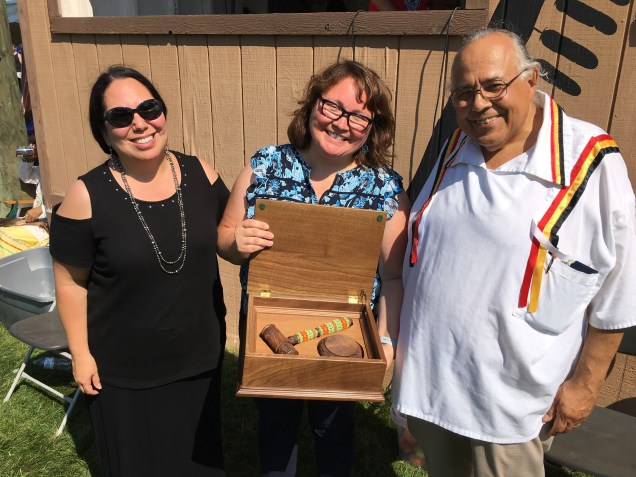
LTBB Honors Former Appellate Justice Wenona Singel


Federal Court Allows Civil RICO Suit to Proceed against Crow Nation-Owned Health Facility
Here are the materials in Wilhite v. Awe Kualawaache Care Center (D. Mont.):
Tenth Circuit Rules against State Jurisdiction over Navajo Casino Tort Claims
Tenth Circuit Briefs in Ute Indian Tribe v. Lawrence
North Dakota SCT Asserts Concurrent Jurisdiction over Nonmember Indian Child Support Orders
Federal Court Rejects Tribal Jurisdiction, Orders Arbitration, in Oilfield Equipment Contract Dispute
Here are the materials in Halcon Operating Co. Inc. v. Rez Rock N Water LLC (D.N.D.):
 Turtle Talk
You must be logged in to post a comment.