tribal courts
Suit against Western Sky/Butch Webb to Proceed
Here are the materials in Scherr v. Western Sky Financial (N.D. Ill.):
Ninth Circuit Holds Strate Governs Navajo Civil Jurisdiction over Nonmembers on State Highways
Here is the unpublished memorandum. An excerpt:
Appellants conceded at oral argument that the Navajo Nation has not retained the right to exclude nonmembers on U.S. Highway 160. Consequently, the highway is the equivalent of non-Indian fee land for jurisdictional purposes, and this case is governed by Strate v. A-1 Contractors, 520 U.S. 438 (1997). See Strate, 520 U.S. at 455-56.
Briefs and oral argument materials here.
Federal district court materials here.
Tribal court materials here.
Eighth Circuit Rules Omaha Indian Reservation Not Diminished
Here is the opinion. An excerpt:
Based upon the record evidence, the district court in this matter has done just that–accurately discerned the contemporaneous intent and understanding of the 1882 Act. The court carefully reviewed the relevant legislative history, contemporary historical context, subsequent congressional and administrative references to the reservation, and demographic trends, and did so in such a fashion that any additional analysis would only be unnecessary surplus. Ever mindful to “resolve any ambiguities in favor of the Indians,” there is nothing in this case to overcome the “presumption in favor of the continued existence” of the Omaha Indian Reservation. Yankton Sioux Tribe, 522 U.S. at 344 (quotation omitted); Yankton Sioux Tribe v. Podhradsky, 606 F.3d 985, 991 (8th Cir. 2010) (quotation omitted).
Briefs here.
Lower court materials here.
Legal Aid of Nebraska Seeking DV Attorney for Native American Victims
Here:
Attention – Attorney Position Open
Legal Aid of Nebraska, a law firm providing free civil legal services to low-income persons, seeks an attorney to serve Native American victims of domestic violence in Western Nebraska. Must be admitted to practice in Nebraska or have a Nebraska license pending, and be licensed or willing to become licensed in the Ponca, Winnebago, Omaha and Santee Tribal Courts. This position entails extensive travel throughout panhandle and Cherry counties. Duties will include but will not be limited to: provide assistance to members of the Omaha, Ponca, Santee, and Winnebago and to other Native Americans who are victims of domestic violence primarily residing in the panhandle and Cherry counties. This position entails providing training to law enforcement; making community presentations; conducting outreach to Native American victims of domestic violence; developing culturally appropriate materials providing legal information and information about Legal Aid of Nebraska’s Native American Project and domestic violence; fostering relationships with the Tribes, tribal members, domestic violence agencies and other service providers. The attorney in this position also provides quality and aggressive representation of low-income Native American domestic violence victims who are clients of LAN primarily in state court, and, engages in the day-to-day practice of law according to the priorities and practices set by Legal Aid of Nebraska. Ideal candidate will possess expertise in the area of domestic violence and demonstrate skill in tribal court practice or connection to Native American issues. This is a full-time position requiring a committed individual. Company cell phone and laptop will be provided. Location in Scottsbluff, Nebraska.
Legal Aid of Nebraska offers excellent supervision, training and support, and state-of-the-art technology. Loan assistance repayment may be available assuming eligibility for Legal Aid’s repayment program. Experience-based competitive salary. Excellent benefits package. Please send resume, references, writing sample and cover letter via email to: Muirne Heaney, Legal Aid of Nebraska, Interim Director of Litigation and Advocacy, at mheaney@legalaidofnebraska.com. EOE. Position open until filled.
Annette Farnan
Interim Executive Director
Little Traverse Bay Bands Odawa Court Administrator Posting

Update in Habeas Matter in Nez Perce Tribal Court
Here a motion for default in the matter captioned Cunningham v. Card:
We posted the petition here.
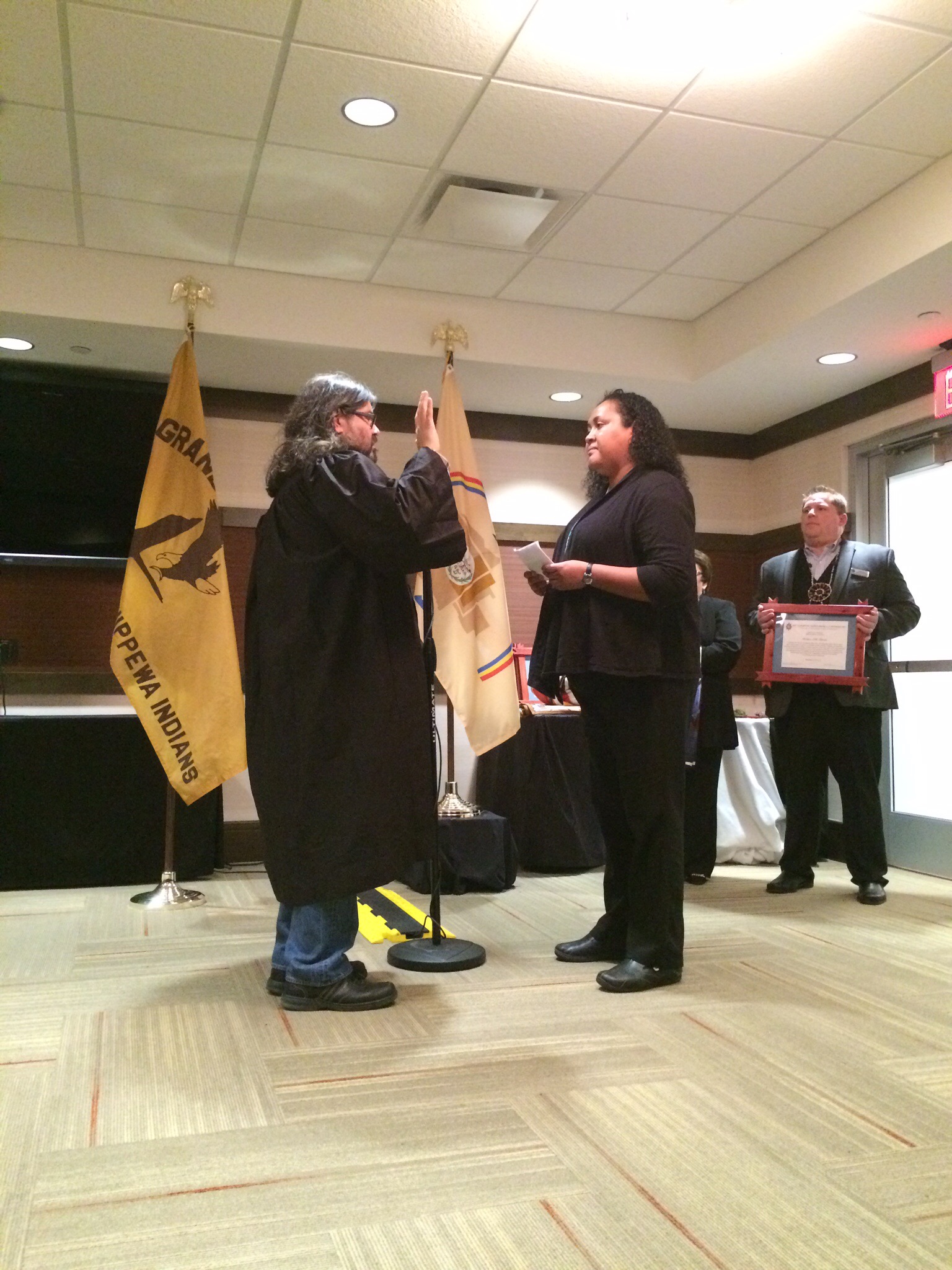
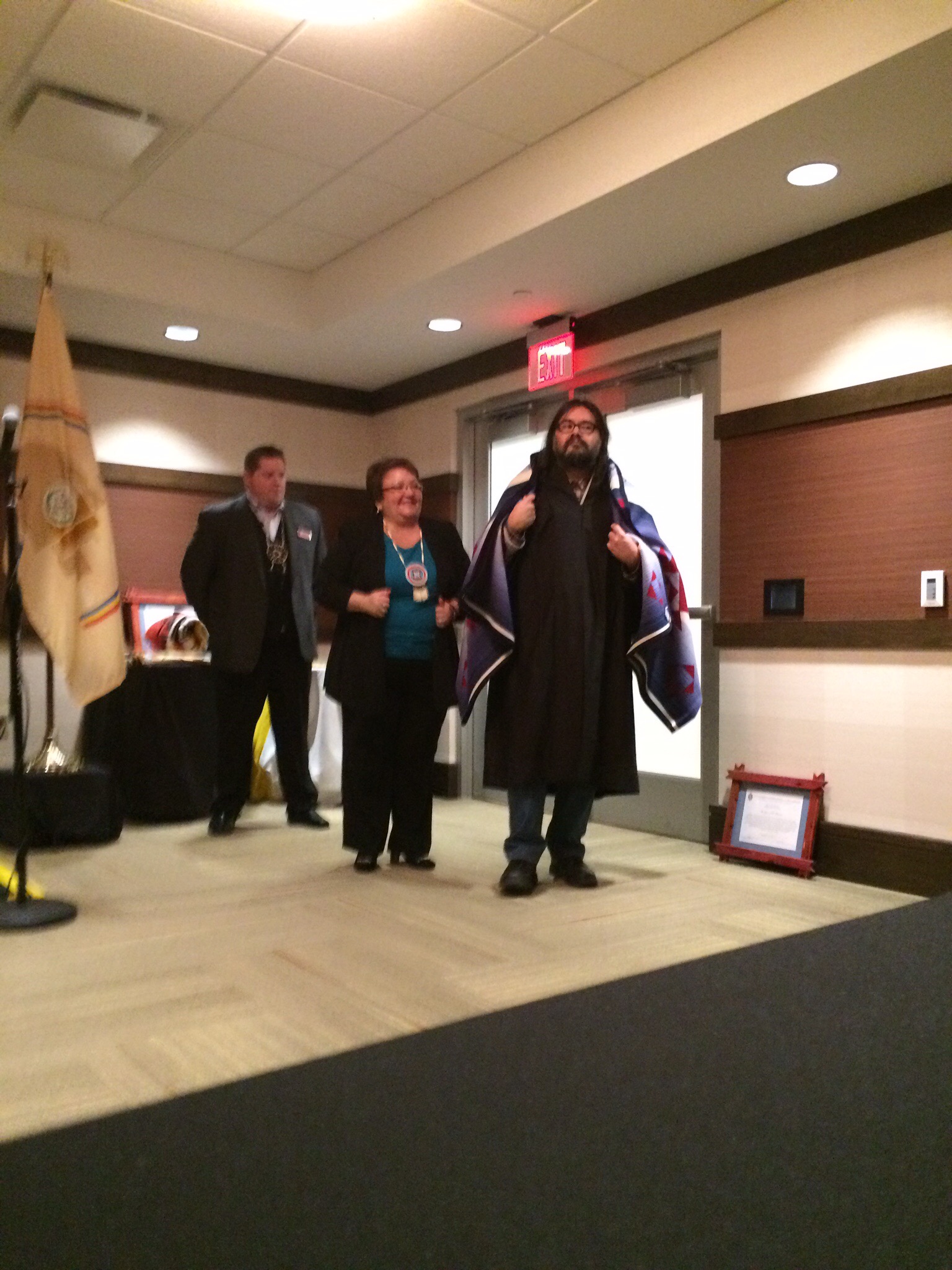
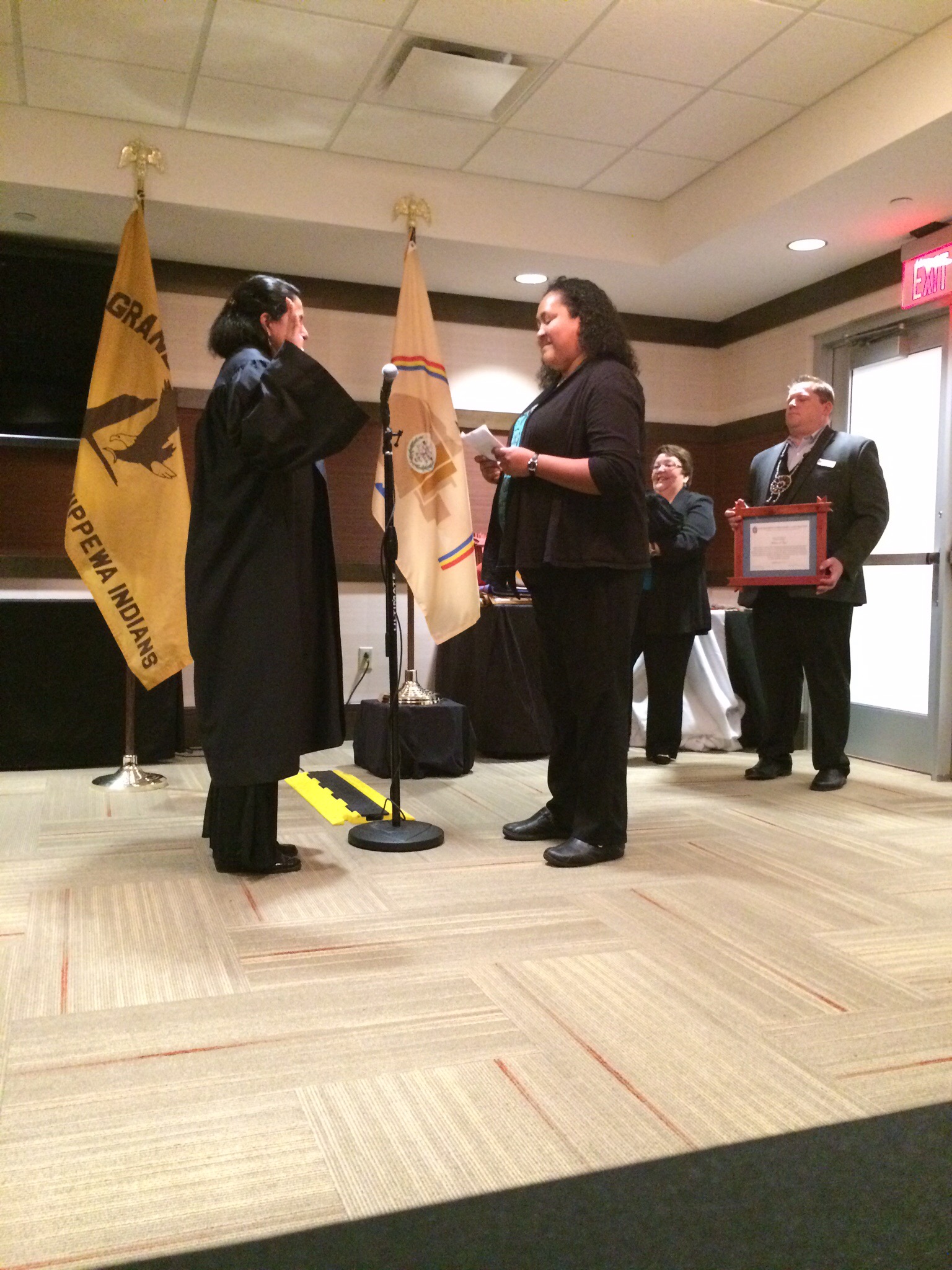
Nottawaseppi Huron Band of the Potawatomi Swearing-In Ceremony
Fletcher being sworn as appellate judge, along with chief judge Melissa Pope, tribal prosecutor Nancy Bogren, and the legendary Bill Brooks

Split Ninth Circuit Panel Dismisses Uncounseled ICRA Habeas Claim for Failure to Exhaust Tribal Remedies
Here are the materials in Alvarez v. Tracy:
From the court’s syllabus:
The panel affirmed the district court’s denial of a habeas corpus petition brought pursuant to the Indian Civil Rights Act, 25 U.S.C. § 1303 (ICRA), and 28 U.S.C. § 2241, in which Fortino Alvarez challenged convictions and sentences imposed by the Gila River Indian Community tribal court.
The panel declined to exercise jurisdiction over Alvarez’s claims and affirmed the denial of the habeas petition because Alvarez failed to exhaust his claims by bringing them first to the tribal courts, and did not demonstrate that unavailability or futility of direct appeal excuses the exhaustion requirement or that the Community’s appeals process did not comply with the ICRA.Although the Community failed to raise Alvarez’s lack of direct appeal in its motion to dismiss, the panel considered the defense under Wood v. Milyard, 132 S. Ct. 1826 (2012), and Granberry v. Greer, 481 U.S. 129 (1987), and concluded that the strong comity and judicial efficiency interests at stake warrant federal abstention.
Dissenting, Judge Kozinski wrote that the majority does not live up to its solemn responsibility to appear impartial, when it forgives the Community, which was represented by counsel, for failing to raise an exhaustion defense in district court or on appeal, but holds Alvarez to his single oversight of failing, while unrepresented before the Community court, to raise his jury trial and confrontation claims by way of a direct appeal. On the merits, Judge Kozinski would find that the Community violated Alvarez’s right to a jury trial under ICRA by failing to inform him that he needed to request a jury, a structural error fatally undermining the conviction.
Judge Kozinski added:
I have read the opinion many times and disagree with pretty much everything in it, including the numerals and punctuation. I explain why in the pages that follow, but first I pose a more basic question: How can a court committed to justice, as our court surely is, reach a result in which the litigant who can afford a lawyer is forgiven its multiple defaults while the poor, uneducated, un-counseled petitioner has his feet held to the fire? I attribute no ill will or improper motive to my excellent colleagues. They are fair, honorable and dedicated jurists who are doing what they earnestly believe is right. But we see the world very differently.
 Turtle Talk
You must be logged in to post a comment.