Here:
Grand Ronde Community Seeks Appellate Judges
Here:
Here:
At the Gun Lake Tribe’s moon pavilion.
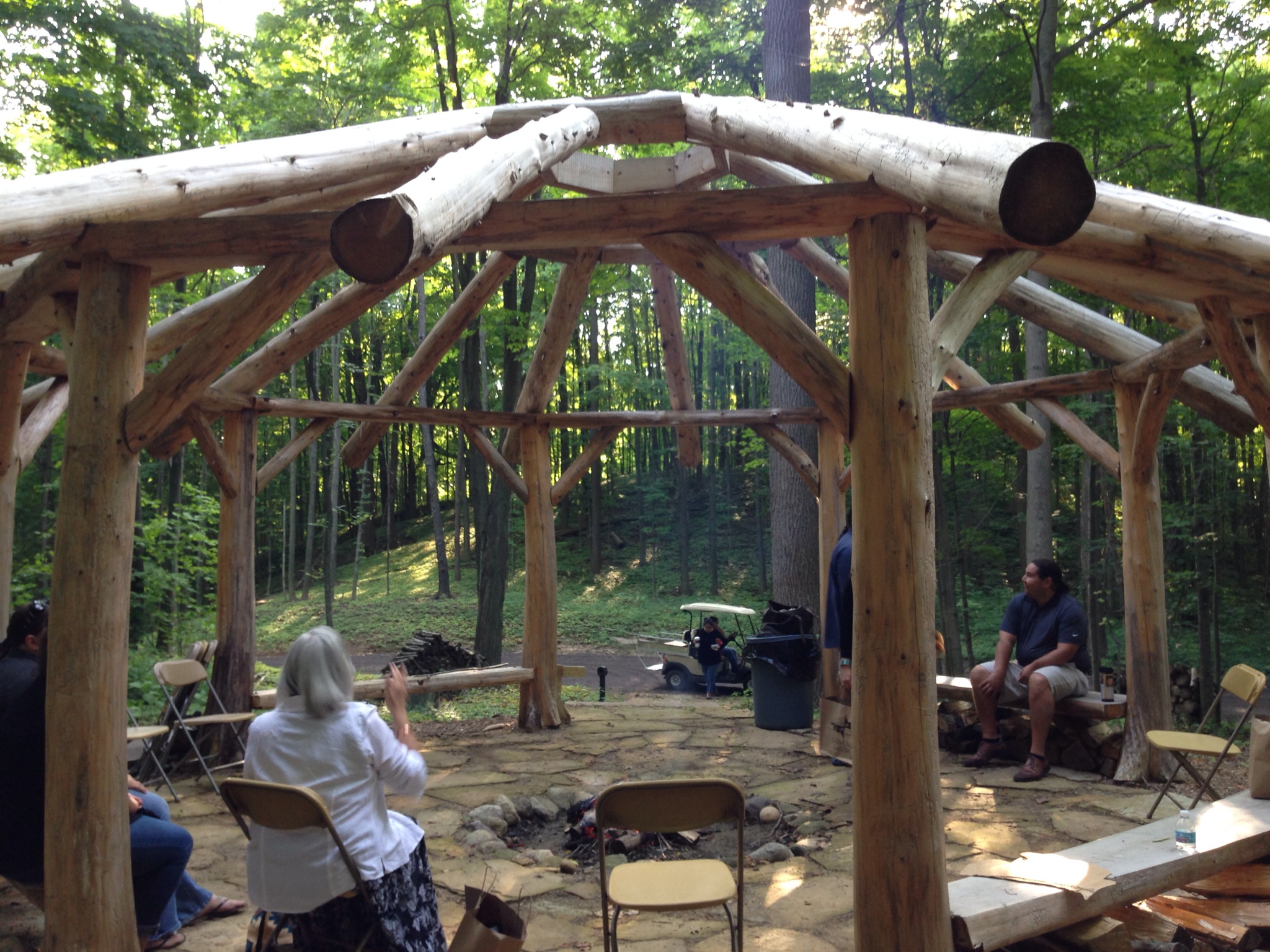
Spartans representing.

Delicious feast!

Here are the materials so far in Mississippi Administrative Services Inc. v. Mississippi Band of Choctaw Indians (S.D. Miss.):
9 Response to Motion to Dismiss
Here is a link to the event.
Registration form here.
Five years ago, we at MSU conducted a study of what became an oral history of modern Michigan tribal-state relations under a contract with the National Congress of American Indians. Our former students did all the work — Alicia Ivory, Adrea Korthase, and Sheena Oxendine. For whatever reason, we never published the paper on our occasional paper website. The students interviewed many of the major players in tribal-state relations from the 2000s and before, including John Wernet, Jim Bransky, and Kathryn Tierney on the 2007 inland consent decree; Mike Petoskey and Kathryn Tierney on Michigan Court Rule 2.615; and Bill Brooks and John Wernet on the Michigan tribal-state tax agreements.
Here it is in its full glory, “Tribal-State Relations: Michigan as a Case Study”:
Here are the materials in EOG Resources Inc. v. Johnson (D. N.D.):
Here are the materials so far in Kodiak Oil & Gas (USA) Inc. v. Burr (D. N.D.):
Here:
Asa’carsarmiut Tribal Council Opening Brief
Asa’carsarmiut Tribal Council Reply
Here are the questions presented (from the opening brief):
1. Whether, in light of this Court’s prior precedents, particularly State v. Native Village of Tanana, 249 P.3d 734 (Alaska 2011), a Superior Court may try a custody action in a matter involving an Alaska Native child without adhering to the requirements of Alaska’s Uniform Child Custody Jurisdiction and Enforcement Act (“UCCJEA”), AS 25.30.300, et seq., when a tribal court has previously entered an initial determination regarding the child.
2. Whether the Superior Court erred in interpreting Alaska’s UCCJEA, AS 25.30.300, et. seq., as excluding tribal courts within the meaning of “court” in AS 25.30.909(6) and erred in failing to register the Asa’carsarmiut Tribal Court custody order, in light of the Court’s prior precedents, particularly State v. Native Village of Tanana, 249 P.3d 734 (Alaska 2011).3. Whether the Superior Court erred in concluding that it had “at least concurrent jurisdiction over the issue of Jacob’s custody,” and proceeded to enter an initial child custody determination without giving comity to or contacting the Asa‘carsarmiut Tribal Court and requesting that the Asa‘carsarmiut Tribal Court determine that it no longer had exclusive, continuing jurisdiction or, alternatively, establishing that the Superior Court “would be a more convenient forum.”4. Whether, if it is found that the Superior Court properly had jurisdiction to modify the Asa’carsarmiut Tribal Court order pursuant to AS 25.30.320, the Superior Court erred by failing to enter an Order Modifying Custody that stated its authority to modify the Asa‘carsarmiut Tribal Court order as well as its findings regarding a *3 substantial change of circumstances, pursuant to AS 25.20.110 rather than a Final Custody Decree and Findings of Fact and Conclusions of Law.
5. Whether, in light of the Court’s prior precedent, particularly John v. Baker, 982 P.2d 738 (Alaska 1999), a Superior Court may try a custody action in a matter involving an Alaska Native child without engaging in a comity analysis when a tribal court had previously entered a custody order regarding the child.
Here are the materials in Phillips v. Salt River Police Dept. (D. Ariz.):
 Turtle Talk
You must be logged in to post a comment.