Here is the order in State v. Wallahee:

From the USDA Office of Tribal Relations:
Tribal Consultation: Expanding Tribal Self Determination Policies at USDA
Where: National Congress of American Indians Mid-Year
(Cherokee, N.C.) (Hybrid: In-person and virtual)
Caucus: May 23rd: 2:00 pm – 5:00 pm (ET)
The Indigenous Food and Agriculture Initiative will facilitate a Tribal Caucus on May 23 from 1-4 p.m. CST ahead of the USDA Consultations on Expanding Tribal Self Determination Policies during NCAI Mid Year, the week of June 3 at the Eastern Band Cherokee Indians. This caucus will be closed to federal staff, and registrants will have access to a briefing note that will cover the three topics.
Dates: Monday, June 3:
Forestry (1-4 p.m. EDT)
Register Here for Forestry Consultation
Monday, June 3:
Meat Inspections (4:30-7:30 p.m. EDT)
Register Here for Meat Inspections Consultation
Wednesday, June 5:
Food Sovereignty and Nutrition Programs (1-4 p.m. EDT)
Register Here for Food Sovereignty and Nutrition Consultation
RSVP: All attendees, including those attending in-person, must register/RSVP above. The Zoom link will allow you to choose “Virtual” or “In-Person.
Tribal Treaty Database Consultation and Listening Session
What: Tribal Treaty Database Consultation and Listening Session
Where: NCAI Midyear Convention, Cherokee, North Carolina
Room: 108
When: Wednesday, June 5, 2024
1:00 – 3:00PM ET
RSVP: Whether attending in person or remote please register at the following link: Tribal Consultation and Listening Session on USDA-DOI Treaty Database ZoomGov registration
Updated information here, Tribal Consultations | USDA
The Harvard Law Review has published “Kānāwai From Ahi: Revitalizing The Hawai‘i Water Code in the Wake of the Maui Wildfires.” PDF
An excerpt:
Native Hawaiians have been skeptical of corporate landowners’ alleged concerns over disaster preparedness and characterization of traditional water rights. They blame the prioritization of corporate water interests, the privatization of water, and the harms of colonialism for the severity of the fires. And they worry that Lahaina’s destruction could be used to furtively pass “unpopular laws and policies” that prioritize commercial uses and exacerbate political inequality.
As Chandler-‘Īao’s box of water-permit applications illustrates, the Maui fires represent an inflection point for Hawaiian water law. But we did not arrive at this point overnight. Rather, the fires were the byproduct of a century of colonialism that imposed a resource-management regime that razed the environment and externalized its harms on kānaka maoli. Because of this legacy, Maui was “a ticking time bomb” for wildfires. When it is remembered that the ancient Hawaiian system of watershed management was sustainable before it was ravaged by colonialism, Maui’s current state is even more heart wrenching.

Here is the amended opinion and the order denying en banc review before the full court.
Panel decision and briefs here.

Elena A. Baylis has posted “Looted Cultural Objects,” forthcoming in the Columbia Law Review Forum, on SSRN. Here is the abstract:
In the United States, Europe, and elsewhere, museums are in possession of cultural objects that were unethically taken from their countries and communities of origin under the auspices of colonialism. For many years, the art world considered such holdings unexceptional. Now, a longstanding movement to decolonize museums is gaining momentum, and some museums are reconsidering their collections. Presently, whether to return such looted foreign cultural objects is typically a voluntary choice for individual museums to make, not a legal obligation. Modern treaties and statutes protecting cultural property apply only prospectively, to items stolen or illegally exported after their effective dates. But while the United States does not have a law concerning looted foreign cultural objects, it does have a statute governing the repatriation of Native American cultural items and human remains. The Native American Graves Protection and Restoration Act requires museums to return designated Native American cultural objects to their communities – even if they were obtained before the law went into effect. This statute offers a valuable model for repatriating foreign cultural objects that were taken from formerly colonized peoples.
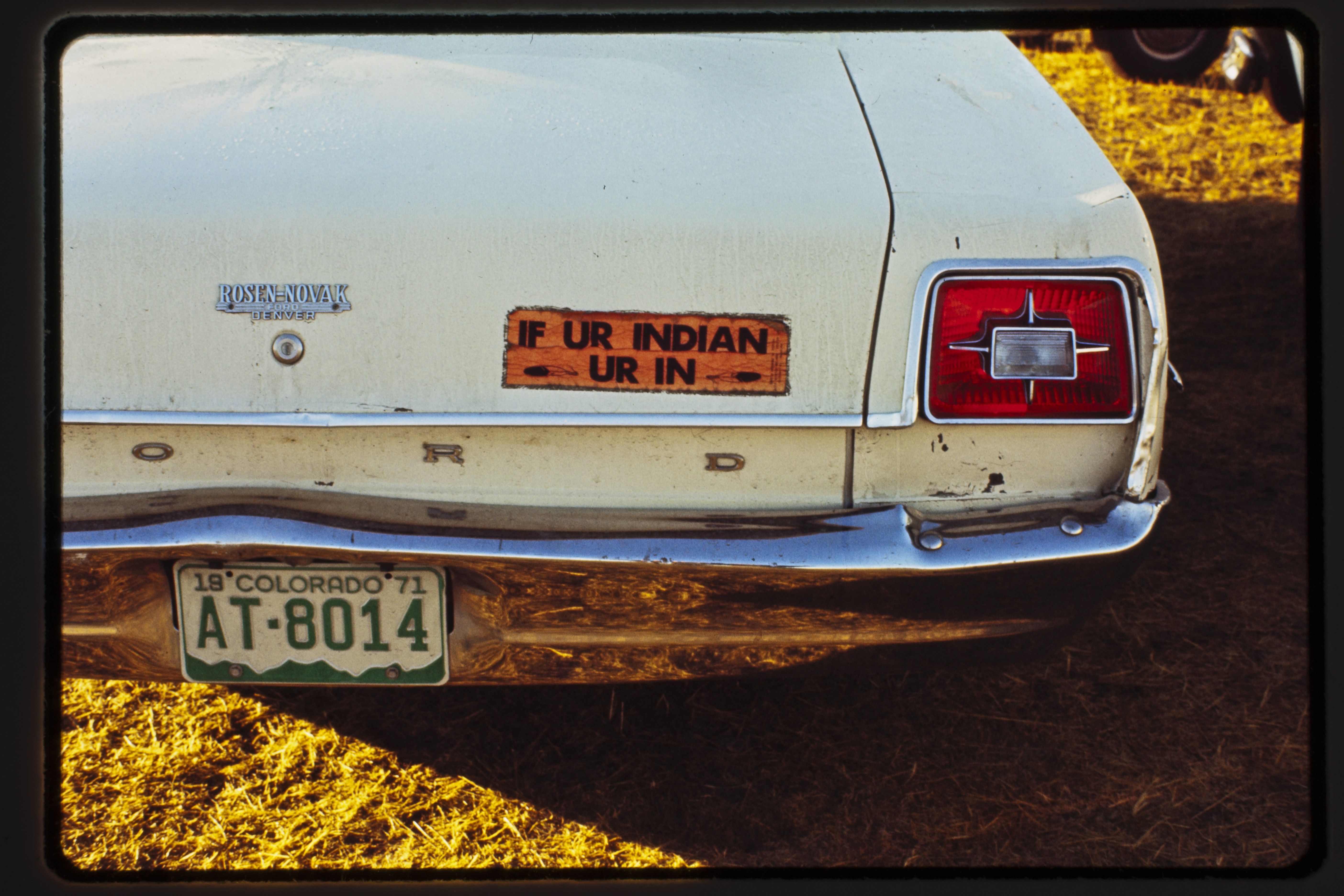
To defend a challenge to a North Dakota State House subdistrict that the North Dakota Legislature approved in 2021, the the Mandan, Hidatsa, and Arikara (“MHA”) Nation intervened as a defendant to support North Dakota. After MHA Nation and the state successfully won summary judgment in the district court, North Dakota is now asking the Supreme Court to vacate the state’s (and the MHA Nation’s) win in the lower court.
Here is the jurisdictional statement from the Plaintiffs.
Here is MHA Nation’s Motion to Dismiss or Affirm.
And here is North Dakota’s Response.
Media coverage:
More here.
Here are the materials in Xia v. Harrah’s Arizona Corporation (D. Ariz.):
Ann E. Tweedy has posted “Anticommandeering and Indian Affairs Legislation,” forthcoming in the Harvard Journal on Legislation, on SSRN.
Here is the abstract:
The Supreme Court recently applied the narrow and relatively new anticommandeering doctrine for the first time to federal Indian Affairs legislation in Halaand v. Brackeen without explaining why the doctrine should be extended from the Interstate Commerce Clause context to that of the Indian Commerce Clause, as well as to the other congressional powers that form the basis of the Indian Child Welfare Act (ICWA). In subsequent cases relating to Indian Affairs legislation, the Court should clarify that only a very narrow version of the anticommandeering doctrine applies in this context because of the virtual absence of state authority in the area and the history of acceptance of federal activities that can be described as commandeering state enforcement activities. Existing literature in this area is limited, with Matthew Fletcher and Randall Khalil having argued, before Brackeen was issued, that ICWA should be interpreted as having been enacted under Section 5 of the Fourteenth Amendment, an invitation that the Court ultimately did not take up. This Essay, The Diminished Significance of the Anticommandeering Doctrine in the Context of Indian Affairs Legislation, is important because it explains holes in the Court’s reasoning in Brackeen and because it safeguards Congress’s ability to protect Native Americans and Tribes from longstanding abusive state practices such as the unwarranted removal of Indian children from their homes.


 Turtle Talk
You must be logged in to post a comment.