New Student Scholarship on Indian Country Criminal Sentencing

Nasrin Camilla Akbari has published “The Gladue Approach: Addressing Indigenous Overincarceration Through Sentencing Reform” in the NYU Law Review. PDF

Here is the abstract:

In the American criminal justice system, individuals from marginalized communi- ties routinely face longer terms and greater rates of incarceration compared to their nonmarginalized counterparts. Because the literature on mass incarceration and sentencing disparities has largely focused on the experiences of Black and Hispanic individuals, far less attention has been paid to the overincarceration of Native peo- ples. Yet there are clear indications that Native peoples are both overrepresented within the criminal justice system and subject to unique sentencing disparities as compared to other ethnicities. While these issues are partly motivated by traditional drivers of criminal behavior, including access barriers to housing, employment, and education, this Note argues that there is a greater systemic issue at play: the enduring legacy of colonialism. Accounting for—and correcting—this legacy in the criminal justice system is a complex task, though not an impossible one. For example, over the past twenty years, the Canadian criminal justice system has implemented a novel, remedial sentencing approach to address the overincarcera- tion of Aboriginal offenders: the Gladue approach. Recognizing the extent to which the Canadian legal system has failed to account for the unique needs, exper- iences, and circumstances of Aboriginal offenders, the Gladue approach mandates an individualized and contextualized approach to sentencing, one which prioritizes community-based alternatives to incarceration and emphasizes restorative justice. This Note proposes two legal pathways by which to transplant the Gladue approach to the American criminal justice system. In so doing, it offers the first comprehensive analysis of the normative and constitutional implications of applying the Gladue approach to the sentencing of Native peoples within the United States. While the approach has challenges and shortcomings, it is neverthe- less a powerful tool by which the American criminal justice system can begin to reckon with its colonial past and present.

The Whitney’s effort to get you to feel good about giving them zhoonya.

Michael McNally on Indian Sacred Sites

Michael D. McNally has published “The Sacred and the Profaned: Protection of Native American Sacred Places That Have Been Desecrated” in the California Law Review. PDF

Here is the abstract:

From Standing Rock to San Francisco Peaks, Native American efforts to protect threatened sacred places in court have been troubled by what this Article identifies as the profanation principle: a presumption that places already profaned or degraded by development or pollution can no longer be sufficiently sacred to Native peoples to merit protection. When the Supreme Court of Hawai’i rejected Native Hawaiian challenges to a massive new telescope on Mauna Kea because its summit was already developed, the sole dissenting justice termed it the “the degradation principle”: a view that because eleven telescopes had already despoiled the summit, the new telescope would cause no substantial adverse impacts on natural and cultural resources. This Article draws on religious studies training to show that, from the Ganges River to Jerusalem’s Western Wall, what makes the holy places of the world’s religions sacred seldom hinges on their natural purity. A presumption that Native American sacred places must be pristine to be authentically sacred is discriminatory, rooted in romanticized stereotypes of Native religions as nature piety rather than complex systems of obligation and relationship to sacred places. If the profanation principle seldom manifests as an explicit legal reason for an outcome, the Article demonstrates how consistently it plays out in cases under religious liberty, historic preservation, and environmental law. The Article suggests moving beyond the profanation principle, likening desecrated sacred places to sick relatives in need of healing and intensifying Native obligations to defend the sacred.

More Jaune Smith . . .

Ninth Circuit Rules against Sauk-Suiatte in U&A Matter

Here is the opinion in Upper Skagit Indian Tribe v. Sauk-Suiatte Indian Tribe.

Briefs and so on here.

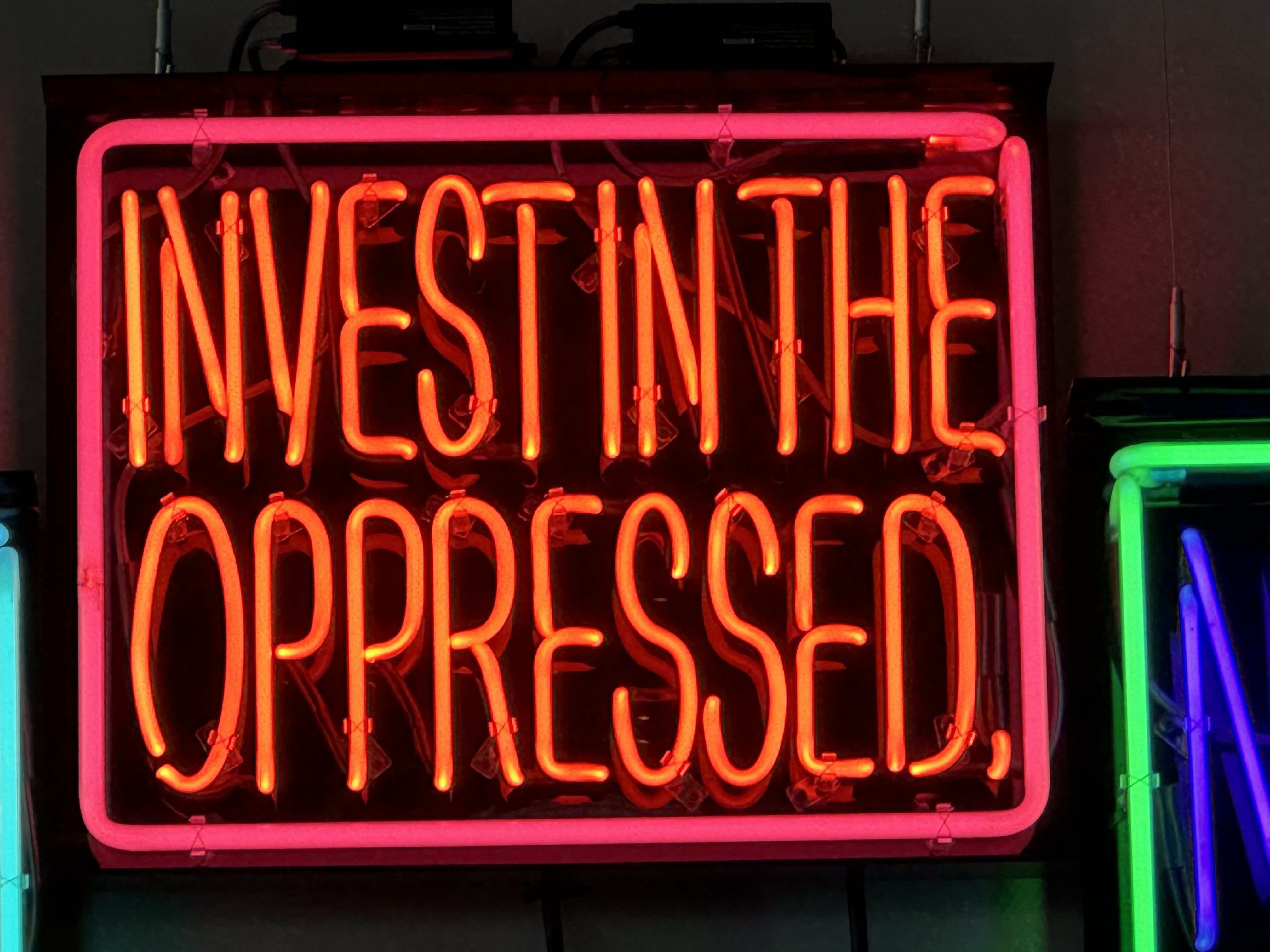
Jaune Smith — it’s as if I took a lot of close-up shots at a Whitney exhibition of her work. . . .

Modoc Nation and FAA Prevail in Challenge to Airport Sale to Tribe

Here is the unpublished order in Tule Lake Committee v. FAA:

Jaune Smith

Nebraska Federal Court Rules in HCI Distributing Tax Case

Here are the available materials in HCI Distributing v. Hilgers (formerly Peterson) (D. Neb.):

Prior post here.

Montana Court Recognize Duty to Educate Students on Native History

Here is the opinion in Yellow Kidney v. Montana Office of Public Instruction:

Briefs here.

North Dakota Passes State ICWA Law, Needs Governor’s Signature

Here is a link to the legislative page. The downloaded bill is on the Turtle Talk State ICWA Law Page.

Press coverage here:

Lawmakers voted nearly unanimously this week to pass House Bill 1536, which would weld the crux of the federal Indian Child Welfare Act (ICWA) onto North Dakota’s law books. The bipartisan legislation now goes to Gov. Doug Burgum, whose spokesman did not immediately respond to a request for comment.

Ute Tribe Sues Farm over Water Rights

Here is the complaint in Ute Indian Tribe of the Uintah and Ouray Reservation v. McKee (D. Utah):

ICWA Jurisdiction Case out of the Oklahoma Supreme Court

Here is the opinion

IN THE MATTER OF S.J.W.

This is a truly unfortunate opinion with absurdly weak analysis that extends the reasoning in Castro-Huerta to reservations in Oklahoma for ICWA cases involving non-member Indian children residing on reservation.

So we are all on the same page, 1911(a) of ICWA states:

An Indian tribe shall have jurisdiction exclusive as to any State over any child custody proceeding involving an Indian child who resides or is domiciled within the reservation of such tribe, except where such jurisdiction is otherwise vested in the State by existing Federal law.

(emphasis added)

This case involves the jurisdiction of the Chickasaw Nation tribal court over a Muskogee child. The parents appealed a state child protection case claiming the state did not have jurisdiction over the child after McGirt and the Chickasaw Nation had exclusive jurisdiction. There is, of course, an easy answer to this, which is the Tribes after McGirt all signed 1919 agreements with the State of Oklahoma to ensure continued concurrent jurisdiction post-McGirt when it involves an ICWA case. The Oklahoma Supreme Court would like you to know that this is a “misunderstanding of the construction of 1911(a)” which, frankly, came as a surprise to me and seems to be lacking any legal support, but here we are. 

Instead, the Oklahoma Supreme Court took it upon itself to, for the first time I’ve ever seen, claim that 1911(a) only refers to territorial jurisdiction but not subject matter jurisdiction. In fact, the Court  wrote “Whether § 1911’s ‘jurisdiction’ means ‘subject matter jurisdiction’ has received little attention, but requires our review.” I mean, I really don’t think it did, but here we are. Again. 

In doing so, the  Court decided that Castro-Huerta, involving the prosecution of non-Indians on reservation, is broad enough to hold that the state courts have subject matter jurisdiction over tribal reservations for . . . all the things?

When federal Indian law issues arise, we must take special care to determine if federal law preempts or ousts the state of its general adjudicative authority. Id. When determining jurisdictional disputes for cases arising within the external boundaries of a reservation, we must remember that Oklahoma’s sovereignty does not stop at reservation borders. Castro-Huerta, 597 U.S. at ___, 142 S. Ct. at 2488. The U.S. Constitution authorizes Oklahoma district courts to exercise jurisdiction in Indian country–Oklahoma’s territory includes “Indian country.” Id. at 2493.

Indian country is part of the State, not separate from the State. To be sure, under [the United States Supreme Court’s] precedents, federal law may preempt that state jurisdiction in certain circumstances. But otherwise, as a matter of state sovereignty, a State has jurisdiction over all of its territory, including Indian country. See U.S. CONST., Amdt. 10.

Id. The general rule is that Oklahoma is “‘entitled to the sovereignty and jurisdiction over all the territory within her limits.'” Id. (citing Lessee of Pollard v. Hagan, 44 U.S. (3 How.) 212, 228, 11 L. Ed 565 (1845)).

The State of Oklahoma by its Constitution has broadly authorized its district courts to exercise subject matter jurisdiction over “all justiciable matters” unless otherwise noted in the Constitution. Okla. Const. art. VII, § 7(a). Adjudicating children deprived surely is a “justiciable matter.” Ibid. While the parties refer to ICWA’s general reference to “jurisdiction” as “subject matter jurisdiction,” we decline to accept this characterization. This is especially so given the presumption of a district court’s general adjudicatory jurisdiction

Therefore, the Court holds that the state has concurrent jurisdiction on reservation over non-member Indian children, because 1911(a) only means tribes have territorial jurisdiction exclusive concurrent as to its members. To be fair, the opinion is fairly confusing, but ultimately states:

When a child appears before a district court judge and is subsequently determined to be a member Indian, the district court maintains subject matter jurisdiction. But the sovereign status of a tribe and its territorial jurisdiction over its members and territory necessitates disposition of the matter in that tribe’s tribal courts because self-governance is implicated. See Holyfield, 34. (Abusive state practices with respect to Indian Children “seriously undercut the tribes’ ability to continue as self-governing communities. Probably in no area is it more important that tribal sovereignty be respected than in an area as socially and culturally determinative as family relationships.” (citations omitted) (quotations omitted). Section 1911’s “jurisdiction” does not concern a district court’s subject matter jurisdiction; it concerns the connection to the forum and to the group of people (tribe). 

I mean, ICWA seems pretty clear that the exclusive jurisdiction is over any child custody proceeding, which feels like subject matter jurisdiction to me, and every court I’ve ever been in front of, but the Oklahoma Supreme Court seems to believes the state maintains subject matter jurisdiction over all child protection proceedings whether on or off reservation. It’s truly fascinating to see the Oklahoma Supreme Court claim that territorial jurisdiction “as a concept of international law, is important for our state . . .”

The Court then holds, without citation, that 1911(a) requires the Indian child to be residing on their own reservation rather than any reservation for exclusive (?) jurisdiction–though it is certainly not clear from the language of the law that is the intent. The Court notes again this question hasn’t been subject to “judicial scrutiny,” which is probably because the language is pretty straightforward and tribal jurisdiction over non-member Indians is noncontroversial. It appears from the last sentence of the opinion that the Chickasaw Court doesn’t have jurisdiction over the non-member Indian child at all.  I guess, here we are. 
 

New Student Scholarship on Tribal Citizenship and Blood Quantum

Ashleigh Lussenden has published a Note, “Blood Quantum and the Ever-Tightening Chokehold on Tribal Citizenship: The Reproductive Justice Implications of Blood Quantum Requirements,” in the California Law Review. PDF

The abstract:

Blood often serves as the basis for identity for many groups in the United States. Native Americans, however, are the only population in which blood is a requirement for collective belonging and can be the determining factor for whether one receives tribal benefits and services. Many Tribal Nations use blood quantum, the percentage of Indian blood one has, as a bright-line rule to determine qualification for tribal membership. Initially established as a colonial tool of dispossession and assimilation, tribes adopted blood quantum to ensure the preservation of culture and community.

This Article contends that tribal adoption of blood quantum limits tribal members’ reproductive autonomy and violates the tenets of reproductive justice. Forcing tribal members to consider the blood quantum of their future children limits individual choice of partner and the manner in which tribal members choose to build their families. This limitation of autonomy and violation of reproductive justice principles is especially stark when analyzed in combination with contemporary pressures on Native conception and parenting, including urban migration, dysgenic environmental impacts on fertility, sexual violence, and inadequate, underfunded, and abusive reproductive healthcare. Collectively, these pressures decrease fertility, the number of available partners, and the ability for Native people to conceive and parent within their own communities.

By applying the principles of reproductive justice, Tribal Nations may begin to reassess what belonging means in Native communities and how tribal membership policies can support reproductive autonomy. The current rise of nation-building and concentrated push for self-determination in Native communities provides a unique opportunity to interrogate the priorities of tribal membership requirements and reimagine inclusion and collective belonging in Native Nations.