Native Families and COVID-19

Here.

Native youth have suffered the highest rate of caregiver loss from the pandemic—4.5 times higher than that of White children. This means that 1 of every 168 Native children have lost their primary caregivers to COVID, as compared with 1 of every 310 Black children, 1 of every 412 Hispanic children, and 1 in every 753 White children.

Thanks to Fred Fisher to sending this on to us.

Oklahoma Tax Commission Opinion Rejecting McGirt-Based Tax Immunity

Here:

OTC-order-2021-12-08-04

Related news coverage.

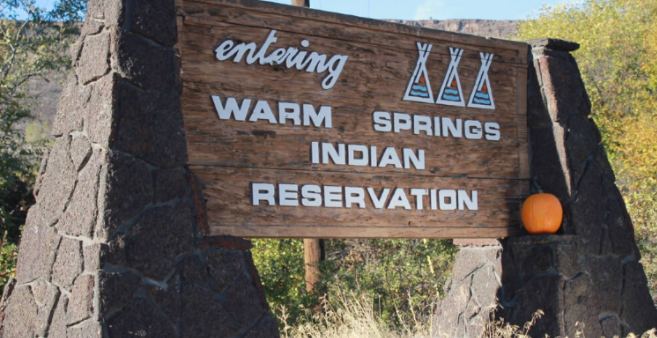
Ninth Circuit Briefs in Section 1983 Suit against Warm Springs Tribal Police

Here are the briefs in Weaver v. Gregory:

Opening Brief

Answer Brief

Tribal Amicus Brief

Lower court materials here.

Update in Suit against Nome Police for Failure to Investigate Sexual Assault against Native Woman

Here are updated materials in Hardy v. City of Nome (D. Alaska):

36 Harvey Motion to Dismiss

41 Response

42 Reply

45 DCt Order on Motion to Dismiss

64 Hardy Motion to Compel

66 Response

67 Reply

72 DCT on Motion to Compel

74 Hardy Motion for Sanctions

75 Response

80 Reply

92 Hardy Supplemental Brief

95 Nome Motion to Dismiss

The complaint is posted here.

SCOTUS Denies More Oklahoma Petitions, Still Holding on Brackeen, Yakama, and Standing Rock Petitions

Order list here. Prior post detailing the other petitions here.

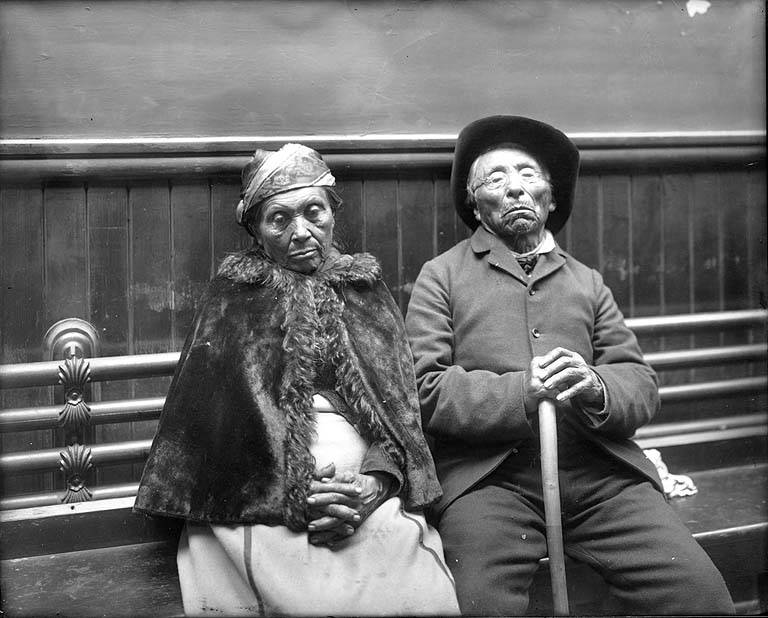
Suquamish Indians waiting . . .

Here are the materials in Oklahoma v. Davis, a petition in which Oklahoma only asked to overrule McGirt:

Oklahoma v Davis Petition

Davis BIO

MCN Amicus Brief

Reply

There are a bunch more denials of Oklahoma’s brilliant papering strategy (we’ll post materials later, cuz we have lives and Tribal Law won’t teach itself  . . . or will it?):

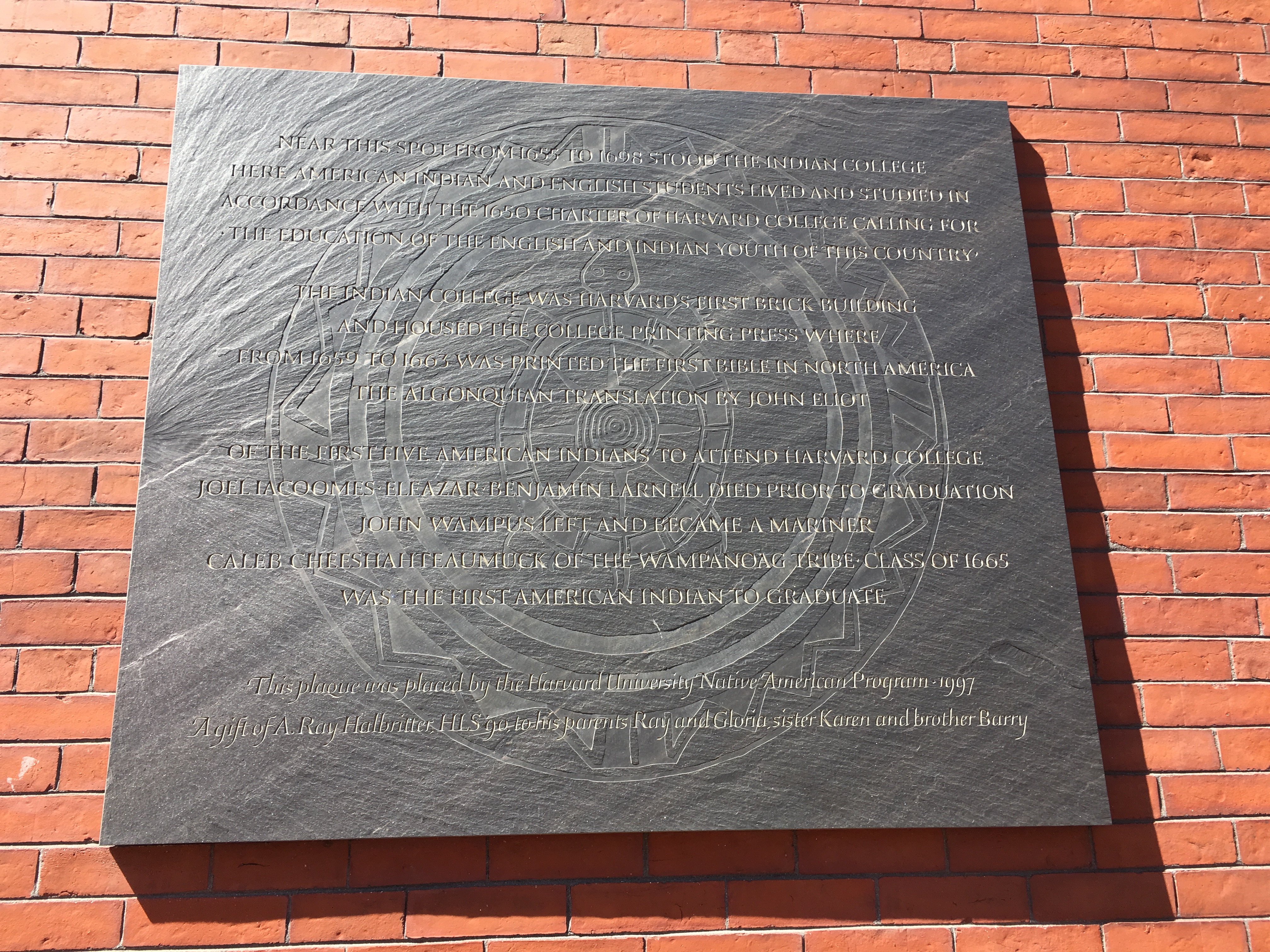
Oh and because we can’t have nice things, the Court granted the Harvard affirmative action case, too.

Connecticut Supreme Court Briefs in State Law Preemption Case [Non-Indian Vendors on Mashantucket Lands]

Here are the materials in Soloniewicz v. Sugar Factory LLC (Conn. S. Ct.):

Appellant Brief

Soloniewicz Brief

Sugar Fox Reply Brief

AG Amicus Brief


Ninth Circuit Briefs in Challenge to Arizona School District Ban on Beaded Graduation Cap

Here are the materials in Waln v. Dysart School District:

Opening Brief

Answer Brief

Oklahoma Court of Criminal Appeals Decides Indian Status Case

Here are the materials in Wadkins v. State of Oklahoma (Okla. Cr. Crim. App.):

Motion to Vacate

Appellant Brief

State Brief

OCCA Opinion

An excerpt:

The State’s evidence did not refute Wadkins’s evidence of recognition in any meaningful way. The State called one witness, namely Michael Williams, a special agent with the Department of Corrections with expert knowledge of the current prison gangs. Williams testified that the UAB is a white supremacist gang. While there are presently five to ten Native American gangs, he admitted the only Indian gang in existence when Wadkins first went to prison was the Indian Brotherhood. He was unaware of any present affiliation between the UAB and Indian Brotherhood gangs, but admitted gangs sometimes align. He confirmed that DOC records reflected that Wadkins is a former member of the UAB and that Wadkins’s UAB tattoos have been defaced. His testimony neither refuted Wadkins’s evidence of tribal recognition nor showed Wadkins’s membership in the UAB was a renouncement of his Indian status.
The district court’s conclusion–that Wadkins failed to establish recognition–is not supported by the record. While eligibility for tribal membership alone is insufficient to prove recognition, Wadkins’s subsequent enrollment coupled with the other factors, specifically his possession of a CDIB card since childhood and receipt of Indian health services, showed he was recognized as Indian by the Choctaw Nation. Because he is an Indian for purposes of federal criminal law and the charged crimes occurred in Indian Country, the State lacked jurisdiction over this matter.

Beverly Clark & Lynnmarie Johnson American Indian Law Section of the State Bar of Michigan Bar Study Scholarship

Deadline: February 25, 2022 at 5pm EST

See details here

Beverly Clark (Aamjiwnaang First Nation, Sarnia Reserve).
Mary 21, 1939 – February 16, 2013.
Beverly received her BA in 1961 and her MA in 1963 from the University of Michigan. Prior to entering into the practice of law, Beverly was a public school teacher. She received her JD from Wayne State University in 1972. Her law practice focused on family law in the Detroit area. In 1983, Beverly became the first woman President of the Michigan Trial Lawyers Association (now known as the Michigan Association for Justice). She served on the Detroit Human Relations Commission as a Chair and Vice-Chair. She was the first Native American Commissioner for the Michigan Civil Rights Commission and served between 1982 and 1991. She was the 2006 awardee of the American Indian Law Section’s Tecumseh Peacekeeping Award and served on the Board for Michigan Indian Legal Services.

Lynnmarie Johnson (Saginaw Chippewa descendant).
December 15, 1960 – July 21, 2015.
Lynnmarie was born in Flint, Michigan and was a resident of the Flint area all of her life. On February 23, 1980 she married Michael Bryan Johnson. Lynnmarie received her BBA from the University of Michigan in 1991, after receiving her AA, with honors, in 1989 from Mott Community College. Lynnmarie graduated from University of Michigan Law School in 1994. Not only was she a licensed attorney, she was also a certified public accountant. Her law practice had a focus on Bankruptcy and Estate Planning. She was a past Chair of the American Indian Law Section of the State Bar of Michigan and a board member for both Michigan Indian Legal Services and Legal Services of Eastern Michigan.

Requirements:

The following guidelines will be used in administering and making awards from the Beverly Clark
& Lynnmarie Johnson American Indian Law Section of the State Bar of Michigan Bar Study
Scholarship. Applicants must:

• Be an actively enrolled 3L law student or a recent law school graduate.
• Intend to sit for the Michigan Bar Examination.
• Compose and submit a Letter of Interest in the scholarship, which outlines your
commitment to Indian Country and/or to Native American communities.
• Submit a current resume and a recent law school transcript.

Submission Deadline:

Applications are due by February 25, 2022 at 5 p.m. EST by email to lmulhern@rosettelaw.com

Selection:

The American Indian Law Section Council will select the recipient based on the above guidelines.
Applicants will be notified via e-mail regarding their status after the selection committee has met.

Award:

This shall be a one-time award, with the dollar amount and number of awards being based on the
available funds each year. The aggregate total maximum award amount to be distributed shall be
$1500 per year to one or more recipients. e.g. Three Recipients * Three $500 awards = $1500.